

Deciding between a Keurig and a standard coffee maker? This guide breaks down the differences, helping you choose the perfect brewing method for your lifestyle. We’ll cover convenience, cost, taste, and environmental impact. Make an informed decision to enjoy your ideal cup of coffee every morning.
## Keurig vs Standard Coffee Maker: Which Brewer is Right for You?
Are you staring at your kitchen counter, contemplating your next coffee maker purchase? The choice between a modern Keurig and a classic standard coffee maker can feel overwhelming. Both promise that essential morning jolt, but they deliver it in very different ways. This guide is here to demystify the Keurig versus standard coffee maker debate. We’ll dive deep into what each machine offers, helping you pinpoint the perfect brewing companion for your unique needs, preferences, and lifestyle. By the end, you’ll have a clear understanding of their pros and cons, so you can confidently brew your ideal cup.
### Understanding the Basics: What Are We Comparing?
Before we get into the nitty-gritty, let’s define our contenders.
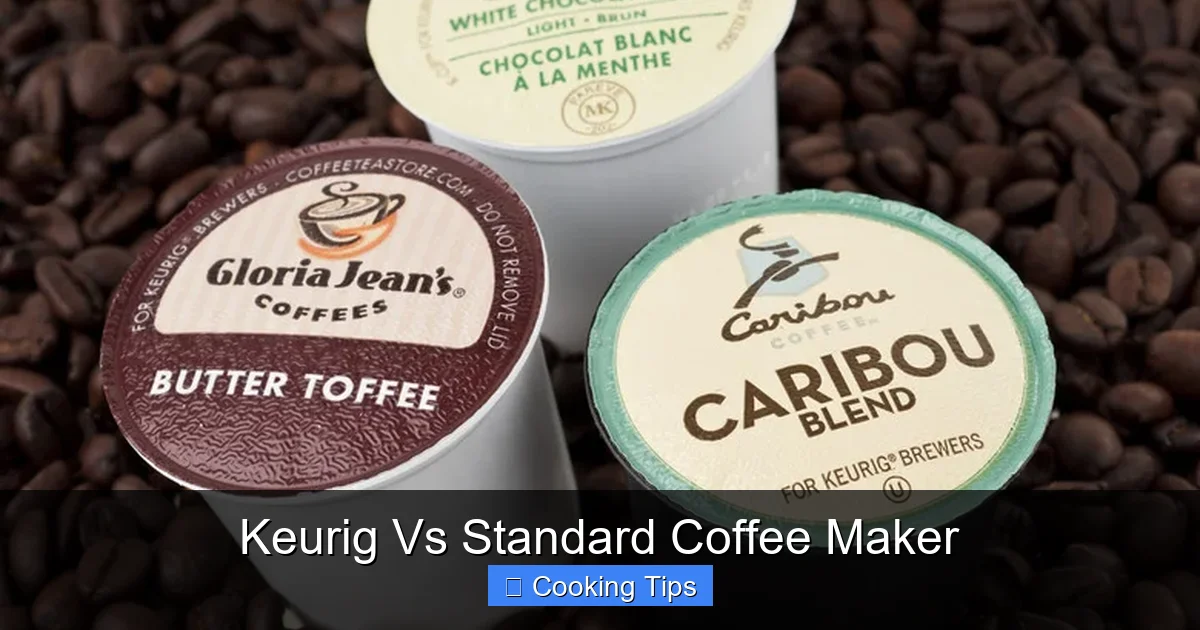
* **Keurig Coffee Makers:** These are single-serve coffee machines that use pre-packaged plastic pods called K-Cups. You pop in a K-Cup, select your desired cup size, and in under a minute, you have a fresh, hot cup of coffee. They are known for their speed and simplicity.
* **Standard Coffee Makers:** This category primarily refers to automatic drip coffee makers. You add ground coffee and water to the machine, and it brews a pot of coffee, typically serving multiple people. They are the familiar workhorses found in many kitchens and offices.
### Convenience: The Keurig’s Strongest Suit
When it comes to sheer ease of use, Keurig reigns supreme. It’s designed for individuals who value speed and minimal effort.
#### Brewing a Single Cup in Minutes
The primary draw of a Keurig is its ability to brew a single cup of coffee almost instantly.
##### How to Brew with a Keurig:
1. **Fill the Water Reservoir:** Most Keurigs have a removable water reservoir. Fill it with fresh, cold water to the desired level.
2. **Insert a K-Cup:** Lift the handle, place your chosen K-Cup into the holder, and close the handle firmly.
3. **Select Cup Size:** Use the buttons on the machine to select your preferred cup size (e.g., 6 oz, 8 oz, 10 oz).
4. **Brew:** Press the brew button. The machine will heat the water and dispense your coffee.
The entire process typically takes less than a minute. There’s no measuring of coffee grounds, no fussing with filters, and very little to clean up afterward.
#### Minimal Cleanup
Cleanup with a Keurig is incredibly straightforward. Once your coffee is brewed, you simply lift the handle and discard the used K-Cup. The drip tray is usually removable for easy wiping. This is a massive advantage for busy mornings or for those who dislike the mess associated with traditional coffee brewing.
### Flavor and Customization: The Standard Maker’s Edge
While Keurig offers convenience, standard coffee makers often provide a richer and more customizable coffee experience.
#### Control Over Your Coffee
With a standard coffee maker, you have complete control over the quality and type of coffee you use.
##### How to Brew with a Standard Coffee Maker:
1. **Add Water:** Fill the carafe or reservoir with the desired amount of fresh, cold water. Pour it into the water reservoir of the machine.
2. **Prepare the Filter:** Place a coffee filter (paper or reusable) into the brew basket.
3. **Add Coffee Grounds:** Measure your favorite ground coffee and add it to the filter. The general guideline is 1-2 tablespoons of coffee per 6 ounces of water, but you can adjust this to your preference.
4. **Start Brewing:** Close the lid and turn on the machine. The coffee will drip into the carafe.
This process allows you to experiment with different coffee beans, roasts, and grind sizes. You can fine-tune the coffee-to-water ratio to achieve your perfect brew strength, from a mild morning cup to a bold, robust brew.
#### Superior Flavor Potential
Many coffee aficionados argue that standard drip coffee makers produce a superior tasting coffee. This is often attributed to:
* Better Extraction: Drip machines can allow for a more even and complete extraction of coffee oils and flavors from the grounds.
* Freshness of Grounds: Grinding your own beans just before brewing offers the freshest, most aromatic coffee.
* Variety of Beans: The ability to choose from an endless array of whole bean coffees means you can explore nuanced flavor profiles that might not be available in K-Cup form.
### Cost Considerations: Initial Purchase and Long-Term Expenses
The cost of owning either a Keurig or a standard coffee maker involves both the upfront purchase price and the ongoing cost of consumables.
#### Initial Purchase Price
* Keurig Machines: The initial cost of a Keurig can range from around $70 for basic models to $200 or more for high-end versions with extra features like water filters or temperature control.
* Standard Coffee Makers: Basic drip coffee makers can be found for as little as $20-$30, while premium models with programmable features or thermal carafes can cost $100-$200.
So, the initial cost can be comparable, depending on the specific models you choose.
#### Ongoing Costs: Pods vs. Beans
This is where the cost difference becomes more significant.
* K-Cups: A box of 12 K-Cups can cost anywhere from $7 to $15, depending on the brand and type of beverage. This works out to roughly $0.58 to $1.25 per cup. Over time, this can add up quickly if you drink multiple cups a day.
* Ground Coffee/Whole Beans: A 12-ounce bag of coffee beans can cost between $8 and $20, depending on the origin and quality. If you make a pot of coffee that uses about 2 ounces of grounds, this bag will yield about 6 pots of coffee. If a pot serves 4-6 cups, this equates to roughly $0.27 to $0.67 per cup.
While Keurig offers convenience, the long-term cost per cup is generally higher than brewing with ground coffee in a standard machine.
#### Reusable K-Cup Filters
A way to mitigate the cost and environmental impact of K-Cups is to use a reusable K-Cup filter. These allow you to fill the pod with your own ground coffee. This significantly reduces the per-cup cost and waste, making Keurigs a more economical and eco-friendly option if you prefer to use your own beans.
### Environmental Impact: Waste and Sustainability
The environmental footprint of your coffee brewing habit is an important consideration for many consumers.
#### K-Cups: The Waste Factor
The biggest environmental concern with Keurig machines is the waste generated by single-use K-Cups. These pods are typically made of plastic and are difficult to recycle in many municipal facilities. While some companies are working on more sustainable K-Cup options, the sheer volume of plastic waste produced by these machines is substantial.
#### Standard Makers: Less Waste, More Resources
Standard drip coffee makers, especially those using paper filters, still generate waste. However, paper filters are generally biodegradable and compostable. Reusable metal or nylon filters further reduce waste. The energy consumption of standard coffee makers might be slightly higher due to longer brewing times, but the material waste is generally lower.
#### Making Greener Choices
* For Keurig users: Opt for K-Cups made from recyclable materials if available. The most sustainable choice is to use a reusable K-Cup filter and your own coffee grounds.
* For Standard Maker users: Consider a reusable coffee filter. Composting used coffee grounds and paper filters also contributes to sustainability.
### Variety and Options: What Can You Brew?
Both Keurig and standard coffee makers offer a wide range of beverage options, but the nature of that variety differs.
#### Keurig: A World of Choices
Keurig machines are renowned for their extensive selection of K-Cup beverages. Beyond coffee, you can find:
* Teas (black, green, herbal)
* Hot chocolate
* Cider
* Espresso-style drinks
* Specialty beverages
This makes Keurig a versatile machine for households with diverse beverage preferences.
#### Standard Makers: Bean Exploration
With a standard coffee maker, your variety comes from the endless possibilities of coffee beans. You can explore single-origin coffees from around the world, try different roasts, and even experiment with flavored coffee beans. If your primary focus is on the nuances of coffee itself, a standard maker offers unparalleled exploration.
### Space and Maintenance: Practical Considerations
Think about how much counter space you have and how much effort you’re willing to put into maintenance.
#### Keurig: Compact and Low Maintenance
Keurig machines are often more compact than many standard drip coffee makers, making them a good choice for smaller kitchens. Their daily maintenance is minimal, primarily involving wiping down the exterior and emptying the drip tray. However, they do require periodic descaling to remove mineral buildup and maintain optimal performance.
#### Standard Makers: Larger Footprint, Regular Care
Standard coffee makers, especially those with larger carafes, can take up more counter space. They require more regular cleaning of the carafe and brew basket. The internal components also need descaling periodically to prevent mineral buildup, which can affect the taste of the coffee and the longevity of the machine.
### Who Should Choose a Keurig?
A Keurig coffee maker is an excellent choice for:
* Individuals or couples: If you mainly drink one cup of coffee at a time and don’t need to brew large pots.
* Busy individuals: If you need your coffee fast and don’t have time for elaborate brewing processes.
* Households with diverse tastes: If family members or guests have different beverage preferences (coffee, tea, hot chocolate).
* Those who prioritize simplicity: If you want a no-fuss, easy-to-operate coffee maker.
### Who Should Choose a Standard Coffee Maker?
A standard coffee maker is ideal for:
* Families or households that drink multiple cups: If you regularly brew a full pot of coffee.
* Coffee connoisseurs: If you enjoy experimenting with different beans, roasts, and brewing methods to achieve the perfect flavor.
* Budget-conscious individuals: If you want to minimize your long-term coffee expenses by buying bulk coffee beans.
* Environmentally conscious consumers: If you want to reduce single-use plastic waste.
### Troubleshooting Common Issues
Even the best coffee makers can have occasional hiccups.
#### Keurig Troubleshooting:
* Machine not brewing: Ensure the water reservoir is full and properly seated. Check that the K-Cup is inserted correctly and the handle is fully closed. Make sure the machine is plugged in and has power.
* Weak coffee: You might be using a K-Cup designed for a larger brew size, or the water reservoir might not be full enough. Try selecting a smaller cup size. If using a reusable filter, you might be using too little coffee.
* Machine making strange noises: This could indicate a need for descaling. Follow your machine’s instructions for the descaling process.
#### Standard Coffee Maker Troubleshooting:
* Coffee tastes burnt or stale: Ensure you are using fresh coffee grounds and clean water. If the machine has a warming plate, it might be overheating the coffee. Consider using a thermal carafe model.
* Coffee brewing too slowly: This is often a sign of mineral buildup. It’s time to descale the machine. Ensure you are using the correct amount of coffee grounds.
* Coffee overflowing the filter basket: You might be using too finely ground coffee, too much coffee, or the wrong size filter. Ensure the brew basket is properly seated.
### Conclusion: Making Your Final Decision
The “best” coffee maker between Keurig and a standard drip machine isn’t a universal answer. It truly depends on your priorities.
If your mantra is “speed and simplicity,” and you enjoy the variety of single-serve beverages without the fuss, a Keurig is likely your winner. It’s perfect for individual cups, quick mornings, and households where everyone wants something different. Remember the option of a reusable K-Cup filter to boost its eco-friendliness and lower long-term costs.
However, if you cherish the ritual of brewing, enjoy the art of selecting and grinding beans, and value the potential for superior flavor control and cost savings, a standard coffee maker is probably your best bet. It’s the classic choice for families, coffee enthusiasts, and anyone who appreciates a good pot of coffee made just right.
Ultimately, both machines can deliver a delicious cup of coffee. Consider your daily routine, your budget, your taste preferences, and your environmental concerns. By weighing the convenience of Keurig against the customization and potential flavor depth of a standard coffee maker, you can confidently choose the brewer that will best fuel your mornings for years to come.
Key Takeaways
- Convenience is King with Keurig: Keurig machines offer unparalleled speed and simplicity, brewing a single cup in under a minute with minimal cleanup.
- Standard Makers Offer Flavor Control & Customization: Traditional coffee makers provide more control over brew strength, temperature, and coffee bean selection, leading to potentially richer flavors.
- Cost Considerations Vary Widely: While the initial purchase price of a Keurig might be higher, the long-term cost can be influenced by K-Cup prices versus bulk coffee beans.
- Environmental Impact is a Key Differentiator: Standard makers generally produce less waste than single-use K-Cups, though reusable K-Cup filters can mitigate this.
- Variety is a Strength of Both: Keurig excels in offering a vast array of pre-packaged beverages, while standard makers allow infinite coffee bean exploration.
- Space and Maintenance Needs Differ: Keurig machines are often more compact, while standard drip coffee makers require regular descaling and filter replacement.
