

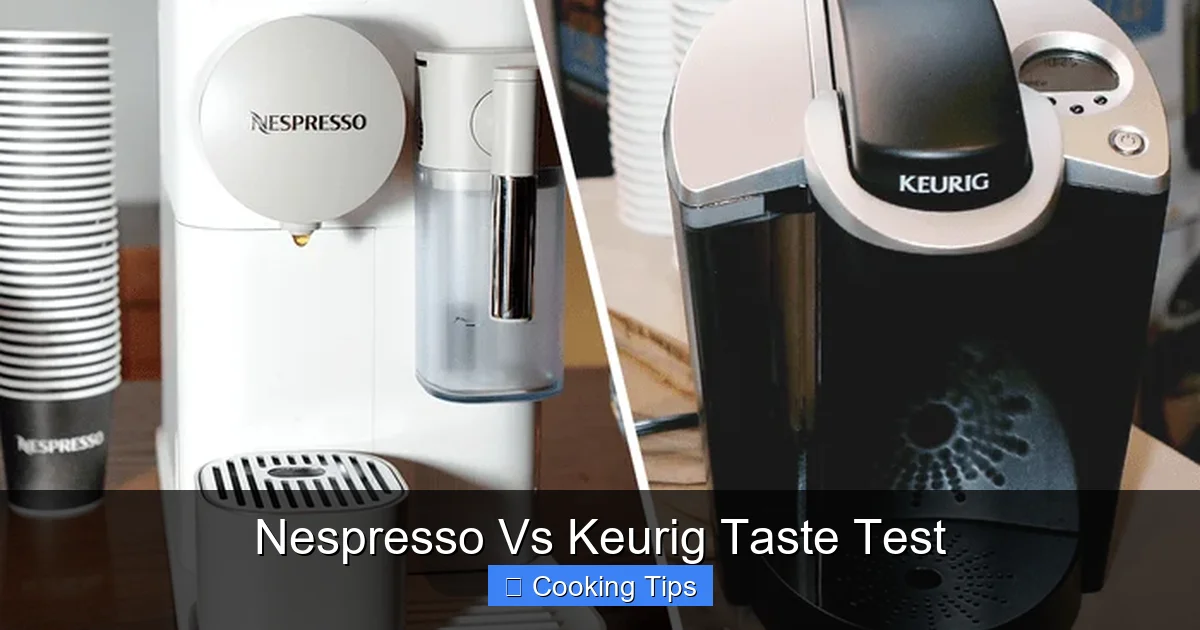
Are you torn between the sophisticated allure of Nespresso and the convenient charm of Keurig? This comprehensive guide walks you through a Nespresso vs Keurig taste test, helping you discover the nuances of each system’s coffee. We’ll explore factors influencing taste, provide a step-by-step tasting process, and help you decide which machine truly delivers your ideal cup.
## Nespresso Vs Keurig Taste Test: Which Coffee Maker Reigns Supreme?
Choosing the right coffee maker can feel like a monumental decision. For many, the debate boils down to two titans of the single-serve world: Nespresso and Keurig. Both offer convenience, but their approach to brewing and the resulting coffee taste are remarkably different. This guide is your ultimate roadmap to conducting your own Nespresso vs Keurig taste test, helping you definitively answer which machine is best for your palate. We’ll dive deep into what makes each system unique and provide you with a structured approach to savoring the subtle (and not-so-subtle) differences. Get ready to become a connoisseur in your own kitchen!
### Understanding the Core Differences: Brewing Technology
Before you even brew your first cup, it’s essential to grasp the fundamental technologies at play. This understanding will illuminate why their tastes diverge so dramatically.
#### Nespresso: The Art of Espresso
Nespresso machines are designed to replicate the experience of traditional espresso. They achieve this through a high-pressure extraction process, forcing hot water through finely ground coffee at around 19 bars of pressure. This high pressure is key to creating the signature thick, velvety crema that tops a Nespresso espresso. The coffee itself is contained within hermetically sealed aluminum capsules, designed to preserve freshness and aroma. Nespresso focuses on a curated selection of coffee blends, often inspired by Italian coffee traditions, and emphasizes a premium, rich coffee experience.
#### Keurig: The King of Convenience and Variety
Keurig machines, on the other hand, operate on a different principle: a simpler, drip-style infusion. Hot water is injected into a K-Cup pod, allowing it to saturate the coffee grounds and drip into your mug. This method is faster and less complex than Nespresso’s high-pressure system. The real strength of Keurig lies in its incredible variety. It boasts hundreds of K-Cup pod options from numerous brands, offering everything from light roasts to dark roasts, flavored coffees, teas, and even hot chocolate. This vast selection makes Keurig a chameleon, adaptable to almost any taste preference and occasion.
### Preparing for Your Taste Test: Setting the Stage for Success
To conduct an effective Nespresso vs Keurig taste test, preparation is key. You want to isolate the variables as much as possible to get a true comparison of the coffee itself.
#### Gathering Your Equipment
You’ll need both a Nespresso machine and a Keurig machine. If you don’t own both, consider borrowing one from a friend or family member, or visiting a store that has both models available for demonstration. You’ll also need the coffee pods or capsules. For a fair comparison, try to select coffees that are aiming for a similar profile if possible. For example, if you’re testing a dark roast from Nespresso, try to find a dark roast K-Cup from Keurig.
* **Nespresso Machine:** Any Nespresso Original or Vertuo machine will work.
* **Keurig Machine:** Any Keurig K-Cup compatible brewer.
* **Coffee Pods/Capsules:** Select at least two comparable coffees for each machine.
* **Water:** Use filtered water for both machines. This removes impurities that can affect taste.
* **Mugs:** Use identical mugs for each tasting to avoid any influence from the mug material or shape.
* **Notepad and Pen:** For taking detailed notes on each coffee.
* **Spoon:** For stirring and tasting.
#### Selecting Your Coffees: The Heart of the Test
The coffee itself is the star of your taste test. Choosing wisely will make all the difference.
* **Nespresso:** Explore the Nespresso boutiques or their website. They offer a wide range of “Grands Crus,” each with distinct flavor profiles. Consider trying a popular blend like Arpeggio (intense, cocoa) or Volluto (sweet, biscuit).
* **Keurig:** The possibilities are almost endless. Look for popular brands like Green Mountain Coffee Roasters, Starbucks, Dunkin’, or Folgers. For a more premium comparison, try K-Cups from roasters that also produce ground coffee.
**Tip:** For the most objective comparison, try to select coffees with similar roast levels (e.g., medium roast vs. medium roast) and flavor profiles if you can find them. If you’re a fan of bold, dark roasts, choose dark roast options for both machines.
### The Step-by-Step Taste Test Protocol
Now for the exciting part – tasting! Follow these steps to ensure a thorough and insightful comparison.
#### Step 1: Brew and Observe
Start by brewing one coffee from each machine.
* **Nespresso:** Insert the capsule, select your brew size (espresso or lungo), and press the button. Watch the coffee flow into your mug. Pay attention to the speed of the extraction and the development of the crema.
* **Keurig:** Insert the K-Cup, select your brew size, and press the button. Observe how the water is injected and how the coffee brews.
**Observation Points:**
* **Appearance:** Note the color of the coffee. For Nespresso, critically assess the crema – its color, thickness, and how long it lasts. For Keurig, observe the clarity and color of the brewed coffee.
* **Aroma (Pre-Tasting):** Before you even take a sip, lean in and smell the coffee. What aromas do you detect? Is it floral, nutty, chocolatey, earthy, or something else? Does one machine’s coffee have a more pronounced or appealing aroma?
#### Step 2: The First Sip – Acidity and Body
Now it’s time to taste. Take a small sip of the first coffee.
* **Acidity:** Is the coffee bright and tangy, or is it smooth and mellow? Acidity is a desirable trait in coffee, often described as a fruity or wine-like sharpness. Too much can make it sour, too little can make it flat.
* **Body:** How does the coffee feel in your mouth? Is it light and watery, or is it full-bodied and rich, coating your tongue? Nespresso is generally known for its fuller body, while Keurig can vary.
#### Step 3: Flavor Exploration
Take another sip, focusing on the taste.
* **Flavor Notes:** What specific flavors can you identify? Use common tasting notes as a guide:
* **Fruity:** Citrus, berry, apple
* **Nutty:** Almond, hazelnut, walnut
* **Chocolatey:** Dark chocolate, milk chocolate, cocoa
* **Spicy:** Cinnamon, clove, pepper
* **Earthy:** Soil, wood
* **Floral:** Jasmine, rose
* **Sweetness:** Does the coffee have a natural sweetness, or does it taste bitter?
* **Balance:** Are the flavors harmonious, or does one element overpower the others?
#### Step 4: The Finish – Aftertaste and Overall Impression
As you swallow, pay attention to the lingering taste.
* **Aftertaste:** What flavors remain on your palate after you’ve swallowed? Is it pleasant and clean, or is it bitter, astringent, or chemical? How long does the aftertaste last?
* **Overall Impression:** Based on all the above, what is your overall feeling about this particular coffee? Did it meet your expectations?
#### Step 5: Repeat and Compare
Rinse your palate with water between each tasting. Then, repeat steps 1-4 with the second coffee from Nespresso, and then the coffees from your Keurig machine. It’s often helpful to taste all the Nespresso coffees first, then all the Keurig coffees, or vice versa. Alternatively, you can taste one Nespresso coffee, then one Keurig coffee, then the next Nespresso, and the next Keurig, to keep them fresh in your mind.
**Crucial Tip:** If you’re tasting multiple coffees from the same machine, try to compare them directly. For example, after tasting Nespresso coffee A, taste Nespresso coffee B and note how it differs in acidity, body, and flavor.
### Analyzing Your Results: Making Sense of the Data
Once you’ve tasted everything, it’s time to review your notes and draw conclusions.
#### Comparing the Nespresso Experience
* **Crema:** Was the crema consistently thick and rich across your Nespresso samples?
* **Intensity:** Did you find the Nespresso coffees to be generally more intense and full-bodied?
* **Flavor Nuance:** Were you able to discern specific, nuanced flavor profiles?
* **Espresso-like Quality:** Did the taste truly evoke an espresso experience?
#### Comparing the Keurig Experience
* **Variety:** How did the different K-Cup brands and roasts compare? Did you find a standout?
* **Convenience vs. Taste:** Did the convenience of Keurig outweigh any perceived compromise in taste compared to Nespresso?
* **Body and Aroma:** Was the body lighter than Nespresso? Was the aroma as complex?
* **Personal Preferences:** Did you find a K-Cup that perfectly matched your ideal cup of coffee, even if it wasn’t an espresso style?
#### Identifying Key Differentiators
Think about the aspects that stood out the most:
* **Pressure:** Did Nespresso’s high-pressure brewing result in a noticeably smoother or more intense flavor?
* **Pod Material:** Did the aluminum Nespresso capsules seem to preserve freshness better than the plastic K-Cups?
* **Coffee Quality:** Was there a discernible difference in the quality of the coffee grounds themselves?
* **Brewing Method:** Ultimately, how did the brewing method (high-pressure vs. drip) impact the final taste?
### Practical Tips for a Better Taste Test
To maximize the insights from your taste test, keep these tips in mind:
* **Consistency is Key:** Ensure you’re using the same amount of water for each brew size on both machines, and the same type of water.
* **Temperature Matters:** While Nespresso machines have fixed temperatures, Keurig models might offer some control. If so, use the same temperature for comparable brews.
* **Avoid Flavored Coffees (Initially):** For your first Nespresso vs Keurig taste test, stick to standard roasts. Flavored coffees can mask the inherent taste of the coffee beans and the brewing system.
* **Take Breaks:** If you’re tasting many coffees, your palate can become fatigued. Take breaks and cleanse your palate with water or a neutral cracker.
* **Tasting Order:** Consider tasting from lightest roast to darkest roast, or from mildest flavor to boldest, to help differentiate.
* **Blind Tasting (Optional but Recommended):** If possible, have someone else prepare and present the coffees without you knowing which is which. This eliminates bias.
### Troubleshooting Common Taste Test Issues
Sometimes, your taste test might not yield clear results. Here are some common issues and how to address them:
* **Coffee Tastes Burnt or Bitter:** This can happen if the water temperature is too high, or if the coffee has been over-extracted. For Nespresso, ensure you’re using the correct capsule. For Keurig, try a smaller brew size. Also, clean your machines regularly; residue can impact taste.
* **Coffee Tastes Weak or Watery:** This might be due to under-extraction or using too much water. Try a larger brew size on Nespresso (lungo) or a smaller brew size on Keurig. Ensure the K-Cup is properly seated in the brewer.
* **No Distinct Flavors:** Some coffees are simply less complex than others. If you’re not tasting much, try more robust roasts or explore specialty coffee brands for both Nespresso and Keurig.
* **Palate Fatigue:** As mentioned, take breaks and cleanse your palate. Tasting too many coffees too quickly will make it hard to discern differences.
### Conclusion: Making Your Choice
After conducting your Nespresso vs Keurig taste test, you’ll likely have a much clearer understanding of your preferences.
* **If you prioritize rich, intense, espresso-style coffee with a beautiful crema and nuanced flavors**, Nespresso will likely be your champion. It’s ideal for those who appreciate the art of espresso and enjoy a curated coffee experience.
* **If you value unparalleled variety, speed, and the ability to cater to diverse tastes within a household**, Keurig is probably the winner. It’s the king of convenience and offers a coffee for every mood and every person.
Ultimately, there’s no single “better” machine. The best coffee maker is the one that consistently delivers the coffee you love, in a way that fits your lifestyle. Your Nespresso vs Keurig taste test has armed you with the knowledge to make that perfect choice. Enjoy your delicious, personalized coffee!
Key Takeaways
- Nespresso excels in espresso-style coffee, offering rich crema and intense flavors due to its high-pressure system.
- Keurig provides unparalleled variety and convenience with its vast selection of K-Cup pods and simple operation.
- The brewing method is a primary differentiator: Nespresso uses high-pressure extraction for espresso, while Keurig uses a drip-style infusion.
- Pod variety and quality significantly impact taste; Nespresso offers premium, Italian-inspired blends, while Keurig boasts a wider range of brands and roasts.
- A personal taste test is crucial, focusing on aroma, acidity, body, flavor notes, and aftertaste for an objective comparison.
- Machine features like temperature control and brew strength can influence the final taste of your coffee.
