


Choosing between a Cuisinart and a Keurig coffee maker can significantly impact your daily coffee experience. This comprehensive guide breaks down the key differences, helping you decide which brand best suits your brewing preferences. From single-serve convenience to drip coffee versatility, we’ll explore the strengths of both to ensure you make an informed decision for your perfect cup.
Cuisinart Vs Keurig Coffee Maker: Which Brews Best for You?
The aroma of freshly brewed coffee is a morning ritual for millions. But when it comes to choosing the right coffee maker, the options can feel overwhelming. Two giants dominate the home coffee scene: Cuisinart and Keurig. Each offers a distinct approach to your daily caffeine fix. Are you a fan of brewing a full pot for the family, or do you prefer a single, perfectly brewed cup just for yourself? This guide will delve deep into the world of Cuisinart and Keurig coffee makers, helping you understand their strengths, weaknesses, and ultimately, which one is the best fit for your kitchen and your coffee habits.
We’ll explore everything from brewing styles and convenience to cost, customization, and environmental impact. By the end of this comparison, you’ll have a clear picture to make an informed decision that will bring you joy with every sip.
Key Takeaways
- Drip Coffee Dominance (Cuisinart): Cuisinart excels in traditional drip coffee makers, offering larger capacities, programmable features, and the ability to brew larger batches, ideal for households or entertaining.
- Single-Serve Simplicity (Keurig): Keurig is the undisputed leader in single-serve coffee, offering unparalleled speed and convenience with K-Cup pods, perfect for individuals or busy mornings.
- Variety of Coffee Options: Keurig boasts an extensive selection of K-Cup flavors and brands, while Cuisinart allows for more customization with your choice of ground coffee beans.
- Brewing Control and Customization: Cuisinart drip machines often provide more control over brew strength, temperature, and timing, appealing to coffee enthusiasts. Keurig prioritizes ease of use and speed over granular control.
- Cost Considerations: While initial appliance costs can vary, Keurig’s reliance on K-Cup pods can lead to higher ongoing expenses compared to using ground coffee with a Cuisinart.
- Environmental Impact: The single-use nature of K-Cup pods raises environmental concerns, whereas Cuisinart drip machines generally produce less waste when using reusable filters.
- Countertop Footprint: Keurig machines are often more compact, making them suitable for smaller kitchens. Cuisinart drip coffee makers can be larger, especially those with multiple carafes or built-in grinders.
Understanding the Core Differences: Drip vs. Single-Serve
The most fundamental distinction between Cuisinart and Keurig lies in their primary brewing method. Cuisinart is renowned for its high-quality drip coffee makers, while Keurig has revolutionized the market with its single-serve pod system.
Cuisinart: The Art of the Drip Brew
Cuisinart’s heritage is deeply rooted in traditional coffee brewing. Their drip coffee makers are designed to produce larger quantities of coffee, making them ideal for households with multiple coffee drinkers or for those who enjoy entertaining. The process typically involves:
- Water Reservoir: You fill a water reservoir with the desired amount of fresh water.
- Coffee Filter and Grounds: You place a paper filter or a reusable filter into the brew basket and add your favorite ground coffee.
- Heating and Dripping: The machine heats the water and allows it to drip over the coffee grounds, extracting the flavor into a carafe below.
Cuisinart machines often come with features like programmability (setting a brew time in advance), adjustable brew strength, and built-in grinders for ultimate freshness. They offer a more hands-on approach for those who appreciate the ritual of making coffee and enjoy controlling various aspects of the brewing process.
Keurig: The Convenience of Single-Serve
Keurig, on the other hand, is synonymous with its K-Cup pod system. This innovation offers unparalleled speed and convenience. The process is incredibly straightforward:
- Water Reservoir: You fill a water reservoir.
- Insert K-Cup: You insert a pre-portioned K-Cup pod containing coffee, tea, or other beverages.
- Select Brew Size: You choose your desired cup size (e.g., 6, 8, or 10 ounces).
- Brew: The machine pierces the pod, heats the water, and brews a single cup directly into your mug in under a minute.
Keurig machines are perfect for individuals or households where everyone has different taste preferences, as each person can select their own K-Cup. The emphasis here is on speed, ease of use, and variety without the need for measuring grounds or cleaning a full carafe after each use.
Key Features and Functionality Compared
Beyond their core brewing methods, Cuisinart and Keurig coffee makers offer a range of features that cater to different user needs. Let’s break down some of the most important ones:
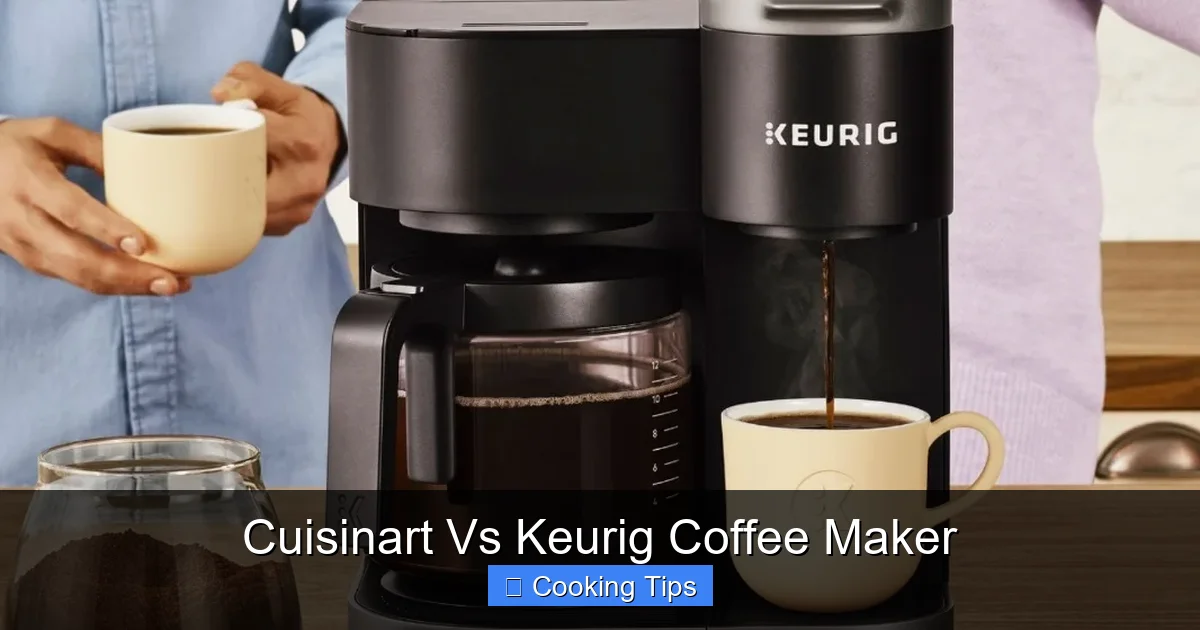
Visual guide about Cuisinart Vs Keurig Coffee Maker
Image source: digitaltrends.com
Brewing Capacity and Batch Size
Cuisinart: Excels in brewing larger batches. Most Cuisinart drip coffee makers come with carafes ranging from 10 to 14 cups. This makes them excellent for families, offices, or when you have guests. Some models even offer thermal carafes to keep coffee hot for extended periods without scorching.
Keurig: Primarily designed for single servings. While some newer Keurig models offer larger brew sizes (up to 12 ounces for a single cup) or multi-cup dispensers, their core strength remains brewing one cup at a time. This means if you need to brew for multiple people simultaneously, it can be time-consuming, requiring multiple brew cycles.
Customization and Control
Cuisinart: Often provides more granular control for coffee enthusiasts. Many Cuisinart models allow you to adjust brew strength (from mild to bold), select brew temperature, and even program the machine to start brewing at a specific time. Some high-end models feature built-in burr grinders for the freshest possible grounds.
Keurig: Focuses on simplicity and consistency. While you can select your brew size and some models offer temperature control, the customization options are generally more limited. The flavor profile is largely determined by the K-Cup pod you choose. This ease of use is a major draw for many.
Coffee Variety and Bean Choice
Cuisinart: Offers ultimate flexibility. With a Cuisinart drip coffee maker, you can use any brand of coffee beans you like, ground to your preferred coarseness. This allows you to explore a vast world of single-origin beans, roasts, and flavor profiles. You’re not limited to pre-packaged options.
Keurig: Relies on K-Cup pods. The variety of K-Cup options is extensive, ranging from major coffee brands like Starbucks and Dunkin’ to specialty roasters and tea companies. There are also reusable K-Cup filters available, allowing you to use your own ground coffee, though this adds an extra step and may not be as seamless as with a drip machine.
Speed and Convenience
Cuisinart: While not as fast as a Keurig for a single cup, a Cuisinart can brew a full pot in about 5-10 minutes, depending on the model and batch size. The convenience lies in brewing a large quantity at once.
Keurig: This is where Keurig truly shines. A single cup of coffee can be brewed in under a minute. This speed is a significant advantage for busy mornings, quick coffee breaks, or when you need a caffeine boost without a long wait.
Cleaning and Maintenance
Cuisinart: Requires regular cleaning of the brew basket, carafe, and water reservoir. Descaling is also necessary periodically to remove mineral buildup. However, cleaning a carafe and filter basket is generally straightforward.
Keurig: Cleaning a Keurig is generally quick for daily use. You’ll need to rinse the drip tray and reservoir. Descaling is also a recommended monthly task. The main cleaning consideration is the K-Cup piercing needle, which can sometimes get clogged.
Cost Considerations: Upfront and Ongoing
When choosing between a Cuisinart and a Keurig, it’s important to consider both the initial purchase price and the long-term cost of ownership.
Initial Appliance Cost
Both Cuisinart and Keurig offer a wide range of models with varying price points. Basic Cuisinart drip coffee makers can be quite affordable, while high-end models with advanced features can be comparable to premium Keurig machines. Similarly, basic Keurig brewers are budget-friendly, but more advanced models with larger reservoirs or specialized features can command a higher price.
Ongoing Coffee Costs
This is where the biggest difference often lies.
Cuisinart: The ongoing cost of using a Cuisinart drip coffee maker is primarily the cost of ground coffee. Buying coffee beans in bulk and grinding them yourself is typically the most economical option. Even pre-ground coffee is generally less expensive per cup than K-Cup pods.
Keurig: The reliance on K-Cup pods means that the cost per cup can add up significantly over time. While K-Cups offer convenience, they are a premium product, and the cost per serving is often higher than brewing your own grounds. Buying K-Cups in bulk can help mitigate this, but it remains a notable ongoing expense for frequent users.
Environmental Impact: A Growing Concern
In today’s environmentally conscious world, the impact of our appliance choices is a significant consideration.
Cuisinart’s Greener Footprint
Cuisinart drip coffee makers are generally more environmentally friendly, especially when used with a reusable coffee filter. This drastically reduces waste compared to single-use coffee pods. Even using paper filters creates less waste than K-Cups.
Keurig and the K-Cup Conundrum
The primary environmental concern with Keurig machines is the sheer volume of K-Cup pods generated. While some K-Cup manufacturers have introduced recyclable or compostable pods, the majority are still made of mixed materials that are difficult to recycle effectively. This has led to significant landfill waste.
Which Coffee Maker is Right for You?
Now that we’ve explored the ins and outs of Cuisinart and Keurig coffee makers, let’s summarize who each brand might be best suited for.
Choose Cuisinart if:
- You regularly brew coffee for more than one person.
- You enjoy experimenting with different coffee beans and brewing methods.
- You prefer more control over brew strength and temperature.
- You are looking for a more cost-effective solution in the long run.
- You are mindful of reducing single-use waste.
- You appreciate the ritual of making a pot of coffee.
Choose Keurig if:
- You primarily drink one cup of coffee at a time.
- Speed and convenience are your top priorities.
- You enjoy having a wide variety of beverages (coffee, tea, hot chocolate) readily available.
- Everyone in your household has different taste preferences.
- You don’t mind the higher cost per cup for the convenience.
- You have limited counter space and prefer a more compact appliance.
Troubleshooting Common Issues
While both Cuisinart and Keurig coffee makers are generally reliable, you might encounter a few common issues. Here’s how to address them:
Cuisinart Drip Coffee Maker Issues:
- Coffee tastes weak: Ensure you’re using enough coffee grounds for the amount of water. Check that the brew basket is seated correctly and the water is reaching the grounds properly.
- Machine is slow to brew: This could be due to mineral buildup. Perform a descaling cycle.
- Coffee overflows the filter: You might be using too fine a grind, too much coffee, or the filter might be clogged. Ensure the filter is seated correctly.
Keurig Single-Serve Issues:
- Coffee is not brewing: Check that the water reservoir is full and properly seated. Ensure a K-Cup pod is inserted correctly and the lid is fully closed.
- Weak or watery coffee: Try a different K-Cup pod, as some can produce weaker brews. Ensure you’ve selected the correct brew size.
- Machine is making strange noises: This could indicate a clog in the water line or the piercing needle. Descale the machine.
- Error messages: Consult your Keurig’s user manual for specific error code explanations.
Regular cleaning and descaling are the best ways to prevent most common problems for both brands.
Conclusion: Your Perfect Brew Awaits
The Cuisinart versus Keurig debate isn’t about which brand is definitively “better,” but rather which one aligns more closely with your personal coffee-drinking habits and preferences. Cuisinart offers the traditionalist a pathway to crafting a perfect pot with control and flexibility, using your favorite coffee beans.
On the other hand, Keurig provides an unmatched level of speed and convenience, making a single cup of coffee accessible at the touch of a button, with an almost endless array of beverage options. Consider your household size, your desire for customization, your budget, and your commitment to environmental impact. By carefully weighing these factors, you can confidently choose the coffee maker that will deliver your perfect brew, day after day.
