


This guide dives deep into the nuances of French press and Keurig coffee taste. We’ll explore how each brewing method impacts flavor, body, and aroma, empowering you to make an informed choice. Discover the full-bodied richness of French press versus the convenient consistency of Keurig.
French Press Vs Keurig Taste
Are you a coffee lover always on the hunt for the perfect cup? You’ve probably noticed there are countless ways to brew your favorite beverage. Two popular contenders are the classic French press and the modern Keurig single-serve brewer. While both get the job done, they offer vastly different coffee experiences, especially when it comes to taste. So, what’s the real difference between French press vs Keurig taste? Let’s dive in and find out!
This guide will break down the science behind each brewing method and how it impacts the final flavor in your mug. We’ll explore everything from the oils and sediment in your coffee to the convenience and customization each machine offers. By the end, you’ll have a clear understanding of which brewing method aligns best with your taste preferences and lifestyle. Get ready to become a coffee connoisseur!
Key Takeaways
- Full Immersion vs. Drip Filtration: The core difference in taste stems from French press’s full immersion brewing, allowing more oils and micro-grounds into the cup, versus Keurig’s drip filtration, which removes them.
- Flavor Nuance and Complexity: French press coffee typically showcases a wider range of subtle flavor notes and a richer, more complex taste profile due to the presence of natural coffee oils.
- Body and Mouthfeel: French press coffee is characterized by a heavier, more viscous body and a fuller mouthfeel, while Keurig coffee tends to be lighter and cleaner on the palate.
- Consistency and Convenience: Keurig excels in delivering consistent results with minimal effort and cleanup, making it ideal for busy individuals seeking a quick, reliable cup.
- Control and Customization: French press offers far greater control over brewing variables like water temperature, grind size, and steep time, allowing for personalized taste profiles.
- Environmental Impact and Cost: While Keurig pods can be convenient, they generate significant waste. French press is a more sustainable and potentially cost-effective long-term solution.
Understanding the Brewing Methods
The taste of your coffee is fundamentally shaped by how it’s brewed. The French press and the Keurig, while both making coffee, operate on entirely different principles. Understanding these core differences is the first step to appreciating their unique flavor profiles.
The French Press: Full Immersion Brewing
The French press, a long-standing favorite among coffee enthusiasts, relies on a method called “full immersion.” This means the coffee grounds steep directly in hot water for a set period. Think of it like making a really robust tea. The grounds and water are together, mingling and sharing all their flavors.
Here’s how it works:
- Coarsely ground coffee is placed in the bottom of the glass carafe.
- Hot water (just off the boil) is poured over the grounds.
- The mixture is left to steep for about 4 minutes.
- A metal mesh filter is then slowly pressed down, separating the grounds from the brewed coffee.
The key here is that the metal filter allows many of the coffee’s natural oils and very fine particles, often called “fines,” to pass through into the final cup. These oils are packed with aroma and flavor compounds that contribute significantly to the coffee’s character. The fines, while sometimes contributing to a slight “muddy” texture, can also enhance the perceived body and richness of the coffee.
The Keurig: Drip and Filtration
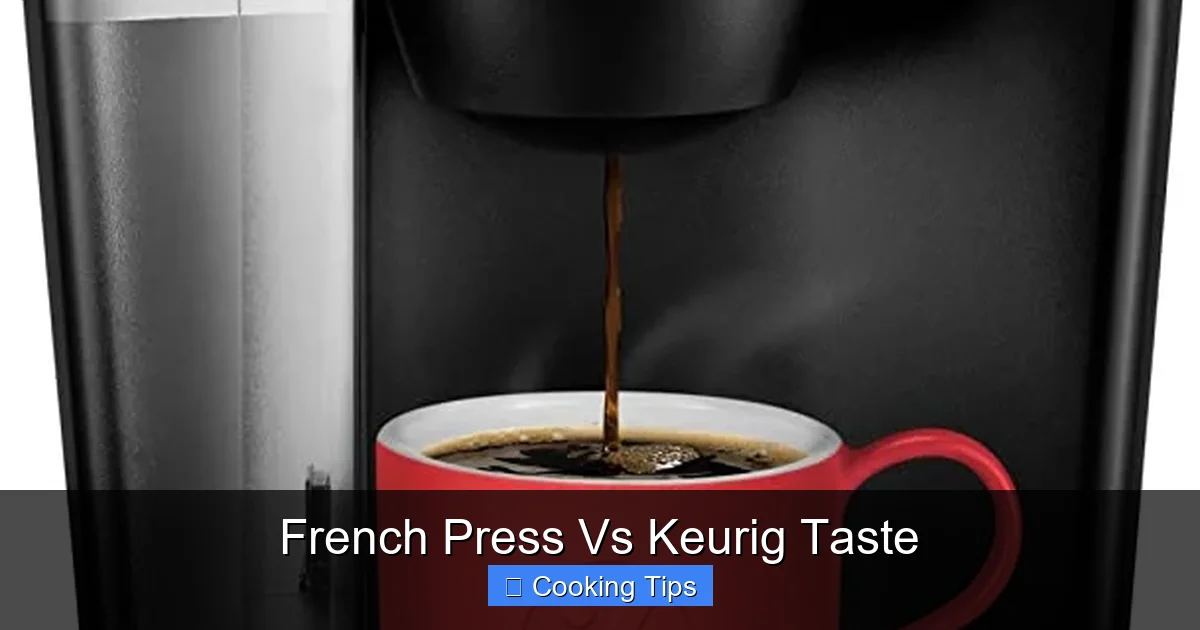
The Keurig, on the other hand, is a single-serve drip coffee maker. It uses pre-packaged coffee pods, often called K-Cups. When you insert a pod and press a button, the machine heats water and forces it under pressure through the pod and then through a fine filter (usually paper or a plastic mesh) directly into your mug.
Here’s a simplified look at the Keurig process:
- You select your desired brew size.
- The machine punctures the K-Cup.
- Hot water is injected into the pod.
- The brewed coffee drips through a filter into your cup.
The critical difference here is the filtration. The Keurig’s system is designed to capture most of the coffee oils and fines. This results in a much cleaner, brighter cup of coffee with a lighter body. The emphasis is on clarity of flavor and avoiding any sediment.
Taste Profile: French Press vs. Keurig
Now that we understand the “how,” let’s talk about the “what” – the taste! The differences in brewing methods directly translate into distinct flavor profiles.

Visual guide about French Press Vs Keurig Taste
Image source: cornercoffeestore.com
French Press: Richness, Body, and Nuance
Because the French press allows coffee oils and some fines into the cup, the resulting coffee is typically:
- Full-bodied: It has a heavier, more viscous texture on your tongue. Think of it as having more “weight.”
- Rich and complex: The presence of oils carries a wider spectrum of flavor compounds. You might detect more subtle notes like floral, fruity, or chocolatey undertones that might be lost in a more filtered brew.
- Mellow and rounded: The oils can also contribute to a smoother, less acidic-tasting cup.
- Aromatic: The volatile oils that create aroma are better preserved, leading to a more fragrant experience even before you take a sip.
Imagine biting into a rich, dark chocolate bar compared to sipping a light fruit juice. The French press is akin to the chocolate – dense, flavorful, and satisfying. It’s the choice for those who appreciate a robust, textured coffee that showcases the bean’s inherent qualities.
Keurig: Clean, Bright, and Consistent
The Keurig’s filtration system leads to a different tasting experience:
- Lighter body: The coffee will feel less heavy and more delicate in your mouth.
- Cleaner and brighter: With fewer oils and fines, the flavors can be perceived as sharper and more distinct. This can highlight the acidity of certain beans.
- Less complex, more straightforward: While you’ll still taste the coffee, some of the subtler, richer nuances might be less apparent. The focus is often on delivering a good, predictable coffee flavor.
- Less aromatic: While still pleasant, the aroma might not be as intense or layered as a French press brew.
The Keurig experience is more like a perfectly brewed cup of black tea – clean, refreshing, and easy to drink. It’s excellent for those who prefer a consistent, no-fuss cup that highlights the primary flavor notes of the coffee without overwhelming the palate.
Key Factors Influencing Taste
Beyond the brewing method itself, several other factors play a crucial role in the taste of your French press or Keurig coffee. Understanding these can help you optimize your brew for the best possible flavor.
Visual guide about French Press Vs Keurig Taste
Image source: cdn1.homewaresinsider.com
Coffee Beans and Roast Level
This is arguably the most important factor, regardless of your brewing method. The origin, varietal, and roast level of your coffee beans will dictate the inherent flavors.
- Light roasts tend to have more acidity, floral notes, and fruity undertones.
- Medium roasts offer a balance of acidity and body, often with caramel or nutty flavors.
- Dark roasts are typically less acidic, with bolder, chocolatey, or smoky notes.
A French press is excellent for highlighting the unique characteristics of single-origin beans or lighter roasts, where subtle flavors can shine. A Keurig can deliver a pleasant cup with any roast, but might be particularly good for medium to dark roasts where consistency is key, and you’re looking for that reliable, comforting coffee flavor.
Grind Size
Grind size is critical for both methods, but the requirements are opposite.
- French press: Requires a coarse grind. If the grind is too fine, it will pass through the metal filter, resulting in a muddy, over-extracted, and bitter cup.
- Keurig: Uses pre-ground coffee in pods. The grind is usually medium-fine, optimized for drip brewing. If you were to try and use your own grounds in a reusable Keurig pod, a grind that is too coarse won’t allow enough water to pass through for proper extraction, while a grind that is too fine could clog the system and lead to an over-extracted, bitter brew.
Practical Tip: For French press, aim for a grind size that resembles coarse sea salt. For Keurig, if using reusable pods, start with a medium grind and adjust.
Water Temperature
Water temperature significantly impacts extraction. Water that is too hot can scorch the coffee grounds, leading to bitterness. Water that is too cool will result in under-extraction, making the coffee taste weak and sour.
- Ideal for French press: Around 195-205°F (90-96°C). Let boiling water sit for about 30-60 seconds before pouring.
- Keurig: The machine automatically heats the water to an optimal temperature, which is one of its conveniences.
Practical Tip: If you don’t have a thermometer, for French press, bring your water to a boil, then let it sit for about a minute before pouring.
Brew Time (Steep Time for French Press)
This is where the French press offers a lot of user control, while the Keurig is automated.
- French press: A typical steep time is 4 minutes. Adjusting this can significantly change the taste. Shorter times might lead to a weaker, sourer cup, while longer times can result in bitterness and over-extraction.
- Keurig: The brew time is fixed by the machine and the pod. You can often choose between different brew sizes (e.g., 6 oz, 8 oz, 10 oz), which slightly alters the water-to-coffee ratio and thus the concentration.
Practical Tip: Experiment with steeping times for your French press. Start with 4 minutes and then try 3.5 minutes or 4.5 minutes to see how it affects the flavor.
Convenience vs. Craftsmanship
When comparing French press vs Keurig taste, we also have to consider the user experience and what each brewing method prioritizes: convenience or craftsmanship.

Visual guide about French Press Vs Keurig Taste
Image source: littlecoffeeplace.com
The Keurig: Speed and Simplicity
The Keurig is a champion of convenience. Its allure lies in its:
- Speed: A fresh cup of coffee in under a minute.
- Ease of use: Insert pod, press button, done.
- Minimal cleanup: Dispose of the pod and rinse the drip tray.
- Variety: Access to hundreds of different coffee brands, teas, and hot chocolates.
This makes the Keurig ideal for busy mornings, office settings, or households where everyone has different taste preferences and wants their coffee made quickly without fuss.
The French Press: Ritual and Control
The French press, while requiring a little more effort, offers a more involved and rewarding experience for those who enjoy the process of making coffee.
- Control: You have agency over every variable – grind size, water temperature, and steep time.
- Ritual: The act of measuring beans, grinding them, pouring water, and pressing the plunger can be a meditative morning routine.
- Cost-effectiveness: Buying whole beans and grinding them yourself is often cheaper in the long run than buying pods.
- Sustainability: No single-use plastic pods are involved.
This is for the coffee enthusiast who appreciates the journey of crafting a cup and enjoys the ability to fine-tune their brew to perfection. It’s about the experience as much as the final taste.
Troubleshooting Taste Issues
Even with the best intentions, sometimes your coffee might not taste as expected. Here are common issues and how to fix them:
French Press Problems
- Too Bitter/Harsh:
- Grind size too fine (allow more fines into the cup).
- Steep time too long.
- Water too hot.
- Using stale or low-quality beans.
- Too Weak/Sour:
- Grind size too coarse (under-extraction).
- Steep time too short.
- Water not hot enough.
- Not enough coffee grounds.
- Muddy Texture:
- Grind size too fine.
- Filter needs cleaning or is damaged.
Keurig Problems
With a Keurig, taste issues are often related to the pods or maintenance:
- Bitter or Burnt Taste:
- Machine needs descaling (mineral buildup can affect water temperature and flow).
- Pod might be faulty or expired.
- Using a dark roast when you prefer lighter.
- Weak or Watery Taste:
- Using a larger brew size than intended for the pod.
- Pod might be faulty or not properly seated.
- Machine needs cleaning (clogged needle).
- Chemical or Plastic Taste:
- New machine might need initial rinses.
- Pods might be low quality or past their expiration date.
Practical Tip: For Keurig machines, regular descaling and cleaning are essential for consistent taste. Follow the manufacturer’s instructions for maintenance.
Which is Right for You?
The “better” brewing method is entirely subjective and depends on your priorities. If you’re asking about French press vs Keurig taste:
Choose French Press if:
- You crave a rich, full-bodied coffee with complex flavors.
- You enjoy the ritual of brewing and want control over the process.
- You are looking for a more sustainable and potentially cost-effective brewing method.
- You appreciate the nuance of coffee beans and want to explore their subtle notes.
Choose Keurig if:
- Convenience and speed are your top priorities.
- You want a consistent, reliable cup of coffee every single time with minimal effort.
- You enjoy variety and want to easily switch between different coffee brands, teas, or even hot cocoa.
- You live alone or have a household with diverse coffee preferences.
Conclusion
The debate between French press vs Keurig taste ultimately boils down to a trade-off between flavor complexity and sheer convenience. The French press, with its full immersion brewing and minimal filtration, delivers a robust, aromatic, and full-bodied cup that truly showcases the character of the coffee bean. It appeals to those who savor the brewing process and appreciate a deep, nuanced flavor profile. On the other hand, the Keurig offers unparalleled speed and simplicity, providing a consistently clean and bright cup that’s perfect for busy mornings or when you need a quick caffeine fix without any fuss. Neither is inherently superior; they simply cater to different needs and preferences. By understanding the brewing methods and the factors that influence taste, you can confidently choose the machine that will best satisfy your personal coffee cravings and fit seamlessly into your lifestyle.
