

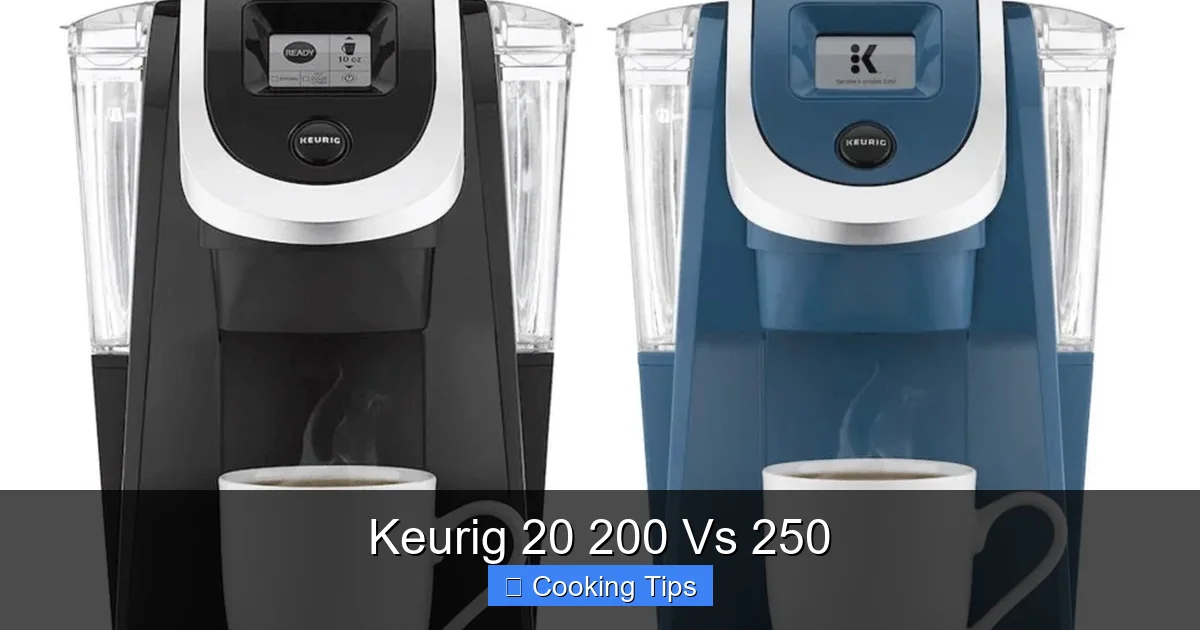
Confused between the Keurig 200 and 250 models? This guide breaks down the key differences in features, performance, and value. Learn which Keurig coffee maker best suits your brewing needs and budget, helping you make an informed decision for your perfect cup.
Welcome to your ultimate guide to understanding the differences between the Keurig 200 and Keurig 250 coffee makers. If you’re in the market for a new Keurig and have found yourself comparing these two popular models, you’re not alone. Often, distinguishing between seemingly similar products can be a challenge, especially when manufacturers release updated versions or offer different retail bundles. This guide is designed to demystify the Keurig 200 vs 250 comparison. We’ll dive deep into their features, functionalities, design nuances, and overall value to help you make the best choice for your home brewing experience.
Keurig has revolutionized home coffee brewing with its single-serve system. The convenience of popping in a K-Cup pod and having a fresh cup of coffee, tea, or hot chocolate in minutes is undeniable. However, navigating the different models can sometimes feel like a maze. Let’s simplify this by focusing on the Keurig 200 and 250. You’ll learn what sets them apart, what they have in common, and how to determine which one is the perfect fit for your kitchen and your coffee-drinking habits.
Key Takeaways
- Model Identification: The Keurig 200 and 250 are often part of the same product line, with the 250 typically being a later iteration or a slightly updated version with minor improvements.
- Core Functionality: Both models share the fundamental Keurig single-serve brewing system, offering convenience and a variety of beverage options.
- Design and Aesthetics: While similar, there might be subtle variations in physical design, color options, and the materials used, impacting how they fit into your kitchen décor.
- Brewing Features: Key brewing features like brew size options, strength control, and temperature settings are generally consistent, though slight enhancements might be present in the 250.
- Water Reservoir: The capacity and ease of access to the water reservoir are crucial for convenience, and differences, if any, can significantly affect daily use.
- Price and Value: Understanding the price point and the value proposition of each model is essential for making a cost-effective purchase that meets your expectations.
- Target Audience: Consider who each model is best suited for – whether it’s a single user, a small family, or someone who entertains frequently.
Understanding Keurig Model Naming Conventions
Before we get into the specifics of the 200 and 250, it’s helpful to understand how Keurig often names its machines. Keurig’s product lines often follow a numerical progression. For instance, models ending in 00 or 50 within a series might indicate slight variations or updates. Sometimes, the difference is a cosmetic update, a slightly larger water reservoir, or a minor enhancement in brewing technology. Other times, a higher number might signify a more premium feature set. For the 200 and 250, the distinctions are typically subtle, making this comparison all the more important.
Keurig 200 vs. 250: A Feature-by-Feature Breakdown
Let’s get down to the brass tacks. We’ll compare the Keurig 200 and 250 across key areas that matter to home coffee drinkers.
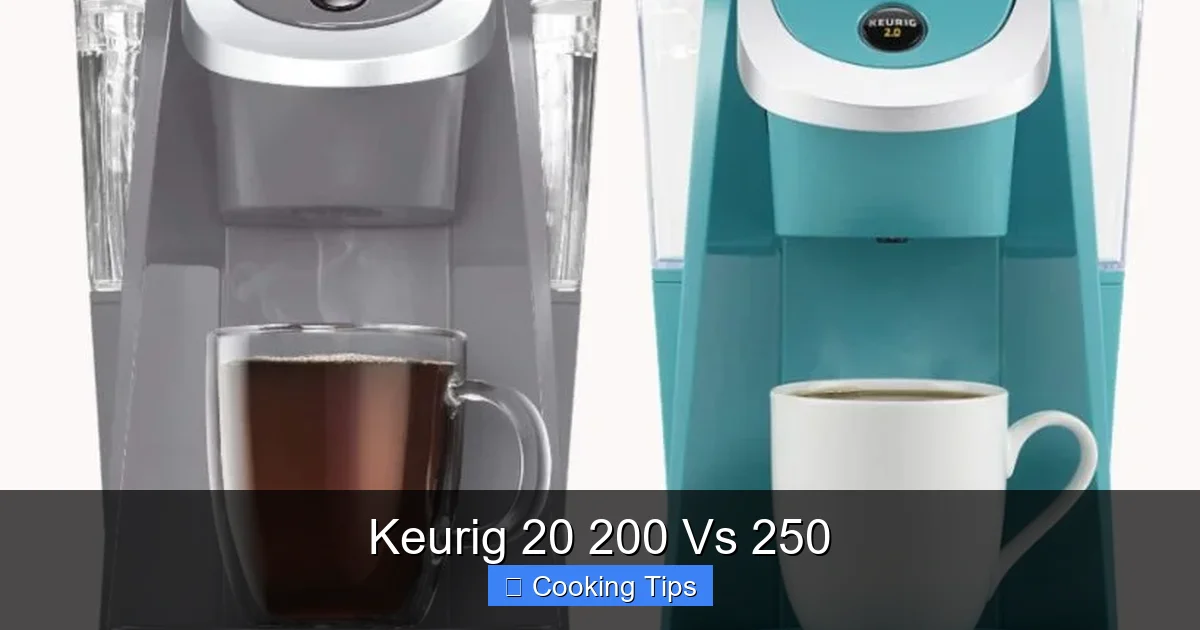
Visual guide about Keurig 20 200 Vs 250
Image source: sarahscoopeats.com
Brewing Capabilities
At their core, both the Keurig 200 and Keurig 250 are designed for single-serve brewing. They both utilize K-Cup pods, offering a wide array of flavors and brands. The fundamental brewing process remains consistent.
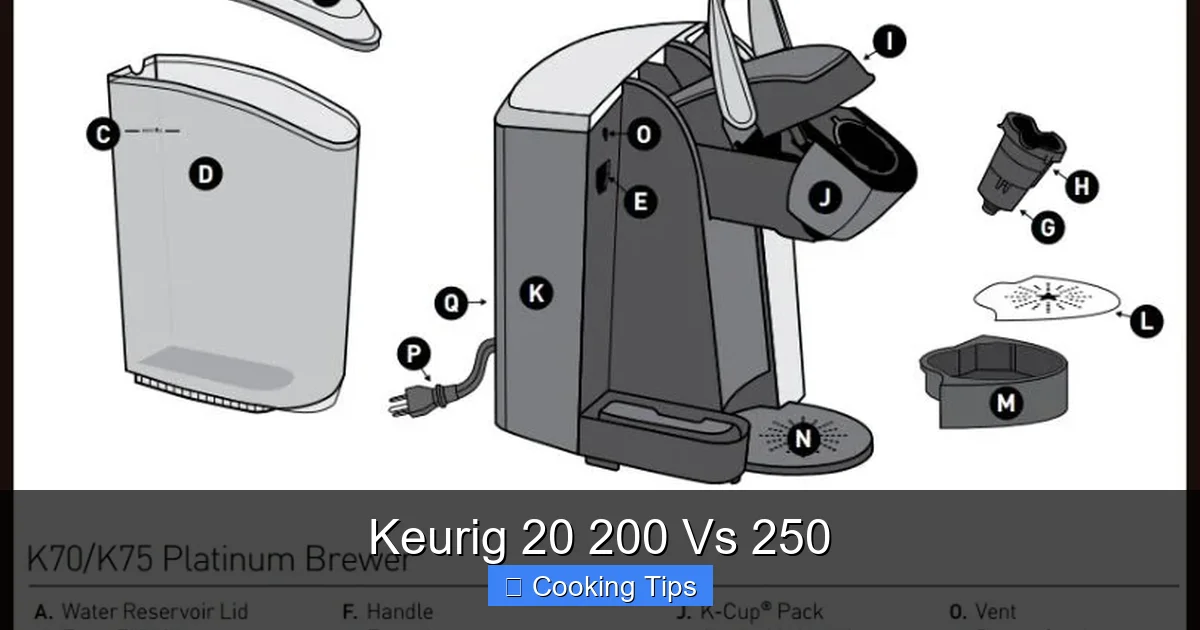
Visual guide about Keurig 20 200 Vs 250
Image source: i.pinimg.com
Brew Size Options
One of the most practical aspects of a Keurig machine is the ability to choose your brew size. This allows you to tailor your coffee strength and volume to your preference. You’ll typically find that both the Keurig 200 and 250 offer a standard set of brew sizes, usually ranging from 6 oz to 10 oz, and sometimes up to 12 oz depending on the specific sub-model or bundle. This is ample for most users. The goal is to provide a customizable cup every time.
Brew Strength and Temperature
Some Keurig models offer strength control, allowing you to brew a bolder cup by slowing down the water flow. Similarly, temperature control can be a sought-after feature. While both the 200 and 250 aim to provide a satisfying brew, the presence and ease of use of these specific controls can vary. Typically, these more advanced features might be more prevalent in higher-numbered or later-generation models. It’s important to check the specific product specifications for the exact model you are considering, as these features aren’t always standard across all variations.
Design and Construction
The physical appearance and build quality of your coffee maker are important considerations for your kitchen counter.
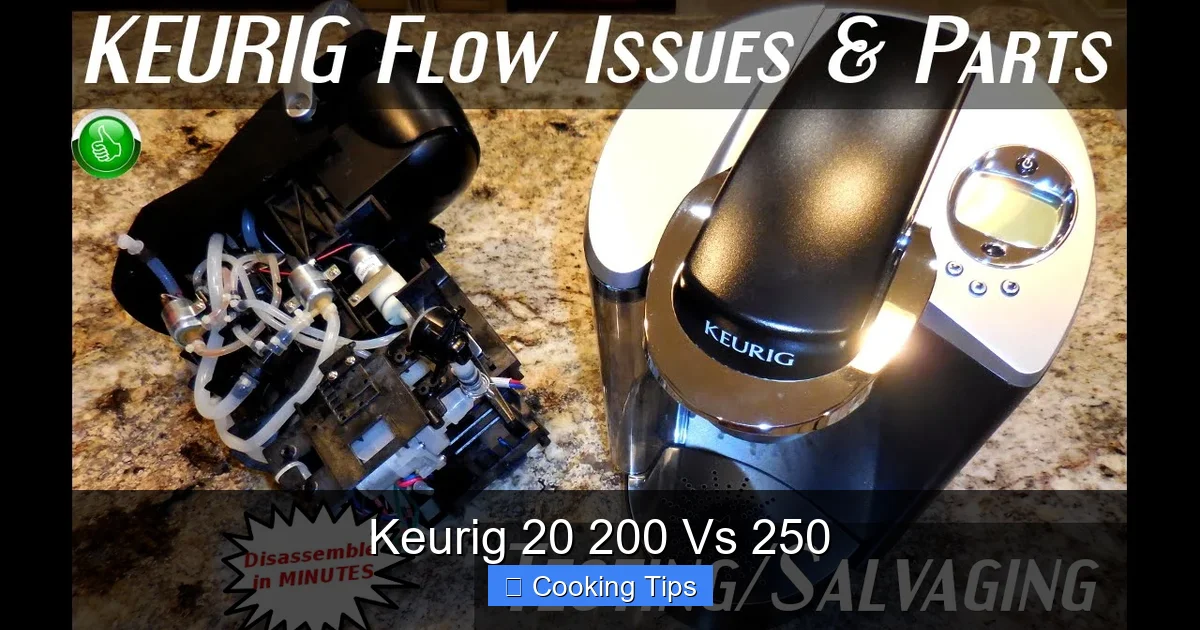
Visual guide about Keurig 20 200 Vs 250
Image source: i.ytimg.com
Aesthetics and Color Options
Keurig often offers its machines in various color options to match different kitchen decors. The Keurig 200 and 250 might share a similar overall silhouette, but subtle differences in the finish, the types of plastic used, or the arrangement of buttons could be present. For example, one might have a matte finish while the other is glossy, or one might come in classic black and silver, while the other offers a bolder color choice like red or blue. The Keurig 250, as a potentially later iteration, might boast a slightly more refined or modern aesthetic.
Build Quality and Materials
Both machines are generally built with durable plastics. However, there might be slight variations in the perceived quality of the materials or the sturdiness of components like the drip tray or the K-Cup holder. It’s hard to definitively say without holding both machines, but often, incremental upgrades in newer models aim to enhance the user experience through better materials or a more robust design. Look for user reviews that comment on the build quality if this is a primary concern.
Water Reservoir
The water reservoir is a critical component for convenience. Its capacity determines how often you’ll need to refill it.
Capacity and Refill Frequency
This is one area where you might see a noticeable difference. Keurig machines often come with reservoirs ranging from 40 oz to 70 oz or more. A larger reservoir means you can brew multiple cups before needing to add more water, which is a significant convenience, especially for households that drink a lot of coffee or for busy mornings. The Keurig 250, being a potentially newer or slightly more advanced model, might feature a larger water reservoir than the Keurig 200, or it might offer a more easily removable and accessible reservoir design.
Ease of Access and Cleaning
Beyond capacity, consider how easy it is to remove, fill, and clean the water reservoir. Some reservoirs are top-loading, while others are rear-mounted and fully detachable. A detachable reservoir is generally easier to fill at the sink and clean thoroughly. This is a practical feature that can greatly improve your daily interaction with the machine.
User Interface and Controls
How you interact with your coffee maker is key to a seamless experience.
Button Layout and Display
Both models will likely feature simple button controls for brewing. You’ll typically find buttons for power, brew size selection, and perhaps a brew button. The presence of an LCD display can enhance usability, providing clear feedback on brewing status, water temperature, and maintenance alerts. The Keurig 250 might have a more intuitive or visually appealing display compared to the Keurig 200, or vice versa depending on the specific design choices made by Keurig.
Ease of Operation
Ultimately, both machines are designed for ease of use. You insert a K-Cup, select your brew size, and press brew. However, subtle differences in button responsiveness, indicator lights, or the clarity of instructions on the interface can make one machine feel slightly more user-friendly than the other.
Maintenance and Descaling
All coffee makers require regular maintenance to ensure optimal performance and longevity. Keurig machines are no exception. Regular descaling is crucial to remove mineral buildup.
Descaling Alerts
Some Keurig models are equipped with a descaling indicator light that alerts you when it’s time to descale. This is a very helpful feature that takes the guesswork out of maintenance. It’s worth checking if this feature is present on the specific Keurig 200 and 250 models you’re comparing. If one model has it and the other doesn’t, it can be a significant deciding factor for those who appreciate proactive maintenance reminders.
Cleaning Procedures
Both machines will have similar basic cleaning procedures: wiping down the exterior, cleaning the drip tray, and descaling. However, the ease of disassembling certain parts for cleaning might differ slightly. For example, a removable drip tray is standard, but access to other internal parts for cleaning might vary.
Price and Value Proposition
When making a purchasing decision, price is often a major factor.
Cost Comparison
Generally, the Keurig 200 and 250 will fall into a similar price bracket. However, the Keurig 250, being potentially a newer or slightly more refined model, might command a slightly higher price. Conversely, the Keurig 200 might be available at a more budget-friendly price point, especially if it’s an older model or part of a promotional sale. It’s always advisable to compare current prices from various retailers.
What You Get for Your Money
Consider the features that come with each model for its price. If the Keurig 250 offers a larger water reservoir, a more advanced display, or a slightly more durable build for a modest price increase, it might represent better long-term value. If the Keurig 200 has all the essential brewing functionalities you need at a lower cost, it might be the more sensible choice for budget-conscious buyers.
So, Keurig 200 vs. 250: Which One is Right for You?
The choice between the Keurig 200 and Keurig 250 often comes down to subtle differences and personal priorities. Here’s a simplified way to decide:
Choose the Keurig 200 if:
- You are looking for a reliable, no-frills single-serve coffee maker and a lower price point is a priority.
- You don’t need the absolute latest features and are content with standard brew sizes and basic operation.
- You have a smaller household or don’t brew coffee as frequently, so a smaller water reservoir isn’t an issue.
- You found a particularly good deal on the Keurig 200 and it meets all your essential needs.
Choose the Keurig 250 if:
- You are willing to spend a little more for potentially minor upgrades in design, build quality, or features.
- A larger water reservoir is important for your household’s coffee consumption.
- You appreciate a slightly more modern aesthetic or user interface.
- You are buying a newer model and want the latest iteration available within that product tier.
- You want to maximize convenience with features like a descaling indicator if present.
In many cases, the difference between the Keurig 200 and 250 is not groundbreaking. They are both capable single-serve coffee makers. The “250” often represents an incremental improvement or a slightly different package offered by retailers. Always check the specific model number and its listed features on the product packaging or the retailer’s website to ensure you are getting exactly what you expect.
Troubleshooting Common Keurig Issues
While the Keurig 200 and 250 are generally reliable, you might encounter common issues. Here are a few tips:
Machine Not Brewing
Possible Cause: Water reservoir is empty or not seated correctly. Power cord is not plugged in. Brew button not pressed firmly.
Solution: Ensure the reservoir is full and properly clicked into place. Check the power connection. Try pressing the brew button again with a bit more pressure.
Coffee Tastes Weak or Watery
Possible Cause: Wrong brew size selected. K-Cup pod is not punctured properly. Machine needs descaling.
Solution: Select a smaller brew size for a stronger taste. Ensure the K-Cup is seated correctly and the machine has punctured it. Perform a descaling cycle according to the manufacturer’s instructions.
Machine is Leaking
Possible Cause: Drip tray is full. K-Cup holder is clogged or damaged. Water reservoir seals are compromised.
Solution: Empty and clean the drip tray. Inspect the K-Cup holder for blockages or damage. Check the seals on the water reservoir and ensure it’s properly fitted.
Descaling Issues
Possible Cause: Descaling solution not used correctly. Machine needs multiple rinses after descaling.
Solution: Follow the descaling instructions precisely. After the descaling cycle, run at least 8-10 full water brews to rinse out any remaining solution.
Conclusion
When comparing the Keurig 200 and 250, remember that the differences are often subtle. Both models provide the signature Keurig convenience of single-serve brewing. The Keurig 250 might offer slight advantages in terms of water reservoir capacity, updated aesthetics, or a more refined user interface, often at a slightly higher price point. The Keurig 200 remains a solid choice for those seeking a functional and affordable entry into the Keurig ecosystem.
Your final decision should hinge on your personal preferences, budget, and how you plan to use the machine. Read specific product reviews for the exact models you’re considering, as retail bundles can sometimes include extra K-Cups or accessories that influence the overall value. Whichever you choose, a Keurig coffee maker is designed to bring simplicity and delicious beverages to your daily routine.
