

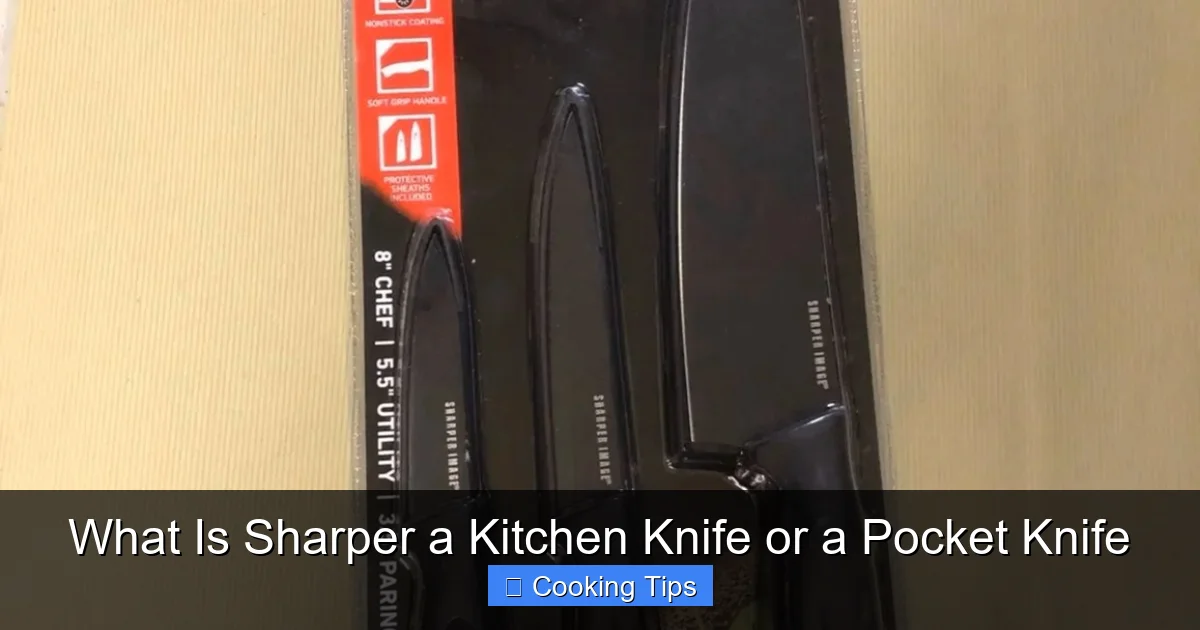
This guide delves into the question: “What is sharper, a kitchen knife or a pocket knife?” We’ll explore the factors influencing sharpness, including blade geometry, steel composition, and intended use. Ultimately, you’ll learn that both can be incredibly sharp, but their designs cater to different tasks, impacting their perceived sharpness and how they are maintained. Understanding these differences empowers you to choose and care for the right knife for any job.
What Is Sharper a Kitchen Knife or a Pocket Knife
Welcome to the world of sharp edges! It’s a question many of us ponder, perhaps while effortlessly slicing through a ripe tomato or struggling to open a stubborn package: what’s actually sharper, a kitchen knife or a pocket knife? It’s not as simple as one being definitively superior to the other. The truth is, both kitchen knives and pocket knives can be incredibly sharp, but their designs, materials, and intended uses lead to different types of sharpness and performance.
In this comprehensive guide, we’ll cut through the confusion and explore what makes a knife sharp. We’ll dive into the anatomy of a blade, the science behind different steels, and how the way a knife is meant to be used influences its cutting edge. By the end, you’ll have a clear understanding of the factors that contribute to sharpness in both your culinary tools and your everyday carry companions, and you’ll know how to keep them performing at their best.
- Blade Geometry Matters: The angle and shape of a knife’s edge significantly impact its sharpness and cutting ability.
- Steel Type Influences Edge Retention: Different steel alloys offer varying degrees of hardness, toughness, and corrosion resistance, affecting how long a knife stays sharp.
- Intended Use Dictates Design: Kitchen knives are designed for precise slicing and chopping, while pocket knives prioritize durability and utility for everyday tasks.
- Maintenance is Crucial for Both: Regular sharpening and honing are essential for maintaining the sharpness of any knife, regardless of its type.
- Perceived Sharpness Varies: A knife that feels “sharper” might have a finer edge for delicate tasks, while another might excel at tougher cutting jobs.
- There’s No Universal Winner: The sharpest knife depends on the specific knife, its maintenance, and the task at hand.
Understanding Knife Sharpness: Beyond Just “Sharp”
Before we pit kitchen knives against pocket knives, let’s define what “sharpness” really means in the context of a blade. It’s not just about how easily it can pierce. True sharpness is about the ability to slice cleanly with minimal force. This relies on two primary factors: the sharpness of the edge itself and the overall geometry of the blade.
Edge Geometry: The Angle of Attack
The edge of a knife is the very apex where the two bevels (the sloped surfaces that form the edge) meet. The angle of this apex is critical. A finer, more acute angle will generally feel sharper and slice more easily through softer materials. Think of a razor blade – its edge is incredibly thin and angled for precise cutting.
- Acute Angles (e.g., 10-15 degrees per side): These edges are very sharp and excel at slicing through delicate materials like fruits, vegetables, and paper. However, they are more prone to chipping or rolling if used on harder materials or with twisting motions.
- Obtuse Angles (e.g., 20-25 degrees per side): These edges are more robust and durable. They are better suited for tasks that involve more force, chopping, or cutting through tougher materials. They might not feel as “razor-sharp” for slicing but are more forgiving in everyday use.
Kitchen knives, especially those designed for slicing like chef’s knives or paring knives, often feature more acute edge angles to facilitate clean cuts through food. Pocket knives, on the other hand, might have slightly more obtuse angles to withstand the rigors of everyday tasks like opening boxes, cutting cord, or light prying.
Blade Geometry: The Overall Shape
Beyond the very edge, the overall shape of the blade also plays a role. A thin, highly polished blade can glide through materials more easily, contributing to a perception of sharpness. A thicker blade, while potentially more robust, might require more force to cut through the same material.
The Heart of the Blade: Steel Types
The material a knife is made from is arguably the most significant factor in its ability to hold an edge. Different types of steel have varying properties that affect their hardness, toughness, and corrosion resistance. This directly impacts how sharp a knife can become and how long it stays that way.

Visual guide about What Is Sharper a Kitchen Knife or a Pocket Knife
Image source: lh3.googleusercontent.com
What Makes Steel “Good” for Knives?
When we talk about steel for knives, we’re usually referring to “high-carbon” or “stainless” steel alloys. The key elements that contribute to a knife’s performance are:
- Carbon: Higher carbon content generally leads to harder steel, which can be sharpened to a finer edge and holds that edge longer.
- Chromium: Added for corrosion resistance, making the steel “stainless.”
- Vanadium, Molybdenum, Tungsten: These alloying elements improve toughness, wear resistance, and the ability to hold a fine edge.
Common Steels in Kitchen Knives
Kitchen knives are often made from stainless steels that balance sharpness, ease of maintenance, and corrosion resistance. You’ll find a wide range:
- Japanese Steels (e.g., VG-10, AUS-8, SG2): These are known for their exceptional hardness, allowing for very fine, sharp edges that hold up well. They can be more brittle, so they are often found in knives with more delicate blades.
- German Steels (e.g., X50CrMoV15): These are a good all-around choice, offering a balance of sharpness, toughness, and corrosion resistance. They are more forgiving and easier to sharpen than some harder Japanese steels.
- High-Carbon Stainless Steels: Many brands blend high carbon content with chromium for a good balance of hardness and corrosion resistance.
The goal for many kitchen knife steels is to achieve a high level of hardness (measured in Rockwell Hardness, HRC). A hardness of 58-60 HRC is common for high-quality kitchen knives, allowing for excellent edge retention.
Common Steels in Pocket Knives
Pocket knives face different demands. They need to be tough and durable, capable of handling a variety of tasks, often in less-than-ideal conditions. While sharpness is important, edge retention and resistance to chipping are often prioritized.
- 420HC: A very common and affordable stainless steel. It’s corrosion-resistant and easy to sharpen but doesn’t hold an edge as long as higher-end steels.
- 8Cr13MoV/9Cr18MoV: Popular in many budget-friendly knives, these Chinese steels offer a good balance of performance for their price point.
- AUS-8: Similar to its use in kitchen knives, this steel provides good all-around performance in pocket knives, balancing toughness and edge retention.
- D2 Tool Steel: This semi-stainless steel is known for its excellent wear resistance and ability to hold an edge very well. It can be a bit more challenging to sharpen and can rust if not cared for.
- S30V, S35VN, S90V: These are premium powdered steels offering exceptional edge retention, hardness, and toughness. They are found in higher-end pocket knives and are designed to stay sharp for extended periods.
Pocket knife steels often aim for a balance that favors durability. While they can be sharpened to a fine edge, their design might lean towards holding that edge through more demanding use.
Intended Use: The Deciding Factor
Ultimately, the question of “what is sharper” is heavily influenced by what each type of knife is designed to do.
Visual guide about What Is Sharper a Kitchen Knife or a Pocket Knife
Image source: ht-pocket-knife.com
Kitchen Knives: Precision and Performance
Kitchen knives are tools of culinary precision. They are crafted to slice, dice, chop, and mince with efficiency and accuracy. The tasks they perform – cutting through soft fruits, vegetables, meats, and herbs – require a keen, sharp edge that glides effortlessly.
- Chef’s Knives: These workhorses are designed for general chopping and slicing. Their broad blades and refined edges allow for smooth movement through ingredients.
- Paring Knives: Small and agile, these are perfect for detailed work like peeling, trimming, and intricate cuts. Their sharp, often very fine, edges are paramount.
- Slicing Knives: Long and narrow, these knives are designed to create thin, uniform slices of meats and fish, requiring an exceptionally sharp and smooth edge.
The sharpness of a kitchen knife is critical for food preparation. A dull kitchen knife can crush ingredients, make uneven cuts, and even be more dangerous as it requires more force, increasing the risk of slipping.
Pocket Knives: Durability and Versatility
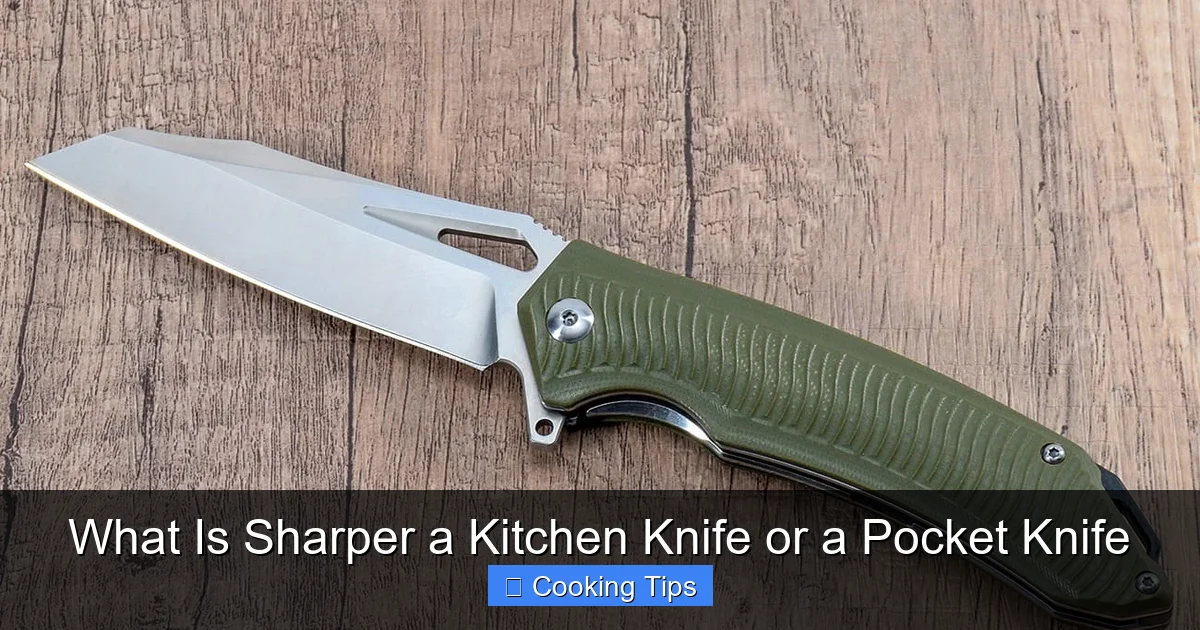
Pocket knives, also known as folding knives or EDC (Everyday Carry) knives, are designed for a broader range of tasks. They are companions for daily life, whether it’s opening mail, cutting rope, preparing kindling, or performing minor repairs.
- Utility Knives: These are built to be robust. While they need to cut effectively, they also need to withstand pressure, twisting, and occasional impacts.
- Multi-tools: Many pocket knives incorporate other tools, meaning the blade might be designed to be a reliable workhorse rather than a delicate slicer.
While a pocket knife needs to be sharp enough to perform its cutting tasks, its design often prioritizes toughness and the ability to maintain a functional edge through diverse and sometimes harsh conditions.
Can a Pocket Knife Be Sharper Than a Kitchen Knife?
Yes, absolutely. A high-end pocket knife made with a premium steel like S90V and meticulously sharpened to a fine angle can be incredibly sharp, perhaps even sharper for slicing tasks than a workhorse German-made kitchen knife with a more robust edge.
Visual guide about What Is Sharper a Kitchen Knife or a Pocket Knife
Image source: d3au0sjxgpdyfv.cloudfront.net
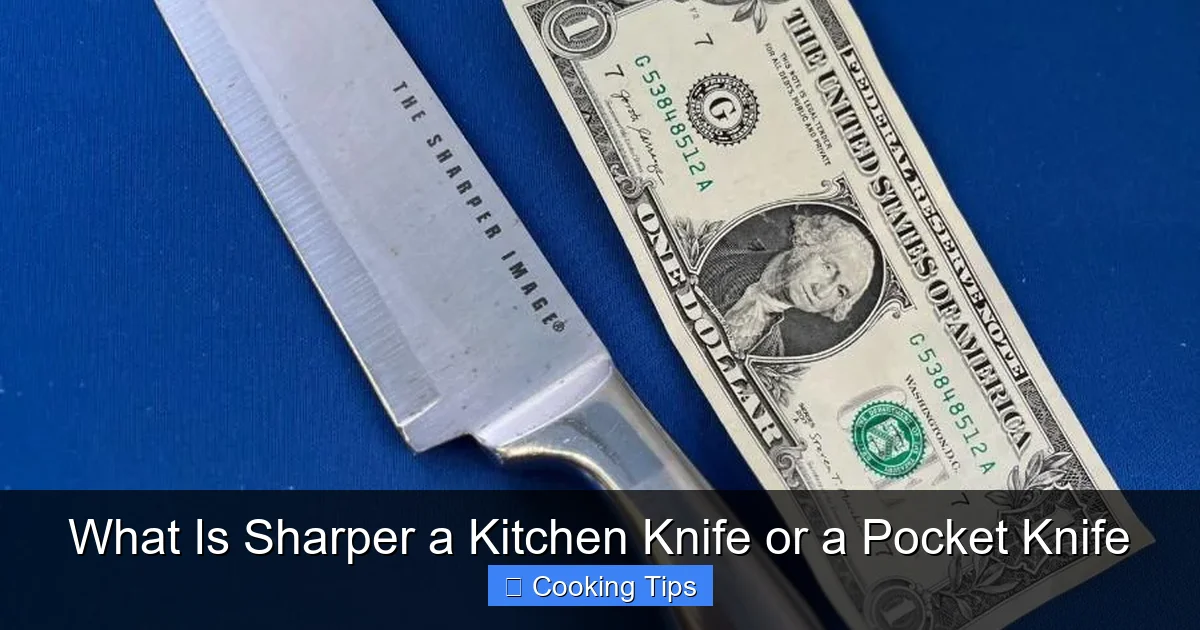
Conversely, a well-maintained Japanese-style chef’s knife, sharpened to a 10-degree angle per side, will likely feel much sharper for slicing through delicate foods than most standard pocket knives.
The key is that both can be sharp. The difference lies in the steel type, the edge geometry chosen by the manufacturer based on the intended use, and how well each knife is maintained.
The Role of Maintenance: Sharpening and Honing
No matter how good the steel or how precise the initial grind, a knife’s sharpness will diminish over time and with use. Regular maintenance is crucial for both kitchen and pocket knives.
Sharpening: Re-establishing the Edge
Sharpening involves removing a small amount of metal from the blade to recreate the apex of the edge. This is typically done using:
- Whetstones (Sharpening Stones): These are the gold standard for achieving a razor-sharp edge. They come in various grits, from coarse for repairing damaged edges to ultra-fine for polishing.
- Electric Sharpeners: These offer convenience and speed but can sometimes remove too much metal or create less precise edges if not used carefully.
- Pull-Through Sharpeners: These are easy to use but generally offer less control and can be harder on the blade.
For kitchen knives, achieving a fine, polished edge is often the goal. For pocket knives, the focus might be on maintaining a functional, sharp edge that can withstand tougher use.
Honing: Realignment and Maintenance
Honing is not sharpening; it’s about realigning the microscopic teeth of the blade’s edge that can become bent or misaligned during use. A honing steel (often made of steel, ceramic, or diamond-impregnated material) is used for this purpose.
- Regular Honing: Honing your knife before or after each use (or every few uses) can significantly extend the time between sharpenings and maintain a perception of sharpness.
- Ceramic Rods: These are excellent for honing and can even provide a mild sharpening effect.
Both kitchen and pocket knives benefit greatly from regular honing. It’s a simple step that makes a huge difference in how sharp your knife feels and performs.
Troubleshooting: Why Doesn’t My Knife Feel Sharp?
Even with the right type of knife, you might encounter issues with sharpness. Here are a few common reasons:
- Dull Edge: The most obvious reason. The microscopic teeth on the edge have either worn down or are damaged. It’s time to sharpen.
- Rolled Edge: The very apex of the edge has bent over, rather than being sharp and straight. Honing might help realign it, but sharpening is often necessary.
- Chips or Nicks: Small pieces of the edge have broken off. This requires careful sharpening to remove the damaged area.
- Improper Sharpening: Sharpening at the wrong angle or using too coarse a stone can create a less-than-ideal edge.
- Wrong Steel for the Job: A knife made from softer steel will simply not hold a fine edge for as long as one made from high-carbon or premium alloys.
- Corrosion: Rust or pitting on the blade can affect its ability to cut cleanly.
Conclusion: It’s All About the Edge and the Purpose
So, what is sharper, a kitchen knife or a pocket knife? The answer is nuanced. Both types of knives can be manufactured to achieve exceptional sharpness. A specialized kitchen knife, designed for slicing, will likely feel sharper for that particular task than a general-purpose pocket knife. Conversely, a tough, well-sharpened pocket knife might outperform a delicate kitchen knife in rougher cutting situations.
The real difference lies in their intended purpose, the specific steel alloys used, and the edge geometry that the manufacturer chooses to implement. Kitchen knives often prioritize a finer, more acute edge for clean slicing. Pocket knives tend to balance sharpness with durability and edge retention for a wider array of tasks.
Ultimately, the sharpest knife is the one that is appropriate for the task at hand and, crucially, is well-maintained. Regular sharpening and honing are the keys to unlocking and preserving the cutting potential of any blade, whether it’s preparing your next meal or tackling your daily chores.
