

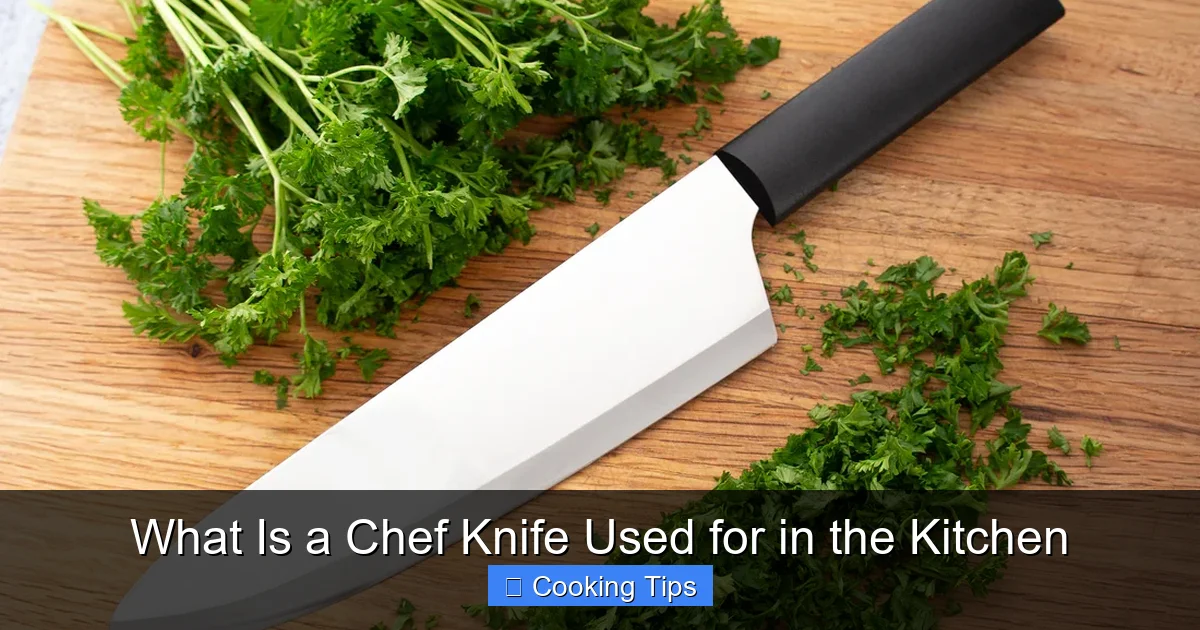
The chef knife is the workhorse of the kitchen, indispensable for a vast array of culinary tasks. This comprehensive guide will illuminate its many uses, from rough chopping to delicate mincing. Learn how to harness the power of your chef knife to become a more efficient and confident cook.
What Is a Chef Knife Used For In The Kitchen
Welcome to the heart of your kitchen arsenal: the chef knife. If you’re new to cooking or looking to truly understand the power of your tools, you’ve come to the right place. The chef knife, often called the “cook’s knife,” is undeniably the most important and frequently used knife in any kitchen. Its versatility is legendary, making it capable of handling a stunning array of culinary tasks.
In this guide, we’ll dive deep into the world of the chef knife. You’ll learn exactly what this indispensable tool is used for, how to use it effectively, and why it deserves its place of honor on your knife block. We’ll cover everything from basic chopping techniques to more nuanced tasks, helping you to unlock your full culinary potential. By the end of this article, you’ll have a profound appreciation for the chef knife and a clear understanding of how to wield it with confidence and skill.
Key Takeaways
- The Chef Knife is Your All-Purpose Tool: It excels at chopping, slicing, mincing, and dicing a wide variety of ingredients.
- Versatility is Key: From vegetables and fruits to meats and herbs, a chef knife handles most preparation needs.
- Technique Matters: Proper grip and slicing motion are crucial for safety and efficiency.
- Size and Weight are Important: Choose a chef knife that feels balanced and comfortable in your hand for optimal control.
- Maintenance is Essential: Regular sharpening and proper cleaning will keep your chef knife performing at its best.
- Not for Every Task: While versatile, it’s not ideal for tasks requiring specialized blades like boning or paring.
The Anatomy of a Chef Knife: Understanding Its Design
Before we explore its uses, it’s helpful to understand why the chef knife is so effective. Its design is a testament to practical engineering for culinary purposes.
The Blade
The blade of a chef knife is typically between 8 and 12 inches long, with 8 inches being the most common and versatile size for home cooks. It’s relatively wide, offering stability and a good surface area for tasks like scooping ingredients. The edge is usually straight or has a gentle curve, allowing for a rocking motion that is excellent for chopping and mincing. The spine, or the top edge of the blade, is thick and provides strength.
The Handle
The handle is designed for comfort and control. A good chef knife handle will feel balanced in your hand, allowing for a secure grip without causing fatigue. Materials can vary, including wood, plastic, or composite materials. The bolster, a thick metal collar between the blade and the handle, adds weight and improves balance. It also protects your fingers from slipping onto the blade.
The Tang
The tang is the part of the blade that extends into the handle. A full tang, where the metal of the blade runs the entire length of the handle, is generally preferred for durability and balance.
The Many Roles of a Chef Knife: What It Does Best
The chef knife isn’t just a knife; it’s a multi-tool for food preparation. Its design allows it to perform a wide range of cutting tasks with efficiency and precision.
Chopping: The Foundation of Culinary Preparation
Chopping is perhaps the most fundamental use of a chef knife. Whether you’re dicing onions, mincing garlic, or breaking down larger vegetables, the chef knife is your go-to.
How to Chop Effectively
The rocking motion is key here. Place the tip of the chef knife on your cutting board and use the curve of the blade to rock back and forth. Keep the tip of the knife in contact with the board as much as possible. Your other hand should be used to gather the food and guide it towards the blade. For consistent results, try to cut pieces of similar size.
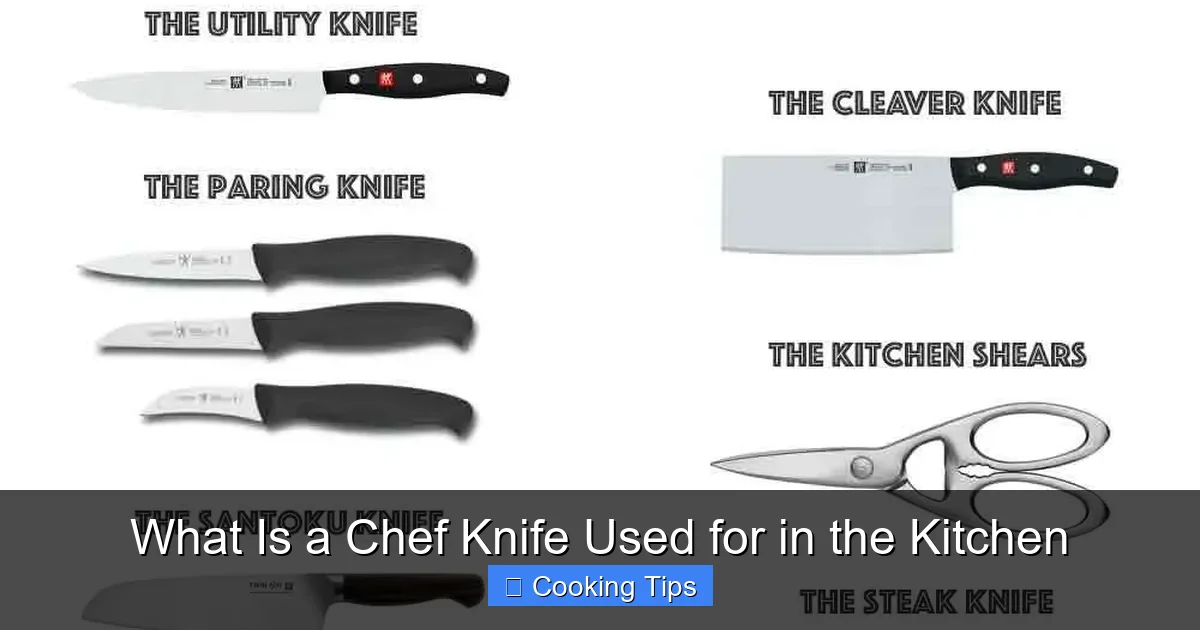
Visual guide about What Is a Chef Knife Used for in the Kitchen
Image source: cdn.shouldit.com
Slicing: Creating Uniform Pieces
From slicing tomatoes to portioning cooked meats, the chef knife excels at creating clean, uniform slices. The long, sharp blade allows you to make smooth, decisive cuts.
The Slicing Technique
For slicing, you’ll typically use a more forward-and-down motion. Start the cut at the heel of the blade and draw the knife towards the tip, completing the cut with a slight downward push. This technique ensures a cleaner cut and less tearing of ingredients.
Dicing: Achieving Precise Cubes
Dicing involves cutting ingredients into small, uniform cubes. This is essential for many recipes, ensuring even cooking and a pleasing presentation. The chef knife’s width helps in guiding the cut for uniform shapes.
Mastering the Dice
Start by slicing the ingredient into uniform planks. Then, stack a few planks and cut them into uniform strips. Finally, cut across the strips to create cubes. The chef knife’s ability to maintain a straight edge is vital for achieving perfect dice.
Mincing: Finely Cutting Herbs and Aromatics
Mincing means chopping ingredients into very small pieces. This is commonly done with herbs, garlic, ginger, and shallots. The chef knife’s sharp edge and rocking motion make it ideal for this delicate yet crucial task.
The Mincing Motion
Similar to chopping, the rocking motion is paramount. For herbs, gather them into a neat pile. Hold the tip of the knife steady and use the curve to chop rapidly back and forth. With garlic or ginger, mince first and then gather and chop again until the desired fineness is achieved.
Hacking and Cutting Through Larger Ingredients
While not its primary purpose, a sturdy chef knife can be used to hack through certain larger items. Think about cutting through a large squash or even breaking down poultry (though a cleaver is often preferred for heavy-duty tasks). The strength of the blade is important here.
When to Hack with Caution
Use a strong chef knife for this. A firm, confident downward motion is required. Be mindful of the resistance of the food and ensure a stable grip on the knife and the ingredient. Always cut away from yourself for safety.
Crushing Garlic and Spices
The flat side of the chef knife blade is perfect for crushing garlic cloves or whole spices. This releases their essential oils and flavors more effectively than simply slicing them.
The Crushing Technique
Lay the garlic clove flat on your cutting board. Place the flat side of your chef knife blade over the clove and press down firmly with the palm of your hand. You can also give the knife a slight twist. Do the same for whole spices like peppercorns or cumin seeds.
Scooping Ingredients
The broad surface of the chef knife blade makes it useful for scooping chopped ingredients directly from the cutting board into a pan or bowl. This saves a step and reduces the chance of dropping food.
A Handy Scooping Trick
After you’ve chopped your ingredients, simply angle your chef knife and use the blade to sweep the food onto the knife. Then, carefully transfer the food to its destination.
Choosing the Right Chef Knife for You
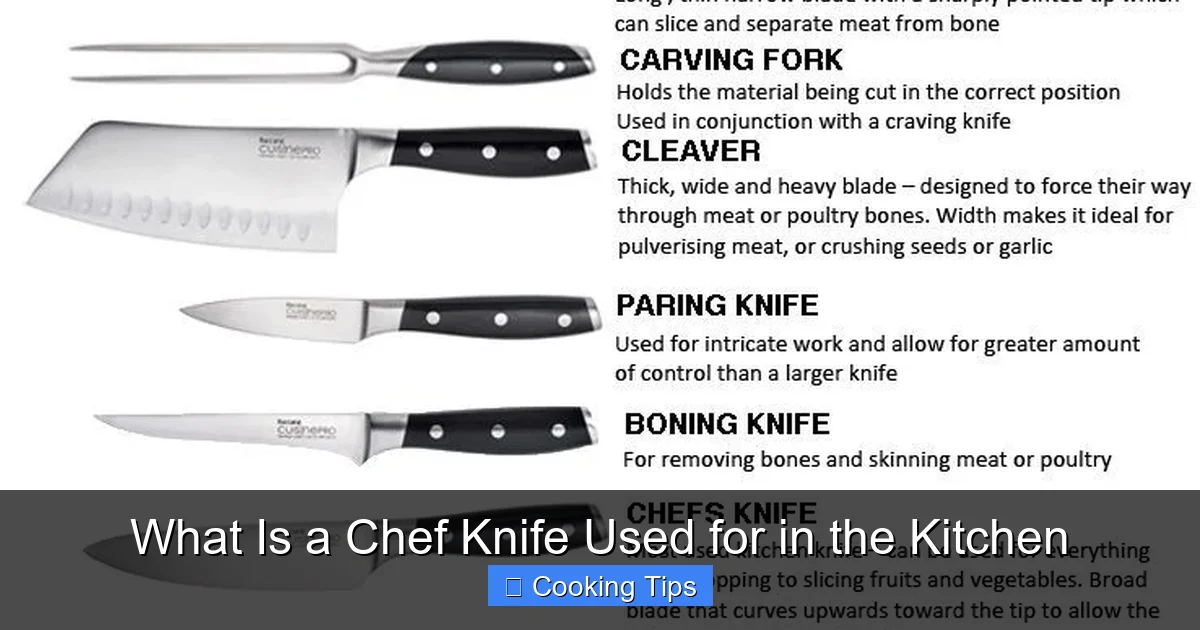
Visual guide about What Is a Chef Knife Used for in the Kitchen
Image source: i.pinimg.com
Not all chef knives are created equal. Several factors can influence your choice, ensuring you get a knife that fits your hand and your cooking style.
Blade Length
As mentioned, 8 inches is a great all-rounder. Longer blades (10-12 inches) are good for tackling larger quantities or bigger ingredients, but can be unwieldy for some. Shorter blades (6-7 inches) are more agile but less efficient for bulk chopping.
Blade Material
High-carbon stainless steel is a popular choice. It offers a good balance of sharpness, durability, and resistance to rust and staining. Ceramic blades are extremely sharp and lightweight but can be brittle.
Weight and Balance
The knife should feel comfortable and balanced in your hand. A well-balanced knife will feel like an extension of your arm, reducing fatigue and improving control. Try holding a few different knives to see what feels best.
Handle Comfort
The handle material and shape are crucial for grip and comfort. Some prefer ergonomic designs, while others like a classic feel. Ensure the handle provides a non-slip grip, especially when wet.
Mastering Chef Knife Techniques: Essential Skills
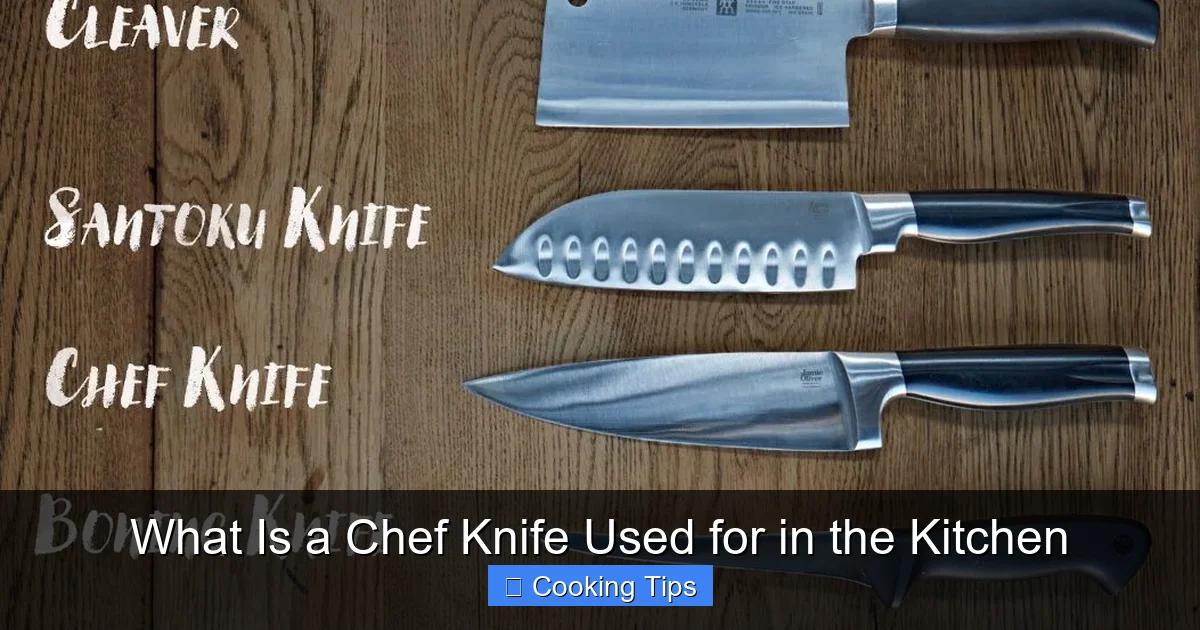
Visual guide about What Is a Chef Knife Used for in the Kitchen
Image source: i.pinimg.com
Owning a great chef knife is only half the battle. Learning proper techniques will elevate your cooking and ensure safety.
The Pinch Grip
This is the most recommended grip for chef knives.
- Pinch the blade just in front of the bolster with your thumb and index finger.
- Wrap your remaining three fingers around the handle.
This grip provides excellent control and leverage, allowing for precise cuts and less fatigue.
The Handle Grip (Less Recommended)
This is where you grip the handle only, with your thumb resting on the side of the handle or the bolster. While it might feel secure initially, it offers less control and can lead to wrist strain for extended tasks.
The Cutting Board Setup
Ensure your cutting board is stable. A damp cloth or paper towel placed underneath can prevent it from sliding. Work with good lighting so you can see what you’re doing clearly.
The Importance of a Sharp Knife
This might sound counterintuitive, but a sharp knife is safer than a dull one. A sharp blade cuts with less effort, reducing the risk of the knife slipping. Dull knives require more force, increasing the likelihood of accidents.
Caring for Your Chef Knife: Longevity and Performance
Proper care will ensure your chef knife remains a sharp, reliable tool for years to come.
Washing Your Chef Knife
Always hand wash your chef knife. The high heat and harsh detergents of a dishwasher can damage the blade, dull the edge, and degrade the handle material.
- Wash it immediately after use.
- Use warm, soapy water.
- Rinse thoroughly.
- Dry it completely with a soft cloth to prevent rust and water spots.
Sharpening Your Chef Knife
Regular sharpening is essential. The frequency depends on how often you use your knife and the type of board you cut on.
- Honing Steel: Use a honing steel regularly (even daily) to realign the microscopic teeth of the blade. This doesn’t actually sharpen but maintains the edge.
- Sharpening Stone (Whetstone): For true sharpening, a whetstone is ideal. Learn the proper angle (usually 15-20 degrees per side) and practice to achieve a keen edge.
- Electric Sharpeners: These are convenient but can remove more metal than necessary, potentially shortening the life of your knife if used too often.
Storage
Store your chef knife properly to protect the blade and yourself.
- Knife Block: A well-designed knife block keeps blades separated and protected.
- Magnetic Strip: This keeps knives accessible and on display, but ensure they are placed and removed carefully to avoid scratching the blades.
- Blade Guards: These are excellent for storing knives in drawers or for transport.
When NOT to Use Your Chef Knife
While incredibly versatile, the chef knife isn’t designed for every single kitchen task. Using it for the wrong purpose can damage the knife and be dangerous.
Bones and Hard Shells
Avoid using your chef knife to cut through bones, frozen foods, or very hard shells (like coconuts). These tasks require specialized tools like a cleaver or a bone saw, which are designed to withstand such force. Trying to cut through these with a chef knife can chip or break the blade.
Prying or Screwdriving
Never use your chef knife as a pry bar or a screwdriver. The blade is not designed for lateral force and can snap.
Leverage Tasks
Don’t use the knife to apply leverage, such as trying to open a jar by wedging the blade. This is a recipe for disaster.
Conclusion: Your Culinary Companion
The chef knife is more than just a cutting implement; it’s a true companion in the kitchen. Its ability to perform a vast range of tasks – from the rough chop of root vegetables to the delicate mince of fresh herbs – makes it an indispensable tool for any home cook. By understanding its design, mastering essential techniques, and committing to proper care, you will unlock a new level of efficiency and enjoyment in your culinary endeavors.
Invest in a good quality chef knife, learn to use it with respect and skill, and you’ll find it transforming your meal preparation from a chore into a creative and rewarding experience. Embrace the power of the chef knife, and let it guide you on your delicious journey in the kitchen.
