

Unlock the secret to perfect homemade cold brew! This guide helps you select the best coffee beans and understand roast levels for an exceptionally smooth and flavorful beverage. Follow our easy step-by-step instructions to create café-quality cold brew right in your kitchen, no matter your experience level.
## Best Coffee to Make Cold Brew at Home
Welcome, coffee lovers! Are you tired of expensive trips to the coffee shop for that smooth, refreshing cold brew? Do you dream of sipping on a perfectly balanced, low-acid iced coffee that you made yourself? You’ve come to the right place! Making stellar cold brew at home is surprisingly simple, and the biggest secret to success lies in choosing the right coffee.
This guide is your ultimate roadmap to selecting the best coffee beans for cold brew. We’ll delve into bean origins, roast levels, grind sizes, and even talk about freshness. By the end, you’ll be equipped with all the knowledge you need to brew a delicious, café-quality cold brew concentrate that will impress your taste buds and your friends. Let’s dive in and unlock the magic of home-brewed cold brew!
### Why Does Coffee Choice Matter for Cold Brew?
Cold brewing is a process that uses time instead of heat to extract flavor from coffee grounds. Because there’s no heat involved, the extraction is different. Hot water extracts oils and acids quickly, which can sometimes lead to bitter or acidic coffee. Cold water, over a long period, extracts flavors more gently. This results in a coffee concentrate that is naturally sweeter, smoother, and has significantly less acidity.
The type of coffee bean, how it’s roasted, and how it’s ground all play a huge role in how those flavors will develop during this slow extraction. Choosing the right coffee ensures you’re setting yourself up for a delicious outcome, rather than a watery or overly bitter disappointment.
### Understanding Coffee Beans for Cold Brew
When it comes to coffee, not all beans are created equal, especially for cold brew. Here’s what you need to know:
#### 1. Arabica vs. Robusta Beans
* Arabica Beans: These are the most popular type of coffee bean, known for their complex flavor profiles, pleasant aroma, and bright acidity. They generally have a wider range of flavors, from fruity and floral to nutty and chocolatey. For cold brew, Arabica beans are often preferred because their nuanced flavors can translate beautifully into a smooth, rich concentrate.
* Robusta Beans: Robusta beans are known for their high caffeine content and strong, bold, often rubbery or chocolatey flavor. They have more caffeine and less acidity than Arabica. While some people enjoy the intense kick of Robusta, they can sometimes produce a more bitter taste in cold brew if not handled carefully. Many specialty cold brews opt for 100% Arabica, but a blend with a small percentage of Robusta can add a nice crema and a caffeine boost.
Our Recommendation: For the smoothest and most flavorful cold brew, especially if you’re a beginner, stick with 100% Arabica beans. If you enjoy a stronger, more intense brew with a caffeine kick, consider a blend that includes a small percentage of Robusta.
#### 2. Bean Origins and Their Flavor Profiles
Different regions produce beans with distinct characteristics. Here’s a look at how common origins can influence your cold brew:
* Central American Beans (e.g., Costa Rica, Guatemala, Mexico): These beans are often celebrated for their balanced acidity, clean taste, and versatile flavor profiles. You’ll typically find notes of chocolate, nuts, and caramel, making them fantastic for cold brew. They offer a delightful sweetness that holds up well to the cold brewing process.
* South American Beans (e.g., Colombia, Brazil): Similar to Central American beans, these often boast chocolatey and nutty flavors, with a pleasant sweetness and medium body. Colombian beans can be quite bright, while Brazilian beans tend to be more mellow and chocolate-forward, making them a very safe and delicious choice for cold brew.
* African Beans (e.g., Ethiopia, Kenya): These beans are known for their vibrant, often fruity or floral notes. Ethiopian beans, in particular, can have bright, berry-like flavors. While these can be exciting, the higher acidity and complex fruitiness might sometimes be too pronounced in a cold brew for some palates, potentially tasting a bit too tart if not carefully selected or blended.
* Asian/Indonesian Beans (e.g., Sumatra, Java): These beans are often associated with a full body, low acidity, and earthy, spicy, or even smoky flavors. They can produce a very rich and bold cold brew, which is great if you prefer a darker, more robust profile.
Our Recommendation: Start with Central or South American beans. Their natural sweetness, chocolatey, and nutty notes are exceptionally well-suited for cold brew, providing a comforting and crowd-pleasing flavor.
#### 3. The Crucial Role of Roast Levels
The roast level of your coffee beans is one of the most critical factors in cold brewing.
* Light Roasts: These beans are roasted for a shorter time at lower temperatures. They retain more of their origin characteristics, often tasting brighter, more acidic, and more delicate. For cold brew, light roasts can sometimes taste weak, underdeveloped, or even a bit sour because the delicate flavors don’t always translate well through the cold extraction.
* Medium Roasts: Medium roasts are roasted longer than light roasts, allowing for more browning and the development of richer flavors. They offer a good balance of origin characteristics and roast-derived notes like caramel, nuts, and chocolate. Medium roasts are often considered the sweet spot for cold brew, providing a good flavor depth without being too bitter or too acidic.
* Dark Roasts: Darker roasts are roasted longer and at higher temperatures, resulting in beans that are oily and very dark brown. They develop bold, smoky, chocolatey, and even bittersweet flavors. Dark roasts are excellent for cold brew because their robust flavors can easily come through the slow extraction process. They tend to produce a strong, smooth, and chocolate-forward cold brew. However, be cautious of “too dark” roasts, which can become overly bitter or charcoal-like.
Our Recommendation: Opt for medium to dark roasts. They offer the best balance of flavor development for cold brew. If you enjoy a classic, rich cold brew, a medium-dark or dark roast is your best bet. If you want a bit more nuanced sweetness with your richness, a good medium roast is perfect.
### The Grind: Why It’s Non-Negotiable
When it comes to cold brew, the grind size isn’t just important – it’s essential.
#### The Power of a Coarse Grind
For cold brew, you need a coarse grind. Think of sea salt or breadcrumbs in size.
* Why Coarse? A coarse grind allows for a slower, more even extraction. Hot water is great for breaking down finely ground coffee quickly. Cold water, however, needs more time and surface area. A coarse grind prevents over-extraction, which is a common cause of bitter cold brew. It also makes the filtering process much, much easier. If you use a fine grind (like for espresso), you’ll end up with a cloudy, silty mess that’s difficult to strain and tastes bitter.
#### How to Achieve the Right Grind
* Burr Grinder is Best: For the most consistent grind size, a burr grinder is highly recommended. Blade grinders chop beans inconsistently, creating a mix of fine dust and large chunks. A burr grinder grinds beans to a uniform size, which is crucial for even extraction.
* Ask Your Local Roaster: If you don’t have a burr grinder, most local coffee shops or roasters will happily grind your beans for you. Just tell them you’re making cold brew and need a coarse grind.
Our Recommendation: Always use a coarse grind. If you buy pre-ground coffee, ensure it specifically states it’s for French Press or cold brew. If in doubt, buy whole beans and grind them just before brewing.
### Freshness: The Secret Ingredient You Can’t Skip
Even the best beans will taste subpar if they’re not fresh.
#### Why Freshness Matters
Coffee beans are perishable. When roasted, they begin to release aromatic oils and compounds. This process, known as degassing, is crucial. Freshly roasted coffee (typically within 1-4 weeks of the roast date) will have the most vibrant flavors. As coffee ages, these volatile compounds dissipate, leading to a flat, stale taste.
#### How to Ensure Freshness
* Check the Roast Date: Always look for a “roasted on” date on your coffee bag, not a “best by” date. The closer to the roast date, the better.
* Buy Whole Beans: Grinding coffee right before brewing preserves the most flavor. Pre-ground coffee loses its aroma and flavor much faster.
* Store Properly: Keep your coffee beans in an airtight container away from light, heat, and moisture. Avoid storing coffee in the refrigerator or freezer, as this can introduce moisture and unwanted odors.
Our Recommendation: Purchase whole beans from a reputable roaster with a clear roast date. Aim to use beans within 1-4 weeks of their roast date for optimal flavor.
### Putting It All Together: Your Cold Brew Recipe
Now that you know what to look for, let’s put it into practice. Here’s a simple, foundational recipe for making delicious cold brew at home.
#### Ingredients and Equipment
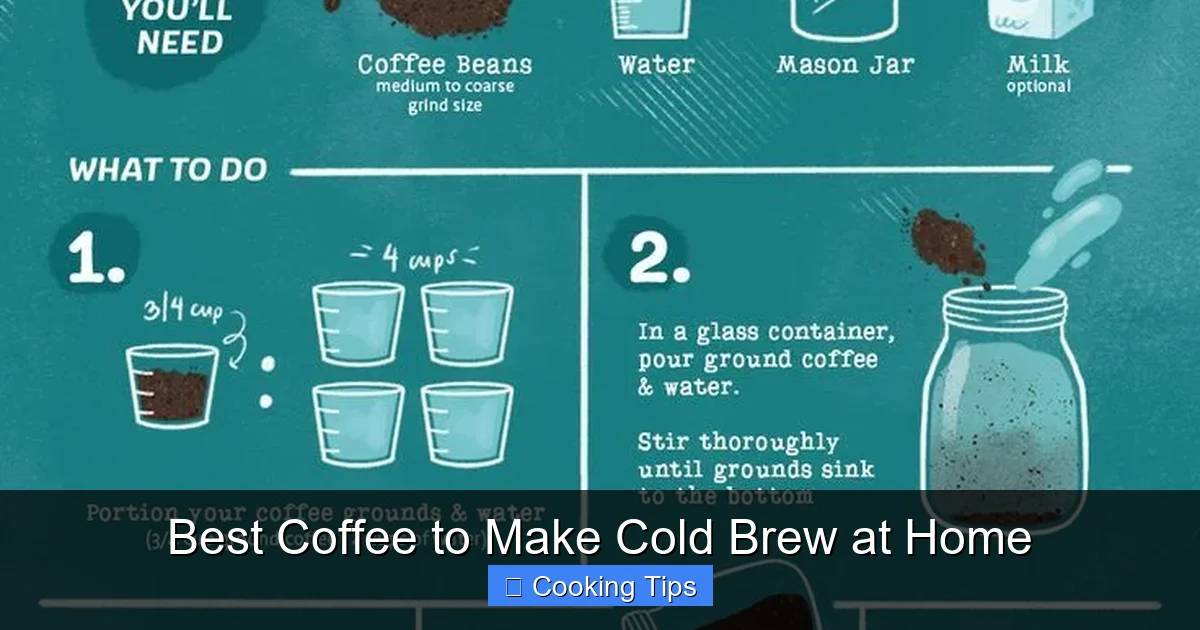
* Coffee Beans: 1 cup (about 85-100g) of whole beans (medium to dark roast, Arabica)
* Water: 4 cups (about 950ml) of filtered or good-tasting tap water
* Grinder: Burr grinder is ideal
* Brewing Vessel: A large jar, pitcher, or French press (at least 1-liter capacity)
* Straining Equipment: Fine-mesh sieve, cheesecloth, or a cold brew maker with a built-in filter
#### Step-by-Step Brewing Guide
1. Grind Your Beans: Measure out your whole coffee beans. Grind them to a coarse consistency. Aim for uniformity – the size of coarse sand or breadcrumbs.
2. Combine Coffee and Water: Place the coarsely ground coffee into your brewing vessel. Pour the filtered water over the grounds.
3. Stir Gently: Give the mixture a gentle stir to ensure all the coffee grounds are saturated with water. Don’t over-stir.
4. Steep at Room Temperature or Refrigerate: Cover the vessel. You can steep your cold brew at room temperature for 12-18 hours, or in the refrigerator for 18-24 hours. Longer steeping times generally yield a stronger concentrate. Experiment to find what you like best!
* Room Temperature Steeping: This method tends to extract more flavor and can be a bit faster.
* Refrigerated Steeping: This method is slower and can result in a slightly cleaner taste.
5. Strain Your Cold Brew: Once the steeping time is complete, it’s time to strain.
* Using a Sieve/Cheesecloth: Place a fine-mesh sieve over another clean container. Line the sieve with cheesecloth (if you have it) for an extra fine filter. Slowly pour the cold brew mixture through the sieve. You may need to strain it twice to remove all the sediment.
* Using a French Press: If you used a French press as your brewing vessel, slowly press down the plunger. Then, pour the concentrate through a fine-mesh sieve into another container to catch any stray grounds.
6. Dilute and Serve: You’ve just made cold brew concentrate! It’s potent and meant to be diluted. Pour over ice and add water or milk (dairy or non-dairy) to your desired strength. A common starting point is a 1:1 ratio of concentrate to water/milk, but adjust to your preference.
### Troubleshooting Common Cold Brew Issues
Even with the best beans, sometimes things don’t go as planned. Here are a few common problems and how to fix them:
#### Bitter Cold Brew
* Cause: Over-extraction due to a too-fine grind, steeping for too long, or water that’s too hot (if steeping at room temperature on a very hot day).
* Solution: Use a coarser grind. Reduce steeping time. Ensure your water is at room temperature or slightly cooler if steeping in a very warm environment.
#### Weak or Watery Cold Brew
* Cause: Under-extraction due to a too-coarse grind, not enough coffee, or not steeping long enough.
* Solution: Use a slightly finer (but still coarse!) grind. Increase the coffee-to-water ratio (e.g., use more coffee grounds). Extend the steeping time.
#### Cloudy or Silty Cold Brew
* Cause: Grind is too fine, or not filtered properly.
* Solution: Use a coarser grind next time. Strain the cold brew multiple times using a fine-mesh sieve and cheesecloth if necessary.
### Conclusion: Your Journey to Perfect Cold Brew
Choosing the best coffee for cold brew is the foundation of a delicious homemade brew. By understanding the nuances of bean origins, roast levels, and the critical importance of a coarse grind and freshness, you’re well on your way to mastering this refreshing beverage.
Remember, coffee is personal. This guide provides a strong starting point, but don’t be afraid to experiment! Try different beans, adjust your ratios, and tweak your steeping times. The joy of cold brew is in discovering your perfect cup. So grab your favorite beans, get brewing, and enjoy the smooth, rich, and invigorating taste of your very own homemade cold brew. Happy brewing!
Key Takeaways
- Understand Bean Origins: While any coffee bean can be used, some origins like Central and South American beans offer a naturally sweet and chocolatey profile ideal for cold brew.
- Roast Level Matters: Medium to dark roasts are generally preferred for cold brew as they develop rich, complex flavors that shine through the cold brewing process. Light roasts can sometimes taste too acidic or weak.
- Grind Size is Crucial: A coarse grind is essential for cold brew. It prevents over-extraction and makes filtering much easier, resulting in a cleaner, less bitter taste.
- Freshness is Key: Always use freshly roasted and freshly ground coffee for the best flavor. Coffee loses its aromatic compounds over time, impacting the final brew.
- Water Quality Impacts Taste: Use filtered or good-tasting tap water. Impurities in water can negatively affect the delicate flavors of your cold brew.
- Ratio is Your Friend: The coffee-to-water ratio significantly impacts the strength and flavor. A common starting point is 1:4 to 1:8, but experimentation is encouraged.
- Patience Pays Off: Cold brewing takes time, typically 12-24 hours. This slow steeping process extracts a smoother, less acidic concentrate than hot brewing.
