


Looking for the best mini food processor? This comprehensive guide, drawing on insights from Consumer Reports, will walk you through selecting the perfect compact kitchen appliance. Learn what to look for, understand performance metrics, and discover tips for optimal use and maintenance to make your cooking easier and more efficient. Make informed decisions for your culinary needs.
Key Takeaways
- Understand Mini Food Processor Benefits: Mini food processors are ideal for small kitchens, quick tasks like chopping herbs, making sauces, or grinding nuts, saving time and effort.
- Consumer Reports’ Evaluation Criteria: Consumer Reports rigorously tests mini food processors on performance (chopping, pureeing), ease of use, durability, and noise levels, providing unbiased ratings.
- Key Features to Consider: Look for features like bowl capacity, motor power, blade design, lid locking mechanisms, and dishwasher-safe components for convenience and effectiveness.
- Performance in Action: Understand how different mini food processors excel in specific tasks, from finely mincing garlic to creating smooth dips, based on expert reviews.
- Proper Usage and Maintenance: Learn the best practices for operating your mini food processor safely and efficiently, including cleaning and storage tips to prolong its lifespan.
- Troubleshooting Common Issues: Identify and resolve common problems like uneven chopping or motor strain with practical advice to keep your appliance running smoothly.
Best Mini Food Processor by Consumer Reports
Welcome to your ultimate guide to finding the best mini food processor, informed by the unbiased testing and recommendations of Consumer Reports. In today’s busy kitchens, efficiency and space-saving are paramount. A mini food processor, also known as a mini chopper, can be a game-changer, tackling small prep tasks with speed and precision that larger appliances can’t match. Whether you’re a seasoned chef or just starting your culinary journey, understanding which mini food processor best suits your needs is crucial. This guide will demystify the process, helping you navigate the options and make a confident purchase.
Consumer Reports is renowned for its in-depth, independent testing. They put appliances through rigorous evaluations to provide consumers with reliable data. When it comes to mini food processors, their experts assess everything from how well they chop onions to their ability to create smooth hummus. We’ll distill this valuable information to help you understand what makes a mini food processor truly “best” and how to leverage that knowledge.
Why Choose a Mini Food Processor?
Before diving into specific models, let’s clarify why a mini food processor deserves a spot in your kitchen. These compact powerhouses are designed for tasks that are too small for a full-sized food processor but too tedious or time-consuming to do by hand.

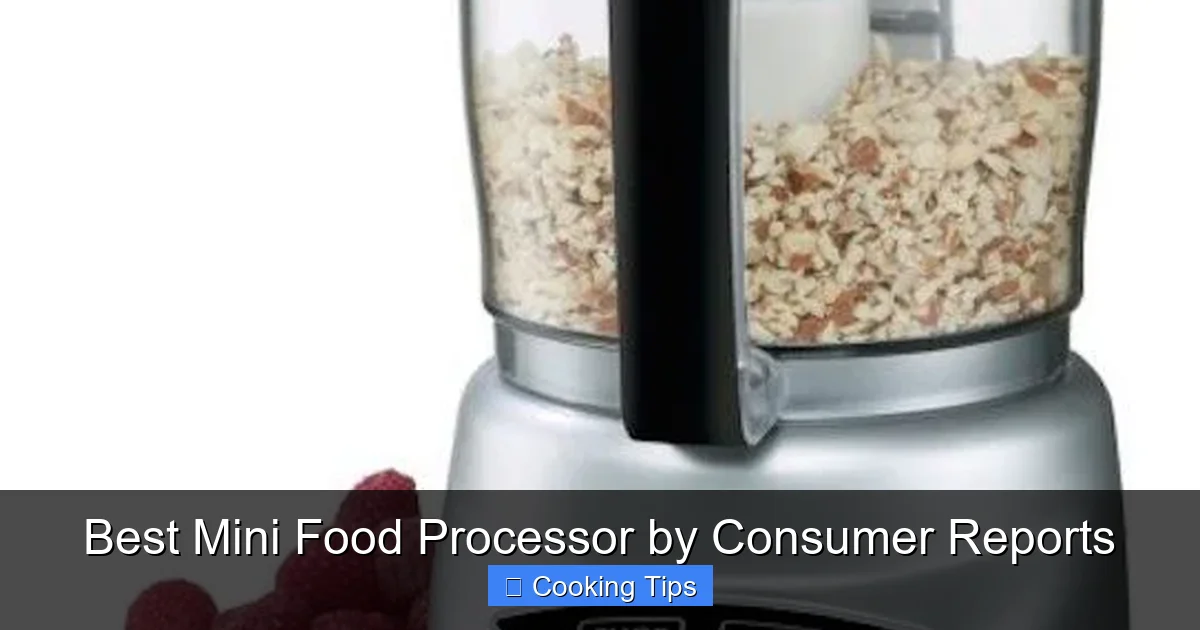
Visual guide about Best Mini Food Processor by Consumer Reports
Image source: m.media-amazon.com
Common Mini Food Processor Tasks:
- Chopping Herbs: Finely mince parsley, cilantro, basil, or other herbs in seconds.
- Making Pesto and Dips: Quickly whip up small batches of pesto, hummus, or salsa.
- Grinding Nuts and Seeds: Prepare your own nut flours or spice blends.
- Creating Baby Food: Puree fruits and vegetables for homemade baby meals.
- Mincing Garlic and Onions: Avoid teary eyes and uneven chunks when prepping aromatics.
- Making Breadcrumbs: Turn stale bread into fresh breadcrumbs.
- Emulsifying Dressings: Effortlessly combine oil and vinegar for perfect vinaigrettes.
The primary advantage is convenience. They take up minimal counter space and are easy to clean. For individuals, couples, or small families, a mini food processor is often all the processing power you need.
Understanding Consumer Reports’ Evaluation Process
Consumer Reports doesn’t just pick favorites; they conduct extensive testing. Their methodology ensures that their recommendations are based on real-world performance and durability. Here’s a general overview of what they consider:
Visual guide about Best Mini Food Processor by Consumer Reports
Image source: thespruceeats.com
Performance Metrics:
- Chopping Uniformity: How evenly does the processor chop ingredients like onions, nuts, or herbs? Are there large chunks mixed with fine dust?
- Pureeing Consistency: For tasks like making hummus or baby food, how smooth is the resulting puree?
- Capacity Efficiency: Does the processor work well with small quantities, or does it require a minimum amount to function effectively?
- Motor Power and Strain: How does the motor handle tougher ingredients like hard cheeses or frozen fruits? Does it overheat or struggle?
Ease of Use and Design:
- Assembly and Disassembly: How easy is it to put together and take apart for cleaning?
- Lid Locking Mechanism: Is the lid secure and intuitive to lock and unlock?
- Control Simplicity: Are the buttons or controls straightforward and easy to operate?
- Bowl Design: Is the bowl easy to scrape clean? Does it have measuring marks?
Durability and Safety:
- Material Quality: Are the plastic parts sturdy? Is the motor housing robust?
- Blade Sharpness and Material: Are the blades made of durable, sharp stainless steel?
- Motor Lifespan: While harder to test directly, they consider build quality and brand reputation.
- Safety Features: Does the appliance have safety interlocks to prevent operation if not assembled correctly?
By understanding these evaluation points, you can better interpret reviews and choose a mini food processor that aligns with Consumer Reports’ standards for excellence.
Key Features to Look for in a Mini Food Processor
When you’re sifting through models, pay close attention to these features. They significantly impact how well the appliance performs and how much you’ll enjoy using it.

Visual guide about Best Mini Food Processor by Consumer Reports
Image source: m.media-amazon.com
Bowl Capacity:
Mini food processors typically range from 2 to 5 cups. Consider what you’ll be making most often. For chopping herbs or making a single serving of pesto, a 2-3 cup bowl is sufficient. If you plan to make slightly larger batches of dips or sauces, a 4-5 cup model offers more versatility. Remember that a manufacturer’s stated capacity is often the maximum liquid they can hold, not the practical amount of solid ingredients you can process.
Motor Power (Wattage):
While wattage isn’t the only indicator of power, it gives you a general idea. Higher wattage often means a stronger motor that can handle tougher jobs and run for longer periods without overheating. For basic chopping, 200-300 watts might suffice. For more demanding tasks like grinding nuts or pureeing fibrous vegetables, look for 350 watts or higher. Consumer Reports often notes how well models perform relative to their stated wattage.
Blade Design and Material:
Most mini food processors come with a single S-shaped blade. Look for blades made of high-quality stainless steel. The sharpness and design of the blade are critical for efficient and even chopping. Some models might offer different blade attachments, but this is less common for mini units.
Ease of Cleaning:
This is a major factor for any kitchen appliance. Ideally, the bowl, lid, and blade should be dishwasher safe. If you have to hand-wash, ensure the components are easy to access and rinse thoroughly. Some bowls have fewer crevices, making them simpler to clean.
Lid and Locking Mechanism:
A secure lid is essential for safety and to prevent ingredients from splashing out. Consumer Reports often checks how intuitive the locking mechanism is. Some require a specific twist or click to engage, which is a good safety feature. Ensure the lid has a pour spout if you plan to emulsify dressings or sauces directly in the bowl.
Cord Storage:
A small but significant convenience. Some models feature a place to wrap the cord underneath the unit, keeping your counter tidy when not in use.
Putting a Mini Food Processor to the Test: Practical Usage Tips
Once you have your mini food processor, how do you get the most out of it? Here are some practical tips to ensure optimal performance and longevity.
Step-by-Step Guide to Using Your Mini Food Processor:
1. Preparation is Key
Before you start, ensure all components are clean and dry. Cut larger ingredients into smaller, uniform pieces (about 1-inch cubes) for more even processing. For example, if you’re chopping an onion, cut it into quarters first, then process.
2. Assemble Correctly
Place the blade securely onto the motor base or into the bowl, depending on the design. Then, place the bowl over the base. Ensure the lid is properly aligned and locked into place. Many models won’t operate unless the lid is secured, a vital safety feature.
3. Add Ingredients Strategically
Don’t overfill the bowl. For chopping, add ingredients in batches if necessary. If you’re making a sauce or dressing, add liquids first, then softer ingredients, and finally harder ingredients or solids. This layering helps with emulsification and prevents the motor from straining.
4. Operate in Pulses
Most mini food processors have a “pulse” function or a simple on/off button. For chopping, use short pulses. This gives you more control over the texture and prevents over-processing. Check the consistency periodically by stopping the processor and scraping down the sides of the bowl with a spatula.
5. Scrape Down the Sides
Ingredients tend to stick to the sides of the bowl. Stop the processor, carefully remove the lid, and use a spatula to scrape down the ingredients towards the blades. This ensures everything gets processed evenly.
6. Know When to Stop
The definition of “done” depends on the task. For chopping herbs, you might want a fine mince. For nuts, you might want a coarse chop or a fine powder. For purees, you’re looking for a smooth consistency. Over-processing can turn ingredients into a paste or mush.
7. Clean Immediately
The best time to clean your mini food processor is right after use. Dried-on food bits are much harder to remove. Disassemble the components and wash them according to the manufacturer’s instructions. If they are dishwasher safe, place them on the top rack.
Practical Examples and Tips:
- For Pesto: Add basil, pine nuts, garlic, and Parmesan cheese to the bowl. Pulse a few times to chop. While the processor is running, slowly drizzle in olive oil through the lid opening until smooth.
- For Chopping Onions: Cut the onion into quarters. Pulse until finely chopped, not pureed. Stop and scrape down the sides as needed.
- For Grinding Nuts: Ensure the nuts are dry. Pulse until the desired consistency is reached. Be careful not to over-grind, or you’ll end up with nut butter.
- For Smoothies (if applicable): Some larger mini food processors can handle small smoothies. Add liquids first, then soft fruits, then ice or frozen ingredients. Pulse until smooth.
Troubleshooting Common Mini Food Processor Issues
Even the best mini food processors can encounter minor issues. Here’s how to address them:
Issue: Uneven Chopping
Cause: Ingredients were too large, not cut uniformly, or the bowl was overfilled. The lid wasn’t scraped down properly.
Solution: Cut ingredients into smaller, more uniform pieces. Process in smaller batches. Ensure you stop and scrape down the sides of the bowl between pulses.
Issue: Motor Strains or Overheats
Cause: Trying to process too much at once, processing very hard ingredients (like frozen blocks of fruit), or running the motor for too long without a break.
Solution: Reduce the amount of food in the bowl. Cut hard ingredients into smaller pieces. If processing for an extended period, give the motor a break every 30-60 seconds to prevent overheating.
Issue: Leaking
Cause: The lid or bowl wasn’t assembled correctly, or the seal is damaged.
Solution: Ensure the lid is firmly locked in place and the bowl is seated correctly on the base. Check the gasket or seal on the lid for any damage or wear. If damaged, contact the manufacturer for a replacement part.
Issue: Blades Not Cutting Effectively
Cause: Blades may be dull or damaged, or the motor isn’t powerful enough for the task.
Solution: Ensure the blades are clean and free of debris. If they appear dull or damaged, check if replacement blades are available. If the motor consistently struggles, it might not be powerful enough for your typical tasks.
Conclusion: Making Your Final Choice
Choosing the best mini food processor is about matching your cooking habits with the appliance’s capabilities. By understanding the rigorous testing methodologies of Consumer Reports and focusing on key features like capacity, motor power, and ease of cleaning, you can make an informed decision. Remember, these compact kitchen helpers are designed to simplify your life, saving you time and effort on countless small tasks.
We encourage you to consult the latest Consumer Reports ratings and reviews for specific model comparisons. Pay attention to user feedback regarding durability and overall satisfaction. With the right mini food processor, you’ll find yourself reaching for it more often than you think, making everyday meal prep a breeze.
