

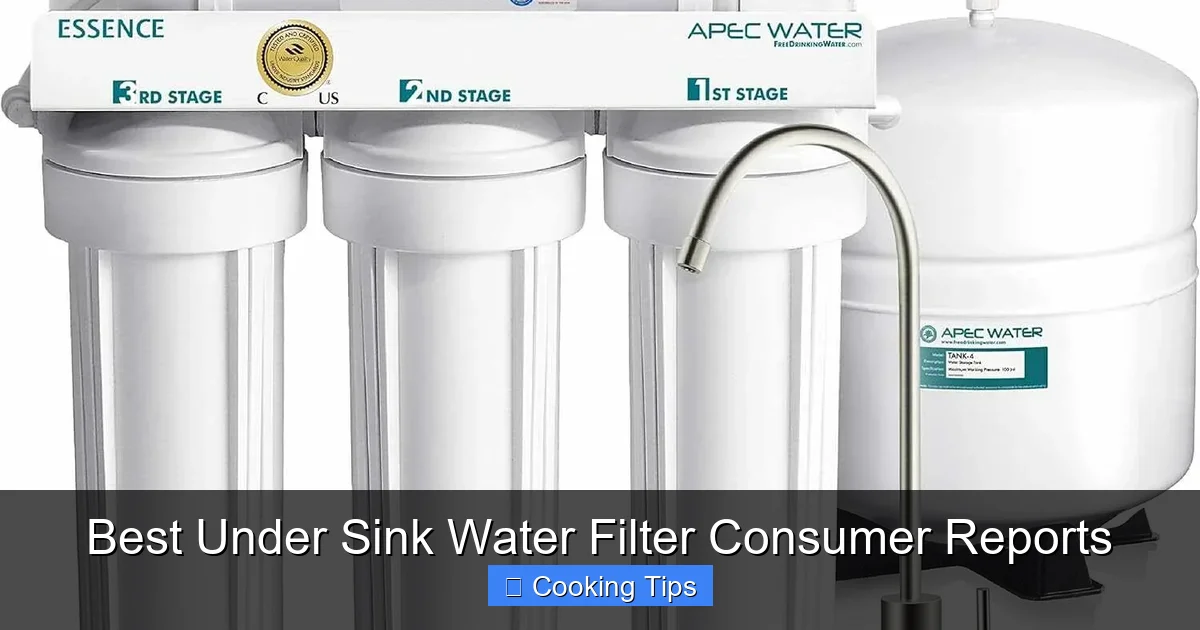
Confused about choosing the best under sink water filter? This guide breaks down Consumer Reports’ insights to help you make an informed decision. We’ll cover filter types, what contaminants they target, and installation tips. Get cleaner, safer water with the right system for your kitchen, ensuring better taste and health for your family.
Are you concerned about the quality of your tap water? Do you wish your drinking water tasted fresher and was free from potential contaminants? An under sink water filter might be the perfect solution for your home. These powerful systems are installed discreetly beneath your kitchen sink, providing a continuous supply of purified water directly from your faucet. But with so many options on the market, how do you choose the best under sink water filter?
This comprehensive guide, drawing on insights akin to what you’d find in Consumer Reports, will walk you through everything you need to know. We’ll demystify the different types of under sink water filters, explain what contaminants they can remove, and guide you through the selection and installation process. By the end of this guide, you’ll be well-equipped to find the best under sink water filter that meets your family’s needs and your budget.
Key Takeaways
- Understand Your Water Quality: Before choosing a filter, test your tap water to identify specific contaminants you need to address.
- Filter Types Matter: Learn the differences between activated carbon, reverse osmosis, and ultrafiltration filters and which is best for your needs.
- Certifications are Crucial: Look for NSF/ANSI certifications to ensure the filter effectively removes the contaminants it claims to.
- Flow Rate and Capacity: Consider how much filtered water you need daily and the filter’s lifespan to avoid frequent replacements.
- Ease of Installation: While many under sink filters are DIY-friendly, some may require professional installation, impacting overall cost.
- Long-Term Costs: Factor in replacement filter costs, maintenance, and potential water pressure changes when budgeting for an under sink water filter.
Why Consider an Under Sink Water Filter?
Tap water, while generally safe in many developed regions, can still contain a variety of impurities. These can include chlorine, lead, pesticides, herbicides, volatile organic compounds (VOCs), and even pharmaceuticals. While some of these are not immediately harmful, long-term exposure can pose health risks. Furthermore, chlorine, often used as a disinfectant, can significantly impact the taste and smell of your water, making it less enjoyable to drink.
An under sink water filter offers a convenient and effective way to improve your water quality. Unlike pitcher filters, which require constant refilling, or whole-house systems, which can be expensive and complex, under sink filters provide a dedicated source of clean water for drinking and cooking. They are a popular choice for homeowners seeking a balance of performance, cost-effectiveness, and ease of use.
Understanding Different Types of Under Sink Water Filters
Visual guide about Best Under Sink Water Filter Consumer Reports
Image source: kitchenadvising.com
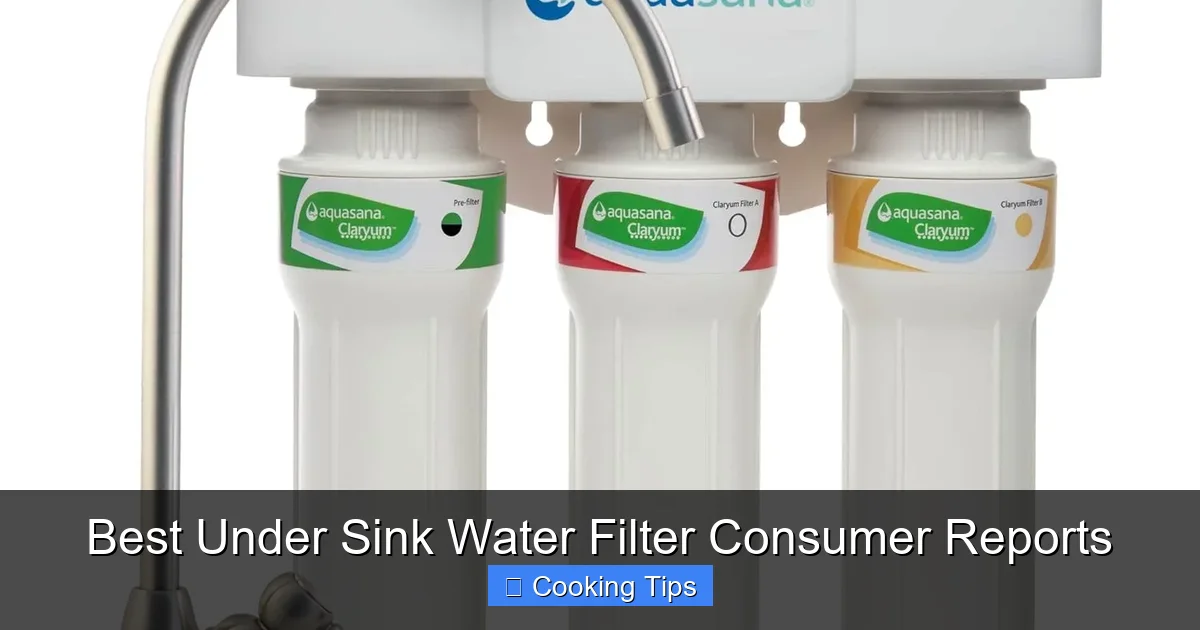
The “best” under sink water filter for you depends largely on your specific water concerns and filtration needs. There are several primary filtration technologies commonly used in under sink systems:
1. Activated Carbon Filters
Activated carbon filters are the most common type found in under sink water systems. They work through a process called adsorption, where impurities in the water are attracted to and held by the porous surface of the carbon.
What they remove:
- Chlorine and chloramines (improving taste and odor)
- VOCs (like benzene and toluene)
- Sediment
- Some pesticides and herbicides
Pros:
- Effective at improving taste and odor.
- Relatively inexpensive.
- Do not remove beneficial minerals.
- Easy to maintain.
Cons:
- Not effective against dissolved solids like salts or heavy metals like lead or arsenic.
- Require regular replacement.
2. Reverse Osmosis (RO) Systems
Reverse osmosis is a more advanced filtration method that forces water through a semi-permeable membrane. This membrane has very small pores that allow water molecules to pass through but block larger molecules, including most dissolved solids and contaminants.
What they remove:
- Dissolved solids (salts, minerals, metals)
- Lead, arsenic, mercury
- Fluoride
- Bacteria and viruses (though not always their primary function)
- Pesticides and herbicides
Pros:
- Highly effective at removing a wide range of contaminants.
- Produces very pure water.
Cons:
- Can remove beneficial minerals, sometimes requiring a remineralization stage.
- Slower filtration rate, often requiring a storage tank.
- Wastes some water during the filtration process.
- More expensive than simple carbon filters.
- Requires more complex installation.
3. Ultrafiltration (UF) Systems
Ultrafiltration is similar to reverse osmosis in that it uses a membrane, but the pores are larger. This allows for a faster flow rate and the retention of beneficial minerals.
What they remove:
- Sediment
- Bacteria and viruses
- Protozoa
- Chlorine
- Some larger organic molecules
Pros:
- Effectively removes microorganisms without removing minerals.
- Faster flow rate than RO.
- Less water waste compared to RO.
- Generally easier to install than RO.
Cons:
- Does not remove dissolved solids like salts or heavy metals as effectively as RO.
- May not remove all chemical contaminants.
4. Multi-Stage Filtration Systems
Many of the best under sink water filters combine multiple technologies. These systems often include pre-filters (like sediment filters), activated carbon filters, and sometimes RO or UF membranes. This multi-stage approach provides comprehensive filtration, tackling a wider array of contaminants.
What Contaminants Should You Target?
Visual guide about Best Under Sink Water Filter Consumer Reports
Image source: mycampingpro.com
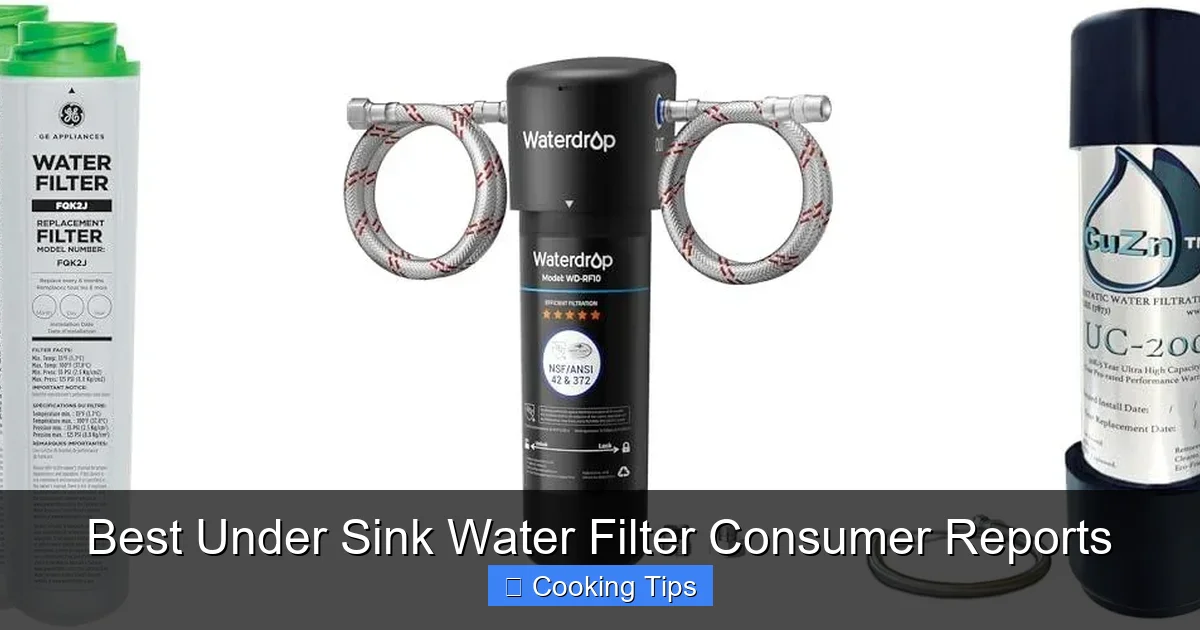
To select the best under sink water filter, you first need to understand what’s in your water. The most reliable way to do this is through a water quality test. You can purchase DIY test kits, or send a sample to a certified laboratory.
Here are some common contaminants and how different filter types address them:
- Chlorine: Almost all activated carbon filters effectively reduce chlorine, improving taste and odor.
- Lead: Look for filters certified to remove lead, often found in older plumbing. Activated carbon filters with specific certifications or RO systems are typically best for lead.
- VOCs: Activated carbon filters are excellent at removing VOCs.
- Sediment: Sediment filters, often used as a pre-filter, are effective at removing sand, silt, and rust particles.
- Bacteria and Viruses: UF and RO systems are best for removing these microorganisms. Some specialized carbon filters may also offer some level of reduction.
- Dissolved Solids (TDS): Reverse osmosis is the most effective technology for reducing TDS.
- Pesticides and Herbicides: Activated carbon filters generally perform well against these.
Choosing the Best Under Sink Water Filter: Key Features to Look For
Visual guide about Best Under Sink Water Filter Consumer Reports
Image source: m.media-amazon.com
When comparing different under sink water filter models, keep these crucial features in mind:
1. NSF/ANSI Certifications
This is arguably the most important factor. Look for certifications from the National Sanitation Foundation (NSF) and the American National Standards Institute (ANSI). These certifications ensure that the filter has been independently tested and verified to meet specific standards for contaminant reduction.
Common NSF/ANSI standards to look for include:
- NSF/ANSI Standard 42: For aesthetic effects like chlorine taste and odor.
- NSF/ANSI Standard 53: For health effects like lead, VOCs, and other contaminants.
- NSF/ANSI Standard 58: For reverse osmosis systems, ensuring reduction of TDS and other specific contaminants.
- NSF/ANSI Standard 401: For emerging contaminants, such as pharmaceuticals and certain pesticides.
A filter certified to multiple standards will offer broader protection.
2. Filter Lifespan and Replacement Costs
Under sink water filters have a limited lifespan, and the replacement filters are an ongoing cost. Pay attention to:
- Filter Capacity: Measured in gallons or months. A higher capacity filter will last longer.
- Replacement Frequency: How often do you need to change the filters?
- Cost of Replacement Filters: Factor this into your long-term budget. Some systems have expensive proprietary filters.
A system that requires more frequent or costly filter changes might be more expensive in the long run, even if the initial purchase price is lower.
3. Flow Rate and Water Pressure
Your under sink water filter will connect to your cold water line, and its performance can affect your water pressure.
- Flow Rate: How quickly filtered water is dispensed from the faucet. For a single filter system, a flow rate of 0.5-1 gallon per minute (GPM) is common. RO systems, due to the membrane, may have a slower flow rate, which is why they often include a storage tank.
- Water Pressure Drop: Some filters can reduce your existing water pressure. If you have low water pressure to begin with, this might be a concern.
Consider how much filtered water you typically use and if a slightly slower flow rate will be an issue for you.
4. Ease of Installation
Most under sink water filters are designed for DIY installation. However, the complexity can vary:
- Basic Carbon Filters: Usually involve disconnecting your cold water line, inserting a filter housing, and reconnecting.
- RO Systems: These are more involved, often requiring connections to the drain line (for wastewater) and potentially drilling a hole for a dedicated RO faucet if you don’t want to use your main faucet.
If you’re not comfortable with basic plumbing, be prepared to budget for professional installation.
5. System Size and Space Requirements
Under sink water filters, especially RO systems with their storage tanks, can take up a significant amount of space. Measure the available space under your sink before purchasing to ensure the system will fit comfortably.
6. Dedicated Faucet vs. Main Faucet Filtration
Some under sink water filter systems filter water directly through your existing kitchen faucet. Others come with a separate, dedicated faucet specifically for filtered water.
- Dedicated Faucet: Offers a cleaner, more modern look and ensures that your main faucet’s aerator isn’t clogged by filter sediment. It also prevents unfiltered water from accidentally being dispensed.
- Main Faucet Filtration: Simpler installation and less clutter under the sink if you don’t want an extra faucet.
The choice often comes down to personal preference and aesthetic considerations.
Step-by-Step Guide to Choosing and Installing Your Best Under Sink Water Filter
Let’s break down the process of getting your under sink water filter up and running.
Step 1: Assess Your Water Quality
As mentioned, this is your starting point.
- If you have municipal water, check your local water quality report.
- Purchase a home water testing kit or send a sample to a lab to identify specific contaminants.
- Note down any concerns: unpleasant taste/odor, visible particles, or known issues like lead in older homes.
Step 2: Identify Your Filtration Needs
Based on your water test results, determine which contaminants you need to address.
- For taste/odor: Activated carbon.
- For lead/heavy metals: Certified activated carbon or RO.
- For bacteria/viruses: UF or RO.
- For dissolved solids: RO.
Step 3: Research and Compare Models
Now, armed with your needs, start looking at specific under sink water filter systems.
- Read reviews from reputable sources, looking for information similar to Consumer Reports findings on performance and reliability.
- Check NSF/ANSI certifications thoroughly. Ensure the specific contaminants you’re targeting are listed on the certification.
- Compare filter lifespan, replacement costs, and availability of replacement filters.
- Consider the flow rate and any potential water pressure impacts.
Step 4: Purchase Your Under Sink Water Filter
Once you’ve narrowed down your choices, make your purchase. Consider buying from reputable retailers or directly from the manufacturer.
Step 5: Installation Day!
This is where the system goes from paper to reality.
H3: Gather Your Tools and Supplies
You’ll typically need:
- Adjustable wrench
- Screwdriver set
- Plumber’s tape (Teflon tape)
- Bucket or towels for catching drips
- Drill and appropriate bit (if installing a separate faucet)
- Safety glasses
Read the manufacturer’s instructions carefully before you begin.
H3: Turn Off Water Supply
- Locate the cold water shut-off valve under your sink and turn it off completely.
- Turn on your main faucet to relieve any remaining pressure.
H3: Disconnect Existing Water Line
- Place a bucket or towels under the connection to catch any residual water.
- Carefully disconnect the cold water supply line from the shut-off valve.
H3: Install the Filter System
This is where the process diverges slightly depending on the system type.
For basic carbon filters:
- Most systems come with a T-adapter or a saddle valve that taps into the cold water line. Follow the manufacturer’s instructions precisely.
- Connect the inlet of the filter housing to the cold water line and the outlet to the faucet connector or dedicated faucet.
For RO systems:
- You’ll typically install a pre-filter, the RO membrane housing, a post-filter, and a storage tank.
- Connect the drain line to your sink’s drain pipe, usually with a fitting that allows wastewater to be flushed away.
- Install the dedicated RO faucet (if applicable) by drilling a hole in your countertop or sink.
H3: Connect the Faucet
- If using your main faucet, connect the filtered water line to the faucet’s designated connection.
- If installing a dedicated faucet, connect the filtered water line to it.
H3: Check for Leaks
- Turn the cold water supply valve back on slowly.
- Inspect all connections for drips or leaks. Tighten any connections as needed.
- Flush the system according to the manufacturer’s instructions. This usually involves running water through the filter for several minutes to remove any carbon fines or air.
Step 6: Regular Maintenance
Your under sink water filter is only as good as its maintenance.
- **Replace filters on schedule:** This is crucial for continued performance and to prevent bacterial growth. Note the replacement dates.
- Clean the faucet aerator: If you have a dedicated faucet, its aerator may need cleaning.
- Inspect for leaks: Periodically check under the sink for any signs of leaks.
Troubleshooting Common Issues
Even the best under sink water filter can encounter minor problems.
Low Water Pressure
- Cause: Clogged filter cartridges, kinked tubing, or insufficient incoming water pressure.
- Solution: Replace filters if they are due. Check all tubing for kinks. Ensure your main water pressure is adequate. For RO systems, check the pressure in the storage tank.
Water Leaks
- Cause: Loose fittings, damaged O-rings, or improper installation.
- Solution: Turn off the water supply immediately. Check all connections and tighten them. Inspect O-rings and replace if damaged. Ensure all seals are seated correctly.
Unpleasant Taste or Odor After Installation
- Cause: Incomplete flushing of new filters, or the filter is already exhausted.
- Solution: Ensure you have flushed the system thoroughly according to the manufacturer’s instructions. Replace the filters if they are old or were not flushed properly.
Conclusion
Investing in the best under sink water filter is a decision that can significantly enhance your home’s water quality, leading to healthier drinking habits and better-tasting food and beverages. By understanding your water’s needs, the different filtration technologies available, and key features like NSF/ANSI certifications, you can confidently select a system that provides pure, clean water for years to come. Remember that regular maintenance, especially timely filter replacements, is essential to ensure your under sink water filter continues to perform at its best. Enjoy the peace of mind that comes with knowing you’re drinking safe and delicious water every day.
