

Discover how to select the best water filter system for your well water. This comprehensive guide will walk you through understanding your water quality, exploring different filtration technologies, and making an informed decision to ensure you have safe, clean, and great-tasting water straight from your tap. We’ll cover everything from initial testing to ongoing maintenance.
Best Water Filter System for Well Water
Having your own well can be a wonderful thing. It offers independence and a potentially abundant source of water. However, well water isn’t always pure. Unlike municipal water, which undergoes rigorous testing and treatment, well water can contain a variety of contaminants that aren’t visible but can affect its taste, smell, and even your health. That’s where a good water filter system comes in. But with so many options available, how do you find the best water filter system for your well water?
This guide is designed to help you navigate the world of well water filtration. We’ll break down the process into manageable steps, from understanding what’s actually in your water to choosing and maintaining the perfect system for your needs. By the end, you’ll have the knowledge to make a confident decision and enjoy safe, clean, and delicious water from your well.
Key Takeaways
- Understand Your Well Water Quality: The most crucial first step is testing your well water to identify specific contaminants like bacteria, minerals, sediment, or chemicals. This dictates the type of filtration system needed.
- Identify Common Well Water Contaminants: Be aware of potential issues such as iron, manganese, hardness (calcium and magnesium), sulfur, sediment, bacteria, viruses, nitrates, arsenic, and volatile organic compounds (VOCs).
- Explore Different Filtration Technologies: Different contaminants require different solutions. Common methods include sediment filters, activated carbon filters, water softeners, iron filters, UV sterilizers, and reverse osmosis systems.
- Consider Whole-House vs. Point-of-Use Systems: Decide whether you need to filter all the water entering your home (whole-house) or just at specific outlets like the kitchen sink (point-of-use).
- Factor in Maintenance and Cost: Understand the ongoing costs of filter replacement, electricity, and potential professional servicing. Also, consider the initial purchase and installation price.
- Prioritize Certifications and Reputation: Look for systems certified by reputable organizations like NSF International for performance and safety. Read reviews and choose a trusted brand.
Step 1: Test Your Well Water
This is the absolute most important step. You wouldn’t try to fix a car without knowing what’s wrong with it, right? The same applies to your well water. You need to know what you’re dealing with before you can choose the right filter. Untreated well water can contain a mix of things that might be concerning.
Common contaminants found in well water include:
- Minerals: Iron, manganese, calcium, magnesium (hardness).
- Sediment: Sand, silt, dirt.
- Sulfur: Causes a rotten egg smell.
- Bacteria and Viruses: E. coli, coliform bacteria.
- Chemicals: Nitrates, arsenic, pesticides, VOCs (volatile organic compounds).
How to Test Your Water
There are a few ways to get your well water tested:
- Home Test Kits: These are readily available online or at hardware stores. They are good for detecting common issues like hardness, pH, iron, and chlorine. They are convenient but might not be as precise as lab tests.
- Certified Laboratory Testing: This is the most accurate method. You can find local certified labs that specialize in water testing. They will provide you with a kit, you collect a sample according to their instructions, and send it back. They offer comprehensive analysis of a wide range of potential contaminants. Your local health department can often recommend certified labs.
- Well Water Testing Companies: Some companies offer on-site testing and consultation. This can be a good option if you want a professional to come to your home and explain the results in person.
Tip: Test your water at least once a year, and especially if you notice any changes in taste, odor, or appearance, or if there have been any nearby environmental changes (like new construction or agricultural activity).
Step 2: Understand Common Well Water Contaminants and Their Effects
Once you have your test results, it’s time to decipher them. Knowing what’s in your water helps you choose a filter that specifically targets those problems.
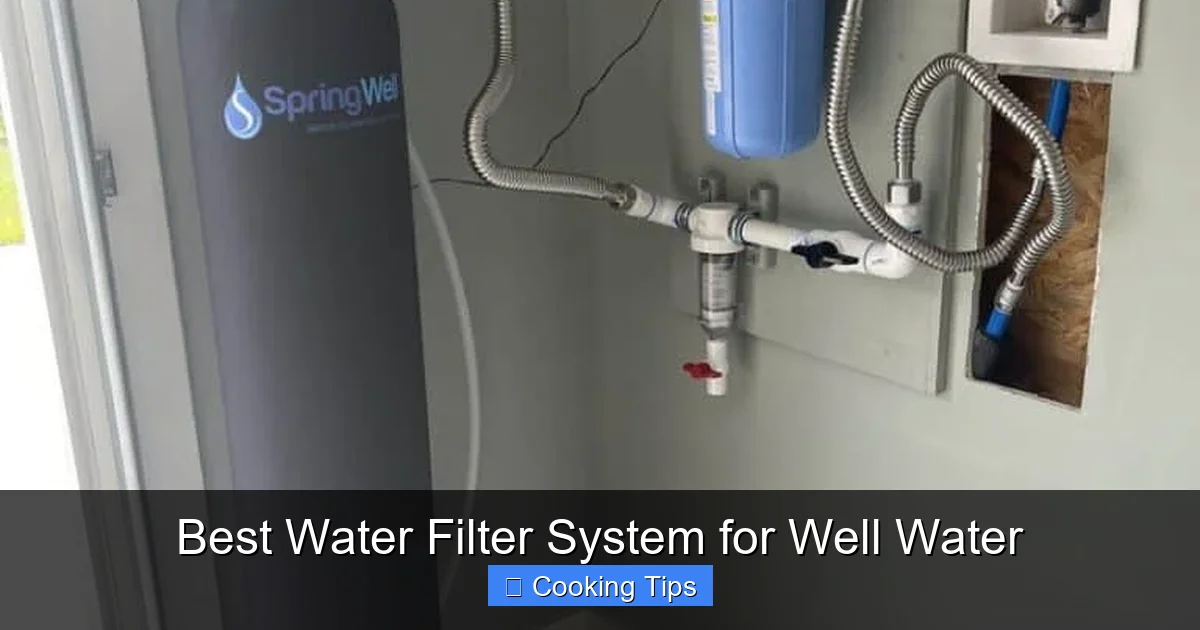
Visual guide about Best Water Filter System for Well Water
Image source: waterdefense.org
Hardness (Calcium & Magnesium)
What it is: High levels of dissolved calcium and magnesium.
Effects: Leaves scale buildup in pipes, appliances, and fixtures. Can cause dry skin and hair, and dull-looking laundry.
Solution: Water softener.
Iron and Manganese
What it is: Dissolved or particulate iron and manganese.
Effects: Stains sinks, tubs, and toilets red/brown (iron) or black/brown (manganese). Can impart a metallic taste to water.
Solution: Iron filter, water softener (if dissolved), or specialized oxidation filters.
Sulfur (Hydrogen Sulfide)
What it is: A gas that creates a distinct rotten egg smell.
Effects: Unpleasant odor and taste. Can tarnish silverware and affect the taste of food and beverages.
Solution: Sulfur filter (often an oxidizing filter), carbon filter, or air injection system.
Sediment (Sand, Silt, Rust)
What it is: Tiny particles of dirt, sand, rust, or other debris.
Effects: Cloudy or murky water. Can clog pipes and appliances. Wears down plumbing.
Solution: Sediment filter.
Bacteria and Viruses
What it is: Microorganisms like E. coli, coliform bacteria, giardia, and cryptosporidium.
Effects: Can cause serious illness. Not visible, odorless, or tasteless.
Solution: UV sterilizer, ultrafiltration, or reverse osmosis (RO).
Nitrates
What it is: A common contaminant from fertilizers or septic systems.
Effects: Dangerous for infants (blue baby syndrome) and can be a long-term health risk for adults.
Solution: Reverse osmosis, ion exchange, or specialized nitrate filters.
Arsenic
What it is: A naturally occurring toxic metal.
Effects: Serious long-term health risks, including cancer.
Solution: Reverse osmosis, specialized arsenic filters.
VOCs (Volatile Organic Compounds)
What it is: Chemicals from pesticides, solvents, or industrial pollution.
Effects: Can cause a range of health problems, including cancer and neurological damage.
Solution: Activated carbon filters, reverse osmosis.
Step 3: Choose the Right Type of Water Filter System
Now that you know what you’re looking for, you can start exploring the different types of filtration systems available. Often, you’ll need a combination of filters to address all your water’s issues.
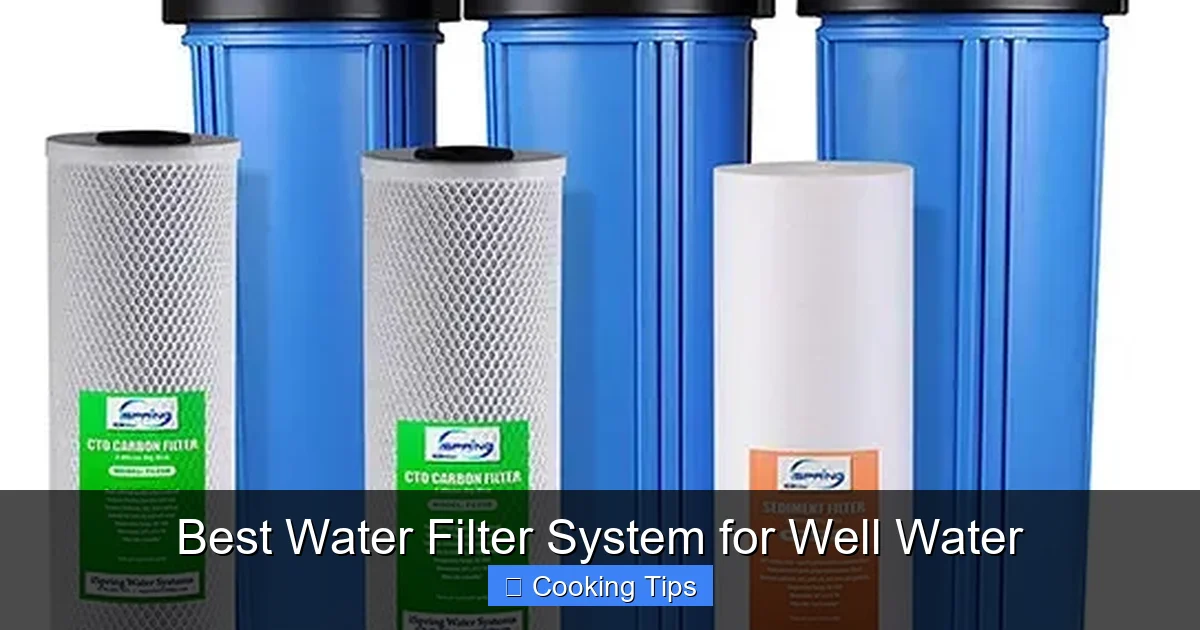
Visual guide about Best Water Filter System for Well Water
Image source: watertechadvice.com
Sediment Filters
Purpose: To remove visible particles like sand, silt, rust, and dirt.
How they work: Water passes through a porous material (like pleated paper, string-wound fibers, or spun polypropylene) that traps larger particles.
Placement: Usually the first stage in a multi-stage system to protect finer filters from clogging.
Maintenance: Cartridges need to be replaced regularly, typically every 1-6 months, depending on water quality.
Activated Carbon Filters (GAC and Carbon Block)
Purpose: To remove chlorine, VOCs, pesticides, herbicides, and improve taste and odor by adsorbing contaminants.
How they work: Carbon has a highly porous surface that attracts and holds onto contaminants. Granular Activated Carbon (GAC) uses loose carbon granules, while Carbon Block uses compressed carbon for finer filtration.
Placement: Effective for both whole-house and point-of-use systems.
Maintenance: Cartridges need replacement, usually every 6-12 months.
Water Softeners
Purpose: To remove hardness minerals like calcium and magnesium.
How they work: They use ion exchange. Resin beads are coated with sodium ions. As hard water passes through, the calcium and magnesium ions stick to the resin, releasing sodium ions into the water. The system periodically regenerates by flushing the resin with a brine (salt) solution.
Placement: Typically installed as a whole-house system.
Maintenance: Requires regular addition of salt to the brine tank. The resin bed may need replacement every few years.
Iron Filters (Oxidizing Filters)
Purpose: To remove dissolved iron, manganese, and hydrogen sulfide.
How they work: These filters typically oxidize the contaminants (turn them into a solid form) and then filter them out. Common types include air-injection oxidizers, manganese greensand, or catalytic carbon.
Placement: Usually installed as a whole-house system.
Maintenance: Varies by type; some require periodic backwashing, while others might need specific cleaning agents or regeneration. Salt may be needed for some types.
UV Sterilizers
Purpose: To kill bacteria, viruses, and other microorganisms.
How they work: Water passes through a chamber where it’s exposed to ultraviolet light, which inactivates the DNA of microorganisms, rendering them harmless.
Placement: Typically installed as a whole-house system, often after other filters.
Maintenance: The UV lamp needs to be replaced annually, and the quartz sleeve needs cleaning periodically.
Reverse Osmosis (RO) Systems
Purpose: To remove a very wide range of contaminants, including dissolved solids, heavy metals (like arsenic, lead), nitrates, salts, and even some bacteria and viruses.
How they work: Water is forced under pressure through a semi-permeable membrane that allows water molecules to pass but blocks most other dissolved substances. RO systems usually have multiple stages, including pre-filters and post-filters.
Placement: Most commonly installed as a point-of-use system for drinking and cooking water, but whole-house RO systems are also available (though expensive and complex).
Maintenance: Pre-filters and post-filters need regular replacement (every 6-12 months). The RO membrane is the most expensive component and typically lasts 2-5 years.
Step 4: Decide Between Whole-House and Point-of-Use Systems
This decision depends on your specific needs and the contaminants you are trying to address.
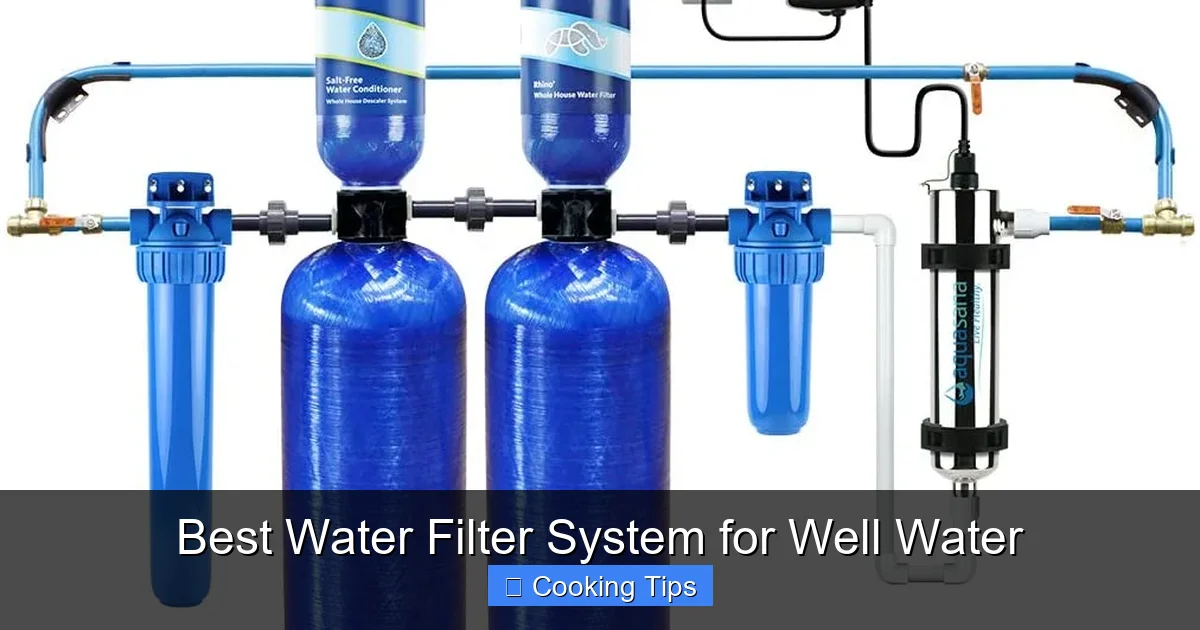
Visual guide about Best Water Filter System for Well Water
Image source: waterfilterspot.com
Whole-House Water Filter Systems
What they are: Installed where the water enters your home, treating all the water that comes out of every tap, shower, and appliance.
Pros: Provides treated water throughout the entire house. Protects all your plumbing and appliances from sediment and scale. Ideal for addressing issues like hardness, iron, or general sediment that affects bathing and laundry.
Cons: Higher initial cost and more complex installation. Requires more frequent filter changes for all the water used. Can be overkill if only specific water uses are problematic.
Point-of-Use (POU) Water Filter Systems
What they are: Installed at a specific fixture, most commonly under the kitchen sink for drinking water, or on a showerhead.
Pros: More affordable initial cost. Easier to install and maintain. Targets specific water uses, like drinking and cooking water, making it efficient for those purposes.
Cons: Only treats water at that specific location. Doesn’t protect the rest of your plumbing or appliances. If you have multiple concerns (e.g., hardness in the shower and bad taste for drinking), you might need multiple POU systems.
Recommendation: For well water with multiple issues, a common and effective strategy is to use a whole-house system for primary filtration (e.g., sediment, iron, softening) and then a point-of-use system (like RO) for drinking water if very high purity is desired or specific contaminants like nitrates or arsenic are present.
Step 5: Consider Installation and Maintenance
Even the best water filter system won’t work well if it’s not installed correctly or if you neglect its maintenance.
Installation
DIY vs. Professional: Simple POU systems like under-sink filters or showerhead filters are often easy for a DIYer. Whole-house systems, especially those involving plumbing modifications, might be best left to a qualified plumber or water treatment professional. Incorrect installation can lead to leaks, reduced system performance, and potential damage.
Maintenance
This is crucial for ensuring your filter continues to work effectively and lasts as long as possible.
- Regular Filter Replacements: This is the most common maintenance task. Follow the manufacturer’s recommendations or replace them when you notice a drop in water pressure or a return of the original water problem.
- System Cleaning: Some systems, like UV sterilizers, require periodic cleaning of components.
- Salt Refills: For water softeners, you’ll need to ensure the brine tank is adequately filled with salt.
- Professional Servicing: For complex systems, consider occasional professional checks to ensure everything is running optimally.
Tip: Keep a log of filter replacement dates to stay on track.
Step 6: Evaluate Cost, Warranties, and Certifications
When choosing a system, it’s wise to look beyond just the initial price tag.
Initial Cost
This includes the purchase price of the system and any installation fees. Whole-house systems are generally more expensive upfront than POU systems.
Ongoing Costs
Don’t forget the cost of replacement filters, salt (for softeners), electricity (for UV or RO pumps), and potential maintenance or repair costs. These can add up significantly over the life of the system.
Warranties
A good warranty can protect your investment. Look for systems that offer at least a 1-year warranty on parts and labor, and longer warranties on tanks or major components.
Certifications
Look for certifications from independent organizations like NSF International. These certifications ensure that the system has been tested and verified to meet specific standards for performance and safety. Common certifications include:
- NSF/ANSI Standard 42: For aesthetic effects (chlorine taste and odor, sediment).
- NSF/ANSI Standard 53: For health effects (lead, mercury, VOCs, cysts).
- NSF/ANSI Standard 58: For Reverse Osmosis Systems.
- NSF/ANSI Standard 55: For Ultraviolet Microbiological Water Treatment Systems.
A system with a relevant NSF certification provides extra assurance that it will perform as advertised.
Step 7: Putting It All Together – Making Your Choice
Now it’s time to bring all this information together. Imagine your well water test results and your specific needs.
Scenario Example:
Your test results show high levels of iron, moderate hardness, and some sediment. You also notice a slight sulfur smell.
Recommended System:
- Whole-House:
- Stage 1: A 5-micron sediment filter to catch any larger particles.
- Stage 2: An iron filter designed to oxidize and remove iron and manganese (e.g., an air injection oxidizer or a manganese greensand filter). This will also help with the sulfur smell.
- Stage 3: A water softener to address the hardness.
- Stage 4 (Optional, but good practice for well water): An activated carbon filter for further taste and odor improvement, and to catch any residual smaller contaminants.
- Point-of-Use (for drinking water): If your iron levels are still concerning for drinking or you want the highest purity, an under-sink Reverse Osmosis system would be an excellent addition to your drinking water tap.
This multi-stage approach ensures that all your water is protected from the most common well water issues, while providing exceptionally clean drinking water.
Conclusion
Choosing the best water filter system for your well water is a process that requires careful consideration. It starts with understanding your water, then identifying the right technology to address any issues, and finally, making a decision based on your budget and maintenance capabilities. By following these steps, you can ensure that your well water is not only safe to drink but also tastes great. Investing in a quality water filtration system is an investment in your health, your home, and your peace of mind.
