

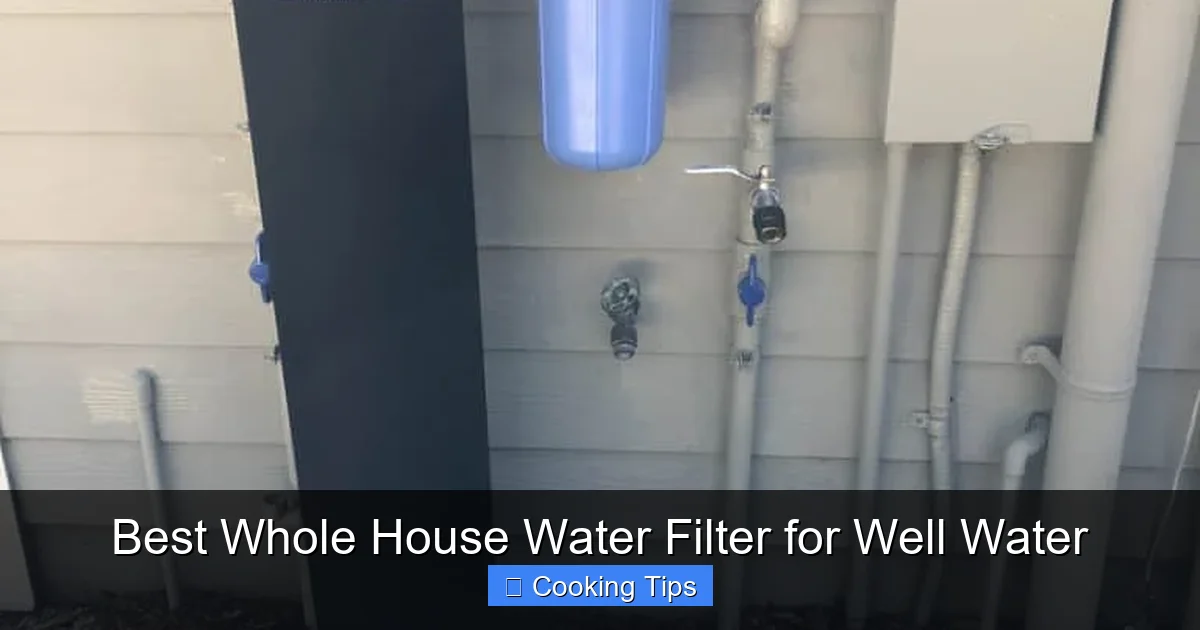
This comprehensive guide helps you choose the best whole house water filter for your well water. We’ll walk you through understanding your well water’s unique challenges and the various filtration technologies available. Learn how to select the right system for clear, safe, and great-tasting water throughout your home.
Key Takeaways
- Understand Your Well Water’s Needs: Testing your well water is the crucial first step to identify specific contaminants like sediment, iron, sulfur, bacteria, or hardness, which dictates the type of filtration required.
- Explore Filtration Technologies: Different filters target different issues. Sediment filters remove particles, carbon filters reduce chemicals and improve taste/odor, UV filters neutralize bacteria, and water softeners address mineral buildup.
- Consider System Capacity and Flow Rate: Ensure the filter system can handle your household’s water usage without reducing pressure and that it’s sized appropriately for your home’s plumbing.
- Factor in Maintenance and Costs: Replacement filter cartridges, electricity usage (for UV or some softeners), and initial installation costs are all important financial considerations.
- Prioritize Certifications: Look for NSF/ANSI certifications to ensure the filter effectively removes the contaminants it claims to and is made from safe materials.
- Professional Installation is Recommended: While some DIY is possible, professional installation ensures the system is correctly integrated into your plumbing for optimal performance and longevity.
Best Whole House Water Filter for Well Water
Having a well at home offers a connection to nature and a sense of self-sufficiency. However, well water can also be a complex beast. Unlike municipal water, which undergoes rigorous treatment, well water’s quality can vary dramatically and may contain a range of contaminants that affect its taste, odor, and safety. This is where a whole house water filter becomes an essential investment for any well owner. This guide will equip you with the knowledge to choose the best whole house water filter for your well water, ensuring your family has access to clean, pure, and delicious water for drinking, cooking, and bathing.
By the end of this guide, you’ll understand:
- Why testing your well water is paramount.
- The common contaminants found in well water and their effects.
- The different types of whole house water filters and what they treat.
- How to select a filter system that meets your specific needs and budget.
- Important considerations for installation and maintenance.
Step 1: Test Your Well Water Thoroughly
This is non-negotiable. Before you even think about buying a filter, you need to know what’s in your water. Well water quality isn’t static; it can change due to seasonal rains, agricultural runoff, or nearby industrial activity. A comprehensive water test is your roadmap to selecting the right filtration system.
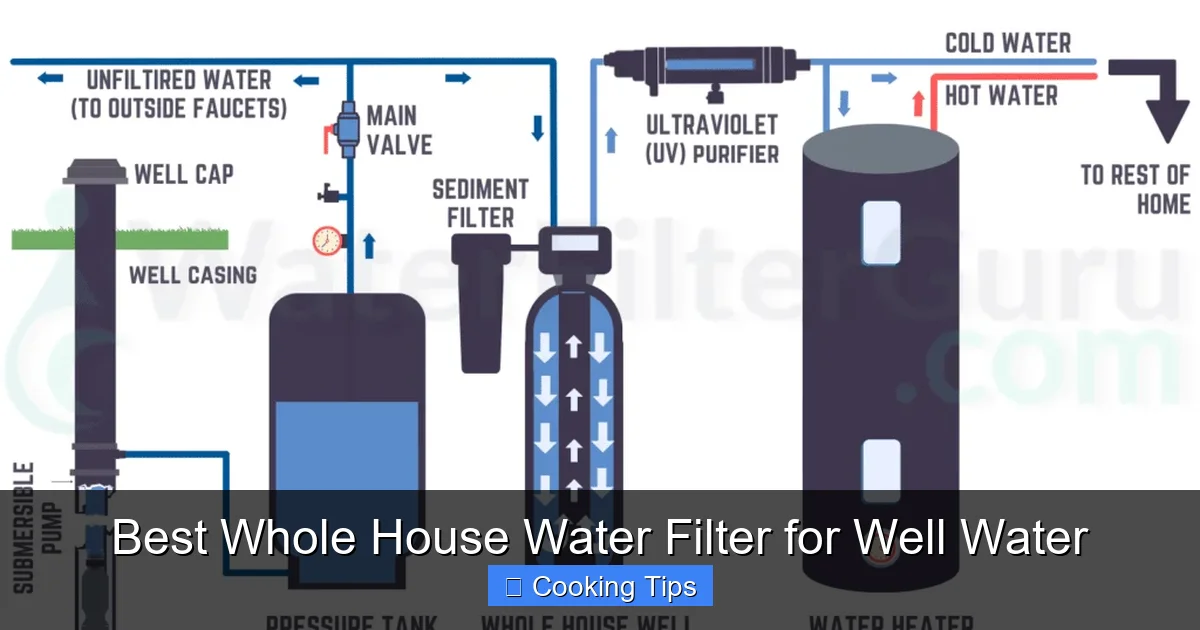
Visual guide about Best Whole House Water Filter for Well Water
Image source: waterfilterguru.com
Why Testing is Crucial
Municipal water supplies are regularly tested and treated. Your well water, however, relies on the earth’s natural filtration and your well’s integrity. Without testing, you’re essentially guessing at the problem, which can lead to buying an ineffective filter and wasting money. Contaminants in well water can range from benign but annoying (like sulfur leading to a rotten egg smell) to genuinely harmful (like E. coli or high levels of lead).
What to Test For
Your test should cover:
- Physical Contaminants: Sediment, sand, silt, and turbidity.
- Chemical Contaminants: Iron, manganese, calcium, magnesium (hardness), chlorine, nitrates, arsenic, lead, pesticides, and volatile organic compounds (VOCs).
- Biological Contaminants: Bacteria (like E. coli and coliform), viruses, and other microorganisms.
- Odor and Taste: Sulfur (rotten egg smell) is common.
How to Get Your Water Tested
You have a few options:
- Local Health Department: Many offer free or low-cost well water testing services. This is an excellent starting point.
- Certified Water Testing Labs: Search online for accredited laboratories in your area. They provide detailed reports and can often interpret the results for you.
- Home Water Testing Kits: These are convenient for basic checks but are less comprehensive than lab tests. They are good for initial screening but shouldn’t be your sole method.
Tip: Collect your water sample according to the lab’s instructions, typically from a cold-water tap that hasn’t been used for a few hours, to ensure accurate results.
Step 2: Understand Common Well Water Contaminants and Their Effects
Once you have your test results, you’ll start to see patterns. Here’s a breakdown of common issues and what they mean for your water:
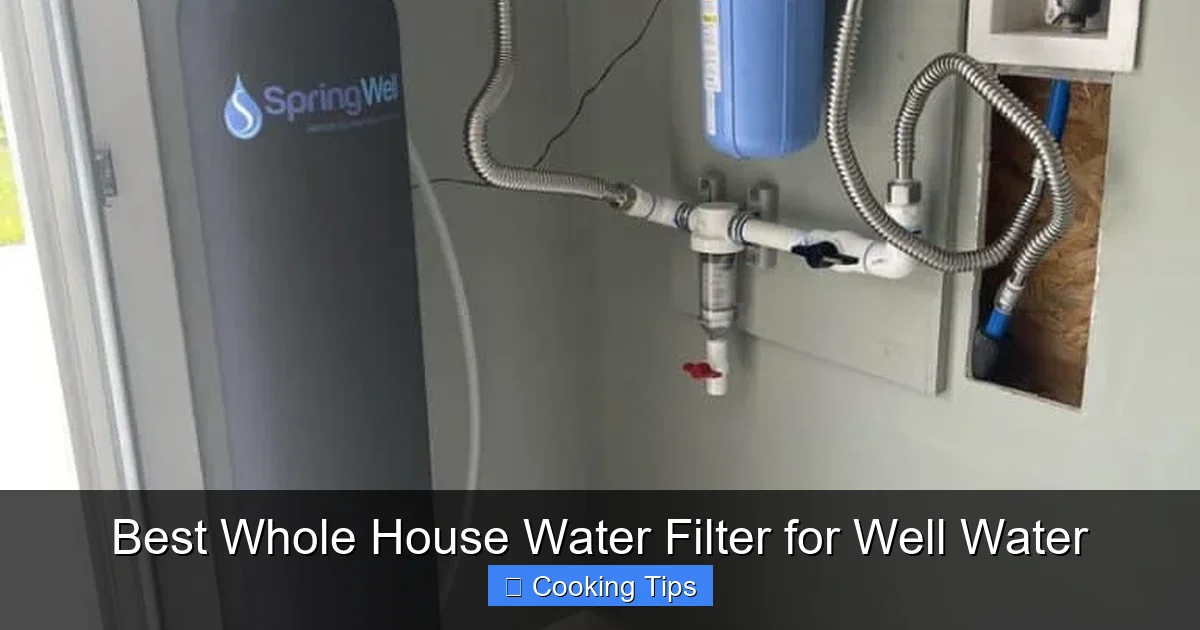
Visual guide about Best Whole House Water Filter for Well Water
Image source: waterdefense.org
Sediment and Turbidity
What it is: Tiny particles of sand, silt, rust, and clay suspended in the water.
Effects: Cloudy water, potential for clogs in plumbing fixtures and appliances, gritty feeling, and can carry other contaminants.
Iron and Manganese
What it is: Dissolved minerals that are common in groundwater.
Effects: Metallic taste, rust-colored stains on fixtures and laundry, and can contribute to a slimy feel.
Hardness (Calcium and Magnesium)
What it is: High concentrations of dissolved minerals, primarily calcium and magnesium.
Effects: Soap doesn’t lather well, soap scum buildup, scale deposits in pipes, water heaters, and appliances, reducing their efficiency and lifespan.
Sulfur (Hydrogen Sulfide)
What it is: A gas dissolved in water, often produced by bacteria.
Effects: Distinct rotten egg smell, unpleasant taste, can tarnish silverware.
Bacteria and Viruses
What it is: Microorganisms that can enter wells from surface water contamination or faulty well construction.
Effects: Serious health risks, including gastrointestinal illnesses. This is a critical contaminant to address.
Nitrates
What it is: Chemical compounds often from fertilizers or sewage.
Effects: Dangerous for infants, causing “blue baby syndrome.” Higher levels can be a health concern for adults too.
Step 3: Explore Whole House Water Filtration Technologies
With your contaminant profile in hand, you can now look at the technologies designed to address them. Most whole house systems employ a multi-stage approach for comprehensive treatment.
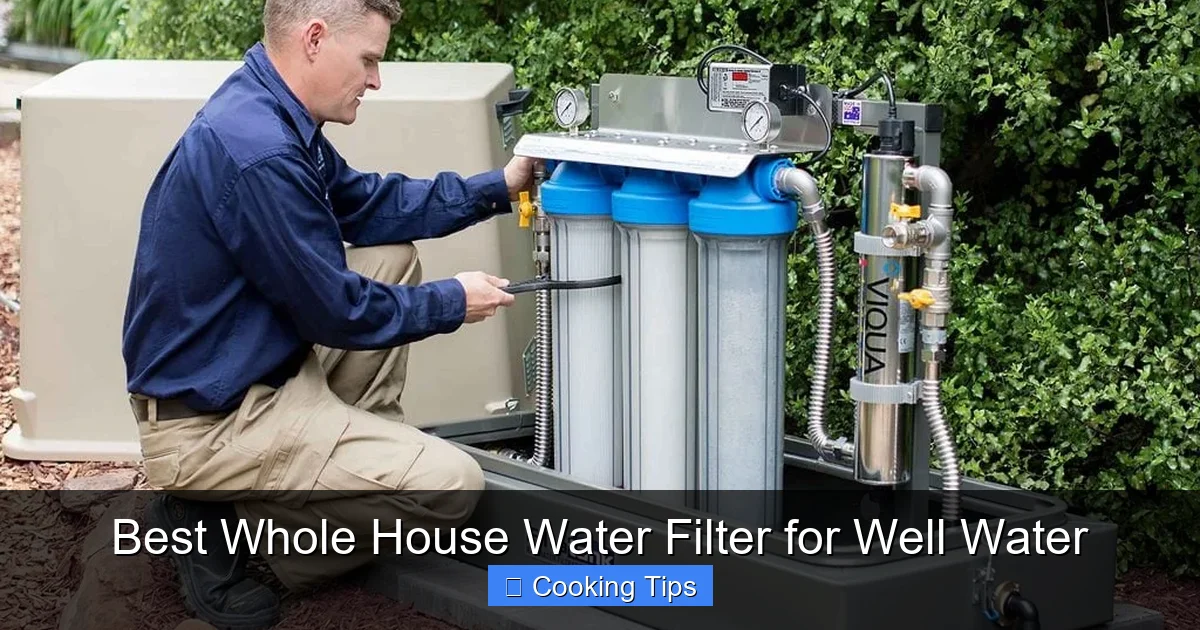
Visual guide about Best Whole House Water Filter for Well Water
Image source: tankdoctor.com.au
Sediment Filters
How they work: These are physical barriers that trap particles. They come in various micron ratings (smaller micron ratings capture finer particles).
Best for: Removing sand, silt, rust, and other visible debris.
Use case: Often the first stage in a multi-stage system to protect subsequent filters from clogging.
Activated Carbon Filters (GAC and Carbon Block)
How they work: Carbon’s porous surface adsorbs impurities like chlorine, VOCs, pesticides, and improves taste and odor.
Best for: Improving taste and smell, reducing chlorine, VOCs, and some other chemicals. Granular Activated Carbon (GAC) is common, while carbon block filters offer finer filtration.
Use case: Excellent for addressing musty or chemical tastes and odors. They don’t remove minerals or bacteria.
Water Softeners (Ion Exchange)
How they work: These systems use resin beads to swap calcium and magnesium ions for sodium ions. They require a brine tank for regeneration.
Best for: Reducing hardness, preventing scale buildup, improving soap lathering, and extending appliance life.
Use case: Essential for homes with hard well water. Note: they add a small amount of sodium to the water. Salt-free conditioners are an alternative that “conditions” minerals without removing them.
Iron Filters (Oxidizing Filters)
How they work: These filters oxidize iron and manganese, converting them into solid particles that can then be filtered out. Common types include air injection oxidation (AIO) and media filters like Birm or Pyrolox.
Best for: Removing dissolved iron and manganese that cause staining and metallic taste.
Use case: A must-have if your water test shows high iron or manganese levels.
UV (Ultraviolet) Sterilizers
How they work: UV light effectively kills bacteria, viruses, and other microorganisms by damaging their DNA, preventing them from reproducing.
Best for: Water that is microbiologically unsafe. This is crucial for preventing waterborne illnesses.
Use case: Essential for wells with any indication of bacterial contamination. Often used as a final stage after other filtration.
Specialty Filters
What they are: Filters designed for specific contaminants like arsenic, lead, or nitrates. These might involve specific media beds or reverse osmosis (though whole-house RO is less common due to water waste and pressure drop).
Best for: Addressing unique, high-level contaminants identified in your water test.
Step 4: Selecting the Best Whole House Water Filter System
Now it’s time to piece together your ideal system based on your water test results and household needs.
Consider a Multi-Stage System
For well water, a single filter is rarely sufficient. Most effective systems combine several types of filtration. A common setup might include:
- Stage 1: Sediment Filter (e.g., 5-micron) to remove larger particles.
- Stage 2: Activated Carbon Filter (e.g., GAC or carbon block) to address taste, odor, and chemicals.
- Stage 3: Water Softener if hardness is an issue.
- Stage 4: Iron Filter if iron/manganese levels are elevated.
- Stage 5: UV Sterilizer for microbiological safety.
The order and specific type of filter can be adjusted based on your water test. For example, if you have very high iron, a dedicated iron filter might come before the carbon filter.
Flow Rate and Capacity
Flow Rate: Measured in gallons per minute (GPM). Your filter system’s flow rate should meet or exceed the peak demand of your household. To determine this, add up the GPM of all appliances that might run simultaneously (e.g., showers, washing machine, dishwasher). For an average home, 10-15 GPM is usually sufficient, but larger homes or those with multiple bathrooms might need more.
Capacity: Filters have a lifespan based on the volume of water they can treat before needing replacement or regeneration. Choose a system with a capacity that balances cost and convenience of replacement.
Certifications Matter
Look for products certified by the NSF (National Sanitation Foundation) or ANSI (American National Standards Institute). These certifications assure you that the filter has been tested to remove specific contaminants and that the materials used are safe for drinking water. Common NSF standards for filters include:
- NSF/ANSI Standard 42: For aesthetic effects (chlorine taste and odor, particulates).
- NSF/ANSI Standard 53: For health effects (lead, mercury, VOCs, cysts).
- NSF/ANSI Standard 58: For Reverse Osmosis Systems.
- NSF/ANSI Standard 55: For Ultraviolet Microbiological Water Treatment Systems.
Budget and Ongoing Costs
Whole house water filter systems vary widely in price. Consider:
- Initial Purchase Price: From a few hundred to several thousand dollars.
- Installation Costs: If you hire a plumber, factor this in.
- Replacement Filter Costs: Cartridges need regular replacement (e.g., every 3-12 months).
- Maintenance: Salt for softeners, electricity for UV lights, etc.
Balance initial cost with long-term value and effectiveness. A cheaper system that doesn’t work well is no bargain.
Step 5: Installation and Maintenance
Proper installation and regular maintenance are key to the long-term performance and effectiveness of your whole house water filter system.
Professional Installation
While some DIY-savvy homeowners might tackle installation, it’s often best left to a qualified plumber. They can ensure the system is correctly plumbed into your main water line, bypass valve is installed for maintenance, and it’s properly sealed to prevent leaks. Incorrect installation can lead to pressure issues, leaks, and reduced filter efficiency.
Regular Maintenance Schedule
- Sediment Filter Replacement: Typically every 3-12 months, depending on water quality and filter micron rating.
- Carbon Filter Replacement: Usually every 6-12 months, or when taste/odor returns.
- UV Bulb Replacement: UV bulbs have a lifespan of about one year.
- Water Softener Salt Refills: Monitor salt levels and refill as needed.
- System Flushing/Cleaning: Follow manufacturer recommendations for periodic flushing or cleaning of tanks and media.
Tip: Keep a log of when filters are replaced and maintenance is performed. This helps you stay on track and ensures you don’t miss crucial service intervals.
Troubleshooting Common Issues
Even with the best system, you might encounter minor hiccups.
- Low Water Pressure: Could indicate a clogged filter, undersized system, or a problem with the well pump. Check your filters first.
- Water Still Smells/Tastes Bad: The filter may be due for replacement, or the system might not be adequately treating the specific contaminant. Re-test your water.
- Scale Buildup Persists: If you have a softener, it may need service, or the hardness levels might be higher than anticipated.
Conclusion
Investing in the best whole house water filter for your well water is an investment in your family’s health, comfort, and the longevity of your home’s appliances. By diligently testing your water, understanding the contaminants, and choosing a multi-stage filtration system tailored to your specific needs, you can transform your well water from a potential concern into a source of pure, refreshing water. Remember to prioritize certified products and factor in ongoing maintenance for years of clean water enjoyment.
