

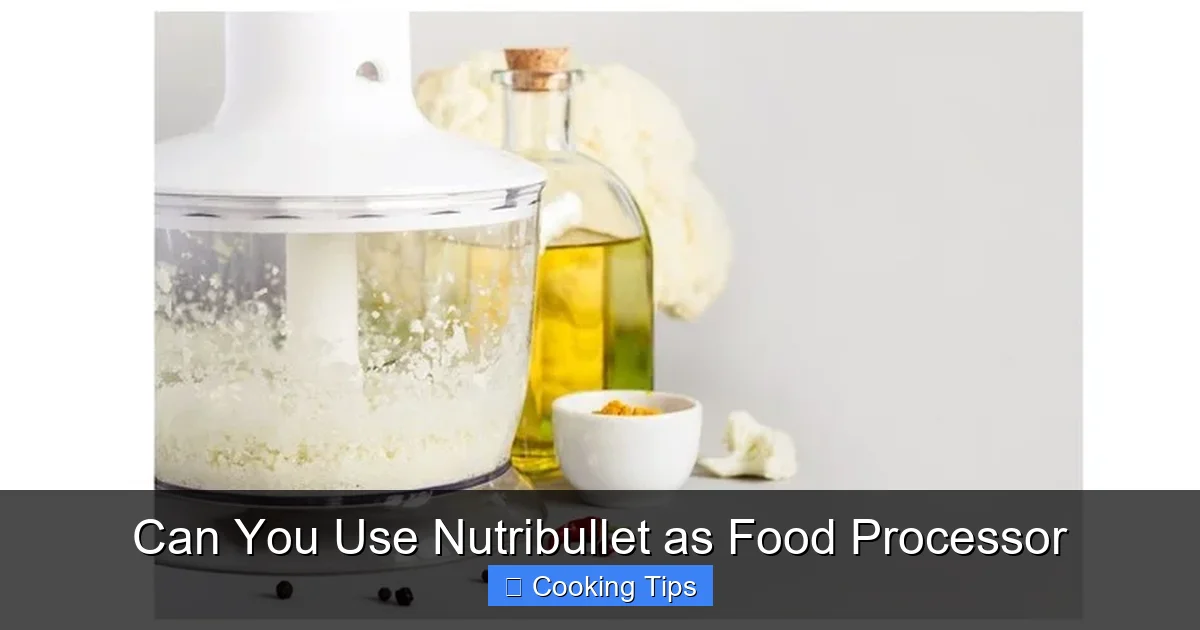
Curious if your Nutribullet can handle more than just smoothies? Yes, you can often use your Nutribullet as a food processor for many tasks. This guide will show you how to effectively chop, mince, and create purees, making your kitchen tasks more efficient. Learn the limitations and best practices to maximize your Nutribullet’s versatility.
Can You Use Nutribullet as Food Processor
In today’s fast-paced world, we’re always looking for ways to make our lives easier in the kitchen. We want to prepare healthy meals quickly and efficiently. Many of us own a Nutribullet, primarily known for its incredible smoothie-making abilities. But have you ever wondered, “Can you use Nutribullet as a food processor?” The answer, with some important caveats, is a resounding yes!
While a Nutribullet isn’t a direct replacement for a dedicated food processor with its various blades and larger capacity, it can certainly take on many of the tasks a food processor handles. This guide will walk you through how to leverage your Nutribullet for chopping, mincing, and pureeing, transforming it into a surprisingly versatile kitchen tool. We’ll explore the techniques, best practices, and what you can realistically expect.
Key Takeaways
- Nutribullets excel at blending and pureeing, making them suitable for tasks like pesto, hummus, and baby food.
- Chopping and mincing can be achieved with pulses, but a true food processor offers more control and uniformity for firmer ingredients.
- The blade design and motor power are key differences, with Nutribullets designed for liquefying rather than precise chopping.
- Choose the right Nutribullet model; some are more powerful and better suited for tougher ingredients than others.
- Preparation is crucial: cut ingredients into smaller, uniform pieces for best results.
- Overfilling and over-processing are common pitfalls; use short pulses and work in batches.
- Cleaning is straightforward, but be mindful of blade care and electrical components.
Understanding the Differences: Nutribullet vs. Food Processor
Before we dive into the “how-to,” it’s important to understand the fundamental differences between your Nutribullet and a traditional food processor. This will help you set realistic expectations and use your appliance effectively.
Blade Design and Function
The blades on a Nutribullet are designed for high-speed extraction and liquefaction. They have a specific angle that pulls ingredients downwards, creating a vortex that pulverizes everything into a smooth consistency. This is perfect for breaking down fruits, vegetables, seeds, and nuts into drinkable smoothies or creamy sauces.
A food processor, on the other hand, typically comes with a S-shaped blade that rotates horizontally. This blade is designed for chopping, dicing, slicing, shredding, and pureeing. Food processors often have multiple blade attachments for different functions, offering much more versatility in texture and cut.
Motor Power and Capacity
Nutribullets generally have powerful motors for their size, designed to efficiently break down tough ingredients for smooth blending. However, their capacity is limited to the size of the cups. Dedicated food processors come in various sizes, from small mini-choppers to large, multi-quart units, allowing you to process larger quantities of food at once.
When Can You Use Your Nutribullet as a Food Processor?
Your Nutribullet is best suited for tasks that involve breaking down ingredients into smaller pieces, pureeing, or creating relatively smooth textures. Think of it as a powerful mini-chopper or a personal-sized food processor for specific jobs.
Suitable Tasks:
- Chopping herbs and garlic: A few quick pulses can finely chop fresh herbs like parsley, cilantro, or basil, and mince garlic cloves.
- Making pesto and dips: You can create delicious pesto, hummus, guacamole, or other dips by blending your ingredients to the desired consistency.
- Pureeing cooked vegetables: Softened cooked vegetables are easily turned into smooth purees for soups, baby food, or side dishes.
- Grinding nuts and seeds: While not as fine as a dedicated grinder, your Nutribullet can process nuts and seeds into a coarse meal or paste.
- Making breadcrumbs: Stale bread can be easily turned into fine or coarse breadcrumbs.
- Creating sauces and dressings: Blend ingredients for vinaigrettes, creamy sauces, or marinades.
Tasks Where a Dedicated Food Processor is Better:
- Uniform dicing or slicing: Achieving uniform cuts for salads or garnishes is difficult with a Nutribullet.
- Shredding cheese or vegetables: This requires specific blades and techniques that a Nutribullet lacks.
- Kneading dough: The motor and blade design are not suited for dough preparation.
- Processing large quantities: The limited cup size means you’ll need to work in batches for larger recipes.
- Achieving very coarse or chunky textures: While pulsing helps, a food processor offers more control for these textures.
How to Use Your Nutribullet for Food Processing Tasks
The key to successfully using your Nutribullet as a food processor lies in technique, ingredient preparation, and understanding the pulsing method.
Step 1: Prepare Your Ingredients
This is the most crucial step when aiming for a food processor-like result.
H3: Cut Ingredients into Smaller Pieces
For any chopping or mincing task, start by cutting your ingredients into uniform, smaller pieces. This helps the blades catch the food more effectively and process it evenly. For example, if you’re chopping onions, cut them into roughly 1-inch chunks. For herbs, remove tough stems and chop them into smaller bunches. For harder ingredients like nuts, ensure they are roughly the same size.
H3: Remove Tough Stems and Skins (When Applicable)
For herbs, remove thick stems that might be too fibrous for the blades to break down. For vegetables, remove tough skins that could make the texture uneven.
H3: Consider Moisture Content
Ingredients with some moisture tend to process better than very dry ones. If you’re processing something dry like stale bread for crumbs, you might need to add a tiny bit of liquid, or process it in very small batches.
Step 2: Load the Nutribullet Cup
Correct loading is essential for optimal performance and to prevent the motor from straining.
H3: Do Not Overfill
This is a common mistake. Overfilling the cup prevents the ingredients from circulating properly and can strain the motor. Leave some headspace at the top. Aim to fill the cup no more than halfway to two-thirds for chopping tasks. For purees, you can fill it a bit higher, but always observe the “max fill” line.
H3: Add Liquid for Smoother Textures (Optional)
If you’re aiming for a smoother texture like a dip or sauce, adding a small amount of liquid (water, oil, broth, or even some of the other ingredients) can help the blades move more freely and create a smoother result. Start with a tablespoon or two and add more as needed.
Step 3: Process with Pulses
This is where you mimic the action of a food processor. Avoid continuous blending unless you want a completely liquefied product.
H3: Use Short, Sharp Pulses
For chopping and mincing, the key is to use short, quick pulses. This means pressing the cup onto the base for just a second or two, then releasing. Repeat this action. This action allows the blades to grab and chop the food without over-processing it.
H3: Check Consistency Frequently
After each pulse or a few pulses, stop and check the consistency. You can do this by removing the cup from the base and gently shaking it, or by carefully looking inside. You want to achieve your desired texture before the ingredients turn into a paste or liquefy completely.
H3: Shake and Scrape Down (If Necessary)
If ingredients are sticking to the sides of the cup, remove the cup from the base, unscrew the blade, and use a spatula to scrape down the sides. Then, reassemble and continue pulsing. You can also gently shake the cup while it’s on the base (without running the motor) to help redistribute ingredients.
Step 4: Assess and Adjust
Once you’ve reached a point where you think you’re done, assess the texture.
H3: Too Coarse?
If the pieces are still too large, continue with short pulses, checking after each one.
H3: Too Fine?
If you’ve gone too far and it’s too smooth, there’s not much you can do to make it coarser again. This is why checking frequently is so important. For purees, this might be perfectly fine.
H3: Need More Flavor or Moisture?
For dips and sauces, you might need to add more ingredients, seasonings, or a touch more liquid and pulse again to combine.
Practical Tips for Nutribullet Food Processing
Here are some extra tips to help you get the best results:
- Start with Softer Ingredients: If you’re new to this, begin with easier-to-process ingredients like soft herbs, cooked vegetables, or bread. Gradually move to tougher ingredients like onions or nuts.
- Work in Batches: For larger recipes, don’t be tempted to stuff the cup. Process ingredients in smaller batches to ensure even chopping and to avoid overloading the motor.
- Use the Right Blade: Most Nutribullets come with an extractor blade. This is the one you’ll use for most food processing tasks.
- Clean Immediately: Food residue can harden, making cleaning more difficult. Rinse the cup and blade right after use.
- Be Mindful of Overheating: If you’re processing a large batch or something particularly tough, take short breaks to allow the motor to cool down.
Troubleshooting Common Issues
Even with the best intentions, you might run into a few snags. Here’s how to fix them:
Issue: Ingredients are not chopping evenly.
Solution: Ensure ingredients are cut into uniform, smaller pieces before adding them to the cup. Also, make sure you’re not overfilling the cup, as this prevents proper circulation.
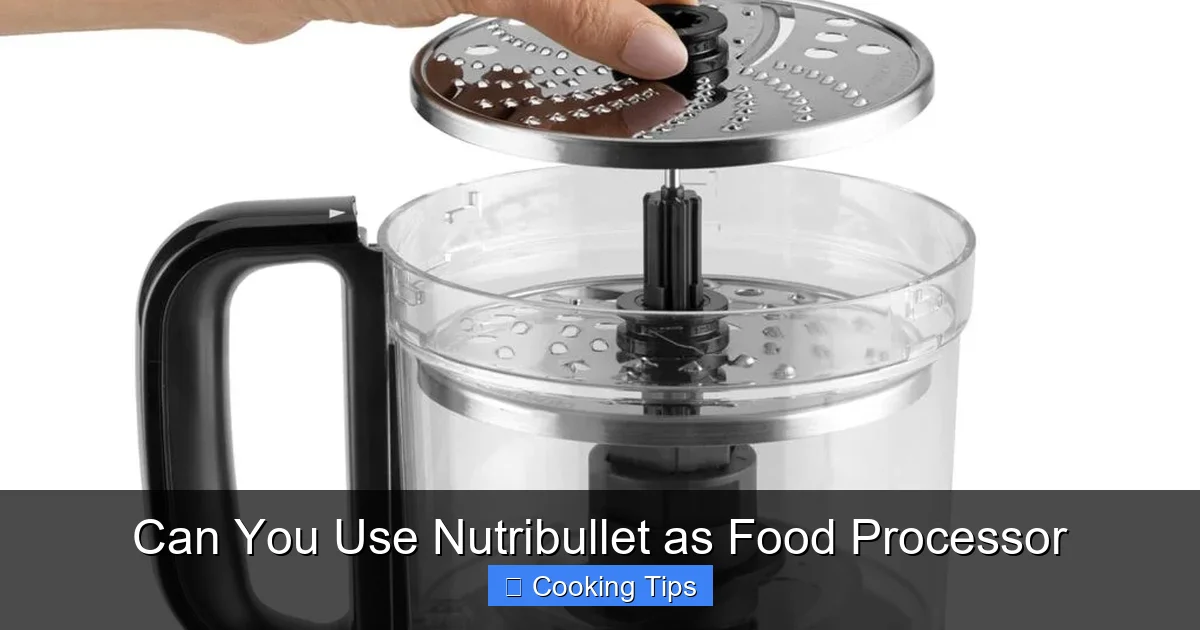
Visual guide about Can You Use Nutribullet as Food Processor
Image source: reviewfoodprocessor.com
Visual guide about Can You Use Nutribullet as Food Processor
Image source: blenderspro.com
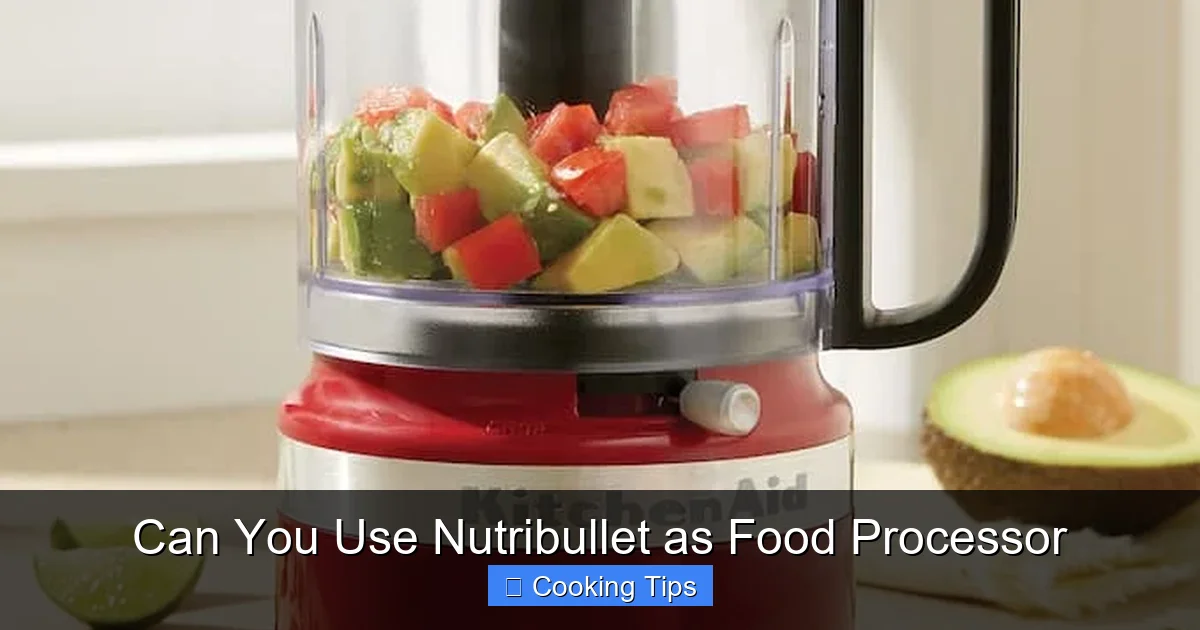
Visual guide about Can You Use Nutribullet as Food Processor
Image source: grindiit.com
Issue: The motor seems to be struggling or stopping.
Solution: You’ve likely overloaded the cup or are trying to process something too tough without adequate preparation. Stop the motor immediately. Remove some ingredients or cut them smaller. If the motor is still struggling, let it cool down for a few minutes.
Issue: The texture is too smooth, not chopped enough.
Solution: You’ve processed for too long. This is why the pulsing technique and frequent checking are so important. For future attempts, use shorter pulses.
Issue: Ingredients are sticking to the sides and not processing.
Solution: Remove the cup from the base. Unscrew the blade and use a spatula to scrape down the sides. Reassemble and continue processing. Adding a tiny bit of liquid can also help prevent sticking.
Conclusion
So, can you use a Nutribullet as a food processor? Absolutely, for many common tasks! While it won’t replace the versatility of a dedicated food processor with its specialized blades and larger capacity, your Nutribullet can be an incredibly useful tool for chopping herbs, making dips, pureeing baby food, and preparing ingredients for a variety of recipes.
By understanding the differences, preparing your ingredients properly, and mastering the pulsing technique, you can unlock a new level of functionality from your beloved Nutribullet. Embrace its power, experiment with different ingredients, and enjoy the convenience of having a capable mini-chopper right at your fingertips. Happy processing!
