
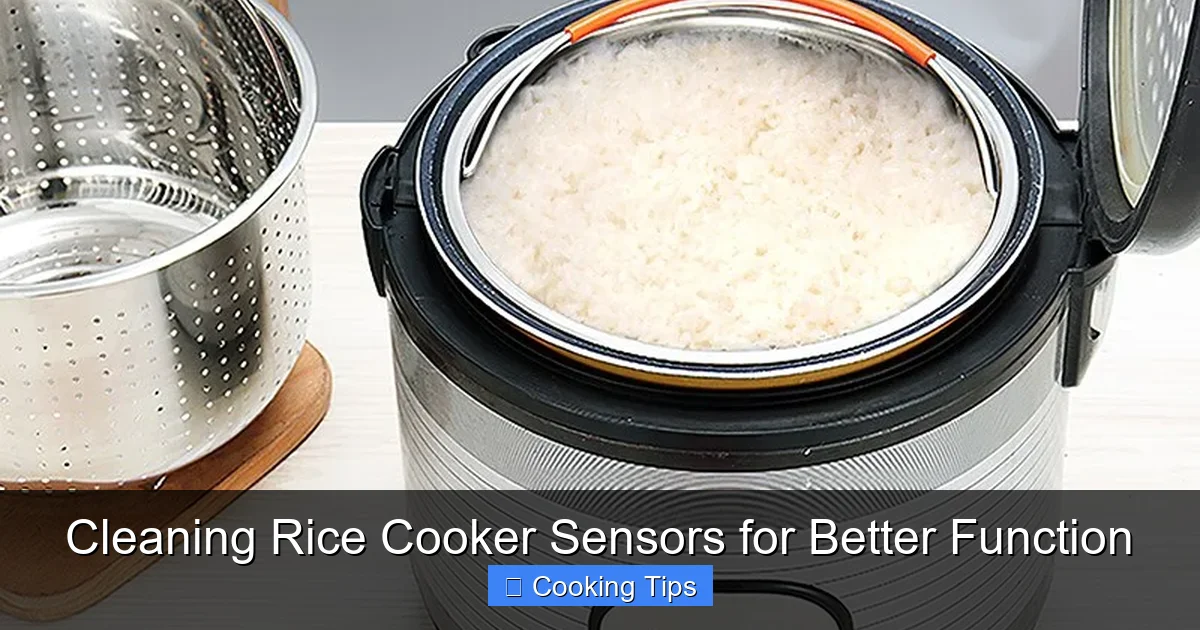
Keep your rice cooker performing its best by regularly cleaning its sensors. This guide provides step-by-step instructions and practical tips to ensure your rice always cooks to perfection. By maintaining clean sensors, you prevent cooking errors and extend the lifespan of your appliance. A clean rice cooker means consistently fluffy and delicious rice, every single time!
Key Takeaways
- Understanding Sensor Importance: Rice cooker sensors are vital for precise temperature control, determining when rice is cooked and preventing burning or undercooking.
- Identifying Sensor Locations: Most rice cookers have sensors on the inner pot’s base and sometimes on the lid or heating element.
- Gathering Cleaning Supplies: You’ll need a soft cloth, mild dish soap, a toothbrush or cotton swabs, and water. Avoid abrasive materials.
- Step-by-Step Cleaning Process: Detach the inner pot, gently wipe down the sensor area with a damp cloth and mild soap, then rinse and dry thoroughly.
- Regular Maintenance Schedule: Aim to clean your rice cooker sensors after every few uses or at least monthly for optimal performance.
- Troubleshooting Common Issues: Learn how to address problems like unevenly cooked rice or the cooker shutting off prematurely due to sensor obstruction.
- Benefits of Clean Sensors: Regular cleaning leads to consistently perfect rice, prevents lingering odors, and extends the overall life of your rice cooker.
Cleaning Rice Cooker Sensors for Better Function
Do you dream of perfectly fluffy, never-burnt rice? If your rice cooker is acting a little… off lately, it might not be the rice itself, but rather something much smaller: its sensors! These unsung heroes are the brains behind your rice cooker, dictating temperature and timing to deliver those consistently delicious results we all crave. Over time, tiny grains of rice, starchy residue, or even a stray drop of water can build up, interfering with their delicate work.
This comprehensive guide will walk you through everything you need to know about cleaning your rice cooker sensors. We’ll demystify their function, pinpoint their locations, and provide clear, step-by-step instructions for a thorough cleaning. By the end of this guide, you’ll be equipped to tackle any sensor-related issue, ensuring your rice cooker always performs at its peak. Get ready to say goodbye to undercooked grains and scorched bottoms, and hello to rice perfection!
Why Are Rice Cooker Sensors So Important?
Before we dive into the cleaning process, let’s take a moment to appreciate the magic of rice cooker sensors. These aren’t just random nubs; they are sophisticated components designed to make your life easier.
The Role of Temperature Sensors
The primary function of most rice cooker sensors is to monitor and regulate temperature. This is crucial for several reasons:
- Boiling Point Detection: Rice cookers work by bringing water to a boil. The sensors detect when the water has reached its boiling point and starts to evaporate.
- Switching to Simmer/Keep Warm: Once most of the water is absorbed or evaporated, the temperature inside the cooker begins to rise above the boiling point of water (100°C or 212°F). The sensors detect this rise and signal the cooker to switch from the ‘cook’ mode to the ‘simmer’ or ‘keep warm’ mode.
- Preventing Overcooking and Burning: By accurately monitoring the temperature changes, the sensors prevent the rice from continuing to boil vigorously and burning at the bottom.
- Ensuring Even Cooking: Consistent temperature control helps ensure that the starch in the rice gelatinizes properly, leading to a fluffy and evenly cooked texture.
Beyond Temperature: Other Sensor Functions
Some advanced rice cookers may have additional sensors that contribute to their functionality:
- Moisture Sensors: These sensors can detect the moisture content in the rice, further refining the cooking process for optimal results.
- Lid Sensors: In some models, a sensor on the lid might ensure it’s properly closed before cooking begins.
When these sensors are clean and unobstructed, they can perform their duties with pinpoint accuracy. A thin layer of starchy residue or a tiny piece of rice can throw off their readings, leading to common rice cooker woes.
Identifying Your Rice Cooker’s Sensors
The exact location and number of sensors can vary depending on your rice cooker’s make and model. However, most modern rice cookers share a few common sensor placements.
The Inner Pot’s Base: The Main Hub
This is where you’ll find the most critical sensor, often referred to as the “thermostat” or “temperature sensor.” It’s typically a small, often metallic disc or probe located at the very bottom of the inner pot, directly above the heating element.
* How to spot it: When you remove the inner pot from the cooker, look at the underside. You’ll likely see a circular or slightly raised area. This is usually where the sensor is housed or where it makes contact with the heating element. Some models might have a small protrusion or a visible metallic component.
* Why it’s important: This sensor is in direct contact with the heat and the base of the inner pot, making it the primary detector of temperature changes during the cooking cycle.
Other Potential Sensor Locations
While less common, some rice cookers might have sensors in other areas:
- The Heating Element Area: Sometimes, the sensor might be integrated directly into the heating element itself or the surrounding cavity.
- The Lid: Certain smart rice cookers might have a small sensor on the lid to ensure it’s properly sealed.
**Tip:** Always refer to your rice cooker’s user manual. It will provide specific details about the location and function of its sensors. If you’ve lost your manual, a quick online search for your model number should yield a digital copy.
Essential Cleaning Supplies
You don’t need a specialized cleaning kit to tackle your rice cooker sensors. Most households already have the necessary items.
* **Soft, lint-free cloths:** Microfiber cloths are ideal as they won’t scratch delicate surfaces and are highly absorbent.
* **Mild dish soap:** A small amount of your regular dish soap is perfect. Avoid harsh detergents or abrasive cleaners.
* **Warm water:** For rinsing and dampening cloths.
* **Cotton swabs or a soft-bristled toothbrush:** These are excellent for gently cleaning around the sensor area, especially if there are nooks and crannies.
* **Dry cloth:** For a final thorough drying.
**Important Note:** Never use abrasive scrubbers, steel wool, or harsh chemicals. These can damage the sensors and the non-stick coating of your inner pot.
Step-by-Step Guide to Cleaning Rice Cooker Sensors
Now that you know *why* and *where*, let’s get to the *how*. This process is straightforward and should become a regular part of your kitchen maintenance.
Step 1: Disconnect and Cool Down
Before you begin any cleaning, ensure your rice cooker is unplugged from the power outlet and has completely cooled down. This is a crucial safety step to prevent any electrical hazards or burns.
Step 2: Remove the Inner Pot
Carefully lift the inner pot out of the rice cooker base. Set it aside in a clean workspace.
Step 3: Inspect the Sensor Area
Turn the inner pot upside down and locate the sensor area on its base. Visually inspect it for any visible debris, starchy residue, dried-on rice grains, or discoloration. Pay close attention to any crevices or raised areas.
Step 4: Gentle Wiping
* **For Light Residue:** Dampen a soft cloth with warm water and a tiny drop of mild dish soap. Gently wipe the sensor area.
* **For Stubborn Residue:** If there’s dried-on gunk, you might need to be a bit more persistent, but still gentle.
* **Sub-step: Use a Damp Cloth:** Dampen the cloth again and hold it against the residue for a minute to soften it.
* **Sub-step: Employ a Toothbrush or Cotton Swab:** For hard-to-reach spots or stubborn bits, use a cotton swab or a soft-bristled toothbrush dipped in warm, soapy water. Gently scrub the area. Work in small, circular motions. Be careful not to apply excessive pressure. The goal is to dislodge the debris, not to scour the surface.
Step 5: Rinse Thoroughly
Once you’ve cleaned the sensor area, it’s vital to remove all soap residue.
* **Method 1 (Inner Pot):** If your inner pot is dishwasher safe, you can rinse it under running water. If not, use a clean cloth dampened with plain warm water to wipe away all soap. Ensure no soapy residue remains.
* **Method 2 (The Base Cavity):** You may also need to gently clean the area *inside* the rice cooker base where the sensor makes contact. Use a *barely damp* cloth (wring it out thoroughly!) or a cotton swab to wipe this area. **Never submerge the rice cooker base in water.**
* **Crucial Caution:** Water should *never* enter the electrical components of the rice cooker base. Only use a damp cloth and ensure it’s wrung out extremely well.
Step 6: Dry Completely
This is as important as cleaning itself. Any residual moisture can lead to rust or interfere with the sensor’s function.
* **Inner Pot:** Use a dry, soft cloth to thoroughly dry the underside of the inner pot, especially around the sensor area.
* **Rice Cooker Base:** Use a dry cloth or paper towel to gently dry the area where the inner pot sits and where the sensor makes contact. Allow it to air dry for a few extra minutes if you’re still concerned about moisture.
Step 7: Reassemble and Test
Once everything is completely dry, place the inner pot back into the rice cooker base. You can now plug it in and try cooking a small batch of rice to ensure everything is working correctly.
How Often Should You Clean Rice Cooker Sensors?
Consistency is key to maintaining optimal performance. The frequency of cleaning depends on how often you use your rice cooker and what you cook in it.
* **For Daily Users:** If you use your rice cooker daily or multiple times a week, aim to wipe down the sensor area after each use, or at least once a week. A quick wipe can prevent build-up.
* **For Moderate Users:** If you use your rice cooker a few times a month, a thorough sensor cleaning every month should suffice.
* **After Cooking Starchy Foods:** If you cook anything particularly starchy or prone to sticking (like certain types of rice or porridge), it’s a good idea to give the sensor area a quick clean immediately after use.
* **If You Notice Issues:** If you start experiencing unevenly cooked rice, the cooker shutting off too soon, or rice burning, it’s a clear sign that your sensors need attention.
Regular, light cleaning is much easier and more effective than trying to tackle a thick layer of hardened residue.
Troubleshooting Common Rice Cooker Sensor Issues
Even with regular cleaning, you might encounter problems. Here’s how to address some common issues related to sensors:
Problem 1: Rice is Under- or Overcooked
* Possible Cause: Obstructed or dirty sensors are not accurately reading the temperature, leading to incorrect cooking cycles.
* Solution: Perform a thorough cleaning of the sensor on the inner pot’s base and the corresponding area in the cooker base. Ensure the inner pot is sitting correctly on the heating element.
Problem 2: Rice Cooker Shuts Off Too Soon (Still Wet)
* Possible Cause: The sensor might be detecting heat prematurely, perhaps due to a minor blockage or a faulty connection.
* Solution: Clean the sensors meticulously. If the problem persists, it might indicate a malfunctioning sensor. Check your warranty or contact the manufacturer.
Problem 3: Rice is Burnt or Scorched at the Bottom
* Possible Cause: The sensor isn’t accurately detecting when the water has evaporated, causing the cooker to stay on the high-heat ‘cook’ setting for too long.
* Solution: Thoroughly clean the sensor. Also, ensure you’re using the correct water-to-rice ratio as per your cooker’s instructions. Using too little water can exacerbate burning.
Problem 4: “Keep Warm” Function Isn’t Working Properly
* Possible Cause: While primarily related to the main cooking sensor, issues with the heating element or power supply can also affect the ‘keep warm’ function. However, a dirty main sensor can sometimes trick the cooker into thinking it’s done too early.
* Solution: Clean the main cooking sensor. If it continues, check the power cord and the cooker’s settings.
**When to Seek Professional Help:**
If you’ve cleaned the sensors thoroughly and are still experiencing persistent problems, it’s possible the sensor itself is damaged or faulty. In such cases, it’s best to consult your rice cooker’s user manual for warranty information or contact the manufacturer’s customer support. Avoid attempting to repair internal components yourself, as this can be dangerous and void your warranty.
The Benefits of Pristine Rice Cooker Sensors
Investing a few minutes in cleaning your rice cooker sensors offers significant rewards:
- Consistently Perfect Rice: The most obvious benefit is the return to perfectly cooked rice – fluffy, tender, and never mushy or burnt.
- Extended Appliance Lifespan: Regular maintenance prevents strain on the heating element and other components, helping your rice cooker last longer.
- Prevents Lingering Odors: Starchy residue can harbor bacteria and lead to unpleasant smells. Cleaning eliminates these odor culprits.
- Improved Energy Efficiency: A well-functioning sensor ensures the cooker operates efficiently, using the appropriate amount of energy for each cycle.
- Peace of Mind: Knowing your appliance is clean and working optimally allows you to enjoy your meals without worry.
Conclusion
Your rice cooker’s sensors are small but mighty components that play a critical role in delivering delicious rice. Don’t underestimate the impact of a little starchy residue or a stray grain. By understanding their importance, knowing where to find them, and following these simple cleaning steps, you can ensure your rice cooker performs flawlessly for years to come.
Make sensor cleaning a regular part of your kitchen routine, and you’ll be rewarded with consistently perfect rice, every single time. Happy cooking!
