

Is your coffee maker refusing to start the brew cycle? Don’t despair! This comprehensive guide walks you through common reasons and simple fixes to get your beloved coffee flowing again. From checking power and water levels to deeper troubleshooting, we’ll help you identify and resolve the issue, ensuring your morning caffeine fix is back on track. Learn to diagnose and fix a non-brewing coffee maker with easy, actionable steps.
Coffee Maker Won’t Start Brew Cycle: What To Do
The aroma of freshly brewed coffee is a morning ritual for many. But what happens when your trusty coffee maker decides to take a silent protest and refuses to start the brew cycle? It can be frustrating, especially when you’re craving that first sip of energizing caffeine. Don’t worry! This guide will walk you through the most common reasons why your coffee maker might not be starting and provide step-by-step solutions to get it brewing again. We’ll cover everything from the simplest checks to more involved troubleshooting.
Key Takeaways
- Power Supply Check: The most common reason a coffee maker won’t start is a simple power issue. Ensure it’s plugged in securely and the outlet is working.
- Water Reservoir Levels: Coffee makers require water to brew. Confirm the water reservoir is filled to the appropriate level and seated correctly.
- Lid and Carafe Placement: Many coffee makers have safety interlocks that prevent brewing if the lid or carafe isn’t properly in place.
- Cleanliness Matters: Mineral buildup and coffee grounds can clog internal components, preventing the brew cycle from initiating. Regular cleaning is crucial.
- Overheating Protection: If the coffee maker has overheated, it might have a safety feature that prevents it from starting until it cools down.
- Internal Component Issues: If basic troubleshooting fails, there might be a problem with internal wiring, pumps, or heating elements, requiring professional attention.
Understanding Why Your Coffee Maker Won’t Start
Before we dive into the fixes, it’s helpful to understand the basic process your coffee maker follows to start brewing. It needs power, water, and a signal to begin. When any of these elements are interrupted or malfunctioning, the brew cycle can be halted before it even begins. Common culprits range from a simple unplugged cord to more complex internal issues.
Step 1: The Most Obvious Checks – Power and Connection
The simplest solutions are often the most overlooked. Let’s start with the absolute basics.
Is it Plugged In?
This might sound incredibly basic, but in the rush of the morning, it’s easy to forget to plug in the coffee maker. Double-check that the power cord is firmly inserted into a functioning electrical outlet.
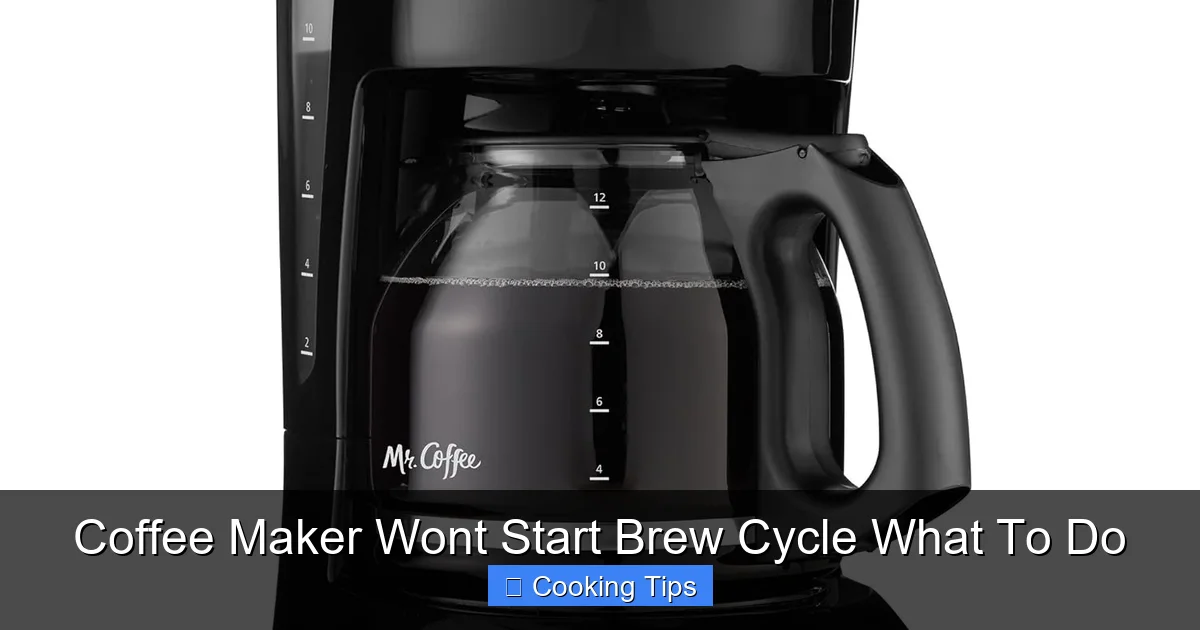
Visual guide about Coffee Maker Wont Start Brew Cycle What To Do
Image source: images-na.ssl-images-amazon.com
Test the Outlet
The issue might not be with the coffee maker itself but with the power source. To test if the outlet is working, try plugging in another small appliance, like a lamp or a phone charger. If that appliance doesn’t work, the problem is with the outlet or your home’s circuit breaker. If it does work, then the outlet is fine, and we can move on to the coffee maker.
Check the Circuit Breaker
If the outlet isn’t working, head to your home’s electrical panel and check the circuit breaker. Look for a tripped breaker (usually in the “off” position or halfway between “on” and “off”). If you find one, flip it firmly to the “off” position and then back to the “on” position. If the breaker trips again immediately, there might be a more significant electrical issue, and you should consult an electrician.
Step 2: Water Reservoir – The Lifeblood of Your Brew
Without water, there’s no coffee. This is another critical area to inspect.
Is the Water Reservoir Full?
Most coffee makers have a minimum water level requirement for them to initiate the brew cycle. Check the water reservoir and ensure it’s filled with fresh, cold water to at least the minimum line indicated by the manufacturer. If it’s too low, the machine’s sensors won’t trigger the brewing process.
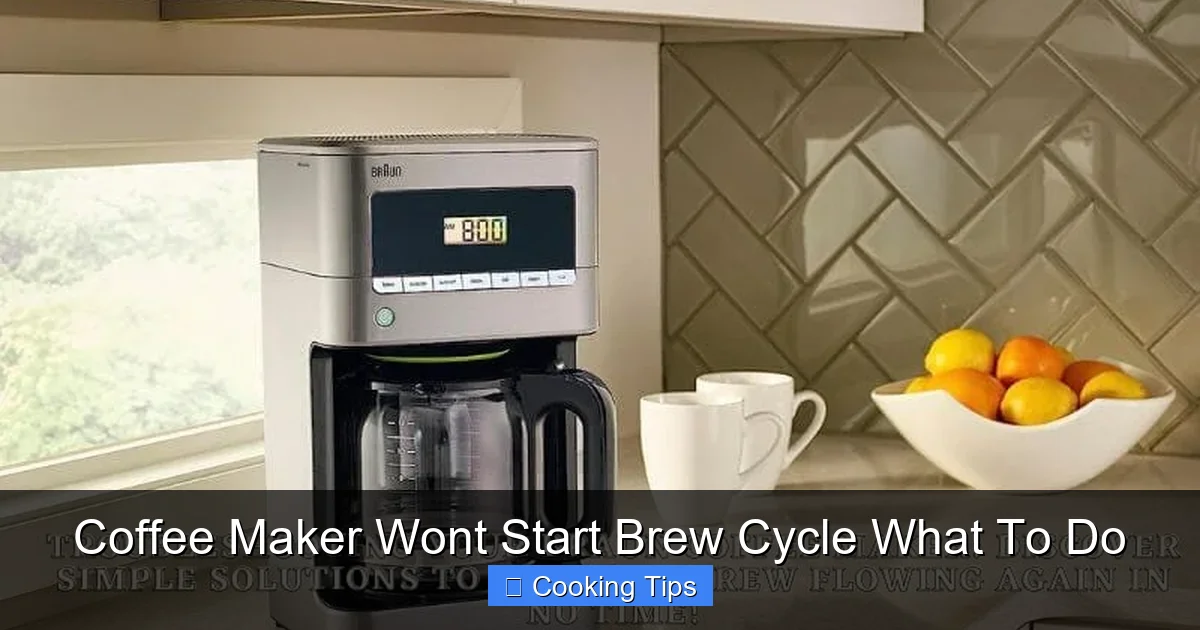
Visual guide about Coffee Maker Wont Start Brew Cycle What To Do
Image source: cafenfood.com
Is the Water Reservoir Seated Correctly?
Some coffee makers have a mechanism where the water reservoir needs to be perfectly aligned and seated for the water to flow into the heating element. Gently remove the water reservoir and then reseat it firmly. Make sure it clicks or settles into place as it’s designed to.
Is the Water Filter Holder in Place?
If your coffee maker uses a reusable or disposable water filter, ensure the filter basket or holder is properly inserted. Sometimes, if this isn’t correctly placed, it can prevent the water from flowing or trigger a safety mechanism that stops the brew cycle.
Step 3: Lid and Carafe – Safety First!
Modern coffee makers are designed with safety features to prevent spills and scalding. These often involve ensuring certain parts are correctly in place.
Is the Brew Basket/Lid Closed Properly?
Many coffee makers have a lid that covers the brew basket and water reservoir. This lid often contains a switch or sensor that tells the machine when it’s safe to brew. Ensure the lid is fully closed and latched. You might hear a click when it’s properly secured.

Visual guide about Coffee Maker Wont Start Brew Cycle What To Do
Image source: images-na.ssl-images-amazon.com
Is the Carafe in the Correct Position?
The carafe (the pot that collects your coffee) also plays a role. There’s usually a small lever or sensor at the base of the brew basket assembly that gets pressed down by the carafe. If the carafe isn’t slid all the way under the brew basket or is slightly out of position, this “pause and serve” mechanism might be engaged, preventing brewing.
Tip: Some coffee makers have a “pause and serve” feature that allows you to temporarily remove the carafe to pour a cup mid-brew. If this lever is stuck or not properly engaged by the carafe, it will prevent brewing altogether. Try wiggling the carafe slightly or ensuring it’s pushed all the way in.
Step 4: Cleaning is Key – Tackling Mineral Buildup and Blockages
Over time, mineral deposits from water (limescale) can build up inside your coffee maker, clogging the water lines and preventing it from heating or dispensing water. Coffee grounds can also accumulate and cause blockages.
Descaling Your Coffee Maker
Descaling is a crucial maintenance task that many people neglect. Limescale can significantly impede your coffee maker’s performance. Most manufacturers recommend descaling every 2-3 months, depending on your water hardness.
- Using Vinegar: A common and effective descaling solution is white vinegar. Fill the water reservoir with a mixture of equal parts white vinegar and water. Place an empty filter in the brew basket. Run a full brew cycle, stopping halfway through. Let it sit for about 30 minutes to an hour, then complete the brew cycle. Discard the vinegar-water solution.
- Rinsing is Essential: After the vinegar cycle, you must run at least two to three full brew cycles with fresh, clean water to rinse out any residual vinegar smell or taste.
- Using Commercial Descalers: You can also purchase specialized coffee maker descaling solutions from your local grocery store or online. Follow the product’s instructions carefully.
Cleaning the Brew Basket and Filter Holder
Remove the brew basket and filter holder and wash them thoroughly with warm, soapy water. Ensure no old coffee grounds are stuck in the nooks and crannies. If you use paper filters, ensure no paper shreds are left behind.
Cleaning the Carafe
Wash the carafe regularly with warm, soapy water. For stubborn stains, you can use a coffee pot cleaning brush or a descaling solution (rinse thoroughly afterward).
Step 5: Checking for Overheating Protection
Coffee makers contain heating elements and thermostats. If the machine gets too hot, or if there’s a malfunction with the thermostat, it might have an automatic shut-off to prevent damage.
Allow it to Cool Down
If you’ve recently used the coffee maker or if it feels unusually hot to the touch, it might have activated an overheat protection mechanism. Unplug the coffee maker and let it cool down for at least 30 minutes to an hour. Once it’s cool, try starting the brew cycle again.
Thermostat Issues
If the coffee maker consistently overheats or won’t start after cooling down, the thermostat might be faulty. This is a more complex issue that often requires professional repair or replacement of the unit.
Step 6: Resetting the Coffee Maker
Sometimes, a simple electronic glitch can cause a coffee maker to malfunction. A power cycle or reset can often clear these temporary errors.
Unplug and Wait
Unplug the coffee maker from the wall outlet. Leave it unplugged for at least 5-10 minutes. This allows any residual power to dissipate and can reset the internal electronics.
After waiting, plug it back in and try to initiate the brew cycle.
Check for a Reset Button
Some more advanced coffee makers might have a specific reset button, often located on the back or underside of the unit. Consult your coffee maker’s manual to see if yours has one and how to use it.
Step 7: Examining Internal Components (with Caution!)
If you’ve gone through all the external checks and cleaning steps, the issue might lie within the coffee maker’s internal components. This is where you’ll need to proceed with caution, and in many cases, it might be time to consider professional help or replacement.
The Heating Element
The heating element is what heats the water. If it’s burned out or malfunctioning, the water won’t get hot enough to initiate the brew cycle, or it might not heat at all. Diagnosing a faulty heating element usually requires some electrical knowledge and a multimeter, which is beyond the scope of a basic troubleshooting guide for most users.
The Water Pump
Some coffee makers, especially more advanced ones with built-in grinders or milk frothers, have a water pump to move water through the system. If this pump is clogged, damaged, or has failed, it won’t be able to draw water from the reservoir to brew.
Internal Wiring
Loose or damaged internal wiring can interrupt the flow of electricity to critical components, preventing the coffee maker from starting. Again, this is a repair best left to qualified technicians.
When to Call for Professional Help or Replace Your Coffee Maker
If you’ve diligently followed all the steps above, performed thorough cleaning and descaling, and your coffee maker still refuses to start the brew cycle, it’s likely an internal component has failed.
Consult Your User Manual
Always refer to your coffee maker’s user manual. It often contains specific troubleshooting tips for your model and information about warranties.
Warranty Check
If your coffee maker is still under warranty, contact the manufacturer. They may offer repair services or a replacement unit.
Professional Repair Services
For some higher-end or specialized coffee makers, professional repair might be an option. However, for most standard drip coffee makers, the cost of repair might approach or exceed the cost of a new machine.
When to Consider Replacement
If your coffee maker is old, has a history of problems, or if the cost of repair is significant, it might be more economical to replace it. Fortunately, there are many excellent coffee makers available at various price points.
Conclusion
A coffee maker that won’t start the brew cycle can be a morning nuisance, but usually, the solution is relatively simple. By systematically checking the power supply, water levels, component placement, and performing regular cleaning, you can often resolve the issue yourself. Remember that regular maintenance, like descaling, is key to preventing many common problems. If basic troubleshooting doesn’t revive your machine, don’t hesitate to consult your manual or consider whether it’s time for a new coffee companion to bring back that essential morning brew. Happy brewing!
