
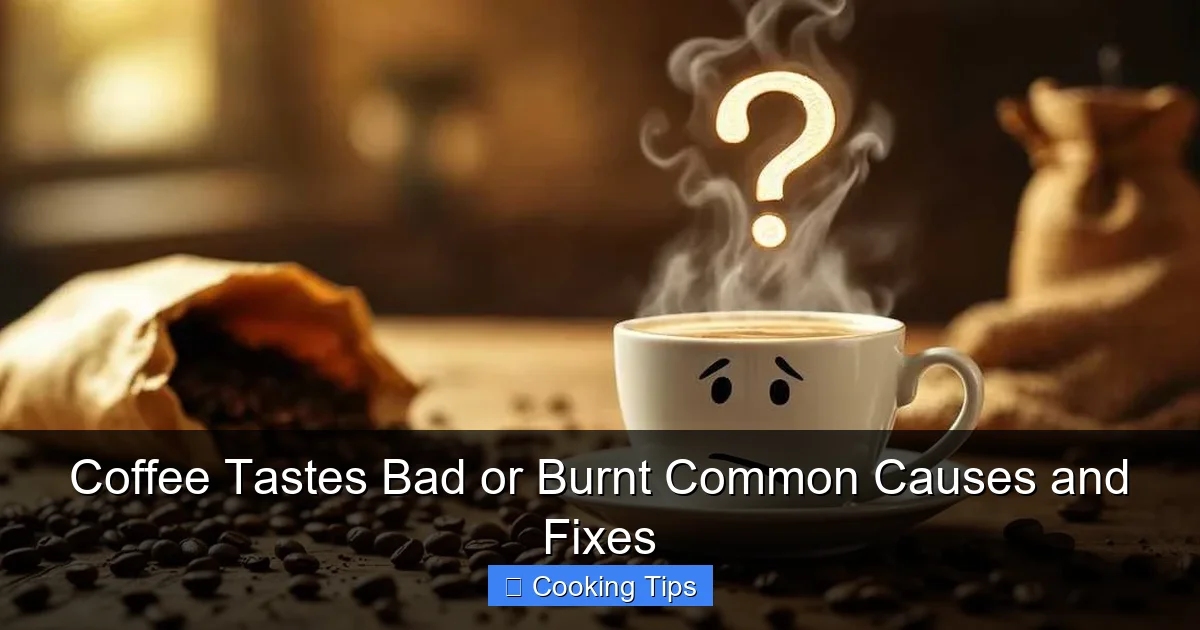
Is your coffee tasting like a burnt campfire? Don’t despair! This guide dives into the common reasons your coffee tastes bad or burnt and provides practical, easy-to-implement fixes. From bean freshness to brewing temperature, we’ll help you reclaim your perfect cup.
## Coffee Tastes Bad or Burnt: Common Causes and Fixes
There’s nothing quite like the aroma of freshly brewed coffee. But what happens when that comforting smell is replaced by a harsh, bitter, or even burnt scent, and the taste matches? It’s a common and frustrating problem for coffee lovers. Fortunately, most coffee taste issues are easily fixable. This guide will walk you through the most frequent culprits behind bad or burnt-tasting coffee and provide simple, effective solutions to get you back to enjoying your perfect cup.
### Understanding Coffee Flavor
Before we dive into the problems, it’s helpful to understand what contributes to good coffee flavor. Coffee is a complex beverage. The taste is influenced by everything from the coffee bean itself to how it’s grown, roasted, ground, and finally brewed. When something goes wrong in this chain, you can end up with less-than-ideal flavors. Bitter and burnt tastes are usually the result of over-extraction or issues with the coffee beans or equipment.
### Common Causes and Their Fixes
Let’s break down the most common reasons your coffee might be tasting off and how to solve them.
#### 1. Stale or Poorly Stored Coffee Beans
One of the most significant enemies of fresh coffee flavor is time and improper storage. Coffee beans, once roasted, begin to lose their aromatic compounds and freshness rapidly.
##### Causes of Stale Beans:
* **Exposure to Air:** Oxygen degrades coffee, leading to stale, cardboard-like, or even rancid flavors.
* **Exposure to Light:** Light can also break down coffee compounds, affecting taste.
* **Exposure to Heat:** Heat accelerates the staling process.
* **Exposure to Moisture:** Moisture can introduce mold and affect the bean’s oils.
##### Fixes:
* **Buy Fresh, Whole Beans:** Always purchase whole beans and grind them just before brewing. Pre-ground coffee goes stale much faster. Look for beans with a “roasted on” date, not just a “best by” date.
* **Proper Storage:** Store your whole beans in an opaque, airtight container. Keep this container in a cool, dark place, like a pantry or cupboard. Avoid the refrigerator or freezer, as temperature fluctuations and moisture can cause problems.
* **Buy Smaller Quantities:** Only buy what you can consume within a couple of weeks. This ensures you’re always brewing with relatively fresh beans.
#### 2. Incorrect Grind Size
The grind size of your coffee is crucial for proper extraction. Extraction is the process of dissolving the coffee solubles into the water. Too fine a grind and the water can’t flow through properly, leading to over-extraction and bitterness. Too coarse a grind and the water flows too quickly, under-extracting the coffee and resulting in a sour or weak taste. A burnt taste is often linked to over-extraction.
##### Causes of Incorrect Grind:
* **Wrong Grind Setting:** Using a grind size that doesn’t match your brewing method.
* **Inconsistent Grinding:** A blade grinder can produce uneven particle sizes, leading to both over and under-extraction within the same batch.
##### Fixes:
* **Match Grind to Brew Method:**
* **Extra Coarse:** Cold brew
* **Coarse:** French press, percolator
* **Medium-Coarse:** Chemex
* **Medium:** Drip coffee makers, pour-over (e.g., V60)
* **Medium-Fine:** Aeropress (for shorter brew times)
* **Fine:** Espresso, Moka pot
* **Extra Fine:** Turkish coffee
* **Use a Burr Grinder:** A burr grinder grinds beans to a consistent size, ensuring even extraction and a better-tasting cup. It’s a worthwhile investment for any serious coffee drinker.
* **Experiment:** If your coffee is consistently bitter, try a slightly coarser grind. If it’s sour or weak, try a slightly finer grind.
#### 3. Water Quality and Temperature
Coffee is over 98% water, so the quality and temperature of your water are critical components of the final taste.
##### Causes of Bad Water Impact:
* **Tap Water Impurities:** Chlorine, minerals, and other impurities in tap water can impart unpleasant flavors to your coffee.
* **Water Too Hot:** Water that is too hot (above 205°F / 96°C) can scorch the coffee grounds, leading to a burnt, bitter taste.
* **Water Too Cold:** Water that is too cold (below 195°F / 90.5°C) will not extract enough flavor, resulting in a weak, sour, or underdeveloped taste.
##### Fixes:
* **Use Filtered Water:** Invest in a water filter for your tap or use a good quality bottled spring water. This removes impurities that can affect flavor.
* **Achieve Ideal Temperature:** Aim for a brewing temperature between 195°F and 205°F (90.5°C and 96°C). If you don’t have a thermometer, bring your water to a boil and then let it sit for about 30-60 seconds before pouring over your grounds. Many modern coffee makers have temperature control features.
* **Don’t Re-boil Water:** Re-boiling water can reduce its oxygen content, which can lead to a flat taste.
#### 4. Dirty Coffee Equipment
This is a very common and often overlooked cause of bitter or burnt coffee. Coffee oils are volatile and can build up on your grinder, brewing basket, carafe, and even your mug. These oils become rancid over time, imparting a stale, bitter, or burnt flavor to your fresh brew.
##### Causes of Dirty Equipment:
* **Infrequent Cleaning:** Not cleaning your equipment after each use.
* **Residue Buildup:** Coffee oils and mineral deposits from water can accumulate.
##### Fixes:
* **Rinse After Each Use:** Rinse your coffee maker’s brew basket, carafe, and any removable parts with hot water after each brew.
* **Clean Your Grinder Regularly:** For burr grinders, follow the manufacturer’s instructions for cleaning. Often, this involves running a bit of coffee grinder cleaner through it or brushing out the burrs. For blade grinders, wipe them out with a dry cloth or paper towel.
* **Deep Clean Your Coffee Maker:** Descale your coffee maker regularly. For drip coffee makers, this typically involves running a cycle with a mixture of vinegar and water, followed by several cycles of clean water to rinse. Refer to your coffee maker’s manual for specific descaling instructions.
* **Wash Mugs Thoroughly:** Ensure coffee mugs are washed thoroughly to remove any lingering oils or residues.
5. Brewing Method and Ratio Errors
The way you brew your coffee and the ratio of coffee grounds to water significantly impact the taste.
##### Common Brewing Errors:
* **Incorrect Coffee-to-Water Ratio:** Using too much coffee can lead to over-extraction and bitterness. Using too little coffee results in a weak, watery brew. The Specialty Coffee Association (SCA) recommends a ratio of 1:15 to 1:18 (e.g., 1 gram of coffee to 15-18 grams of water).
* **Over-Brewing Time:** Letting the coffee grounds steep or brew for too long can extract bitter compounds. This is especially relevant for methods like French press or cold brew.
* **Under-Brewing Time:** Not allowing enough contact time between water and grounds results in under-extraction, leading to sourness.
* **Aggressive Plunging (French Press):** Pushing the plunger down too quickly in a French press can agitate the grounds and force fine particles into the brew, making it muddy and bitter.
##### Fixes:
* **Measure Your Coffee and Water:** Use a kitchen scale to accurately measure both your coffee grounds and your water. This is the most reliable way to achieve a consistent ratio. If you don’t have a scale, use consistent measuring scoops.
* **Follow Recommended Brew Times:** Research the ideal brew time for your specific brewing method. For a French press, aim for about 4 minutes of steeping before pressing. For pour-over, the total brew time should typically be between 2.5 to 4 minutes, depending on the size and method.
* **Gentle Plunging:** For French press, press the plunger down slowly and steadily.
* **Experiment with Ratios:** Start with a common ratio (e.g., 1:16) and adjust slightly based on your preference. If it’s too bitter, use a little less coffee or a slightly coarser grind. If it’s too weak, use a little more coffee or a finer grind.
#### 6. Bean Quality and Roast Level
Sometimes, the problem isn’t with your process but with the beans themselves.
##### Causes:
* **Low-Quality Beans:** Beans that are poor quality, damaged, or not properly processed can have inherent off-flavors.
* **Over-Roasted Beans:** Very dark roasts can sometimes be roasted so intensely that they develop burnt, smoky, or even acrid flavors.
* **Uneven Roasting:** Inconsistent roasting can leave some beans under-developed (sour) and others over-developed (burnt).
##### Fixes:
* **Buy From Reputable Roasters:** Seek out specialty coffee roasters who source high-quality beans and have a good reputation.
* **Consider Roast Level:** If you find dark roasts are consistently burnt for you, try medium or medium-light roasts. These often highlight the coffee’s natural flavor notes without the intense roast character.
* **Check Roast Date:** Again, prioritize beans with a recent roast date.
### Troubleshooting Your Coffee Taste
If your coffee tastes bad or burnt, work through these troubleshooting steps:
1. **Start with the Beans:** Are they fresh? Stored properly?
2. **Check Your Grind:** Is it appropriate for your brewing method? Is your grinder consistent?
3. **Assess Your Water:** Is it filtered? Is the temperature right?
4. **Inspect Your Equipment:** Is it clean? When was the last time you descaled your coffee maker?
5. **Review Your Brewing:** Are you measuring correctly? Is your brew time right?
By systematically checking these elements, you can usually pinpoint the source of the problem and correct it.
### Conclusion
Enjoying a delicious cup of coffee shouldn’t be a gamble. By understanding the common causes of burnt or bad-tasting coffee – from stale beans and incorrect grind to water issues and dirty equipment – you’re empowered to make simple adjustments that will dramatically improve your brew. Invest a little time in fresh beans, clean equipment, and a good brewing routine, and you’ll be rewarded with a consistently satisfying coffee experience. Happy brewing!
Key Takeaways
- Improper Bean Storage: Stale or poorly stored coffee beans are a primary culprit for bitter, off-flavors. Always store beans in an airtight container away from light, heat, and moisture.
- Grind Size Matters: An incorrect grind size can lead to over-extraction (bitter) or under-extraction (sour/weak). Match your grind to your brewing method.
- Water Quality and Temperature: Tap water with impurities or water that’s too hot or too cold can significantly impact taste. Use filtered water and aim for the ideal brewing temperature.
- Dirty Equipment: Residue from old coffee oils can build up in your grinder, brewer, and cups, leading to a rancid, burnt taste. Regular cleaning is crucial.
- Brewing Method Errors: Incorrect coffee-to-water ratios, brew time, and even plunging too aggressively (for French press) can ruin a cup.
- Over-Roasting or Poor Quality Beans: Sometimes, the beans themselves are the problem. Opt for fresh, quality beans and consider darker roasts if you prefer less acidity but be wary of burnt notes.
