
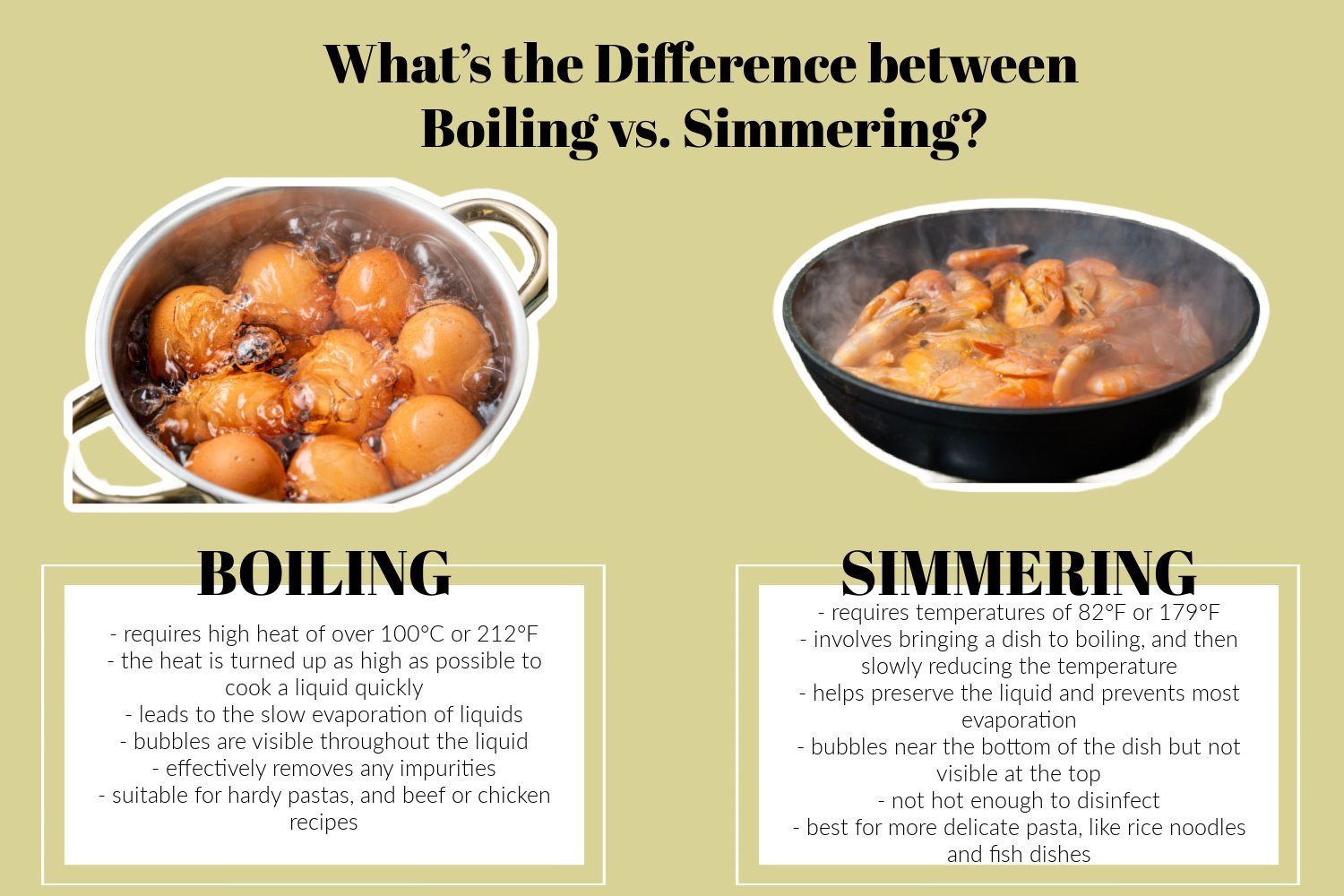
Simmer is a gentle 185–205°F process; boil is a vigorous 212°F rolling action at sea level.
I’ve cooked for years, tested stocks, sauces, and stews, and I’ll walk you through the practical and scientific difference between simmer and boil temperature. You’ll learn clear temperature ranges, visual cues, when to choose a simmer or a boil, and simple tricks I use to get consistent results in the kitchen. This article blends hands-on experience with clear facts so you can cook with more confidence.
Understanding the basic science
Water turns from liquid to gas as heat breaks intermolecular bonds. The difference between simmer and boil temperature is mainly about how much heat energy is present and how quickly bubbles form and rise. Simmering keeps water below full vaporization, while boiling reaches the point where rapid, continuous vapor formation occurs. Altitude and dissolved solids also change the exact temperatures, so what you see on the stove can vary by location.
Temperature ranges and visual cues
Simmer and boil temperature ranges are easy to spot once you know numbers and looks.
- Simmer temperature range
- Gentle simmer: about 180–190°F (82–88°C).
- Regular simmer: about 185–205°F (85–96°C).
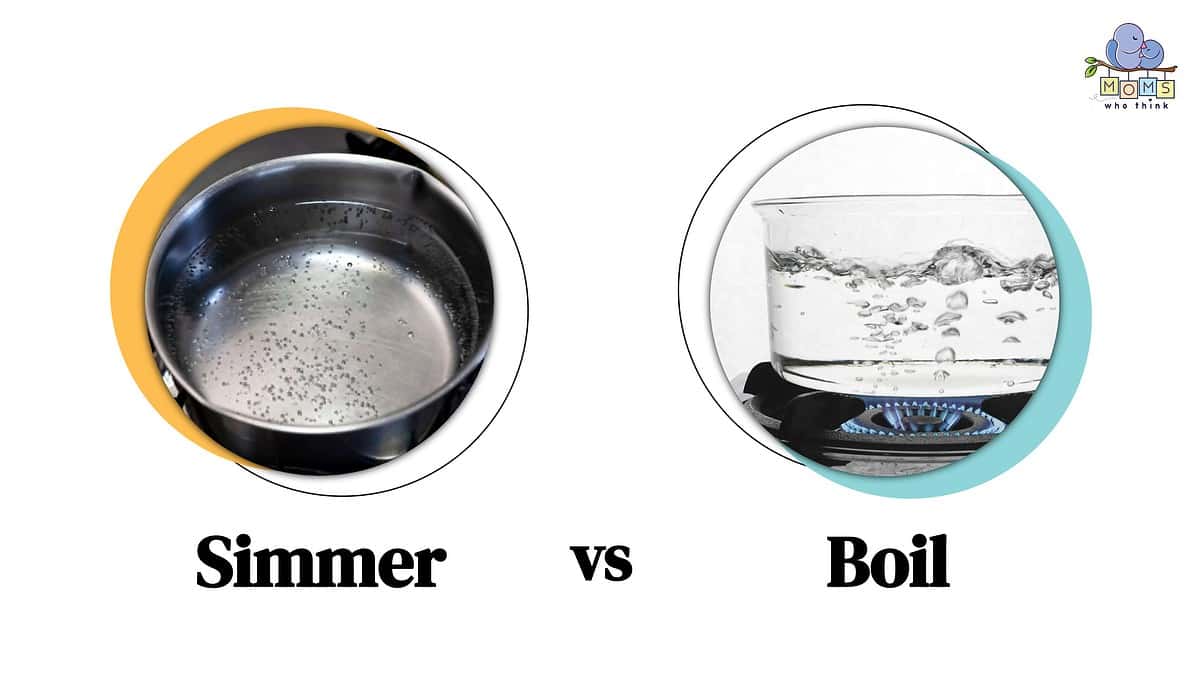
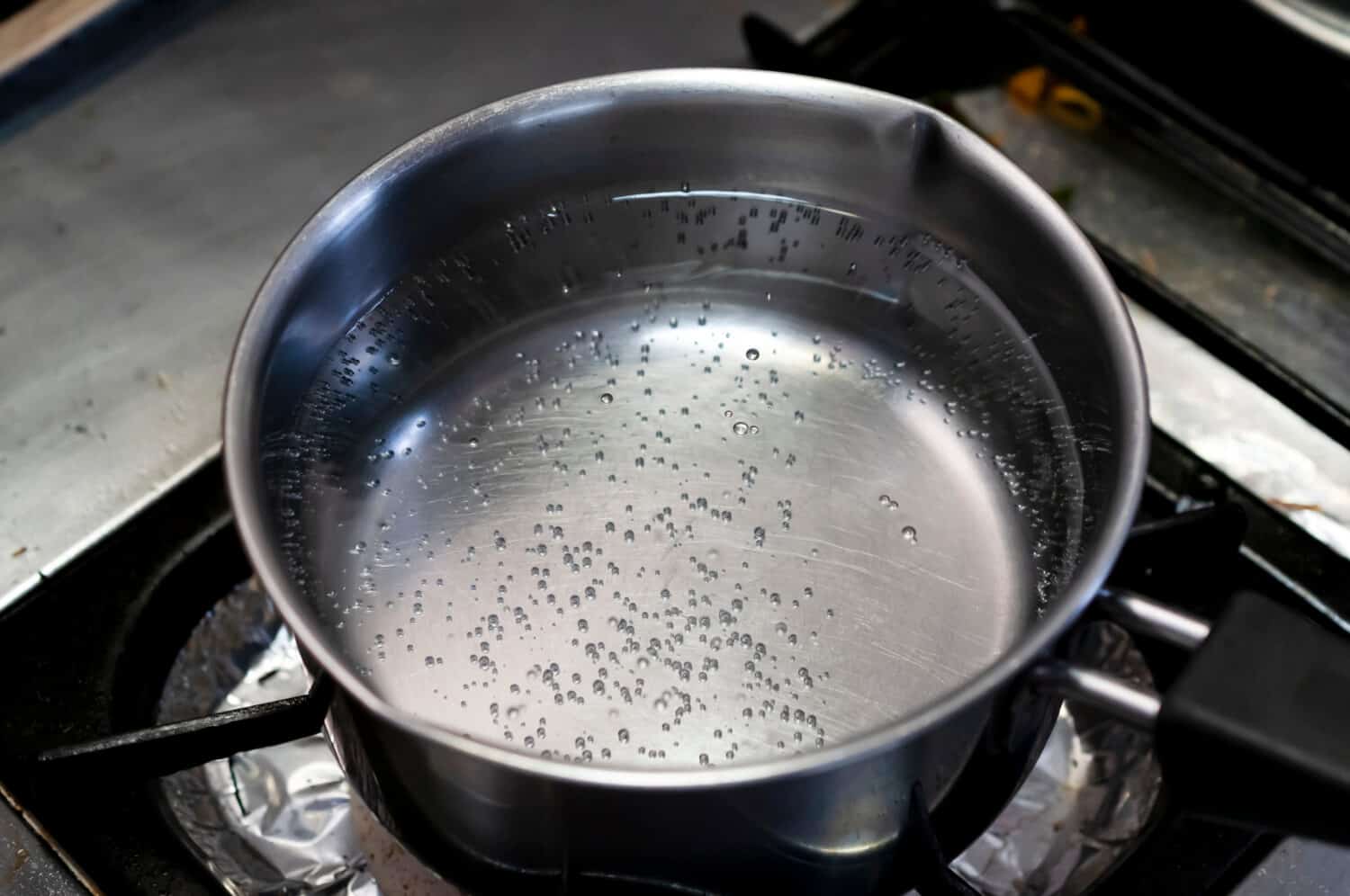
- Visual cues: small steady bubbles breaking the surface, light steam, little movement in the pot.
- Boil temperature range
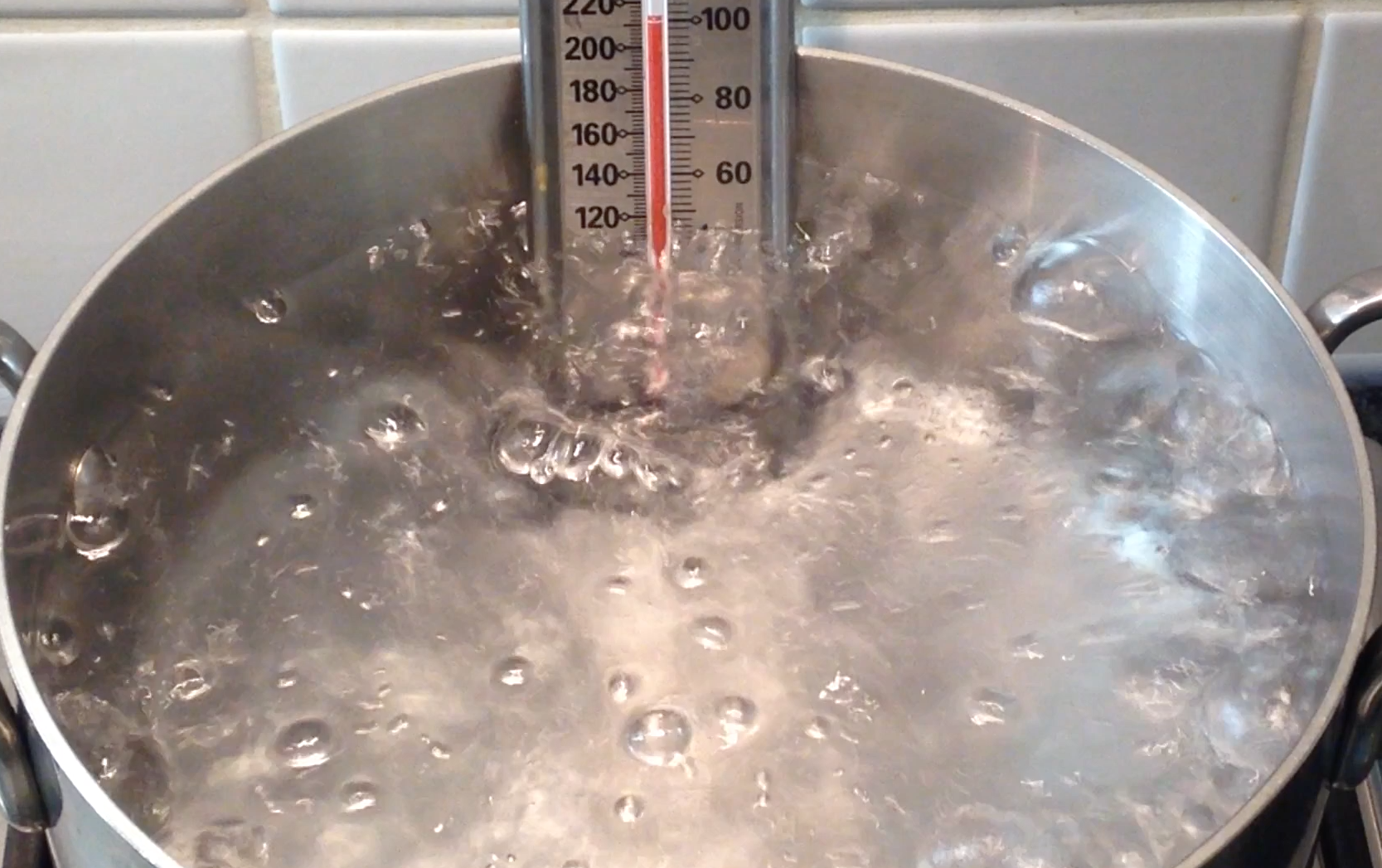
- Boiling point at sea level: about 212°F (100°C).
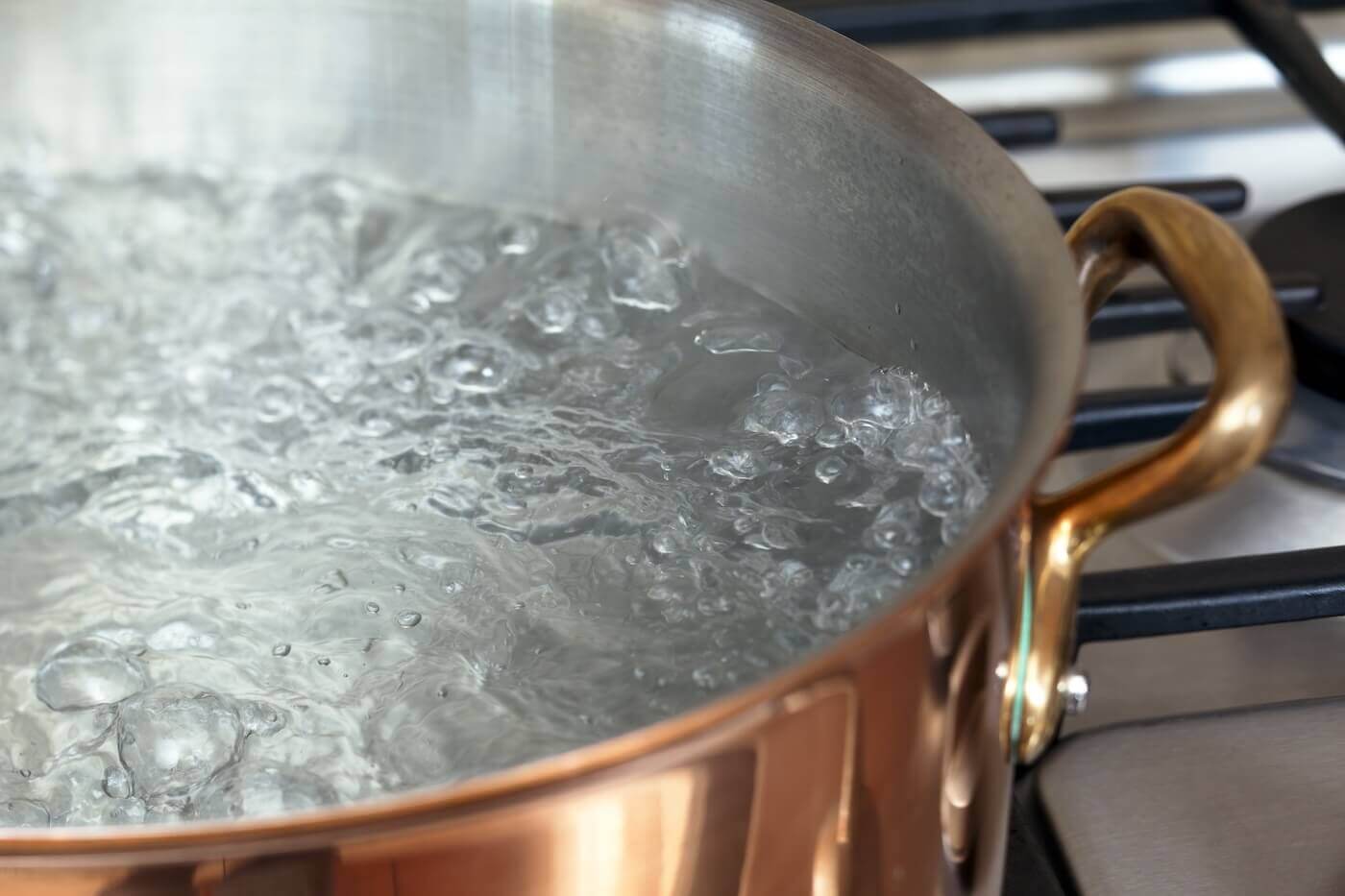
- Visual cues: large rolling bubbles, strong steam, vigorous surface movement.
The difference between simmer and boil temperature matters because one preserves gentle texture and clarity, while the other speeds cooking and increases evaporation. Use a thermometer if you need precision, especially for candy, fermenting, or delicate stocks.
How to control simmer and boil in the kitchen
Controlling heat is a practical skill. Here are reliable ways I use.
- Use the right burner
- Match pot size to burner size for even heat.
- Adjust flame or dial
- Lower the heat slowly to move from boil to simmer, and raise it to go from simmer to boil.
- Use a lid wisely
- Cover to trap heat and bring liquid to a boil faster; tilt or remove lid to maintain a gentle simmer.
- Try tools
- A candy or instant-read thermometer gives exact temperatures.
- A simmer plate or heat diffuser helps on high-output burners.
- Manage evaporation
- Boiling reduces liquid faster; check levels and add liquid when simmering long-cooked dishes.
Understanding the difference between simmer and boil temperature makes these controls predictable and repeatable in your kitchen.
:max_bytes(150000):strip_icc()/all-about-simmering-995786-Final2-5c38beb2c9e77c0001f4fdba.png)
Cooking applications: when to simmer and when to boil
Knowing which method to use improves texture and flavor. Here’s how I choose.
- Stocks and bone broths
- Simmer: preserves clarity and extracts collagen slowly.
- Sauces and stews
- Start at a boil to heat, then simmer to meld flavors and thicken gently.
- Pasta and blanching
- Boil: rapid cooking and short blanch times require a rolling boil.
- Eggs and delicate proteins
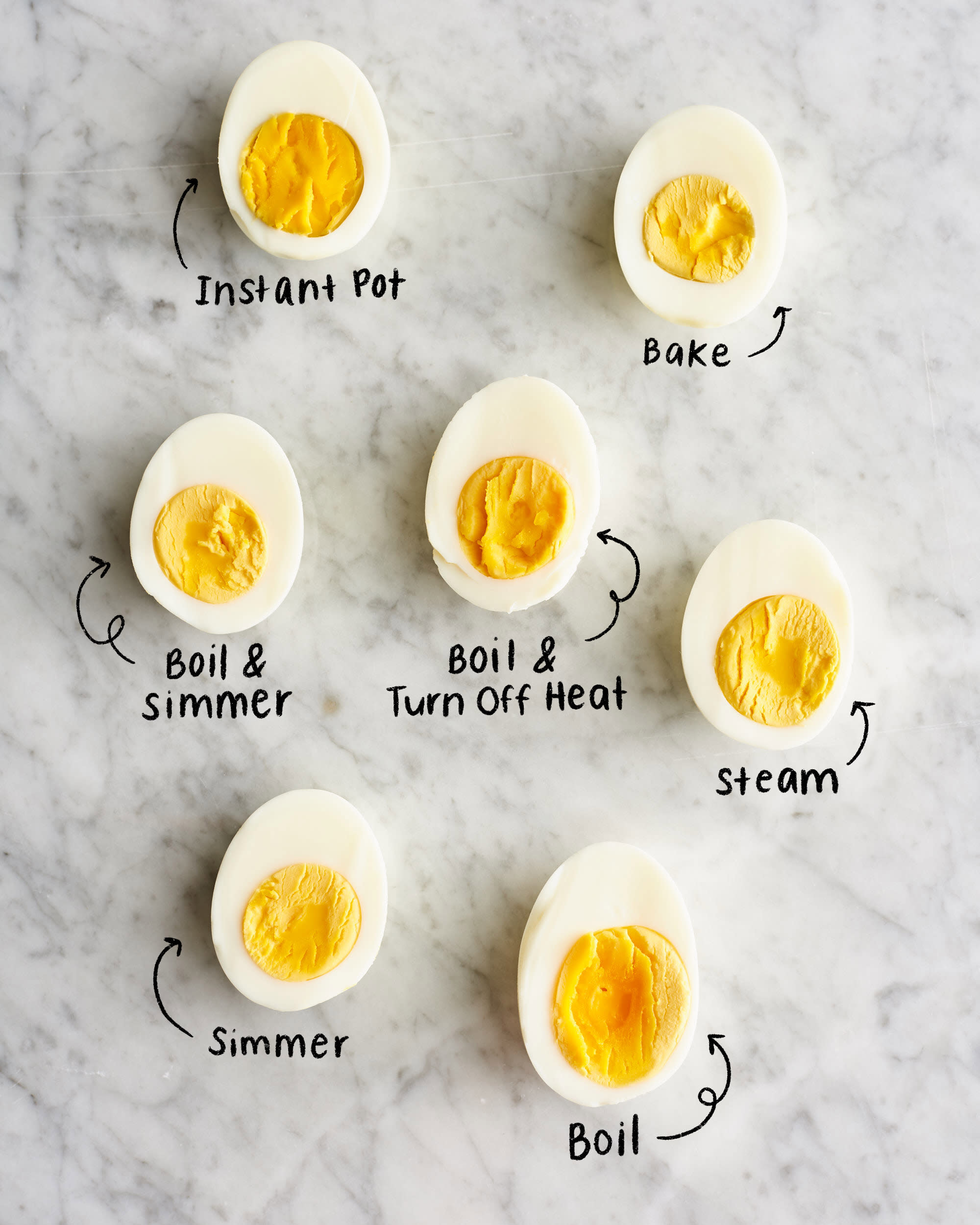
- Simmer: prevents rubbery whites and broken yolks.
- Canning and sterilizing
- Boil: needed for safe processing and sanitation.
I learned to simmer stocks after a cloudy failure early in my career. Gentle heat gives richer mouthfeel without breaking down proteins into a murky mess.
Common mistakes and troubleshooting
People often confuse vigor with progress. A few tips from my mistakes:
- Mistake: letting a sauce boil when it should simmer
- Result: broken emulsion, over-reduced liquid, or tough meat.
- Mistake: using only visual cues at high altitudes
- Result: undercooked food because boiling occurs at lower temperatures.
- Tip: when in doubt, use a thermometer. It saved me many ruined batches.
Remember the difference between simmer and boil temperature is practical, not picky. Small adjustments change texture and flavor in predictable ways.
Frequently Asked Questions of difference between simmer and boil temperature
What exactly is the temperature range for a simmer?
A simmer usually sits between 180–205°F (82–96°C). Small bubbles form and break gently at the surface, unlike the rolling action of a boil.
Does altitude change the difference between simmer and boil temperature?
Yes. Boiling point drops as altitude rises, so both simmer and boil temperatures fall at higher elevations and cooking times may need adjusting.
Can I simmer without a lid?
Yes. Simmering without a lid reduces trapped heat and slows cooking, which is useful when you want gentle evaporation and concentration.
Is a rolling boil always better for cooking?
No. A rolling boil is best for rapid cooking like pasta or blanching. For stocks, stews, and delicate foods, simmering preserves texture and clarity.
How do I move from a boil to a gentle simmer quickly?
Turn the heat down a little and wait. If needed, remove the pot from direct heat for a minute, then return to a lower setting to stabilize the simmer.
Should I use a thermometer to tell simmer from boil?
A thermometer is the most reliable way to measure the difference between simmer and boil temperature, especially for precision tasks like candy making or canning.
Conclusion
Simmering and boiling are simple tools with big effects. The difference between simmer and boil temperature lies in heat level, bubble behavior, and cooking outcome. Use simmer for gentle extraction and tender results, and use boiling for speed and high-heat tasks. Try using a thermometer, match pot size to burner size, and practice lowering the heat slowly to master both techniques. Share your best simmer-to-boil wins or questions below, and consider subscribing for more practical kitchen tips.
