

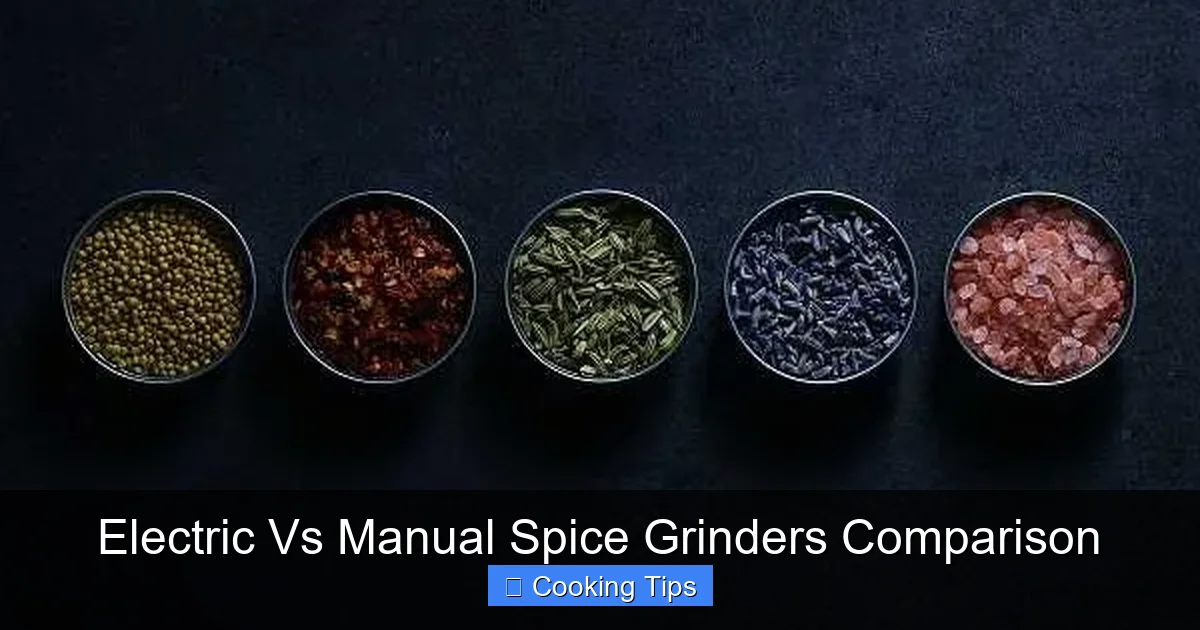
Choosing between an electric and a manual spice grinder? This guide breaks down the key differences to help you make the best choice. We’ll cover speed, consistency, ease of use, and cost. Discover which grinder best suits your culinary needs for unlocking the freshest, most vibrant flavors in your cooking.
Key Takeaways
- Electric grinders offer unparalleled speed and convenience, making them ideal for busy cooks or those who grind large quantities of spices regularly.
- Manual spice grinders provide superior control over texture, allowing for a wider range of grinds from coarse to fine, perfect for specific recipes.
- Maintenance for electric grinders can be more involved, with motor components that require careful cleaning, while manual grinders are generally simpler to clean.
- Portability and power source are key differentiators; manual grinders are battery-free and portable, while electric ones require an outlet.
- Cost varies significantly, with manual grinders being a more budget-friendly option, and electric grinders representing a larger investment.
- Noise level is a factor; electric grinders can be quite loud, whereas manual grinders operate much more quietly.
Electric Vs Manual Spice Grinders: Which Is Right For Your Kitchen?
Welcome, home chefs and flavor enthusiasts! Are you ready to elevate your culinary creations with the vibrant aroma and taste of freshly ground spices? The secret to unlocking their full potential often lies in the grinding. But with two main types of spice grinders on the market – electric and manual – how do you choose the one that’s perfect for your kitchen? This guide is designed to do just that. We’ll dive deep into the world of spice grinding, comparing electric and manual options so you can make an informed decision. By the end, you’ll know which grinder will best suit your cooking style, your spice needs, and your budget. Let’s get grinding!
Understanding the Basics: What is a Spice Grinder?
Visual guide about Electric Vs Manual Spice Grinders Comparison
Image source: economicalchef.com
Before we pit electric against manual, let’s clarify what a spice grinder does. It’s a kitchen tool designed to break down whole spices into smaller particles, releasing their aromatic oils and intense flavors. Unlike pre-ground spices that can lose their potency over time, grinding your own ensures you’re always working with the freshest, most flavorful ingredients. This freshness can dramatically change the outcome of your dishes, from a simple weeknight curry to an elaborate spice rub for your weekend roast.
Electric Spice Grinders: Power and Precision

Visual guide about Electric Vs Manual Spice Grinders Comparison
Image source: cornercoffeestore.com
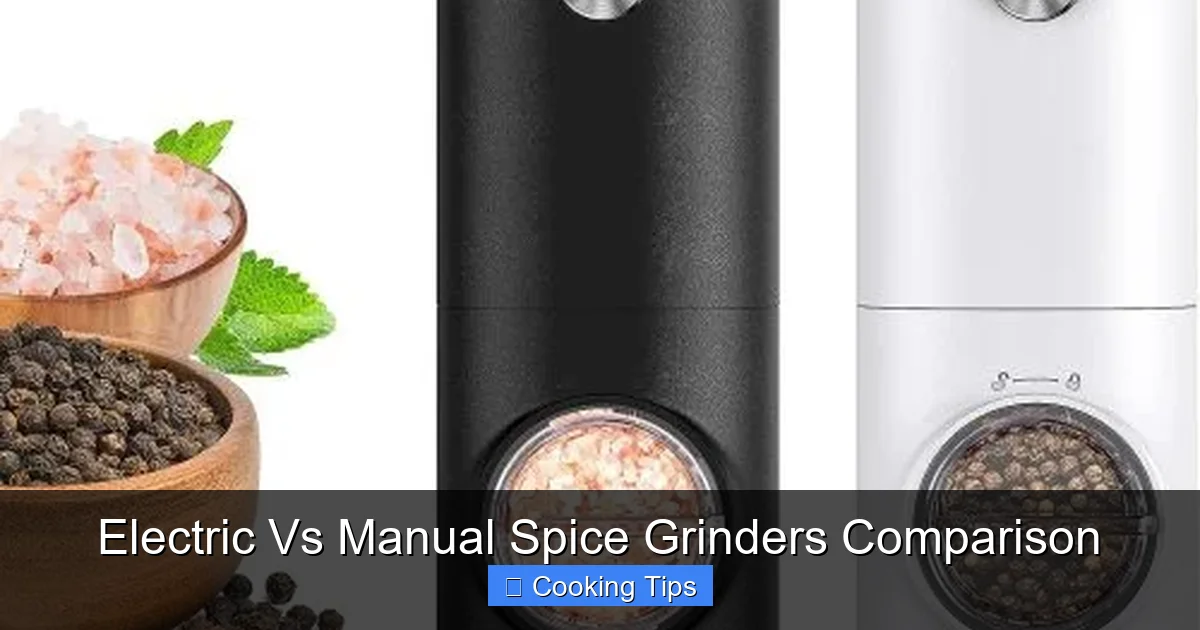
Electric spice grinders are the modern marvels of the spice world. They rely on a motor to spin blades or burrs, quickly pulverizing spices with minimal effort. They are designed for speed and efficiency, making them a popular choice for many home cooks.
How Electric Spice Grinders Work
Most electric spice grinders operate with a simple push-button mechanism. You add your whole spices to a chamber, close the lid securely, and press a button. The motor powers blades that spin at high speed, chopping the spices. Some higher-end models use burrs, similar to coffee grinders, which crush spices for a more consistent grind.
Types of Electric Spice Grinders
* Blade Grinders: These are the most common and affordable. They use a spinning blade to chop spices. They’re great for quick grinding but can sometimes produce inconsistent results, with some pieces being powder-fine and others still coarse.
* Burr Grinders: These grinders have two abrasive surfaces (burrs) that crush spices between them. They offer more control over grind size and are generally better at preserving the flavor of the spices, as they produce less heat. They are usually more expensive.
Pros of Electric Spice Grinders
* Speed and Efficiency: This is the biggest advantage. Electric grinders can turn whole spices into powder in seconds, saving you valuable time in the kitchen. This is especially useful if you cook frequently or prepare recipes that call for large amounts of ground spices.
* Ease of Use: They are incredibly user-friendly. Just add spices, close the lid, and press a button. No physical exertion is required.
* Consistency (with Burr Grinders): While blade grinders can be inconsistent, burr grinders produce a more uniform particle size, which is crucial for certain cooking techniques and baking.
* Large Quantities: If you need to grind a substantial amount of a spice, an electric grinder can handle it much faster than a manual one.
Cons of Electric Spice Grinders
* Heat Generation: The high-speed blades in some electric grinders can generate heat, which can potentially degrade the volatile oils in certain spices, diminishing their flavor. This is less of an issue with burr grinders.
* Less Control Over Texture: Blade grinders, in particular, can be difficult to control for specific textures. You might end up with a powder when you wanted coarse chunks, or vice versa. You often have to pulse it carefully to get the desired consistency.
* Noise: Electric grinders can be quite loud, which might be a consideration if you have an open-plan living space or young children.
* Cleaning: Cleaning electric grinders can be tricky. The blades and chambers can be difficult to access, and you must be careful not to get the motor wet.
* Requires Power: You need a power outlet, which limits where you can use it.
Practical Tips for Electric Grinders
* **Pulse, Don’t Grind Continuously:** For blade grinders, use short pulses to avoid overheating the spices and to gain better control over the grind size.
* **Clean Immediately:** Wipe down the grinder and blades as soon as possible after use to prevent spice residue from hardening.
* **Dedicated Grinders:** If you grind both spices and coffee, consider having separate grinders. Coffee oils can leave a residue that affects the flavor of your spices, and spice residue can taint your coffee. This is also a good idea if you grind pungent spices like cumin or curry powder and delicate spices like cinnamon or nutmeg.
Manual Spice Grinders: Craftsmanship and Control
Visual guide about Electric Vs Manual Spice Grinders Comparison
Image source: cdn.shopify.com
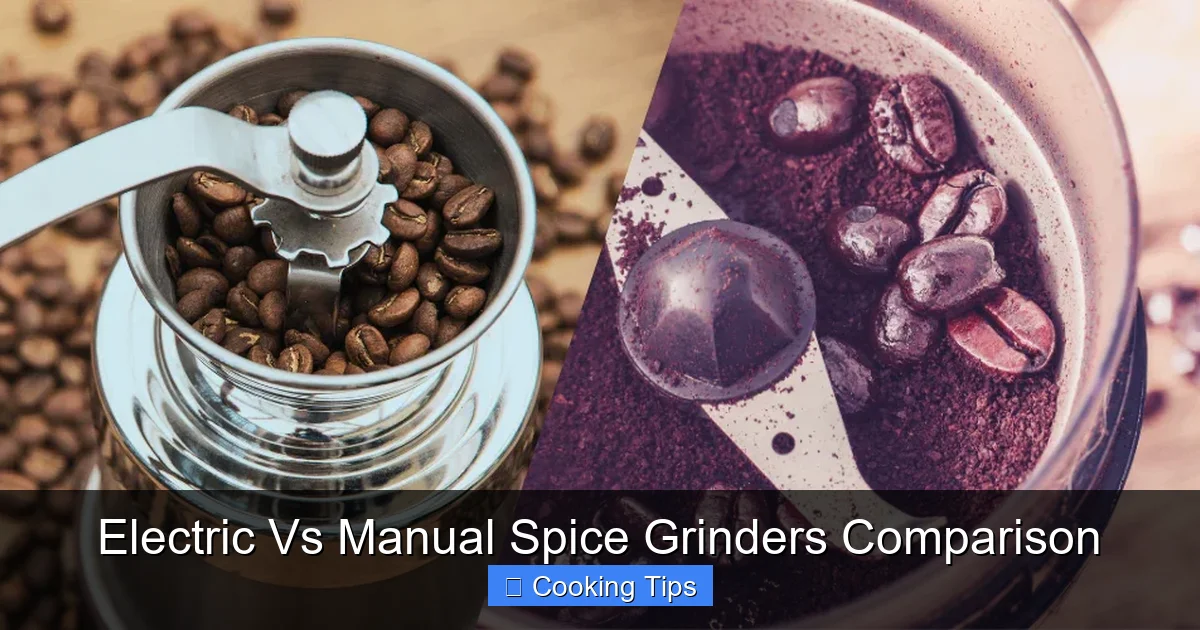
Manual spice grinders, often referred to as spice mills or mortars and pestles, require a bit more elbow grease but offer a different kind of satisfaction and control. They are traditional tools that have been used for centuries to bring out the best in spices.
How Manual Spice Grinders Work
Manual grinders come in various forms, but they generally involve a grinding mechanism that you operate by hand.
* Mortar and Pestle: This is the most basic form. A mortar is a bowl, and a pestle is a blunt tool used to crush and grind ingredients against the inner walls of the mortar. It requires rubbing and pounding motions.
* Spice Mills (with Burrs or Rollers): These resemble small hand-cranked machines. You load the spices into a hopper, and then you turn a crank. This action drives burrs or rollers that crush and grind the spices.
Types of Manual Spice Grinders
* Mortar and Pestle: Available in materials like ceramic, granite, marble, wood, and even stainless steel. Each material has its own benefits for grinding and durability. Granite and marble are excellent for their weight and grinding surface.
* Spice Mills: These often have adjustable burrs, similar to electric burr grinders, allowing for precise control over the grind size. They can be manual crank models or even screw-top mechanisms.
Pros of Manual Spice Grinders
* Ultimate Control Over Texture: This is where manual grinders truly shine. You can achieve a wide range of textures, from a coarse chop to a fine powder, with incredible precision. This is invaluable for recipes that specify a particular grind size.
* Preserves Flavor: Without the heat generated by electric motors, manual grinding is gentler on spices, helping to preserve their delicate aromatic oils and full flavor profile.
* Quiet Operation: Manual grinders are virtually silent, making them perfect for early morning or late-night cooking sessions without disturbing anyone.
* Portability and No Power Needed: They don’t require electricity, making them ideal for camping, picnics, or kitchens with limited outlets.
* Durability and Simplicity: With fewer mechanical parts, manual grinders are generally very durable and easy to maintain.
* Aesthetic Appeal: Many manual grinders, especially mortars and pestles, are beautiful kitchen tools that can add a rustic charm to your countertop.
Cons of Manual Spice Grinders
* Time and Effort: Grinding spices manually takes time and physical effort. If you need large quantities or are in a hurry, this can be a drawback.
* Less Consistent Grind (with some Mortars/Pestles): Achieving a perfectly uniform grind can be more challenging with a mortar and pestle compared to a good electric burr grinder.
* Can Be Messy: Depending on the spice and the grinding motion, some fine powders can escape the mortar.
* Initial Learning Curve: Mastering the technique for a mortar and pestle to get the desired grind might take a little practice.
Practical Tips for Manual Grinders
* **Start Coarse, Then Fine-Tune:** For mortars and pestles, start by crushing larger pieces, then work them into a finer consistency with a circular or pounding motion.
* **Work in Batches:** For large quantities, grind in smaller batches to maintain control and consistency.
* **Clean Thoroughly:** Rinse with hot water and use a stiff brush to remove all spice residue. For very fragrant spices, consider having separate mortars for different spice types.
* **Use the Right Mortar Material:** Granite or marble mortars are heavy and have a rough surface ideal for grinding. Wood can absorb odors, and ceramic can be brittle.
Electric Vs. Manual: Key Comparison Points
Now that we’ve explored each type, let’s directly compare them across crucial factors to help you decide.
Speed and Convenience
* Electric: Wins hands down. Grind spices in seconds.
* Manual: Requires time and effort. Best for those who enjoy the process or aren’t pressed for time.
Grind Consistency and Control
* Electric: Burr grinders offer good consistency. Blade grinders can be hit or miss. Control is limited by the machine’s design.
* Manual: Offers the most control. You can achieve a wide range of textures from coarse to very fine with precision.
Flavor Preservation
* Electric: Blade grinders can generate heat, potentially affecting delicate flavors. Burr grinders are better.
* Manual: Superior flavor preservation due to lack of heat. You’re gentler on the spice.
Ease of Cleaning
* Electric: Can be challenging, especially blade types. Requires care around the motor.
* Manual: Generally simpler, often just a rinse and brush. Mortar and pestles are very straightforward.
Portability and Power
* Electric: Requires a power outlet, limiting portability.
* Manual: Completely portable, no power needed. Great for travel or outdoor cooking.
Cost
* Electric: Blade grinders are affordable. Burr grinders are a larger investment.
* Manual: Mortars and pestles are generally very affordable. Manual mills can range in price.
Noise Level
* Electric: Can be quite loud.
* Manual: Very quiet.
Which Spice Grinder is Right for You?
The best spice grinder for your kitchen depends entirely on your personal needs and preferences.
Choose an Electric Grinder if:
* You are a busy cook who values speed and convenience above all else.
* You frequently cook dishes that require large quantities of ground spices.
* You want a simple, push-button solution with minimal physical effort.
* You are looking for a dedicated spice grinder and don’t mind the noise.
* Consider an electric grinder if you enjoy experimenting with a variety of spices, as many electric grinders can handle a wide range of whole spices. Think about adding fresh ginger or turmeric to your cooking, just as you might be interested in curry spice tips to enhance your culinary repertoire.
Choose a Manual Grinder if:
* You are a culinary purist who values the control over texture and the freshest possible flavor.
* You enjoy the tactile experience of cooking and don’t mind putting in a little extra effort.
* You often cook recipes that require specific grind sizes.
* You need a portable grinder for travel or outdoor cooking.
* You prefer a quiet kitchen environment.
* You are on a tighter budget.
* A mortar and pestle, for example, can also be used for making pastes and dips, adding another layer of versatility to your kitchen tools. If you’re exploring different cooking temperatures, understanding how to gently cook ingredients is important, much like how gentle grinding preserves spice flavor. For more on this, you might find low heat vs medium heat cooking interesting.
Troubleshooting Common Spice Grinder Issues
No matter which type of grinder you choose, you might encounter a few common hiccups.
Electric Grinder Issues
* Uneven Grinding: This is common with blade grinders. Try pulsing in shorter bursts and shaking the grinder between pulses to redistribute the spices.
* **Overheating:** If your spices smell burnt or your grinder feels excessively hot, stop immediately and let it cool down. This can happen if you grind for too long.
* **Motor Smells Funny:** This can indicate overheating or a motor issue. Allow it to cool completely. If the smell persists, the unit may need servicing or replacement.
Manual Grinder Issues
* **Difficulty Grinding Hard Spices:** For very hard spices like whole nutmeg or dried chili peppers, you might need a sturdier mortar and pestle (like granite) or to break them into smaller pieces first.
* **Residue Buildup:** Ensure you clean your grinder thoroughly after each use, especially if you’re grinding oily spices. A stiff brush and hot water are usually sufficient.
* **Inconsistent Texture:** This often comes down to technique. Practice makes perfect with mortars and pestles. For mills, ensure the burrs are clean and properly set.
Conclusion
The choice between an electric and a manual spice grinder boils down to your cooking habits, your priorities, and your kitchen workflow. Electric grinders offer speed and convenience, perfect for the modern, fast-paced kitchen. Manual grinders, on the other hand, provide unparalleled control and a more traditional, mindful approach to cooking, ensuring the freshest, most nuanced flavors.
Consider the types of dishes you make most often, how much time you have, and your preference for tactile kitchen experiences. Whether you opt for the powerful hum of an electric grinder or the quiet precision of a manual one, the reward is the same: the incredible aroma and taste of freshly ground spices that will transform your cooking. So, go forth, choose your champion, and unlock a world of flavor!
