

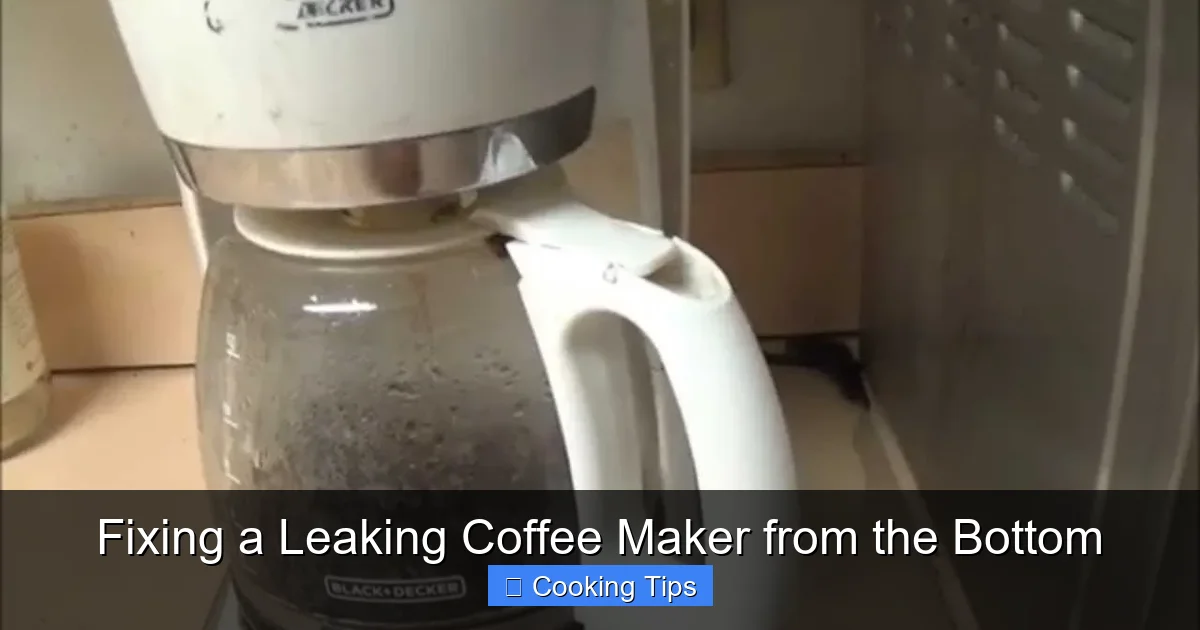
A coffee maker leaking from the bottom is a common frustration, but often a simple fix. This comprehensive guide will walk you through identifying the source of the leak and provide clear, step-by-step instructions to repair it. With a few basic tools and this easy-to-follow advice, you can get your coffee maker back to brewing without the mess, enjoying your morning cup without worry.
Fixing a Leaking Coffee Maker from the Bottom
There’s nothing quite like the aroma of freshly brewed coffee to start your day. But what happens when that pleasant ritual is interrupted by an unwelcome puddle forming at the base of your coffee maker? A leaking coffee maker from the bottom can be a messy, frustrating problem. Fortunately, most common leaks are not insurmountable. This guide will equip you with the knowledge and steps to diagnose and fix that pesky leak, so you can get back to enjoying your coffee without the drip, drip, drip. We’ll cover everything from simple fixes to more involved troubleshooting.
Key Takeaways
- Identify the Leak Source: The first step is to pinpoint exactly where the water is coming from. Common culprits include the water reservoir seal, internal tubing, or the carafe sensor.
- Safety First: Always unplug your coffee maker and ensure it’s completely cool before attempting any repairs to avoid electrical shocks or burns.
- Regular Cleaning is Key: Many leaks stem from mineral buildup or clogged components. Regular descaling and cleaning can prevent future problems.
- Simple Seal Replacements: Often, a leaky coffee maker from the bottom is due to a worn or improperly seated gasket or seal in the water reservoir or other internal connections.
- Internal Tubing Issues: Cracks or disconnections in internal water tubes can also cause leaks. These may require careful reattachment or patching.
- Carafe Sensor Malfunctions: Some coffee makers won’t brew if the carafe isn’t properly positioned. A faulty sensor can sometimes lead to water escaping.
- When to Call a Pro or Replace: For complex internal damage or if repairs prove too difficult, it might be time to consider professional help or a new coffee maker.
Understanding Why Your Coffee Maker Leaks from the Bottom
Before diving into repairs, it’s important to understand the potential reasons for a leak. The bottom of your coffee maker is a hub for various components, including water lines, heating elements, and drip trays. Any disruption to these can lead to water escaping. Common culprits include:
- A damaged or loose water reservoir seal.
- Cracked or dislodged internal water tubing.
- A clogged or malfunctioning drip tray.
- Problems with the carafe sensor or its housing.
- A worn-out heating element seal.
Safety First: Preparing for the Repair
Safety is paramount when dealing with any electrical appliance. Before you begin any troubleshooting or repair, ensure you:
Step 1: Unplug and Cool Down
The very first step, and perhaps the most crucial, is to unplug your coffee maker from the electrical outlet. Then, allow the appliance to cool down completely. Coffee makers operate with hot water and heating elements, and attempting repairs while it’s hot can lead to severe burns.
Visual guide about Fixing a Leaking Coffee Maker from the Bottom
Image source: img.thrfun.com
Visual guide about Fixing a Leaking Coffee Maker from the Bottom
Image source: img.thrfun.com
Step 2: Identify the Source of the Leak
This is where a little detective work comes in. Place a dry towel or paper towels beneath the coffee maker and run a brew cycle (without coffee grounds, just water). Watch closely to see precisely where the water is dripping from. Is it coming from the back, the front, the side, or directly from the center? The location of the leak can often give you a strong clue about the problem.

Visual guide about Fixing a Leaking Coffee Maker from the Bottom
Image source: howtofixit.net
Sub-steps for Leak Identification:
- Observe the Dripping Pattern: Note the speed and consistency of the leak. A slow drip might indicate a minor seal issue, while a steady stream could point to a more significant internal problem.
- Inspect Visible Components: With the coffee maker unplugged and cool, visually inspect the exterior for any obvious cracks or loose parts, especially around the water reservoir and the base.
- Run a Test Cycle (Carefully): If the leak isn’t immediately obvious, run a small amount of water through the machine. Place it on a towel to catch any drips and carefully observe from different angles.
Step 3: Addressing Common Leak Issues
Once you’ve identified the likely source, you can begin the repair process. Here are some of the most common issues and how to fix them.
Issue 1: Leaking Water Reservoir
The water reservoir is a frequent source of leaks. If you see water dripping from the area where the reservoir connects to the coffee maker’s body, it’s likely a seal problem.
Fixing the Reservoir Seal:
- Inspect the Seal: Remove the water reservoir. Check the rubber gasket or seal at the bottom of the reservoir and where it connects to the machine. Is it cracked, torn, or flattened?
- Clean the Area: Sometimes, mineral deposits or debris can prevent a good seal. Thoroughly clean both the seal and the connection point on the coffee maker with a damp cloth.
- Reseat the Reservoir: Ensure the reservoir is properly seated and locked into place. Sometimes, it’s just not clicked in securely.
- Replace the Seal: If the seal is damaged, you’ll need to replace it. Many coffee maker manufacturers sell replacement parts. You can often find universal rubber gaskets at hardware or appliance stores if you know the correct size.
Issue 2: Leaking Internal Tubing
Water is transported throughout your coffee maker via small plastic or rubber tubes. If these tubes become cracked, brittle, or disconnected, they will leak.
Fixing Internal Tubing:
- Access the Tubing: This is where it gets a bit more involved. You may need to remove the outer casing of your coffee maker to access the internal components. Consult your coffee maker’s manual for instructions on how to safely disassemble it.
- Inspect for Damage: Carefully examine all visible tubing for cracks, kinks, or any signs of wear. Check where the tubes connect to other components for loose fittings.
- Reconnect or Patch: If a tube is simply disconnected, carefully push it back into its fitting. If you find a small crack, you might be able to use a high-temperature, food-safe silicone sealant or waterproof tape specifically designed for appliance repair. However, for significant cracks or multiple leaks, replacing the entire tube might be necessary.
- Reassemble: Once you’ve made the repairs, carefully reassemble the coffee maker, ensuring all screws and panels are properly secured.
Issue 3: Clogged Drip Tray or Brew Basket
While this usually causes overflows from the top, a severely blocked drip tray or brew basket can sometimes force water to escape from the bottom, especially during the brewing process.
Cleaning the Drip Tray and Brew Basket:
- Remove and Clean: Take out the brew basket and the drip tray. Wash them thoroughly with warm, soapy water. Use a small brush or toothpick to dislodge any stubborn grounds or blockages.
- Descale Your Machine: Mineral buildup from hard water can clog internal pathways. Regularly descaling your coffee maker (following the manufacturer’s instructions, usually with a vinegar and water solution or a commercial descaler) is crucial for preventing such issues.
Issue 4: Faulty Carafe Sensor or Plate
Many coffee makers have a sensor or a plate that detects the presence of the carafe. If the carafe isn’t properly in place, the machine won’t brew or might malfunction, leading to leaks.
Troubleshooting the Carafe Sensor:
- Check Carafe Placement: Ensure the carafe is correctly positioned on the warming plate, fitting snugly beneath the brew basket.
- Clean the Sensor/Plate: Sometimes, coffee grounds or residue can interfere with the sensor. Clean the warming plate and the area around the sensor with a damp cloth.
- Inspect for Damage: If you can visually access the sensor area, check for any obvious damage. If the sensor itself appears broken, it might be a repair that requires professional attention or a replacement of that specific component.
Step 4: Testing Your Repair
After you’ve completed your repair and reassembled the coffee maker, it’s time for the moment of truth. Plug it back in, fill the reservoir with water, and run a test brew cycle (again, without coffee grounds is best for the initial test). Watch carefully for any signs of leaks. If the leak has stopped, congratulations!
Troubleshooting Persistent Leaks
If your coffee maker continues to leak after attempting these fixes, don’t despair. Here are a few more things to consider:
- Heating Element Seal: The seal around the heating element at the base of the machine can degrade over time. This is a more complex repair, often requiring significant disassembly. If you suspect this is the issue, and you’re not comfortable with extensive repairs, it might be time to consider professional service or a replacement.
- Cracked Housing: In rare cases, the plastic housing of the coffee maker itself might have a crack. This is usually difficult to repair effectively and may necessitate replacing the unit.
- Internal Pump Issues: A failing water pump can sometimes cause pressure issues leading to leaks, though this is less common for bottom leaks specifically.
When to Consider Replacement
While most coffee maker leaks from the bottom can be fixed with a little DIY effort, there comes a point where repair might not be cost-effective or feasible. If your coffee maker is old, has multiple problems, or if the cost of replacement parts and your time outweighs the cost of a new machine, it might be time to upgrade. Modern coffee makers offer new features and improved efficiency.
Conclusion
A leaking coffee maker from the bottom doesn’t have to mean the end of your morning brew. By following these step-by-step instructions, you can confidently diagnose and repair many common leaks. Remember to prioritize safety, be patient, and consult your coffee maker’s manual for specific details about your model. With a little effort, you can silence those drips and enjoy uninterrupted cups of delicious coffee for years to come.
