

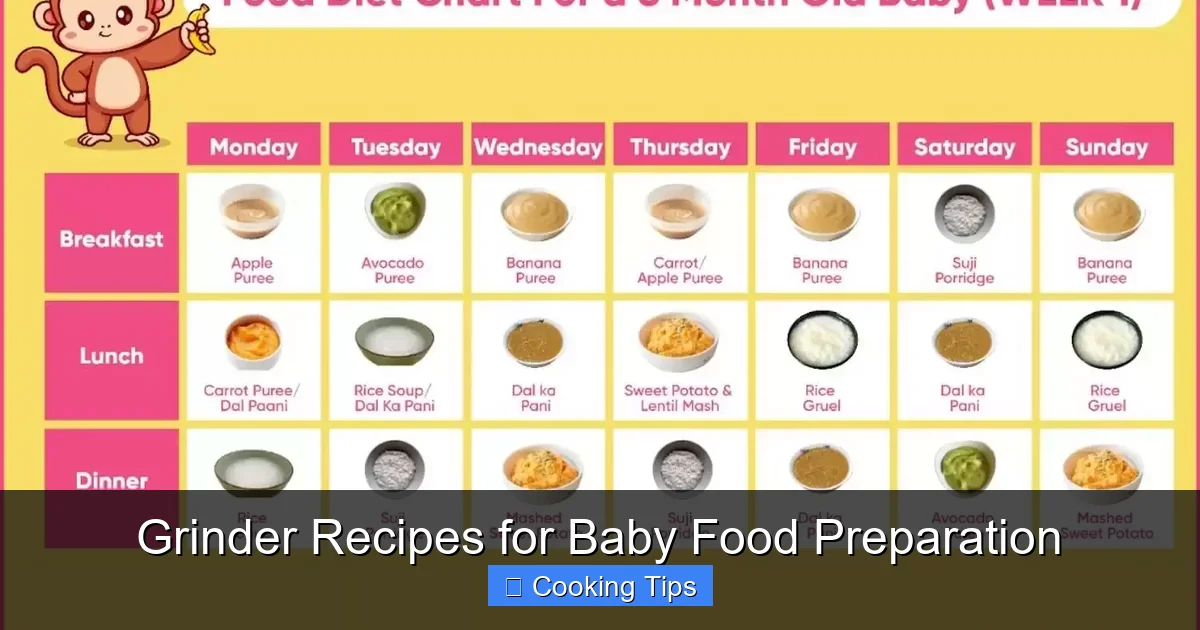
This guide offers a comprehensive look at using grinders for preparing homemade baby food. Learn essential safety tips, step-by-step instructions, and creative recipe ideas to make nutritious meals for your baby. From single ingredients to mixed purees, we’ll show you how to effectively use your grinder for simple, healthy baby food preparation.
# Grinder Recipes for Baby Food Preparation
Welcoming a baby is an exciting time, and one of the most rewarding aspects is feeding them. As your little one transitions from milk to solids, you might be wondering about the best ways to prepare their first foods. Many parents are discovering the efficiency and versatility of using grinders, also known as food processors or blenders, to create delicious and nutritious homemade baby food. This guide will walk you through everything you need to know about using a grinder for baby food preparation. You’ll learn about choosing the right grinder, preparing ingredients, creating smooth purees, and even exploring some tasty recipes.
## Why Use a Grinder for Baby Food?
Using a grinder to make baby food offers numerous advantages. It allows you to control exactly what goes into your baby’s meals, avoiding added sugars, salts, and preservatives often found in store-bought options. Grinding fresh ingredients ensures maximum nutrient content and allows you to tailor the texture to your baby’s developmental stage. Plus, it can be more cost-effective in the long run.
## Choosing the Right Grinder
When selecting a grinder for baby food, consider a few key features:
### Food Safety and Material
* Ensure the grinder is made from food-grade, BPA-free materials. This is crucial for your baby’s health.
* Look for grinders designed for processing soft foods and purees. Heavy-duty grinders might be overkill and harder to clean effectively for small baby portions.
### Size and Capacity
* Consider a smaller, personal-sized grinder or a food processor with a smaller bowl attachment. This is ideal for making single servings or small batches, reducing waste.
* If you plan to make larger batches for freezing, a standard food processor will be more suitable.
### Ease of Cleaning
* Baby food preparation requires meticulous cleaning. Opt for a grinder with detachable parts that are dishwasher-safe or easy to wash by hand.
* Avoid grinders with too many nooks and crannies where food residue can hide.
## Essential Safety and Hygiene Practices
Before you begin grinding, establish a routine of safety and hygiene. This is paramount when preparing food for infants.
### Cleanliness is Key
* **Wash your hands thoroughly** with soap and water before preparing any food.
* **Wash all grinder parts**, utensils, and containers with hot, soapy water. If possible, sanitize them.
* **Clean your work surfaces** before and after preparation.
### Food Preparation Safety
* **Cook foods thoroughly** before grinding, especially meats, poultry, and eggs. This ensures any harmful bacteria are killed. You can refer to a comprehensive Cooking Temperature Guide For Beginners to ensure foods are cooked to safe internal temperatures.
* **Cool cooked foods** before grinding to prevent steam burns and to preserve nutrients.
* **Use fresh, high-quality ingredients.** Inspect fruits and vegetables for any signs of spoilage.
## Getting Started: Preparing Your First Baby Foods
The journey of introducing solids is often done with single-ingredient purees. This helps your baby get used to new tastes and allows you to easily identify any potential allergic reactions.
### Step-by-Step Grinding Process
1. **Select Your Ingredient:** Start with simple, easily digestible foods like sweet potatoes, carrots, peas, apples, or pears.
2. **Prepare the Ingredient:**
* **Vegetables:** Wash, peel (if necessary), and chop into small, manageable pieces.
* **Fruits:** Wash, peel (if necessary), core, and chop into small pieces. Remove any seeds.
* **Meats/Poultry:** Cook thoroughly until no pink remains. Let cool slightly, then chop into small pieces.
3. **Cook the Ingredient (if necessary):**
* **Steaming:** This is an excellent method as it retains the most nutrients. Place chopped ingredients in a steamer basket over boiling water. Cook until tender. Check that water levels remain appropriate; understanding the best heat level for boiling water is key here for effective steaming.
* **Boiling:** Boil chopped ingredients in a small amount of water until tender.
* **Baking/Roasting:** Bake or roast vegetables until soft.
4. **Drain Excess Liquid:** After cooking, drain most of the water, reserving a small amount.
5. **Place in Grinder:** Put the cooked, slightly cooled ingredient into your grinder’s container.
6. **Grind:**
* **Pulse:** Start by pulsing a few times to break down the food.
* **Process:** Continue processing until a smooth puree forms.
* **Add Liquid:** If the puree is too thick, add a small amount of the reserved cooking liquid, breast milk, formula, or plain water, a tablespoon at a time, until you reach the desired consistency.
7. **Check Texture:** For very young babies, aim for a very smooth, almost liquid consistency. As they get older, you can gradually make the puree slightly thicker or lumpier.
8. **Serve or Store:** Serve immediately at a safe temperature or store properly.
## Grinder Recipes for Baby Food
Here are some simple and delicious recipes to get you started. Remember to always introduce new ingredients one at a time.
### 1. Sweet Potato Puree
Sweet potatoes are rich in Vitamin A and have a natural sweetness that babies love.
* **Ingredients:**
* 1 medium sweet potato
* Water, breast milk, or formula (for thinning)
* **Instructions:**
1. Wash, peel, and cube the sweet potato.
2. Steam or boil the cubes until very tender.
3. Drain most of the water, reserving some.
4. Place the cooked sweet potato in the grinder.
5. Grind until smooth, adding liquid as needed to achieve desired consistency.
### 2. Pea Puree
Peas are a good source of protein and fiber.
* **Ingredients:**
* 1 cup frozen or fresh peas
* Water, breast milk, or formula (for thinning)
* **Instructions:**
1. If using fresh peas, shell them.
2. Cook peas by steaming or boiling until tender (about 5-7 minutes).
3. Drain well.
4. Place cooked peas in the grinder.
5. Grind until smooth, adding liquid if necessary. You might need to scrape down the sides of the grinder a few times.
### 3. Apple and Pear Puree
This is a classic combination that’s gentle on a baby’s digestive system.
* **Ingredients:**
* 1 apple (like Fuji or Gala)
* 1 pear (like Bartlett or Anjou)
* Water (for cooking and thinning)
* **Instructions:**
1. Wash, peel, core, and chop the apple and pear.
2. Steam or boil the fruit pieces until very soft.
3. Drain most of the water, reserving some.
4. Place the cooked fruit in the grinder.
5. Grind until smooth, adding liquid as needed.
### 4. Chicken and Carrot Puree
A more substantial meal, introducing protein and a familiar vegetable. Ensure the chicken is thoroughly cooked.
* **Ingredients:**
* 2-3 ounces cooked chicken breast (plain, boiled or steamed)
* 1/2 cup cooked carrots
* Reserved cooking liquid from carrots, or water, breast milk, or formula
* **Instructions:**
1. Ensure chicken is fully cooked and cut into small pieces.
2. Place cooked chicken and carrots into the grinder.
3. Grind until very smooth, gradually adding liquid until you achieve a very soft, easily swallowable consistency. This might take a bit longer than fruit or vegetable purees.
### 5. Avocado Mash
Avocado is a fantastic first food because it’s creamy and rich in healthy fats, requiring no cooking.
* **Ingredients:**
* 1/2 ripe avocado
* A splash of breast milk, formula, or water (optional, for thinning)
* **Instructions:**
1. Mash the avocado with a fork in a bowl until relatively smooth.
2. For a smoother puree, transfer to the grinder.
3. Grind briefly, adding a tiny amount of liquid if needed. Avoid over-processing avocado, as it can become gummy.
## Adjusting Texture for Your Baby
The consistency of baby food is crucial for safe eating.
### Thinning Purees
* **For early eaters (6 months):** Aim for a very thin, liquid-like consistency. Use breast milk, formula, or water generously. The puree should easily drip off a spoon.
* **For developing eaters (7-8 months):** Gradually thicken the puree. It should still be smooth but hold its shape on a spoon a bit better.
* **For more advanced eaters (9+ months):** You can introduce thicker purees or slightly mashed foods with small lumps, preparing them for finger foods.
### Thickening Purees
If a puree is too thin, you can sometimes thicken it by:
* Cooking the ingredients a bit longer initially, to remove more moisture.
* Adding a small amount of a grain cereal designed for babies (like rice or oatmeal).
## Storage and Reheating
Proper storage is vital to maintain the safety and freshness of homemade baby food.
### Refrigeration
* Cool cooked purees completely.
* Store in airtight containers or ice cube trays (for single servings) in the refrigerator.
* Homemade baby food typically lasts 2-3 days in the refrigerator.
### Freezing
* **Ice Cube Trays:** This is the most convenient method for freezing. Pour purees into clean ice cube trays, cover with plastic wrap (to prevent freezer burn), and freeze until solid.
* **Portioning:** Once frozen, pop the cubes out and transfer them to a freezer-safe bag or container. Label with the date and contents.
* **Shelf Life:** Frozen baby food is best used within 1-2 months for optimal freshness and nutrient quality.
### Reheating
* **From Refrigerator:** Reheat gently in a double boiler or a microwave-safe dish over low heat. Stir frequently and ensure it’s heated through. Be careful not to overheat. Understanding heat control tips for home cooking is important to avoid burning or uneven heating.
* **From Freezer:** Thaw frozen cubes in the refrigerator overnight or reheat directly from frozen over low heat.
* **Temperature Check:** **ALWAYS** test the temperature of the baby food before serving. It should be lukewarm, not hot. A good rule of thumb is to test it on your wrist, similar to how you’d test a baby bottle. Avoid reheating more than once.
## Troubleshooting Common Grinder Issues
Sometimes, things don’t go as planned. Here are a few common issues and how to solve them:
### Issue: Grinder is not grinding food smoothly.
* **Possible Cause:** Food is too dry, or the grinder is overloaded.
* **Solution:** Add more liquid (water, breast milk, formula) and process in smaller batches. Ensure ingredients are cooked until very tender.
### Issue: Puree is too thick or gummy.
* **Possible Cause:** Not enough liquid was added, or the grinder has overworked the ingredients.
* **Solution:** Add a little more liquid and process briefly. For gummy textures with starchy foods like potatoes, ensure they are cooked until very soft and don’t over-process.
### Issue: Food is sticking to the sides of the grinder.
* **Possible Cause:** The consistency is too thick for the grinder to move it effectively.
* **Solution:** Stop the grinder, scrape down the sides with a spatula, and add a little more liquid. Pulse to help redistribute the food.
### Issue: Grinder smells or smokes (for electric grinders).
* **Possible Cause:** Motor is overheating, or the grinder is being used for too long without a break, or it’s being overloaded with very tough ingredients.
* **Solution:** Stop the grinder immediately. Let it cool down completely. Refer to your grinder’s manual. If it persists, there might be a mechanical issue. For safety, never force a grinder that seems to be struggling.
## Beyond Single Ingredients: Flavor Combinations
Once your baby has tried and tolerated several single ingredients, you can start combining them to create more complex flavors and provide a wider range of nutrients.
* **Fruit Combos:**
* Banana and Blueberry
* Mango and Peach
* Strawberry and Yogurt (ensure yogurt is plain, full-fat, and age-appropriate)
* **Vegetable Combos:**
* Carrot and Sweet Potato
* Broccoli and Zucchini
* Butternut Squash and Spinach
* **Protein & Veggie:**
* Chicken and Sweet Potato
* Beef and Carrot
* Lentils and Butternut Squash
**Tip:** When combining ingredients, always ensure all components are cooked and cooled appropriately before grinding.
## Conclusion
Using a grinder for baby food preparation is a simple, healthy, and cost-effective way to nourish your little one. By following these guidelines, prioritizing safety and hygiene, and experimenting with delicious recipes, you can confidently create a variety of nutritious meals for your baby. Remember to observe your baby for any signs of allergies or intolerability and to adjust textures as they grow. Happy grinding and happy feeding!
- Understand Your Grinder: Not all grinders are suitable for baby food. Ensure yours is designed for food processing and can handle various textures.
- Prioritize Safety and Hygiene: Always use clean equipment and follow food safety guidelines to prevent contamination.
- Start with Single Ingredients: Introduce new foods one at a time to easily identify potential allergens.
- Achieve Perfect Texture: Adjust the grinding time and add liquid (water, breast milk, formula) to get the ideal consistency for your baby’s age and stage.
- Explore Flavor Combinations: Once single ingredients are mastered, blend complementary fruits, vegetables, and proteins for more complex flavors.
- Proper Storage is Key: Learn how to safely store homemade baby food to maintain freshness and prevent spoilage.
