

Unsure about the perfect kitchen knife length? This comprehensive guide dives into the world of knife blade dimensions, explaining how different lengths suit various tasks. Learn how to choose the right knife for chopping, slicing, dicing, and more, ensuring efficiency and safety in your kitchen. Understanding knife length is key to mastering your culinary skills.
How Long Is A Kitchen Knife
Welcome to our ultimate guide to kitchen knife lengths! If you’ve ever stood in front of a knife block, utterly bewildered by the array of blades, you’re not alone. The world of kitchen knives can seem complex, but understanding the role of blade length is a crucial step towards becoming a more confident and efficient cook. This guide will demystify how long kitchen knives typically are, why different lengths matter, and how to choose the perfect knife for your culinary adventures.
Let’s dive in and uncover the secrets behind the blade!
- Blade length is measured from the heel to the tip of the cutting edge, not including the handle.
- General-purpose knives like chef’s knives typically range from 8 to 10 inches, offering versatility for most kitchen tasks.
- Smaller knives, such as paring knives (3-4 inches), are ideal for intricate work and detail tasks.
- Longer blades (10-12 inches and above) are best suited for large items like roasts, melons, and bread.
- The correct knife length enhances efficiency and safety, reducing strain and the risk of accidents.
- Consider your hand size and the types of food you prepare most often when selecting a knife.
Understanding Kitchen Knife Length: What Exactly Are We Measuring?
Before we explore the various lengths, it’s important to clarify what “knife length” actually refers to. When people talk about the length of a kitchen knife, they are almost always referring to the **length of the blade itself.** This measurement is taken from the very tip of the blade to the point where the blade meets the handle (often called the “heel”). The handle length is not included in this measurement, as it’s more about ergonomics and grip than the cutting capability.
Think of it like measuring a pencil. You measure the graphite and wood part, not the eraser. Similarly, for a kitchen knife, we’re focusing on the business end – the part that does the cutting.
The Anatomy of a Kitchen Knife and Why Length Matters
Every kitchen knife, regardless of its length, has a blade. This blade is the workhorse. Its length directly influences:
- Efficiency: A longer blade can often slice through larger items in a single stroke. This saves time and effort.
- Control: While longer blades offer more reach, shorter blades provide greater precision and control for delicate tasks.
- Versatility: Some knife lengths are better suited for a wider range of tasks than others.
- Safety: The right length for the job can improve safety. A knife that’s too long for a small task can be unwieldy, while a knife that’s too short for a large item might require more force, increasing the risk of slipping.
Let’s explore the common types of kitchen knives and their typical lengths.
Common Kitchen Knife Lengths and Their Uses
The length of a kitchen knife is often a primary indicator of its intended purpose. Here’s a breakdown of the most common lengths and the knives they’re associated with:
3-4 Inch Paring Knives: The Precision Tools
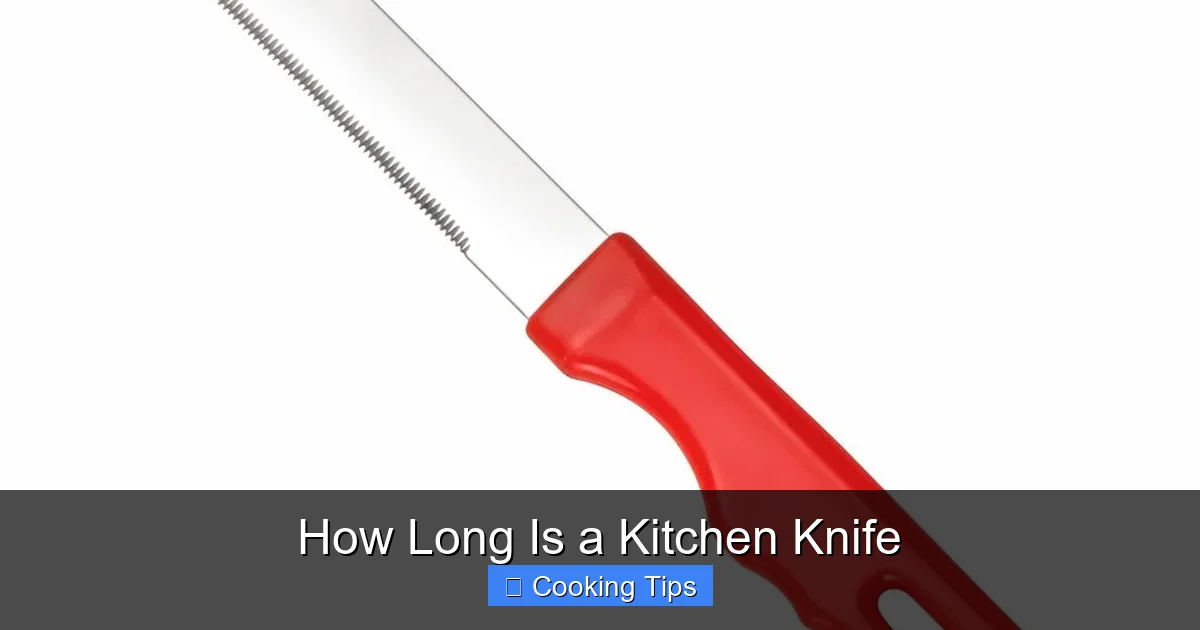
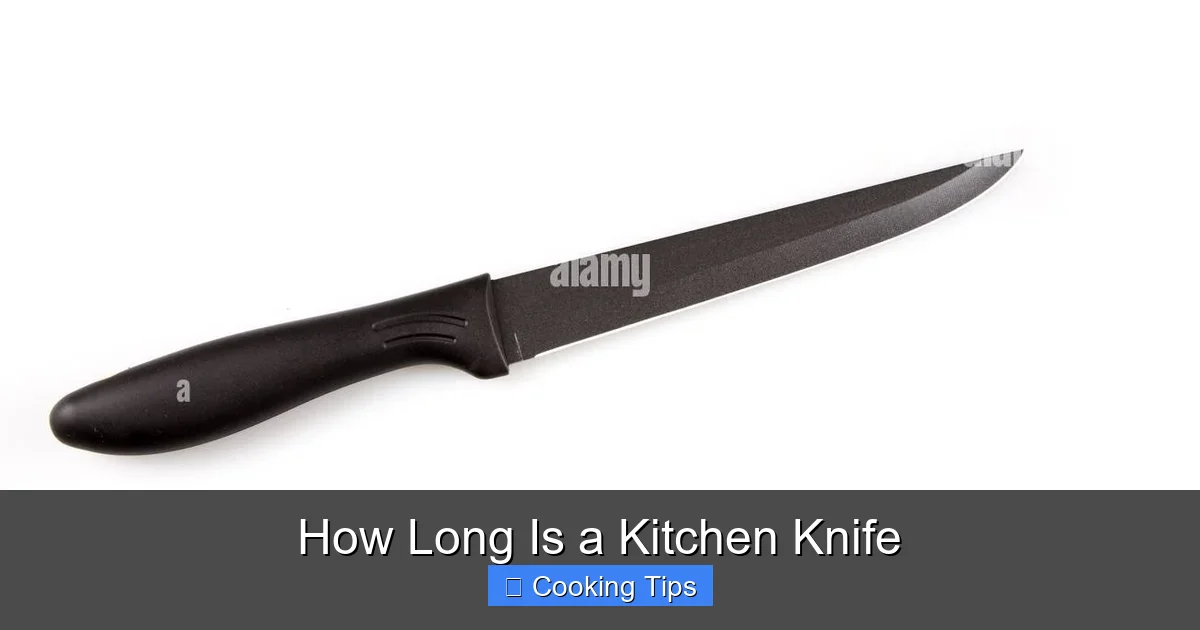
Paring knives are the smallest of the common kitchen knives. Their short blades, typically measuring between 3 and 4 inches, make them perfect for detailed work.
Visual guide about How Long Is a Kitchen Knife
Image source: 5.imimg.com
Visual guide about How Long Is a Kitchen Knife
Image source: c8.alamy.com
What they’re good for:
- Peeling: Their small size allows for close control when peeling fruits and vegetables.
- Trimming: Removing blemishes or unwanted parts from produce.
- Deveining: Quickly and easily removing the vein from shrimp.
- Small Garnishes: Creating intricate garnishes for dishes.
- Hull strawberries: Precisely removing the leafy green tops.
A 3-inch paring knife is excellent for very small hands or those who prefer maximum dexterity. A 4-inch paring knife offers a little more blade to work with while still maintaining excellent control.
5-6 Inch Utility Knives: The Multi-Taskers
Utility knives fall into a middle ground. Their blades, usually between 5 and 6 inches, are larger than a paring knife but smaller than a chef’s knife. They are incredibly versatile.
What they’re good for:
- Slicing smaller fruits and vegetables: Think tomatoes, apples, or onions when you don’t need the full capacity of a chef’s knife.
- Trimming fat from meats: Their size is manageable for working with smaller cuts of meat.
- Cutting sandwiches: A clean slice through bread and fillings.
- Slicing cheese: Many types of cheese are easily managed with a utility knife.
If you find a paring knife too small for general chopping and a chef’s knife too large for everyday tasks, a utility knife might be your go-to.
7-10 Inch Chef’s Knives: The All-Rounders
The chef’s knife is arguably the most important knife in any kitchen. These knives typically have blades ranging from 7 to 10 inches. This length is considered the sweet spot for most home cooks, offering a balance of power and control.
What they’re good for:
- Chopping: Vegetables like onions, carrots, and celery become a breeze.
- Slicing: Larger fruits, vegetables, and meats.
- Dicing: Uniform cubes of ingredients for stews, stir-fries, and salads.
- Mincing: Garlic, herbs, and ginger.
- General prep work: This knife can handle about 80% of all your kitchen cutting needs.
Choosing between lengths:
- 7-inch chef’s knife: A great option for those with smaller hands or who primarily work with smaller ingredients. It offers excellent maneuverability.
- 8-inch chef’s knife: The most popular and versatile size for general kitchen use. It provides a good balance of cutting power and control.
- 9-inch and 10-inch chef’s knives: Ideal for cooks with larger hands or those who frequently chop large quantities of food or tackle bigger ingredients. They offer more leverage and can make quicker work of extensive prep.
A common question is whether a longer chef’s knife is “better.” It’s not necessarily better, but it might be better *for you* depending on your preferences and the tasks you perform most often.
10-12 Inch Slicing Knives: For Smooth, Even Cuts
These longer knives are designed for creating long, clean slices. Their extended blades allow for smooth, uninterrupted cuts, particularly through larger food items.
What they’re good for:
- Carving roasts: Turkey, ham, beef – get those beautiful thin slices.
- Slicing large fruits: Watermelon, cantaloupe, and pineapple.
- Slicing bread: While a dedicated bread knife is often serrated, a long, smooth-edged slicing knife can also work for some loaves.
- Slicing large fish: Filleting and portioning larger fish.
A 10-inch slicing knife offers a good reach, while a 12-inch blade provides even more capability for very large items.
Specialty Knives: Their Unique Lengths
Beyond the general categories, many specialty knives exist, each with a specific length suited to its task:
- Bread Knife (8-10 inches): The serrated edge is key here, but the length is important for sawing through large loaves.
- Boning Knife (5-6 inches): A thin, flexible blade (often shorter than a typical utility knife) designed to get close to bones.
- Fillet Knife (6-11 inches): Very thin and flexible, often longer for delicate fish.
- Santoku Knife (5-7 inches): A Japanese-style knife with a straighter edge and often a Granton edge (dimples). Its length is comparable to a smaller chef’s knife or utility knife, offering a different chopping motion.
- Nakiri Knife (5-7 inches): Another Japanese-style knife, with a straight, rectangular blade, ideal for chopping vegetables.
How to Choose the Right Kitchen Knife Length for You
Selecting the right knife length isn’t just about the type of food you cut; it’s also about your personal comfort and the size of your kitchen space.
Consider Your Hand Size
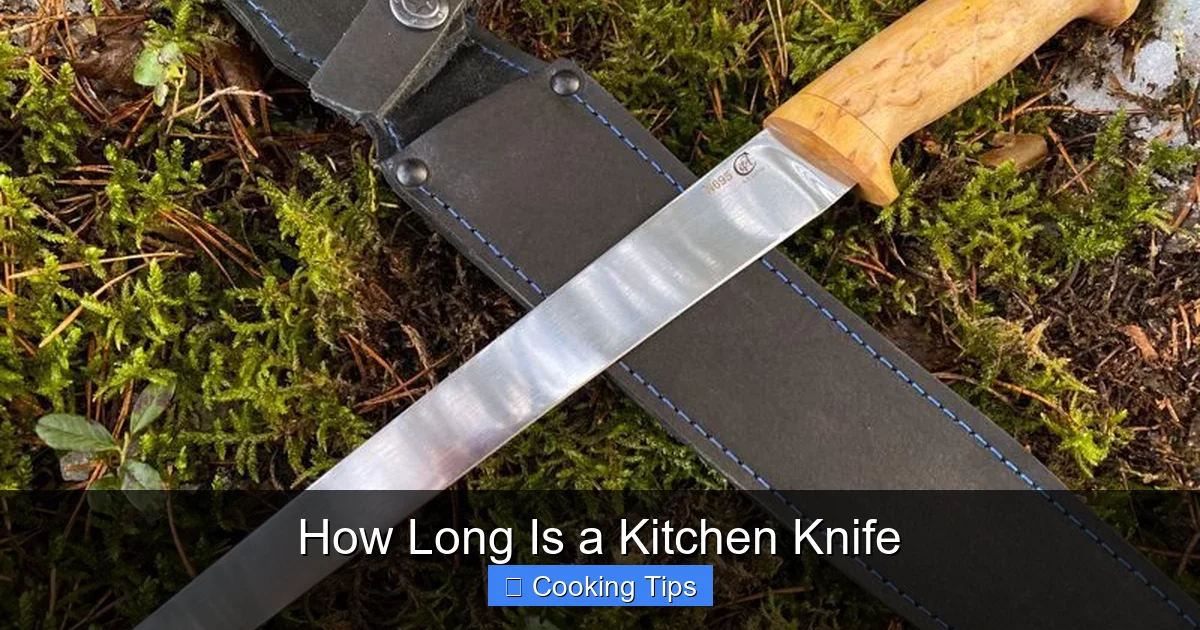
This is a crucial, often overlooked factor. If you have smaller hands, a long, heavy chef’s knife might feel cumbersome and difficult to control. Conversely, someone with larger hands might find a very short paring knife awkward to use for extended periods.
Visual guide about How Long Is a Kitchen Knife
Image source: aaknives.eu
Tip:
Try holding different knives in a store if possible. How does the handle feel? How does the weight balance in your hand? Imagine performing tasks with it. Does it feel natural or strained?
Think About Your Most Frequent Tasks
What do you cook most often? If you’re a baker who primarily works with small ingredients and intricate dough work, a shorter knife might be more useful. If you’re a grill master who regularly carves large roasts, a longer slicing or chef’s knife is essential.
- Vegetable heavy cooking: An 8-inch chef’s knife or a Nakiri knife would be excellent.
- Meat preparation: A longer chef’s knife (9-10 inches) or a dedicated slicing knife will be very useful.
- Garnishes and fine detail: A 3-4 inch paring knife is indispensable.
Assess Your Kitchen Space and Storage
While not directly related to cutting performance, the length of your knives can impact storage. Longer knives require longer slots in knife blocks or longer magnetic strips. If you have limited counter space, a knife roll might be a better storage solution.
Balance is Key: Blade Length and Handle Ergonomics
The length of the blade is only one part of the equation. The handle’s design, material, and how it integrates with the blade (the tang) significantly affect the knife’s balance and how it feels in your hand. A well-balanced knife feels like an extension of your arm, reducing fatigue and improving control, regardless of its blade length.
Troubleshooting Common Knife Length Issues
Even with the best intentions, you might encounter challenges with your knife lengths. Here are some common issues and how to address them:
Problem: My chef’s knife feels too big and unwieldy.
Solution: You might be using a chef’s knife that is too long for your hand size or your typical tasks. Consider a 7-inch chef’s knife or a utility knife for everyday chopping. Alternatively, focus on improving your knife grip and rocking motion to gain better control.
Problem: My paring knife feels too small and awkward for peeling larger vegetables.
Solution: A paring knife is designed for small tasks. For larger vegetables like potatoes or sweet potatoes, a utility knife (5-6 inches) or even an 8-inch chef’s knife might be more comfortable and efficient. Some people also prefer a “bird’s beak” paring knife for certain peeling tasks.
Problem: I struggle to get clean slices from my roasts.
Solution: This is a classic case where knife length is crucial. You likely need a longer slicing knife (10-12 inches) to make smooth, continuous strokes without sawing. Ensure your knife is sharp and that you’re using a proper carving technique.
Problem: My knife feels unbalanced, making it hard to use.
Solution: Balance is key. This could be due to the knife’s design, or the handle material and weight. Look for knives where the tang (the metal of the blade extending into the handle) goes all the way through the handle (full tang) for better stability. Experiment with different brands and models to find one that feels right for you.
Conclusion: Finding Your Perfect Blade Length
The question “How long is a kitchen knife?” doesn’t have a single answer because the “right” length is subjective and task-dependent. From the nimble 3-inch paring knife to the substantial 12-inch slicing knife, each length serves a distinct purpose.
Ultimately, the best kitchen knife length for you will be one that feels comfortable in your hand, is appropriate for the types of food you prepare, and enhances your cooking experience. Don’t be afraid to experiment! Understanding these guidelines is the first step to building a well-rounded knife collection that will make every meal preparation a joy. Happy chopping!
