

Navigating the world of blenders can be overwhelming, but this comprehensive guide simplifies the process. We’ll help you understand different blender types, essential features, and motor power to make an informed decision. Whether you’re a smoothie enthusiast, a soup maker, or a sauce connoisseur, you’ll discover the ideal blender to elevate your culinary creations.
Choosing the right blender can feel like a big decision. With so many options on the market, how do you know which one will actually meet your needs? Don’t worry, we’re here to help! This guide will walk you through everything you need to know to pick the perfect blender for your kitchen and your cooking adventures. We’ll cover the different types of blenders available, what features to look for, and how much power you really need. By the end of this guide, you’ll be confident in making a purchase that will make your cooking life easier and tastier.
Key Takeaways
- Understand Your Primary Use: Identify the main tasks you’ll perform with your blender, such as making smoothies, soups, sauces, or crushing ice, to narrow down your choices.
- Explore Blender Types: Differentiate between personal blenders, countertop blenders, immersion blenders, and high-performance blenders, each suited for different needs.
- Consider Motor Power (Wattage): Higher wattage generally means more power to handle tougher ingredients and achieve smoother results.
- Evaluate Jar Material and Size: Glass jars are durable and don’t stain, while plastic jars are lighter. Size matters for single servings versus family portions.
- Look for Essential Features: Key features include variable speed settings, pulse function, pre-programmed settings, and safety locks.
- Factor in Ease of Cleaning and Maintenance: Dishwasher-safe parts and simple designs make cleaning significantly easier.
- Set a Budget: Blenders range from budget-friendly to premium. Determine how much you’re willing to spend before you start shopping.
Step 1: Identify Your Primary Blending Needs
The very first step to choosing the right blender is to understand what you’ll be using it for the most. Think about your typical kitchen routine. Are you someone who starts every day with a fresh smoothie? Or do you love making creamy soups and sauces from scratch? Perhaps you enjoy experimenting with homemade nut butters or grinding your own spices.
Smoothies and Shakes
If your main goal is to blend fruits, vegetables, ice, and protein powders for healthy drinks, you won’t necessarily need the most powerful blender. A personal blender or a mid-range countertop blender might be perfectly adequate. You’ll want a blender that can handle frozen ingredients and create a smooth, lump-free consistency.
Soups and Sauces
For hot liquids like soups and sauces, you’ll need a blender that can handle heat and blend ingredients to a velvety smooth texture. Some blenders have special features for hot liquids, or you might opt for a high-performance blender that can heat ingredients through friction. Always ensure your blender is safe for hot liquids if this is a primary use.
Dips and Spreads
Making hummus, pesto, or other dips and spreads often involves blending sticky ingredients and nuts. A blender with good torque and variable speed settings will give you more control to achieve the perfect consistency, from chunky to completely smooth.
Ice Crushing and Frozen Drinks
If crushing ice for margaritas or snow cones is high on your list, you’ll need a blender with a powerful motor and sturdy blades. Many standard blenders struggle with large amounts of ice, leading to uneven results or even damaging the motor.
Grinding and Pureeing
For tasks like grinding coffee beans, spices, or pureeing baby food, you’ll need a blender with specific attachments or a robust enough motor and blade system. Some blenders come with specialized grinding cups.
Step 2: Explore Different Types of Blenders
Visual guide about Choose Right Blender For Cooking Needs
Image source: pestoandmargaritas.com
Once you know what you want to blend, it’s time to look at the different categories of blenders available. Each type has its own strengths and weaknesses, making it suitable for different needs.
Personal Blenders
These are small, compact blenders, often with jars that double as travel cups. They are ideal for single servings of smoothies, protein shakes, or small batches of sauces.
Pros:
- Portable and easy to store.
- Quick and easy to use for single servings.
- Often the most affordable option.
- Simple to clean, as the blending jar is the cup.
Cons:
- Limited capacity, not suitable for large batches.
- Less powerful motors, may struggle with ice or tough ingredients.
- Fewer speed settings and features.
Best for: Individuals who primarily make single-serving smoothies and shakes.
Countertop Blenders
These are the most common type of blenders. They feature a base with a motor and a removable jar that sits on top. They come in a wide range of power levels and features.
Pros:
- Versatile for various tasks, from smoothies to soups.
- Available in a wide range of prices and power levels.
- Larger capacity jars are suitable for families or multiple servings.
- Often include multiple speed settings and a pulse function.
Cons:
- Can be bulky and take up counter space.
- Cleaning can be more involved than personal blenders.
- Less portable.
Best for: Most households looking for a versatile appliance for everyday use.
Immersion Blenders (Hand Blenders)
These are handheld devices that you immerse directly into your pot or container to blend. They are excellent for pureeing soups directly in the pot, making sauces, or whipping cream.
Pros:
- Compact and easy to store.
- Great for pureeing hot liquids directly in the cooking pot, minimizing cleanup.
- Versatile for various tasks like emulsifying dressings or chopping small amounts of nuts (with attachments).
- Generally more affordable than high-powered countertop blenders.
Cons:
- Not ideal for ice crushing or very thick mixtures.
- Can cause splashing if not used carefully.
- Limited capacity for blending large quantities.
Best for: Those who frequently make soups, sauces, or want a compact blending solution.
High-Performance Blenders
These are the powerhouses of the blender world. They boast extremely powerful motors, durable blades, and robust construction, allowing them to handle almost any task, from making nut butters to grinding grains.
Pros:
- Exceptional blending power, can create incredibly smooth textures.
- Can handle tough ingredients like frozen fruits, ice, nuts, and seeds with ease.
- Often come with long warranties.
- Can perform a wide range of tasks, including heating and cooking (some models).
Cons:
- Significantly more expensive than other types.
- Can be noisy due to their powerful motors.
- Larger and heavier than standard blenders.
Best for: Serious home cooks, health enthusiasts, and those who want the absolute best in blending performance and versatility.
Step 3: Evaluate Motor Power (Wattage)
Visual guide about Choose Right Blender For Cooking Needs
Image source: thereviewsguru.com
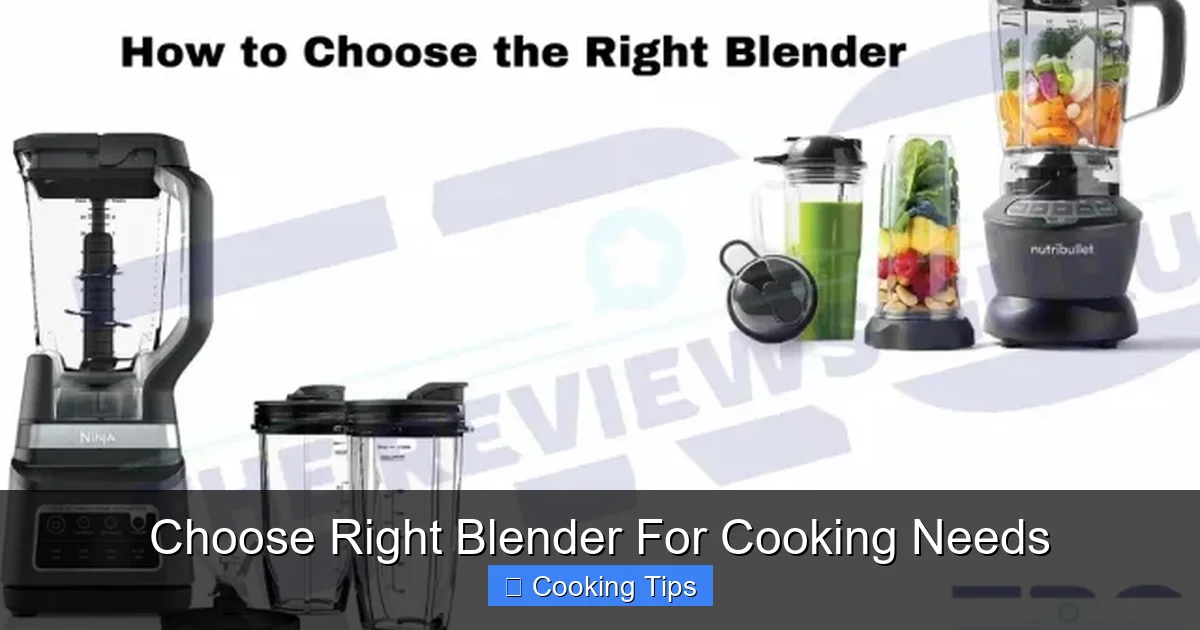
Motor power, measured in watts, is a crucial factor in a blender’s performance. Generally, the higher the wattage, the more powerful the motor.
What Wattage is Right for You?
* 150-400 Watts: These are typically found in personal blenders or very basic countertop models. They are suitable for soft fruits, yogurt, and powders for smoothies. They will struggle with ice or frozen fruits.
* 400-700 Watts: This range is common for mid-range countertop blenders. They can handle most fruits and vegetables, ice cubes (in moderation), and softer nuts. They are good all-rounders for everyday use.
* 700-1000+ Watts: Blenders in this category offer significant power. They can easily crush ice, blend frozen ingredients into a smooth consistency, and handle tougher tasks like making nut butters or grinding spices. High-performance blenders often exceed 1000 watts, sometimes reaching up to 2000 watts or more.
Tip: Don’t just look at wattage. Motor design and blade efficiency also play a role in overall performance. However, wattage is a good starting point for comparison.
Step 4: Consider Jar Material and Size
Visual guide about Choose Right Blender For Cooking Needs
Image source: jucesip.com
The jar is where the magic happens, so its material and size are important considerations.
Jar Materials
* Plastic (BPA-Free Tritan): This is the most common material for blender jars. It’s lightweight, shatter-resistant, and usually dishwasher-safe. Ensure it’s BPA-free for health and safety. Over time, plastic can sometimes become scratched or cloudy.
* Glass: Glass jars are durable, won’t stain or absorb odors, and are aesthetically pleasing. However, they are heavier and can break if dropped. Some glass jars may not be suitable for hot liquids or very high speeds.
* Stainless Steel: Less common for blender jars, but sometimes used for specific functions like grinding. It’s very durable but opaque, so you can’t see the blending process.
Jar Size
* Personal/Single-Serve (16-24 oz): Ideal for one person’s smoothie or shake.
* Small (32-48 oz): Suitable for 1-2 people, small batches of sauces or dips.
* Medium (48-64 oz): A good size for families, allowing for larger batches of smoothies, soups, or batters.
* Large (70+ oz): For large families or those who entertain frequently and need to blend large quantities.
Consideration: If you plan to make both single servings and larger batches, a blender that comes with multiple jar sizes might be a good investment.
Step 5: Look for Essential Features
Beyond the basics, several features can enhance your blending experience and make your blender more user-friendly.
Speed Settings
Most blenders offer multiple speed settings. Variable speed control gives you the most precision to start slow and gradually increase speed, preventing splashing and allowing for finer texture control.
Pulse Function
The pulse button is invaluable for short bursts of power. It’s perfect for rough chopping, breaking down large chunks before blending, or achieving a chunkier texture in dips.
Pre-Programmed Settings
Many blenders come with pre-set programs for common tasks like smoothies, ice crushing, or pureeing. While convenient, they might not always achieve the perfect result for every recipe, so manual control is still important.
Tamper
High-performance blenders often include a tamper. This tool allows you to push ingredients down towards the blades while the blender is running, which is especially useful for thick mixtures that might otherwise get stuck.
Safety Features
Look for features like a secure lid with a filler cap, a locking mechanism that prevents the blender from operating if the jar or lid isn’t properly in place, and non-slip feet to keep the blender stable.
Cord Storage
A thoughtful detail, but cord storage can help keep your countertops tidy.
Step 6: Consider Ease of Cleaning and Maintenance
Let’s be honest, nobody enjoys cleaning kitchen appliances. A blender that’s easy to clean will be used more often.
Dishwasher-Safe Parts
Check if the jar, lid, and blades are dishwasher-safe. This significantly simplifies the cleaning process.
Self-Cleaning Function
Some blenders have a “self-cleaning” mode. You add a drop of soap and water to the jar, run the blender on high for a minute, and then rinse. This is a quick way to get most of the residue off.
Blade Design
Blenders with removable blades can be easier to clean thoroughly. However, some integrated blade systems are designed to be very efficient and can be cleaned adequately with the self-cleaning function.
Material of the Base
A smooth, wipeable base is also a plus, especially if the motor is well-sealed.
Step 7: Set Your Budget and Read Reviews
Blenders range from under $50 to over $500. Determine how much you’re willing to spend based on your needs and the features you require.
Budget Categories:
* Budget-Friendly ($50-$100): Expect personal blenders or basic countertop models with limited power and features. Good for very simple tasks.
* Mid-Range ($100-$250): This is where you’ll find many excellent countertop blenders with good power, multiple speeds, and decent durability. A great sweet spot for most home cooks.
* Premium/High-Performance ($250+): This category includes powerful blenders capable of a wide range of tasks, often with longer warranties and superior build quality.
Read Reviews!
Once you have a few models in mind, dive into online reviews. Look for common themes regarding performance, durability, ease of cleaning, and customer service. Pay attention to reviews from people who use blenders for similar tasks to yours.
Troubleshooting Common Blender Issues
Even the best blenders can encounter minor issues. Here are a few common problems and how to solve them:
Problem: Blender not turning on.
Possible Solutions:
- Ensure the blender is properly plugged into a working outlet.
- Check that the jar and lid are securely locked in place; many blenders have safety interlocks.
- For some models, check if there’s a reset button on the motor base.
Problem: Blender struggling or motor smelling hot.
Possible Solutions:
- You might be trying to blend too much at once. Reduce the amount of ingredients.
- Ensure you’re not overloading the blender with very tough ingredients for its power level.
- For hot liquids, ensure the lid is vented and you’re not overfilling the jar.
- Allow the motor to cool down if it feels excessively hot.
Problem: Ingredients not blending smoothly or getting stuck.
Possible Solutions:
- Add more liquid to the blender.
- Cut larger ingredients into smaller pieces before blending.
- Use the pulse function to break up larger chunks.
- If your blender has a tamper, use it to push ingredients towards the blades.
- Try blending in stages, starting on a lower speed and gradually increasing.
Problem: Leaking from the jar.
Possible Solutions:
- Ensure the lid is properly secured.
- Check if the rubber gasket or seal at the base of the jar is in place and intact.
- Do not overfill the blender jar beyond the maximum fill line.
Conclusion
Choosing the right blender doesn’t have to be a complex process. By understanding your personal cooking needs, exploring the different types of blenders available, and considering key features like motor power and jar material, you can make an informed decision. Don’t forget to factor in ease of cleaning and your budget. With the right blender in your kitchen, you’ll unlock a world of culinary possibilities, from vibrant smoothies to silky-smooth soups and delicious homemade sauces. Happy blending!
