

Selecting the ideal mixer grinder can significantly enhance your kitchen experience. This comprehensive guide breaks down the essential factors to consider, including motor power, jar capacity, blade types, and crucial features. Learn how to match these elements to your specific cooking habits and dietary needs, ensuring you make a wise investment that simplifies your culinary tasks.
Choosing the right mixer grinder is like finding your most reliable kitchen assistant. It’s an appliance that can transform tedious chopping, grinding, and blending tasks into quick, effortless processes. But with so many options flooding the market, how do you pick the one that truly fits your culinary world? This guide will walk you through everything you need to know, from understanding motor power to deciphering the different types of jars and blades. By the end, you’ll be equipped to make an informed decision and bring home a mixer grinder that simplifies your cooking and elevates your kitchen game.
Key Takeaways
- Understand Your Cooking Needs: Determine what you’ll primarily use the mixer grinder for – grinding spices, making batters, pureeing, or chopping.
- Motor Power is Key: Higher wattage generally means more power for tougher grinding tasks. Look for at least 500W for general use, and 750W+ for heavy-duty applications.
- Jar Material and Capacity Matter: Stainless steel jars are durable and easy to clean. Choose capacities that suit your family size and typical batch sizes.
- Blade Versatility is a Plus: Different blades are designed for specific tasks. Ensure the grinder comes with or offers blades for your common requirements like wet grinding, dry grinding, and chutney making.
- Safety Features Enhance Usability: Look for features like overload protection, vacuum feet for stability, and interlocking mechanisms for secure operation.
- Consider Durability and Brand Reputation: Invest in a well-built appliance from a reputable brand for longevity and reliable performance.
- Budget Wisely: Set a budget that aligns with your needs and prioritize features accordingly, rather than overspending on unnecessary functions.
1. Assess Your Kitchen Needs and Cooking Habits
Before you even start looking at specific models, take a moment to reflect on your kitchen habits. This is the most crucial step, as it dictates everything else. Think about what you cook most often and how frequently you’ll use the mixer grinder.
What Will You Grind or Blend?
Are you someone who loves to make fresh spice powders from whole spices? Or do you frequently prepare batters for dosas, idlis, or cakes? Perhaps you enjoy making smooth purees for soups and baby food, or maybe you need to chop onions and tomatoes for gravies.
* Spices: Grinding whole spices requires a powerful motor and sturdy blades.
* Batters: Wet grinding for batters often involves larger jars and blades designed for smooth, consistent results.
* Purees & Pastes: For smooth purees, you’ll need good blending capabilities and potentially smaller jars for finer textures.
* Chutneys: Small, efficient jars with sharp blades are ideal for making quick, flavorful chutneys.
* Chopping: Some mixer grinders come with specialized attachments for chopping vegetables.
How Often Will You Use It?
If you plan to use your mixer grinder daily for multiple tasks, you’ll need a more robust and durable appliance. For occasional use, a basic model might suffice.
What’s Your Family Size?
The number of people you cook for will influence the capacity of the jars you need. Larger families usually require larger jars to prepare ingredients in one go.
2. Decode the Motor Power (Wattage)

Visual guide about Choose The Right Mixer Grinder For Your Needs
Image source: sujataappliances.com
The motor is the heart of your mixer grinder. Its power, measured in watts (W), determines how efficiently and quickly it can handle various tasks, especially tough grinding.
Understanding Wattage Ranges
* **350W – 500W:** These are generally suitable for lighter tasks like making chutneys, grinding small amounts of spices, or blending soft fruits. They are less ideal for heavy-duty grinding.
* **550W – 750W:** This is a popular range for most Indian kitchens. These motors are powerful enough to handle dry grinding of spices, making batters, and pureeing. They offer a good balance of performance and price.
* **750W – 1000W and above:** These high-power motors are designed for demanding tasks like grinding tough ingredients (like turmeric or urad dal), kneading dough, and handling larger quantities. If you do a lot of heavy grinding or have a large family, this is the wattage to aim for.
What to Look For in a Motor
* **Copper Windings:** Motors with copper windings are generally more durable and efficient than those with aluminum windings. They can withstand higher temperatures and last longer.
* **Ventilation:** Good ventilation is crucial to prevent the motor from overheating, especially during prolonged use.
3. Evaluate the Jars: Material, Capacity, and Design
Visual guide about Choose The Right Mixer Grinder For Your Needs
Image source: sujataappliances.com
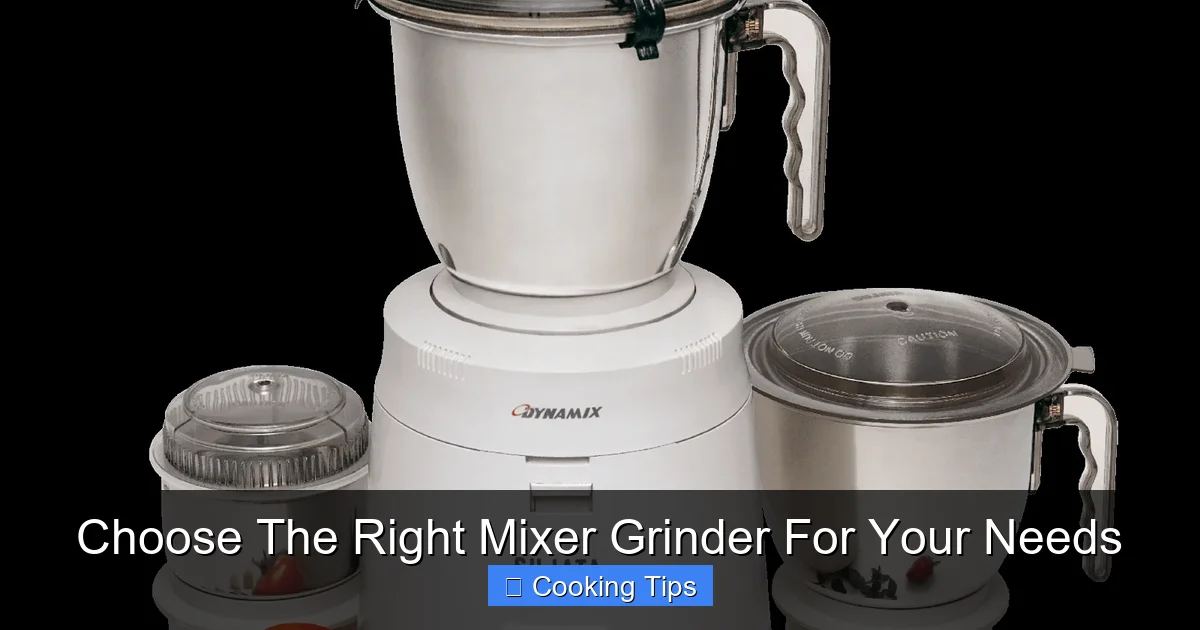
The jars are where the magic happens. Their material, size, and design play a significant role in the appliance’s functionality and ease of use.
Jar Materials
* **Stainless Steel:** This is the most common and preferred material. It’s durable, rust-resistant, easy to clean, and doesn’t absorb odors or flavors. Look for food-grade stainless steel.
* **Plastic:** Some mixer grinders come with plastic jars. These are lighter but can be less durable and may scratch over time, potentially harboring bacteria. They are generally not recommended for heavy grinding.
* **Glass:** Glass jars are excellent for blending, as you can see the consistency. However, they are fragile and can break if dropped, making them less suitable for grinding hard ingredients.
Jar Capacities
Mixer grinders typically come with a set of 2 to 4 jars of varying capacities. Common sizes include:
* **Small Chutney Jar (0.2 L to 0.5 L):** Perfect for making chutneys, small masalas, or grinding ginger-garlic paste.
* **Medium Wet Grinding Jar (0.8 L to 1.5 L):** Ideal for grinding batters for idlis, dosas, or making purees.
* **Large Dry Grinding Jar (1.0 L to 2.0 L):** Suitable for grinding larger quantities of spices or making flours.
**Tip:** Choose a set of jars whose capacities best match the typical quantities you prepare. It’s better to have a slightly larger jar than you sometimes need than to be constantly stuck with too small a jar.
Jar Design Features
* **Lids:** Ensure the lids are secure and have a tight fit to prevent leaks during operation. Some lids come with a small opening to add ingredients while the grinder is running.
* **Handles:** Ergonomic handles make it easier and safer to lift and pour from the jars.
* **Shape:** The internal shape of the jar, along with the blade design, influences how efficiently ingredients are ground or blended.
4. The Crucial Role of Blades

Visual guide about Choose The Right Mixer Grinder For Your Needs
Image source: orpatgroup.com
The blades are what do the actual work. Different blades are designed for different purposes, and the quality of the blades significantly impacts performance.
Common Blade Types
Most mixer grinders come with a standard set of blades, often attached to the jar’s base.
* **Dry Grinding Blades:** These are typically flat and sharp, designed to pulverize dry ingredients like spices, nuts, and grains into fine powders.
* **Wet Grinding Blades:** These are often broader and sharper, designed to efficiently grind wet ingredients and batters. They help in achieving smooth consistency.
* **Chutney Blades:** Usually smaller and very sharp, these are optimized for making chutneys and pastes with a coarser texture.
* **Whisking/Mincing Blades:** Some high-end models might include specialized blades for whisking or mincing.
Blade Material and Sharpness
* **Stainless Steel:** High-quality stainless steel blades are durable, rust-proof, and retain their sharpness.
* **Number of Blades:** While not always an indicator of performance, some blades have multiple edges for more efficient grinding.
* **Sharpness and Durability:** Ensure the blades are made of good quality steel and are well-sharpened. They should be able to withstand rigorous use without becoming dull.
**Tip:** Check if the blades are detachable for easier cleaning. Some mixer grinders have fixed blades, which can be trickier to clean thoroughly.
5. Essential Safety and Convenience Features
Beyond basic functionality, various features can enhance the safety, convenience, and longevity of your mixer grinder.
Safety Features
* **Overload Protection:** This is a vital safety feature. It automatically shuts off the motor if it detects an overload or overheating, preventing damage to the motor and potential hazards.
* **Vacuum Feet:** Rubber or suction feet at the base provide stability and prevent the mixer grinder from moving or vibrating excessively during operation.
* **Interlocking Mechanism:** Some advanced models have an interlocking system that prevents the appliance from operating unless the jar is correctly locked in place.
* **Sufficient Insulation:** Ensure the appliance has good electrical insulation for safe operation.
Convenience Features
* **Cord Winder:** A neat feature to store the power cord neatly when not in use.
* **Durable Body:** A sturdy body, often made of ABS plastic, ensures longevity.
* **Ease of Cleaning:** Look for detachable parts that are easy to wash.
* **Noise Level:** While most mixer grinders are inherently noisy, some models are designed to operate at a lower decibel level than others.
6. Durability, Brand Reputation, and Warranty
Investing in a mixer grinder is an investment in your kitchen for years to come.
Build Quality
* **Materials:** As discussed, the quality of the motor, jars, and blades is paramount.
* **Sturdy Construction:** Check for a robust body and secure fittings.
Brand Reputation
Reputable brands often invest more in research and development, ensuring better quality, performance, and after-sales service. Some well-known brands in the mixer grinder market include Philips, Sujata, Preethi, Havells, Bajaj, and Bosch.
Warranty
A good warranty period (typically 2 to 5 years for the motor) indicates the manufacturer’s confidence in their product’s durability. Always check the warranty terms and what it covers.
7. Budget Considerations
Mixer grinders range from very affordable to quite expensive. The price generally reflects the motor power, number and type of jars, build quality, and brand.
* **Entry-Level (Under ₹3,000):** Suitable for very basic needs and occasional use.
* **Mid-Range (₹3,000 – ₹6,000):** Offers good performance for most home cooks with decent power and multiple jars.
* **Premium (₹6,000+):** High-powered motors, advanced features, superior build quality, and often specialized functionalities.
**Tip:** Don’t just go for the cheapest option. A slightly higher investment in a good quality mixer grinder will save you frustration and replacement costs in the long run. Prioritize features that are essential for your cooking needs over flashy, unnecessary additions.
Troubleshooting Common Mixer Grinder Issues
Even the best mixer grinder can sometimes present minor issues. Here are a few common problems and their solutions:
* **Mixer Grinder Not Starting:**
* **Check Power:** Ensure it’s plugged in securely and the power outlet is working.
* **Overload Protection:** If an overload protector has tripped, wait for it to cool down before trying again.
* **Jar Lock:** Make sure the jar is correctly seated and locked into the base (if your model has an interlocking mechanism).
* **Motor Overheating:**
* **Stop Immediately:** If the motor feels excessively hot, switch it off and let it cool down for at least 15-20 minutes.
* **Reduce Load:** You might be overloading the jar or grinding for too long. Take breaks and use smaller quantities.
* **Check Ventilation:** Ensure the vents are not blocked.
* **Excessive Noise or Vibration:**
* **Check Jar Seating:** Ensure the jar is properly placed on the base and the lid is securely closed.
* **Uneven Load:** Distribute ingredients evenly in the jar.
* **Worn Bush/Bearing:** If the noise is persistent and grinding, it might indicate worn parts. Contact customer service.
* **Leaking from Jar:**
* **Lid Security:** Ensure the lid is tightly closed and the gasket (if any) is in place.
* **Overfilling:** Do not fill the jar beyond the marked maximum fill line.
* **Damaged Jar/Blade Assembly:** Inspect the jar and the blade assembly for cracks or damage.
Conclusion
Choosing the right mixer grinder is a decision that impacts your daily cooking. By carefully considering your specific needs, understanding motor power, evaluating jar and blade specifications, and looking for essential safety and convenience features, you can confidently select an appliance that will be a true asset in your kitchen. Remember to balance your budget with the quality and durability you require. A well-chosen mixer grinder will not only save you time and effort but also open up a world of culinary possibilities. Happy grinding!
