

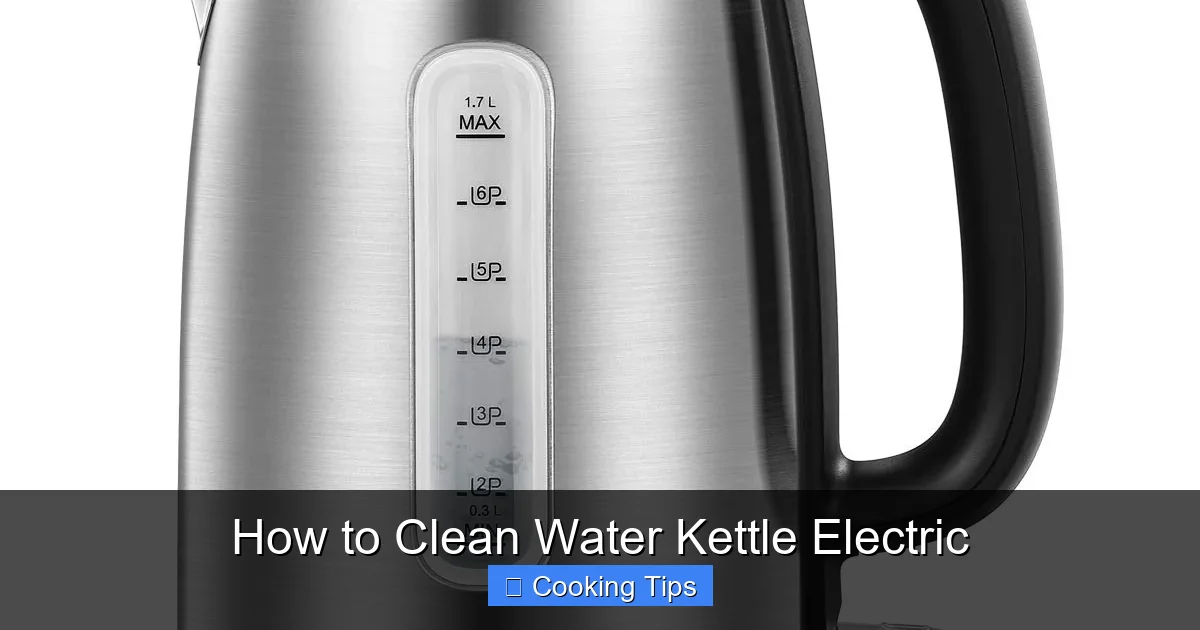
This guide provides a comprehensive look at how to clean your electric water kettle. We’ll cover the common issue of limescale buildup and offer simple, effective methods for removing it. You’ll learn how to use natural ingredients like vinegar and lemon, as well as specific cleaning products, to keep your kettle hygienic and ensure it boils water efficiently. Follow these steps for a cleaner, longer-lasting appliance.
## How to Clean Your Electric Water Kettle: A Sparkling Guide
There’s nothing quite like a freshly brewed cup of tea or a perfectly steeped coffee to start your day or unwind in the evening. And at the heart of this simple pleasure is your trusty electric water kettle. But over time, these essential kitchen companions can develop a rather unwelcome guest: limescale. This white, chalky deposit isn’t just unsightly; it can also affect your kettle’s performance and, in some cases, the taste of your water.
This comprehensive guide will walk you through everything you need to know about **how to clean electric water kettle** effectively. We’ll explore the common causes of limescale, provide simple, step-by-step instructions for various cleaning methods, and offer practical tips to keep your kettle looking and functioning at its best. Get ready to banish those mineral deposits and enjoy pure, clean water every time!
### Why Does Limescale Form in Your Electric Kettle?
Before we dive into the cleaning process, let’s understand why limescale appears in the first place. Limescale, also known as mineral buildup, is primarily composed of calcium and magnesium carbonates. These minerals are naturally present in tap water. When you heat water, especially repeatedly, the dissolved minerals can precipitate out and form a hard, white scale on the heating element and the interior surfaces of your kettle.
The harder your water (meaning it has a higher concentration of dissolved minerals), the more quickly limescale will build up. This buildup acts as an insulator, making your kettle less efficient as it has to work harder and longer to heat the water. This can lead to increased energy consumption and a shorter lifespan for your appliance. Regular cleaning is key to preventing this.
### Preparing to Clean Your Electric Kettle
Safety and preparation are crucial before you begin cleaning your electric water kettle. Always remember:
Always Unplug Your Kettle
This is the most important step. Before you do anything else, ensure your electric kettle is unplugged from the power outlet. Never attempt to clean a kettle while it is connected to electricity.
Allow the Kettle to Cool
If you’ve recently used the kettle, let it cool down completely before cleaning. Hot water and cleaning solutions can be dangerous.
Empty the Kettle
Pour out any remaining water from the kettle.
Gather Your Cleaning Supplies
Depending on the cleaning method you choose, you might need:
- White vinegar
- Lemon juice
- Baking soda
- Water
- A soft cloth or sponge
- A non-abrasive brush (optional)
- A commercial kettle descaler (if preferred)
### Method 1: The Vinegar Powerhouse for Limescale Removal
White vinegar is a kitchen staple and a remarkably effective natural descaler. Its acetic acid content is excellent at breaking down the mineral deposits that form limescale. This is often the go-to method for many households due to its affordability and natural properties.
Step 1: Prepare the Vinegar Solution
In your kettle, combine equal parts white vinegar and water. For a kettle with a noticeable amount of limescale, a 1:1 ratio is usually effective. For lighter buildup, you can use a 1:2 ratio (one part vinegar to two parts water).
Step 2: Let It Soak
Close the lid of your kettle and let the vinegar and water solution sit inside for at least 30 minutes. For stubborn limescale, you might need to let it soak for an hour or even overnight. If your kettle has a removable lid, ensure it’s also submerged in the solution if it has limescale on it.
Step 3: Boil the Solution (Optional but Recommended)
After the soaking period, plug in your kettle and bring the vinegar-water mixture to a boil. Be careful when you do this, as the vinegar fumes can be strong. You may want to open a window for ventilation.
Step 4: Let It Sit Again (After Boiling)
Once the mixture has boiled, unplug the kettle and let it sit for another 15-30 minutes. The heat helps to further loosen the limescale.
Step 5: Empty and Rinse Thoroughly
Carefully empty the kettle, disposing of the vinegar-water solution. You’ll likely see some of the limescale floating in the water. Rinse the inside of the kettle thoroughly with fresh water, multiple times, until the smell of vinegar is completely gone. You can use a soft cloth or sponge to gently wipe away any remaining loosened scale.
Step 6: Boil Plain Water (Final Rinse)
To ensure absolutely no vinegar residue remains, fill the kettle with fresh water and boil it. Discard this water. Repeat this plain water boil one more time if you are particularly sensitive to any lingering taste or smell.
Tips for Using Vinegar:
- Ventilation: Always ensure good ventilation when boiling vinegar as the fumes can be quite potent.
- Stubborn Spots: If some scale remains on the heating element, you can gently scrub it with a non-abrasive sponge or brush after the vinegar soak, before rinsing.
- Frequency: For regularly used kettles in hard water areas, cleaning with vinegar once a month is a good preventative measure.
### Method 2: The Zesty Freshness of Lemon Juice
If you prefer a more natural and pleasantly scented option, lemon juice is an excellent alternative to vinegar. It also contains citric acid, which helps to break down mineral deposits. This method is particularly good for mild to moderate limescale and leaves your kettle smelling fresh.
Step 1: Prepare the Lemon Solution
Squeeze the juice of one to two fresh lemons into your kettle. If you don’t have fresh lemons, you can use about 2-4 tablespoons of bottled lemon juice. Add enough water to fill the kettle about halfway or enough to cover the limescale deposits.
Step 2: Boil the Lemon Mixture
Close the lid and boil the lemon-water solution in your kettle. You can add the lemon rinds to the water as well for extra cleaning power and a stronger scent.
Step 3: Let It Steep
Once boiled, unplug the kettle and let the lemon solution sit inside for about 30 minutes to an hour. This allows the citric acid to work on the limescale.
Step 4: Empty and Rinse
Carefully empty the kettle. You should see loosened limescale. Rinse the interior thoroughly with fresh water. You can use a soft cloth or sponge to gently scrub away any remaining scale. The lemon should leave a pleasant, fresh scent.
Step 5: Boil Plain Water (Final Rinse)
To remove any residual lemon taste or scent, fill the kettle with fresh water and boil it. Discard this water. Repeat once more if desired.
Tips for Using Lemon Juice:
- Freshness: Fresh lemon juice is generally more potent than bottled.
- Gentle Option: This method is ideal if you find the smell of vinegar too strong.
### Method 3: The Gentle Scrubbing Power of Baking Soda
Baking soda is a mild abrasive that can help to scrub away loosened limescale after soaking with vinegar or lemon. It’s not as effective as an acid for dissolving heavy scale on its own, but it’s great for getting rid of any remaining bits.
Step 1: Prepare a Baking Soda Paste
After you’ve emptied your kettle following a vinegar or lemon cleaning, if you still see some stubborn scale, you can make a paste. Mix a few tablespoons of baking soda with a small amount of water to create a thick paste.
Step 2: Apply and Scrub Gently
Use a soft cloth or sponge to apply the baking soda paste to the affected areas inside the kettle. Gently scrub the limescale. Be careful not to scratch the interior surfaces.
Step 3: Rinse Thoroughly
Once you’ve scrubbed, rinse the kettle thoroughly with clean water to remove all traces of baking soda and any loosened scale.
Tips for Using Baking Soda:
- Non-Abrasive: Baking soda is a gentle abrasive, making it safe for most kettle interiors.
- Post-Soak: It’s best used as a follow-up to an acidic soak.
### Method 4: Using Commercial Kettle Descalers
There are many commercial descaling products specifically designed for electric kettles. These are often very effective, especially for heavy limescale buildup. However, it’s crucial to follow the manufacturer’s instructions precisely.
Step 1: Read the Product Instructions Carefully
Each descaler will have specific usage instructions. Do not deviate from them.
Step 2: Prepare the Solution
Typically, you’ll add a measured amount of the descaler to the kettle and fill it with water to a certain level.
Step 3: Allow to Work
Some descalers require you to let them sit for a period, while others instruct you to boil the solution. Follow the directions given.
Step 4: Empty and Rinse Extensively
After the descaler has done its work, empty the kettle. Rinse it very thoroughly with clean water. Most commercial descalers require multiple rinses to ensure no chemical residue remains.
Step 5: Boil Plain Water
As with the other methods, it’s highly recommended to boil plain water at least once, or twice, afterwards and discard it to ensure the water is safe and pleasant to drink.
Tips for Using Commercial Descalers:
- Safety First: Always use in a well-ventilated area and avoid inhaling fumes. Wear gloves if recommended.
- Product Choice: Choose a descaler that is compatible with your kettle material (e.g., stainless steel, plastic).
### Cleaning the Exterior of Your Electric Kettle
While the interior gets most of the attention, don’t forget the outside of your kettle!
Step 1: Unplug and Cool
As always, ensure the kettle is unplugged and cool.
Step 2: Wipe Down
Use a damp, soft cloth to wipe down the exterior surfaces. For stubborn marks, you can use a little mild dish soap on the cloth, but avoid getting water into any electrical openings.
Step 3: Dry Thoroughly
Dry the exterior with a clean, dry cloth to prevent water spots.
Tips for Exterior Cleaning:
- Avoid Abrasives: Do not use abrasive cleaners or scouring pads, as these can scratch the finish.
- Cord Care: Pay attention to the power cord; wipe it clean with a damp cloth and ensure it’s completely dry before plugging it in again.
### Troubleshooting Common Kettle Cleaning Issues
* **Lingering Vinegar Smell:** If the vinegar smell persists after multiple rinses and boiling plain water, try boiling the kettle with a tablespoon of baking soda and water, then rinse thoroughly again. Another plain water boil should do the trick.
* **Stubborn Scale Won’t Budge:** For extremely heavy limescale, you might need to repeat a cleaning method, or try a stronger commercial descaler. Ensure you’re not damaging the kettle by using excessive force or abrasive tools.
* **Kettle Not Heating Efficiently:** This is often a sign of significant limescale buildup on the heating element. A thorough cleaning is essential for restoring its efficiency.
### How Often Should You Clean Your Electric Kettle?
The frequency of cleaning your electric kettle depends heavily on the hardness of your water and how often you use it.
* In hard water areas: You might need to clean your kettle as often as once a month, or even every two weeks, to prevent significant buildup.
* In soft water areas: Cleaning every 2-3 months might be sufficient.
* Visual Check: The best indicator is a visual one. If you start to see a white film or deposits forming on the inside, it’s time for a clean.
Regular maintenance, even just a quick rinse after each use, will go a long way in keeping your electric kettle in top condition and ensuring every cup of hot water is as pure as possible.
### Conclusion
Keeping your electric water kettle clean is an essential part of maintaining a hygienic kitchen and ensuring your appliance functions optimally. By following these simple, effective methods using common household ingredients like vinegar and lemon, or opting for a commercial descaler when needed, you can easily combat limescale buildup. A little regular effort will not only keep your kettle looking pristine but also guarantee better-tasting hot beverages and a longer lifespan for your beloved kitchen gadget. So, go ahead, give your kettle the spa treatment it deserves, and enjoy the pure taste of perfectly heated water every time!
Key Takeaways
- Regular cleaning prevents stubborn limescale buildup. A quick rinse after each use can make deeper cleans much easier.
- Vinegar is a powerful natural descaler. Its acidity effectively breaks down mineral deposits.
- Lemon juice offers a gentler, natural alternative. It’s great for mild scaling and leaves a pleasant scent.
- Baking soda can be used for scrubbing tough spots. It provides a mild abrasive action without scratching.
- Commercial descalers are an option for heavy buildup. Always follow product instructions carefully.
- Always rinse thoroughly after cleaning. This removes any cleaning solution residue.
- Unplug your kettle before cleaning. Safety first is paramount when dealing with electrical appliances.
