

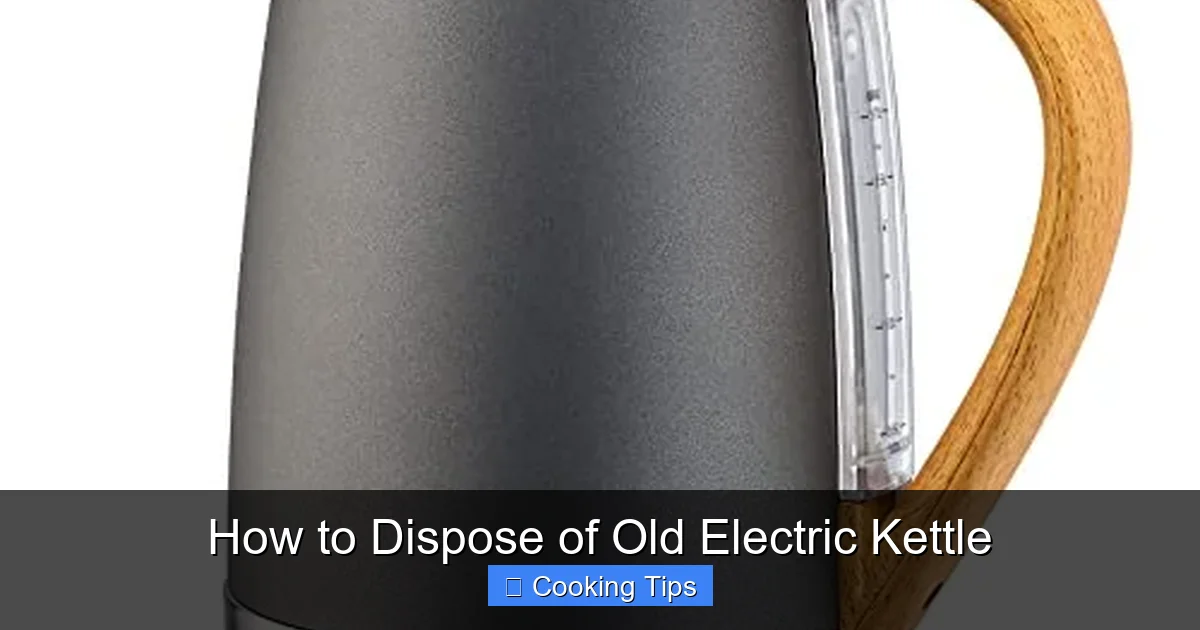
Don’t just toss your old electric kettle! This guide provides comprehensive instructions for disposing of your unwanted appliance responsibly in 2026. You’ll learn about eco-friendly recycling options, understand the importance of safe disposal to protect the environment, and discover practical steps to ensure your old kettle doesn’t end up in landfill.
## How to Dispose of Old Electric Kettle
So, your trusty electric kettle has finally given up the ghost. Perhaps it’s stopped heating, the lid is broken, or maybe you’ve simply upgraded to a newer, shinier model. Whatever the reason, you’re now faced with the question: what’s the best way to get rid of it? In 2026, simply throwing it in the bin isn’t the answer. We’re increasingly aware of our environmental impact, and electrical waste, or e-waste, is a growing concern. This guide will walk you through everything you need to know about how to dispose of your old electric kettle responsibly and eco-friendly.
You’ll learn why proper disposal matters, discover the best recycling options available, and get step-by-step instructions on how to prepare your kettle for its next journey. By the end of this guide, you’ll feel confident in making an environmentally conscious choice for your old appliance.
## Why Proper Disposal Matters
Before we dive into the “how,” let’s talk about the “why.” Electric kettles, like all electrical appliances, are made up of various materials. Some of these materials are incredibly valuable and can be recycled and reused. Think metals like stainless steel, copper, and aluminum. However, some components can also be harmful if they end up in landfill. Plastics can take hundreds of years to decompose, and certain electronic parts might contain small amounts of hazardous substances like lead or mercury, though this is less common in modern kettles.
When an electric kettle is improperly disposed of, these materials don’t get a second life. They simply contribute to overflowing landfills. This wastes precious resources that could be recovered. Furthermore, if these hazardous substances leach into the soil and water, they can cause environmental damage. By choosing responsible disposal methods, you’re helping to:
* **Conserve natural resources:** Recycling metals and plastics reduces the need to mine or manufacture new raw materials.
* **Reduce pollution:** Preventing hazardous materials from entering landfills and ecosystems protects our planet.
* **Save energy:** Recycling materials generally requires less energy than producing them from scratch.
* **Support the circular economy:** This approach aims to keep resources in use for as long as possible, extracting maximum value from them.
So, your old electric kettle is more than just a broken appliance; it’s a collection of materials that deserves a proper end-of-life plan.
## Step-by-Step Guide to Disposing of Your Old Electric Kettle
Let’s get down to business. Disposing of your electric kettle is a straightforward process, but it requires a little thought. Follow these steps to ensure you’re doing it right.
### Step 1: Assess the Kettle’s Condition
Before you make any disposal plans, take a moment to look at your old kettle. Is it completely broken, or are there signs of life?
#### Is it truly broken?
* **No power:** The kettle doesn’t turn on at all, even when plugged into a working socket.
* **Doesn’t heat water:** The light might come on, but the water stays cold.
* **Major physical damage:** The casing is severely cracked, the lid won’t close, or the handle is loose and unsafe.
#### Is it still functional?
* **Minor issues:** Perhaps the indicator light is dim, or it takes a little longer to boil.
* **Cosmetic flaws:** Scratches or slight discoloration that don’t affect performance.
### Step 2: Consider Repair or Donation (If Functional)
If your kettle is still working, even with minor quirks, throwing it away should be your last resort.
#### Repair Options
For simple issues, a bit of research might reveal a DIY repair solution. Check online forums or video tutorials for common electric kettle problems. If you’re not comfortable with DIY, a local appliance repair shop might be able to fix it for a small fee. Repairing an appliance is always more environmentally friendly than replacing it.
#### Donation Possibilities
If your kettle is in good working order and just no longer meets your needs, consider donating it.
* **Friends and Family:** Ask if anyone you know needs a spare kettle.
* **Charity Shops:** Many local charity shops accept working small appliances. Check their donation guidelines first.
* **Community Centres or Shelters:** Some organizations might welcome functional kitchen items.
* **Online Freecycle Groups:** Websites and apps like Freecycle or Buy Nothing groups allow you to offer items for free to people in your local community.
### Step 3: Prepare the Kettle for Disposal
If your kettle is beyond repair or donation, it’s time to prepare it for recycling or proper disposal. This is a crucial step to ensure it’s handled safely.
#### Unplug and Cool Down
First and foremost, ensure the kettle is unplugged from the power outlet. Never attempt to move or pack an appliance that is still connected to electricity. Let the kettle cool down completely if it was recently used. This prevents any residual heat from causing issues during handling.
#### Clean the Kettle
Give your kettle a quick rinse and wipe down. This isn’t strictly necessary for all recycling centres, but it’s good practice. It makes it more pleasant for the waste handlers and prevents any lingering water from causing problems. Remove any visible limescale if possible.
#### Remove Removable Parts (Optional but Recommended)
Some kettles have removable filters or lids. If these are easily detached and made of different materials (e.g., a plastic lid on a metal kettle), consider removing them. This can sometimes aid the recycling process, allowing different materials to be sorted more effectively. However, if parts are stuck or difficult to remove, don’t force them.
#### Do NOT Dismantle
Unless you have expertise in electronics and e-waste, **do not attempt to dismantle your electric kettle**. The internal components can be complex, and some might contain small amounts of hazardous materials. Leave the dismantling and sorting of materials to the professionals at recycling facilities.
### Step 4: Find Your Local Disposal Options
This is where your location plays a significant role. Disposal facilities and options vary greatly.
#### Household Waste Recycling Centres (HWRCs)
Most local councils operate Household Waste Recycling Centres (also known as civic amenity sites or tips). These centres are equipped to handle a wide range of waste, including electrical items.
* **How to find them:** Search online for “[Your Town/City] Household Waste Recycling Centre” or “[Your County Council] recycling centres.” Their websites will usually list what types of waste they accept.
* **What to expect:** You’ll typically drive your car to the site and be directed to specific bins or areas for different waste types. Look for the designated “WEEE” (Waste Electrical and Electronic Equipment) bins.
#### Retailer Take-Back Schemes
Many electronics retailers offer take-back schemes when you purchase a new appliance.
* **The “One-for-One” Rule:** In many regions, retailers are legally obliged to take back an old, similar item when you buy a new one. Check the retailer’s website or ask in-store about their policy. This is often the most convenient option if you’re buying a new kettle.
* **In-store drop-off:** Some larger electronics stores may also have designated drop-off points for small e-waste items, even if you’re not buying anything new.
#### Local Council Collections
Some local councils offer specific collection services for bulky waste or electrical items.
* **Bulky waste collection:** You may need to book a collection in advance, and there might be a small fee. Check your local council’s website for details.
* **Special e-waste collection days:** Occasionally, councils organize special collection events for e-waste in different neighbourhoods.
#### Specialized E-waste Recyclers
There are also private companies that specialize in recycling e-waste.
* **Search online:** Look for “e-waste recycling [Your Area]” or “electrical appliance disposal [Your Area].”
* **Check their credentials:** Ensure they are reputable and follow proper environmental regulations. Some may offer collection services, while others require you to drop off the item.
#### Community Collection Events
Keep an eye out for local community events or environmental initiatives that might include e-waste collection drives. These are often advertised on local notice boards, community websites, or through social media groups.
### Step 5: Transport and Drop Off
Once you’ve identified your disposal route, transport your kettle safely.
* **Secure it:** Place the kettle in a sturdy bag or box to prevent any damage during transit, especially if it has a glass carafe.
* **Follow instructions:** At the recycling centre or collection point, follow the instructions from the staff. They will guide you to the correct disposal area.
* **Be polite:** The staff are there to help, so a friendly approach goes a long way.
## What NOT to Do
To reiterate and reinforce good practices, here are a few things you should absolutely avoid when disposing of your old electric kettle:
* **Do not put it in your general household bin:** This is the most common mistake and contributes directly to landfill problems.
* **Do not burn it:** Burning plastics and electronics can release toxic fumes into the air.
* **Do not dismantle it yourself:** As mentioned, internal components can be hazardous.
* **Do not dump it illegally:** This is harmful to the environment and can result in fines.
## Troubleshooting Common Disposal Questions
### Q: My kettle is broken but still has water inside. What should I do?
**A:** First, empty all water from the kettle and let it dry completely. Then proceed with the disposal steps as outlined above. Ensure it’s cool and unplugged before handling.
### Q: Can I mail my old kettle to a recycling centre?
**A:** This is generally not recommended for individual consumers unless a specific mail-in recycling program is established. Shipping can be costly, and you’ll need to ensure it’s packaged securely to prevent damage and potential hazards. It’s far more practical to use local drop-off points or collection services.
### Q: What if my local recycling centre doesn’t accept small appliances?
**A:** This is uncommon, as most HWRCs are equipped for e-waste. However, if this is the case, explore other options: check with major electronics retailers for their take-back programs, or search for specialized e-waste recycling companies in your area. Sometimes, local councils have specific arrangements for items not accepted at the main centres.
## Conclusion
Disposing of an old electric kettle in 2026 is more than just clearing space in your kitchen; it’s an opportunity to act responsibly towards our planet. By understanding the importance of e-waste management, opting for recycling, and following the simple steps outlined in this guide, you can ensure your old appliance is handled in an eco-friendly manner.
Remember to always check your local regulations, prepare the kettle properly, and utilize the available recycling infrastructure. Whether it’s a trip to your local recycling centre, a retailer take-back scheme, or a community collection event, your effort makes a difference. Let’s all play our part in creating a more sustainable future, one kettle at a time!
Key Takeaways
- Understand the Environmental Impact: Disposing of electrical appliances incorrectly can release harmful materials into the environment, making responsible disposal crucial.
- Prioritize Recycling: Most old electric kettles can be recycled through designated e-waste programs, diverting them from landfills and recovering valuable materials.
- Check Local Regulations: Disposal methods vary by location. Always research your local council’s guidelines for electrical waste.
- Prepare the Kettle for Disposal: Ensure the kettle is unplugged, cool, and preferably cleaned before handing it over for recycling or disposal.
- Consider Repair or Donation: If your kettle is still functional, consider repairing it or donating it to a charity instead of immediate disposal.
- Identify E-waste Collection Points: Familiarize yourself with local drop-off points, retail take-back schemes, or specialized e-waste recycling services.
- Safe Handling is Key: Avoid dismantling the kettle yourself unless you are familiar with electronics, as internal components can be hazardous.
