

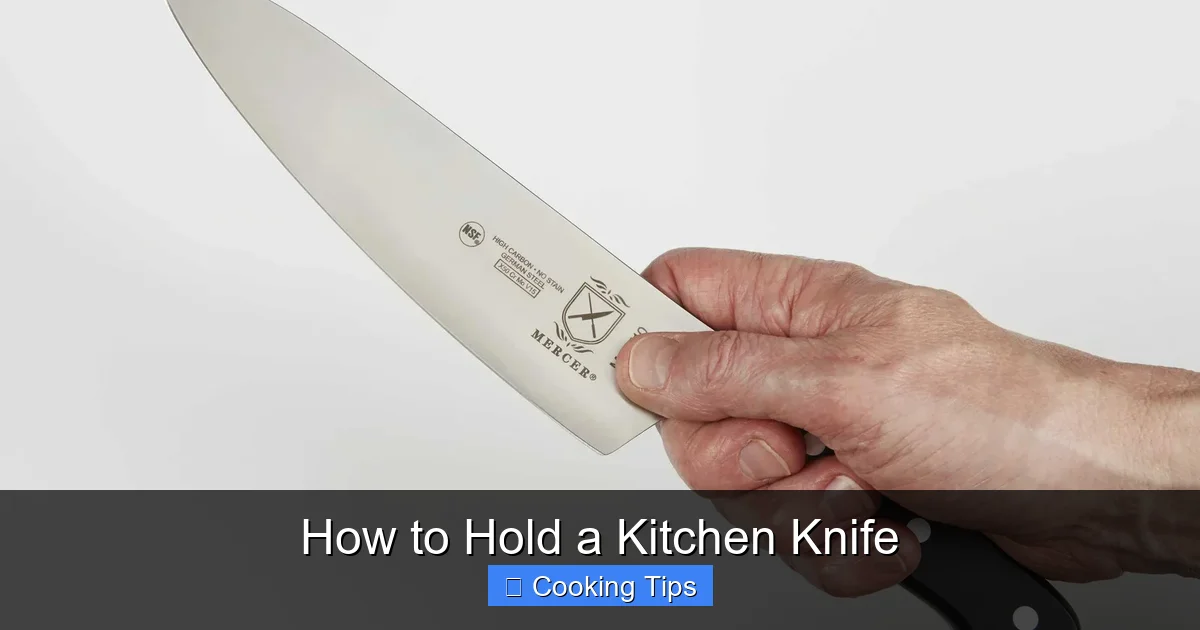
Learning to properly hold a kitchen knife is fundamental for safety and efficiency in the kitchen. This guide covers the two primary grips: the pinch grip and the handle grip, explaining their benefits and when to use them. Mastering these techniques will significantly improve your knife skills and confidence while cooking.
How to Hold a Kitchen Knife
Welcome to the ultimate guide on mastering the art of holding a kitchen knife! Whether you’re a seasoned home cook or just starting your culinary journey, understanding the proper grip is the absolute cornerstone of safe and efficient food preparation. It’s not just about looking like a pro; it’s about preventing accidents and making your time in the kitchen more enjoyable and productive.
Many people pick up a knife the same way they might pick up a hammer – with force and a singular focus on the task at hand. But a kitchen knife is a precision tool, and like any precision tool, it requires a specific technique to wield it effectively. This guide will break down the most important grips, explain why they work, and give you the confidence to chop, slice, and dice like never before. Get ready to transform your cooking experience!
Key Takeaways
- The Pinch Grip is Paramount: This grip, where you pinch the blade between your thumb and index finger, offers the most control and precision, making it ideal for most cutting tasks.
- The Handle Grip is for Stability: While less precise, the handle grip provides extra power and stability, suitable for tougher ingredients or when chopping large quantities.
- Proper Hand Placement is Crucial: Regardless of the grip, ensure your fingers are positioned correctly to avoid slippage and maintain control over the knife.
- The Guiding Hand is Essential: Always use your non-dominant hand to guide the food and the knife, keeping your fingertips tucked away to prevent cuts.
- Practice Makes Perfect: Develop muscle memory and confidence by practicing these grips with simple ingredients before tackling complex tasks.
- Knife Quality Matters: A sharp, well-balanced knife makes a significant difference in how comfortably and safely you can hold and use it.
Why Proper Knife Grip Matters
Before we dive into the “how,” let’s quickly cover the “why.” Why is holding a kitchen knife correctly so important?
- Safety First: This is the big one. A secure grip prevents the knife from slipping, which can lead to serious cuts. When a knife is unstable, it’s much more likely to skid off your cutting board or your food.
- Precision and Control: The right grip allows you to guide the knife exactly where you want it. This means cleaner cuts, more uniform pieces of food, and a professional-looking result.
- Efficiency: When you’re not fighting to control a wobbly knife, you can move faster and more smoothly. This saves time and energy, especially when you’re prepping a lot of ingredients.
- Comfort: Holding a knife correctly reduces strain on your hand and wrist. Over long periods of chopping, this makes a huge difference and prevents fatigue.
- Knife Longevity: Proper handling can also help preserve the edge of your knife. Avoid putting undue stress on the blade or handle.
Think of it this way: you wouldn’t try to paint a masterpiece with a brush held loosely, would you? Your knife deserves the same respect and attention to technique.
The Two Essential Knife Grips
There are several ways to hold a knife, but two grips are considered the gold standard for most kitchen tasks, especially when using a chef’s knife, which is your most versatile tool. We’ll focus on these two: the Pinch Grip and the Handle Grip.
1. The Pinch Grip: The King of Control
This is, by far, the most recommended grip for a chef’s knife. It offers superior control, precision, and agility. Most professional chefs swear by this method.
How to Execute the Pinch Grip
This grip involves your fingers directly on the blade, not just the handle.
Step 1: Locate the “Pinch” Area
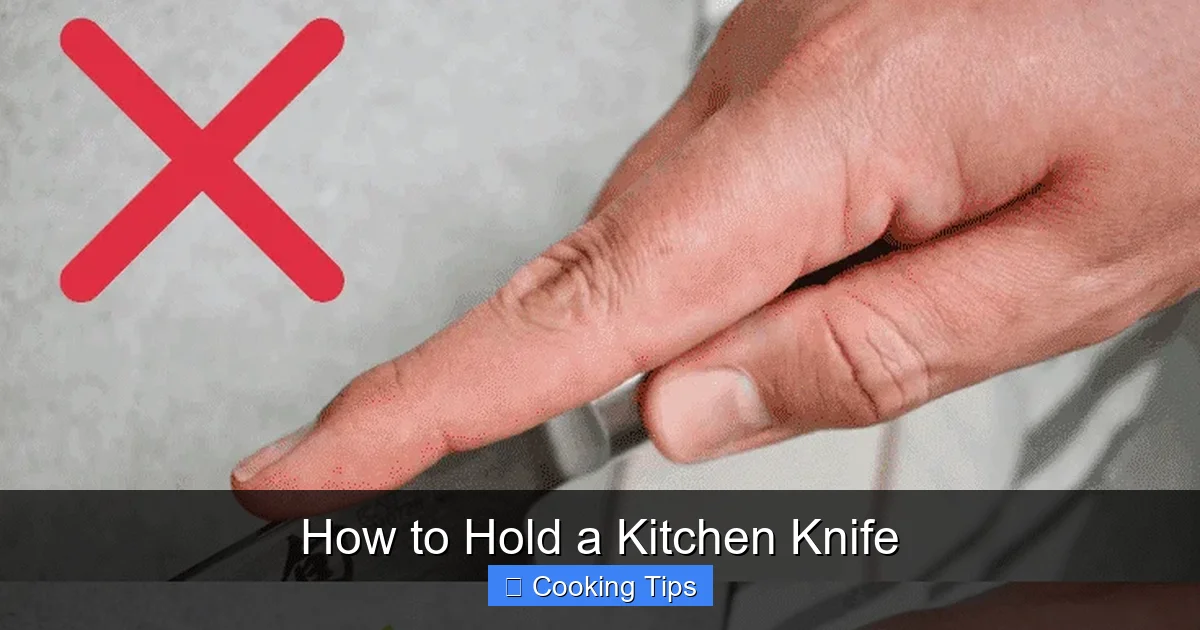
Visual guide about How to Hold a Kitchen Knife
Image source: kendellkreations.com
Visual guide about How to Hold a Kitchen Knife
Image source: thumbs.dreamstime.com
Look at the base of your chef’s knife blade, right where it meets the handle. There’s usually a bolster (a thickened part of the metal) or a transition point. This is your primary grip zone.
Step 2: The Thumb and Index Finger Placement
Your thumb and index finger are the stars of this grip. They will do the heavy lifting for control.
- Thumb: Place your thumb flat on one side of the blade, right at the bolster. It should be firmly but comfortably pressed against the metal.
- Index Finger: Curl your index finger slightly and place the pad of your index finger on the *other* side of the blade, directly opposite your thumb. So, your thumb and index finger are “pinching” the blade together.
This pinch should feel secure and natural. It’s not a death grip; it’s a firm, controlled hold. Your thumb and index finger act as a vise, giving you direct control over the blade’s movement.
Step 3: The Remaining Fingers on the Handle
Your middle, ring, and pinky fingers will wrap around the handle of the knife.
- Middle Finger: This finger will be the primary gripping finger on the handle. It should wrap comfortably around the top or side of the handle.
- Ring and Pinky Fingers: These fingers will also wrap around the handle, supporting the middle finger. They should rest naturally against the handle, providing a stable base for your grip.
The goal here is to have your index finger and thumb providing the precision control on the blade, while your other fingers on the handle offer stability and leverage.
Why the Pinch Grip is Superior
- Unmatched Control: By pinching the blade, you have a much more direct connection to the knife. This allows for subtle adjustments in angle and direction, leading to incredibly precise cuts.
- Reduced Wrist Strain: When you hold the handle further away, your wrist has to do more work to maneuver the knife. The pinch grip brings your hand closer to the cutting action, reducing fatigue.
- Better Balance: Many knives are designed with their balance point near the bolster. The pinch grip naturally aligns your hand with this balance point, making the knife feel like an extension of your arm.
- Improved Safety: A secure pinch grip makes it much harder for the knife to slip out of your hand.
When to Use the Pinch Grip
The pinch grip is your go-to for almost all cutting tasks, including:
- Chopping vegetables (onions, carrots, celery, etc.)
- Slicing fruits
- Mincing herbs
- Dicing ingredients
- Filleting fish (though specialized knives and techniques apply)
If you are using a chef’s knife and need to make precise cuts, reach for the pinch grip.
2. The Handle Grip: Power and Stability
While the pinch grip is ideal for precision, there are times when you need a bit more power or stability, especially when dealing with tougher ingredients or large volumes. This is where the handle grip comes in. It’s more similar to how many people initially hold a knife.
How to Execute the Handle Grip
This grip focuses all your fingers on the handle.
Step 1: Full Hand on the Handle
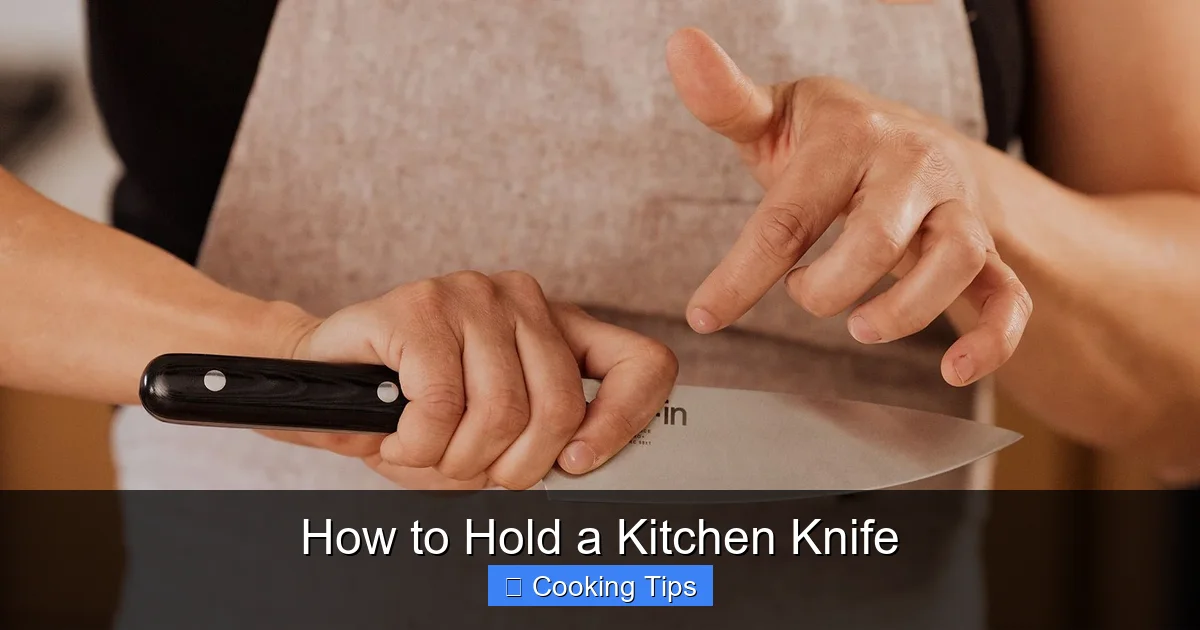
Visual guide about How to Hold a Kitchen Knife
Image source: cdn.sanity.io
Wrap all four fingers (index, middle, ring, pinky) around the handle of the knife. Your index finger will rest on top of the handle, or curled slightly around the front.
Step 2: Thumb Placement
Your thumb can be placed in a couple of common positions:
- Thumb on Top of Handle: Rest your thumb on top of the handle, alongside your index finger.
- Thumb Wrapped Around: Some people wrap their thumb around the side of the handle, offering a bit more pressure.
The key here is to get a firm, comfortable hold of the entire handle. Your grip should be strong enough to feel secure but not so tight that your hand cramps.
When to Use the Handle Grip
The handle grip is best suited for:
- Chopping through tough ingredients: Think winter squash, large melons, or dense root vegetables where you need more brute force.
- Slicing large roasts or meats: When you need to make long, deep cuts.
- When a stable, powerful chop is needed: For very large quantities of ingredients where speed and power are prioritized over intricate precision.
However, it’s important to note that even with the handle grip, a strong, controlled hold is still paramount. Avoid a death grip, as this will lead to fatigue and less control.
The Importance of the Guiding Hand
You can’t talk about holding a kitchen knife without talking about the *other* hand – your guiding hand, or claw hand. This is the hand that holds and steadies the food you are cutting. Its proper positioning is just as critical for safety as your knife-holding hand.
How to Form the Guiding Hand (The Claw Grip)
Step 1: Tuck Your Fingertips
Curl your fingertips inward, towards your palm, creating a “claw” shape. Your knuckles should be sticking out slightly.
Step 2: Use Your Knuckles as a Guide
Place your curled fingertips on the food you are cutting. Your knuckles should be positioned so they are in contact with the side of the knife blade. The blade should rest against your knuckles, guiding its path.
Step 3: Inch Your Way Along
As you make slices, you will “inch” your fingertips back, one segment at a time, maintaining the knuckle-to-blade contact. This ensures the knife stays on track and your fingertips remain safely tucked away behind the blade.
Why the Claw Grip is Essential
- Finger Protection: This is the primary reason. By tucking your fingertips and using your knuckles as a guide, you create a physical barrier between your sensitive fingertips and the sharp blade.
- Steadying the Food: It keeps the food from moving around on the cutting board, making for cleaner, more consistent cuts.
- Controlled Knife Movement: Your knuckles act as a natural ramp for the knife, helping you maintain the correct angle and prevent the blade from drifting.
Tips for a Better Knife Hold and Experience
Beyond the basic grips, here are some extra tips to elevate your knife skills:
- Use a Sharp Knife: This might seem counterintuitive, but a sharp knife is safer than a dull one. A sharp knife cuts where you intend it to. A dull knife requires more force, increasing the risk of slippage and accidents.
- Invest in a Good Chef’s Knife: A well-balanced, comfortable chef’s knife can make a world of difference. It should feel good in your hand.
- Keep Your Knife Dry: Moisture can make the handle slippery, reducing your grip. Wipe your knife dry after washing.
- Maintain Control, Not Force: A death grip will tire your hand and reduce control. Focus on a firm, steady hold rather than squeezing with all your might.
- Practice with Soft Ingredients: Start by practicing your grips and cuts on softer items like zucchini, bell peppers, or large mushrooms. As you gain confidence, move to firmer vegetables.
- Know Your Knife: Different knives have different shapes and purposes. While the pinch grip is excellent for chef’s knives, paring knives or specialized knives might feel slightly different but the principles of control remain.
- Keep Your Cutting Board Stable: A wobbly cutting board is a recipe for disaster. Place a damp paper towel or a non-slip mat underneath it.
Troubleshooting Common Knife Holding Issues
Even with instructions, you might encounter a few hiccups. Here’s how to address them:
- My hand feels tired quickly.
- The knife feels like it’s going to slip.
- I’m not getting clean cuts.
- My guiding hand feels awkward.
Solution: You might be gripping too tightly. Relax your grip slightly, focusing on controlled pressure rather than brute force. Ensure you are using the pinch grip for most tasks, as it distributes pressure more evenly and reduces wrist strain.
Solution: Your hands might be damp or oily. Dry your hands and the knife handle. Ensure you are truly pinching the blade with your thumb and index finger in the pinch grip, as this offers maximum contact and friction.
Solution: This could be a combination of grip and knife sharpness. Make sure your knife is sharp. Experiment with your pinch grip to see if a slightly different angle gives you more control over the blade’s movement.
Solution: This takes practice. Focus on the “claw” shape and keeping your knuckles in contact with the blade. Don’t be afraid to move slowly at first. With repetition, it will become second nature.
Conclusion
Mastering how to hold a kitchen knife is one of the most impactful skills you can develop in the kitchen. It’s the foundation for safety, precision, and efficiency. By understanding and practicing the **pinch grip** for control and the **handle grip** for power, and by always employing the safe **claw grip** with your guiding hand, you’re well on your way to becoming a more confident and capable cook.
Remember, consistency is key. Dedicate a few minutes each time you cook to consciously check your grip. Feel the knife in your hand, adjust your fingers, and focus on that secure, controlled hold. With practice, these grips will become instinctive, and you’ll wonder how you ever cooked without them. So, go ahead, pick up that knife with confidence, and enjoy the process of creating delicious meals!
