

This comprehensive guide will show you how to make a perfect pie crust using a food processor. You’ll learn the essential ingredients, step-by-step techniques, and tips for achieving a flaky and tender crust. Whether you’re a beginner or an experienced baker, this guide will help you master the art of food processor pie crust.
Are you ready to ditch the store-bought pie crusts and impress your friends and family with a homemade, flaky masterpiece? Making a pie crust from scratch might seem intimidating, but with a food processor, it becomes surprisingly simple and efficient. This guide will walk you through every step, from choosing the right ingredients to achieving that perfect, golden-brown finish. We’ll cover the science behind a flaky crust, the techniques for using your food processor effectively, and even how to troubleshoot common problems. Get ready to bake your best pie ever!
## Why Use a Food Processor for Pie Crust?
Using a food processor to make pie crust offers several advantages. It’s much faster than cutting in butter by hand. It also helps distribute the fat evenly, which is crucial for flakiness. The pulsing action of the food processor can achieve a texture that’s difficult to replicate with a pastry blender. This method is ideal for busy bakers or those who find traditional methods a bit challenging.
## Ingredients You’ll Need
The beauty of pie crust lies in its simplicity. You only need a few basic ingredients, but their quality and temperature are paramount.
* All-Purpose Flour: This is the foundation of your crust. Make sure it’s fresh.
* Fat (Butter, Shortening, or a Combination): This is where the magic of flakiness happens.
* Butter: Provides fantastic flavor but can be trickier to work with as it melts faster.
* Shortening: Creates a very tender and flaky crust but lacks the rich flavor of butter.
* Combination: Many bakers swear by a mix of butter and shortening for the best of both worlds.
* Ice-Cold Water: This binds the dough and helps create steam pockets for flakiness.
* Salt: Enhances the flavor of your crust.
* Sugar (Optional): A small amount can add a touch of sweetness and help with browning, especially for sweet pies.
## Step-by-Step Guide to Making Pie Crust in a Food Processor
Follow these steps precisely, and you’ll be well on your way to pie crust perfection. Remember, the key is to keep everything as cold as possible.
## Step 1: Prepare Your Ingredients
This is where you set yourself up for success. Don’t skip this crucial step!
### Cube and Chill Your Fat
* If you’re using butter, cut it into small, uniform cubes (about 1/2 inch). Place the butter cubes in the freezer for at least 15-20 minutes. You want them very cold and firm, but not frozen solid.
* If you’re using shortening, it should also be very cold. You can often buy it already chilled, or you can chill it in the refrigerator. Cut it into cubes if it’s a solid block.
* If you’re using a combination, prepare both your butter and shortening cubes and chill them together.
### Chill Your Water
* Fill a measuring cup with water and add a few ice cubes. Let it sit while you prepare the other ingredients. You want it ice-cold.
## Step 2: Combine Dry Ingredients
This step is quick and simple.
### Add Flour, Salt, and Sugar to the Food Processor
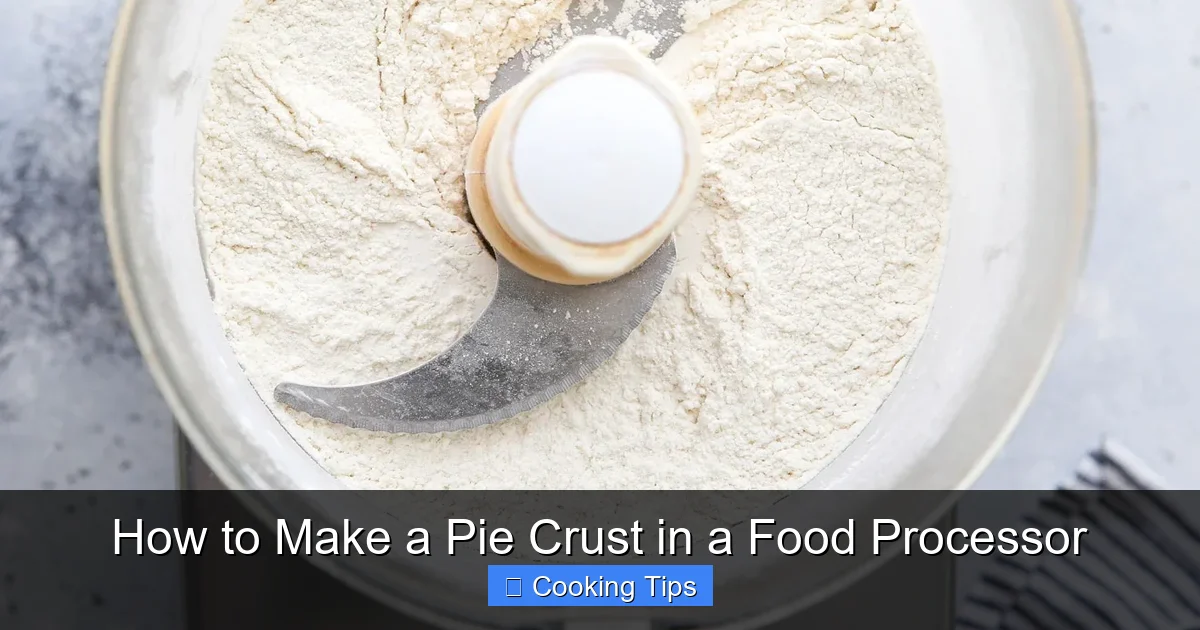
* Place the metal blade in your food processor bowl.
* Add your all-purpose flour to the bowl.
* Add your salt. If you’re using sugar, add it now too.
* Secure the lid.
### Pulse to Combine
* Pulse the dry ingredients for about 10-15 seconds. This just helps to evenly distribute the salt and sugar throughout the flour. You don’t need to overdo it here.
## Step 3: Add the Cold Fat
This is where the magic starts to happen.
### Add Your Cubed, Cold Fat
* With the food processor off, add your cold, cubed butter and/or shortening to the bowl with the flour mixture.
### Pulse Until the Mixture Resembles Coarse Meal
* Now, pulse the food processor. You’ll want to pulse in short bursts, stopping to scrape down the sides of the bowl with a spatula as needed.
* The goal here is to break down the fat into smaller pieces and coat the flour. You’re looking for a texture that resembles coarse meal or small peas. Some larger pieces of fat are good – these will create those lovely flaky layers.
* Be careful not to over-process. You don’t want a paste. This usually takes about 15-25 pulses, depending on your food processor. Keep checking the consistency.
## Step 4: Add the Ice-Cold Water
This step brings your dough together.
### Drizzle in the Water Gradually
* With the food processor running on a low speed (or pulsing intermittently), slowly drizzle in the ice-cold water through the feed tube.
* Add just enough water for the dough to start coming together. This is the most crucial part of hydration. You’re not looking for a wet, sticky dough, but one that holds together when squeezed.
* Stop adding water as soon as the dough begins to form clumps and pull away from the sides of the bowl. It might look a little shaggy, and that’s okay.
### Check for Dough Consistency
* Stop the food processor. Pinch a bit of the dough between your fingers. If it holds together without crumbling apart, you’ve likely added enough water. If it still feels too dry and crumbly, add another tablespoon of ice-cold water and pulse a couple more times.
* Be very careful not to add too much water. Over-watering will lead to a tough crust.
## Step 5: Form and Chill the Dough
This resting period is essential for a tender crust.
### Transfer Dough to a Clean Surface
* Turn the dough out onto a lightly floured surface. It will likely still look a bit shaggy and not perfectly smooth.
### Gently Bring Dough Together
* Using your hands, gently bring the dough together. Don’t knead it! You just want to coax it into a cohesive ball. If it seems a little dry, lightly wet your hands.
### Divide and Shape into Discs
* Divide the dough in half for a double-crust pie, or into one disc for a single-crust pie.
* Shape each portion into a flat disc, about 1 inch thick. Flattening it now will make it easier to roll out later.
* Wrap each disc tightly in plastic wrap.
### Chill the Dough
* Refrigerate the dough discs for at least 1 hour, or up to 2 days. Chilling allows the gluten to relax (making the crust tender) and the fat to firm up (preventing shrinkage during baking). This step is non-negotiable for a good pie crust.
## Step 6: Rolling Out Your Pie Crust
Once chilled, your dough is ready to be rolled.
### Let Dough Soften Slightly
* Before rolling, let the chilled dough sit at room temperature for about 5-10 minutes. This makes it more pliable and easier to roll without cracking.
### Lightly Flour Your Surface and Rolling Pin
* Sprinkle a clean surface (your countertop or a large cutting board) with flour. Also, lightly flour your rolling pin.
### Roll Out the Dough
* Place one dough disc on the floured surface.
* Start rolling from the center outwards, rotating the dough frequently to prevent sticking and ensure an even thickness.
* If the dough starts to crack at the edges, gently press them together with your fingers.
* Roll the dough into a circle about 12 inches in diameter for a standard 9-inch pie plate, and about 1/8 inch thick.
### Transfer Dough to Pie Plate
* Carefully transfer the rolled-out dough to your pie plate. You can do this by gently rolling the dough around your rolling pin and then unrolling it over the plate. Alternatively, you can fold it gently in half and then in quarters, place it in the plate, and then unfold.
* Gently press the dough into the bottom and up the sides of the pie plate. Trim any excess dough, leaving about a 1-inch overhang. Fold this overhang under and crimp the edges as desired.
## Tips for a Perfectly Flaky Pie Crust
* Keep it Cold: I cannot stress this enough. Everything – the fat, the water, even the flour if it’s warm – should be as cold as possible.
* Don’t Overwork the Dough: Overworking develops gluten, which leads to a tough crust. Handle the dough as little as possible. The food processor is great for this because it does the work quickly.
* See the Peas: When you’re pulsing the fat into the flour, you’re looking for pieces of fat the size of small peas or coarse cornmeal. These are the pockets that will create steam and flakiness.
* Hydrate Wisely: Adding water is a delicate balance. Start with less than you think you need and add more a tablespoon at a time. The dough should just come together.
* Resting is Restorative: Chilling the dough isn’t just about firming up the fat; it allows the gluten strands to relax, resulting in a tender crust.
## Troubleshooting Common Pie Crust Problems
Even experienced bakers encounter hiccups. Here’s how to fix some common issues:
### My Crust is Crumbly and Won’t Hold Together
* Cause: Not enough water was added, or the dough was overworked and dried out.
* Fix: If it’s still in a ball on the counter, try gently pressing and patting it together. If it’s already in the pie plate and just won’t cooperate, you can try patching it with a few extra crumbs of dough, moistening your fingers slightly to help them adhere. For future attempts, ensure you add enough water, a tablespoon at a time, until the dough just clumps.
### My Crust is Tough
* Cause: Overworking the dough, which develops too much gluten.
* Fix: There’s not much you can do to fix a tough crust once it’s made. The best solution is prevention: handle the dough minimally, pulse the fat just until it resembles coarse meal, and don’t over-process when adding water. Ensure you chill the dough thoroughly.
### My Crust Shrank During Baking
* Cause: The gluten in the dough was not allowed to relax, or the fat was too warm, causing it to melt too quickly.
* Fix: Again, prevention is key. Make sure you chill the dough for the full recommended time (at least 1 hour). When rolling, try not to stretch the dough too much. If you notice it shrinking, gently push it back into the pan.
### My Crust is Sticky and Hard to Roll
* Cause: Too much water was added, or the dough is too warm.
* Fix: If it’s too warm, wrap the disc tightly and pop it back into the refrigerator for 15-30 minutes to firm up. If it’s sticky because of too much water, lightly flour your surface and rolling pin more generously. You can also try gently scraping off excess dough with a bench scraper.
## Conclusion
You’ve done it! You’ve successfully made a pie crust using a food processor. With its speed and efficiency, this method makes achieving a flaky, tender crust more accessible than ever. Remember the key principles: cold ingredients, minimal handling, and proper chilling. These simple guidelines will elevate your pies from good to unforgettable. So go forth, bake with confidence, and enjoy the delicious rewards of your homemade pie crust. Your taste buds (and anyone lucky enough to share your pie) will thank you!
Key Takeaways
- Cold Ingredients are Crucial: Using ice-cold butter and water is the secret to a flaky pie crust, as it creates steam pockets during baking.
- Pulse, Don’t Process: Over-processing the dough can develop gluten, resulting in a tough crust. Pulse until just combined.
- Butter and Shortening Combo: Combining butter for flavor and shortening for tenderness often yields the best texture.
- Proper Hydration is Key: Add liquid gradually until the dough just comes together. Too little makes it crumbly, too much makes it sticky.
- Chilling is Non-Negotiable: Resting the dough in the refrigerator allows the gluten to relax and the fat to firm up, preventing shrinkage.
- Gentle Handling for Tenderness: Handle the dough as little as possible to avoid overworking it and developing tough gluten.
- Troubleshooting Common Issues: Learn how to fix a crumbly crust or a sticky dough for consistently good results.
