

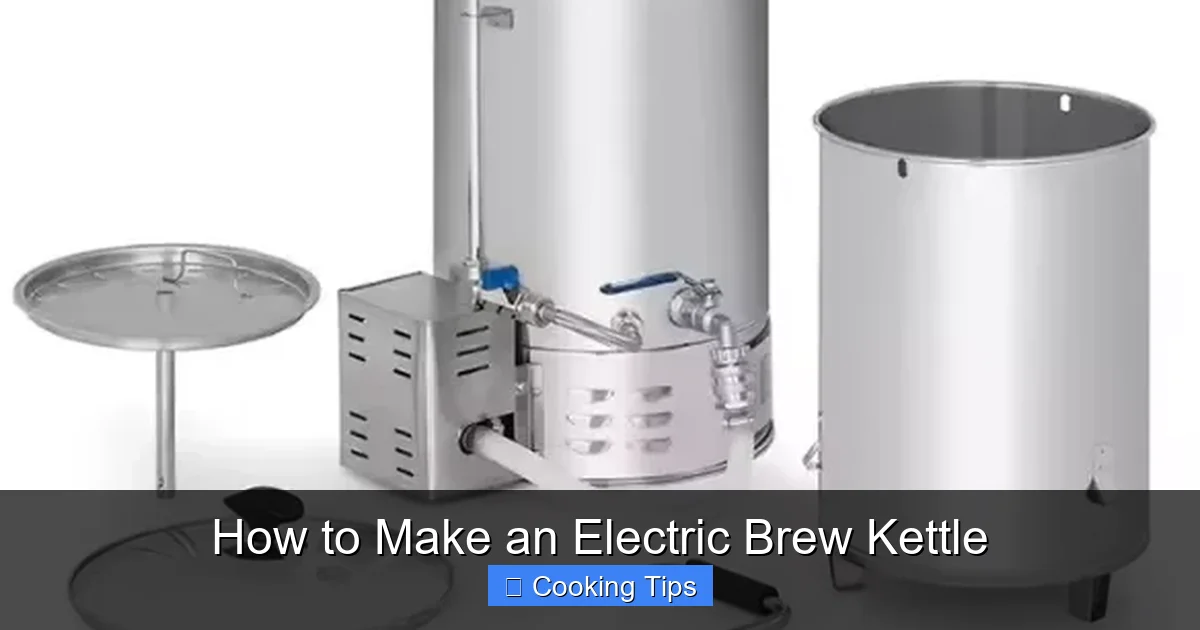
Learn how to build your own electric brew kettle, a crucial upgrade for any homebrewer by 2026. This comprehensive guide walks you through every step, from selecting components to final assembly. Master the art of precise temperature control and elevate your brewing game with this rewarding DIY project.
Key Takeaways
- Understand Component Selection: Learn to choose the right stainless steel kettle, heating element, temperature controller, and wiring for your electric brew kettle project.
- Prioritize Safety: This guide emphasizes crucial safety measures for working with electricity and hot liquids, ensuring a safe and successful build.
- Step-by-Step Assembly: Follow clear, detailed instructions for drilling, mounting components, and wiring your brew kettle for optimal performance.
- Wiring Essentials: Grasp the basics of electrical wiring, including proper connections and grounding, to create a reliable and safe heating system.
- Testing and Calibration: Discover how to safely test your electric brew kettle and calibrate the temperature controller for accurate brewing.
- Maintenance and Upgrades: Gain insights into maintaining your DIY brew kettle and potential future upgrades for even better brewing experiences.
How to Make an Electric Brew Kettle
Welcome, ambitious homebrewers of 2026! Are you tired of constantly stirring your wort on the stovetop or dealing with inconsistent temperatures? It’s time to upgrade your brewing setup with a custom-built electric brew kettle. This guide will show you exactly how to create your own, giving you **unparalleled control over your brewing process**. Building an electric brew kettle is a rewarding DIY project that can significantly improve the quality and consistency of your beer. We’ll cover everything from selecting the right parts to safely assembling and testing your new brewing companion. Let’s dive in and build something awesome!
Why Build an Electric Brew Kettle?
In 2026, the homebrewing landscape is more sophisticated than ever. Electric brew kettles offer several advantages over traditional stovetop brewing:
- Precise Temperature Control: This is the biggest game-changer. With a temperature controller, you can precisely set and maintain your desired mash and boil temperatures, leading to more consistent and repeatable results. No more worrying about scorching or fluctuating heat.
- Energy Efficiency: Electric heating elements can be more efficient than gas stoves, especially when properly insulated.
- Safety: Eliminating an open flame significantly reduces fire hazards, especially in a home environment.
- Convenience: Set it and forget it! Once your temperature is programmed, the controller handles the rest, freeing you up to focus on other brewing tasks or simply relax.
- Customization: You can tailor the size, power, and features of your electric brew kettle to perfectly suit your brewing needs and budget.
Understanding the Components
Before we start building, let’s familiarize ourselves with the essential parts you’ll need. Sourcing quality components is key to a successful and safe build.
The Kettle
The foundation of your electric brew kettle is, of course, the kettle itself.
- Material: A stainless steel kettle is highly recommended. It’s durable, easy to clean, and won’t react with your wort. Look for 304-grade stainless steel, which is food-grade and corrosion-resistant.
- Size: The size of your kettle will depend on your typical batch size. For a standard 5-gallon (19-liter) batch, a 10-gallon (38-liter) to 15-gallon (57-liter) kettle is ideal. This provides enough headspace for a vigorous boil and prevents boil-overs.
- Lid: A tight-fitting lid is important for retaining heat and preventing evaporation during the boil.
You can often find suitable kettles at restaurant supply stores, online homebrew suppliers, or even repurpose a stainless steel stockpot.
The Heating Element
This is what will heat your wort.
- Type: The most common type for DIY electric brew kettles is an immersion heater. These are designed to be submerged directly into the liquid.
- Wattage: The wattage determines how quickly your kettle will heat up. For a 10-15 gallon kettle, aim for a heating element between 3500 and 5500 watts. Anything less might result in slow heating times, while significantly more can be overkill and potentially lead to scorching if not managed carefully. It’s crucial to ensure your home’s electrical circuit can handle the amperage draw of your chosen element. A 5500-watt element at 240 volts draws about 23 amps (5500W / 240V ≈ 23A). You’ll need a dedicated 30-amp circuit for this.
- Material: Look for stainless steel heating elements for durability and food safety.
The Temperature Controller
This is the brain of your electric brew kettle. It regulates the power going to the heating element to maintain your desired temperature.
- Type: PID (Proportional-Integral-Derivative) controllers are the gold standard for precise temperature control. They offer advanced algorithms to prevent temperature overshoot and maintain stability.
- Features: Look for a controller with a digital display, easy-to-use interface, and the ability to set both mash temperatures and boil timers. Some controllers also have built-in safety features like over-temperature shutoff.
- Power Output: Ensure the controller is rated to handle the amperage of your heating element.
Many homebrew suppliers offer integrated PID controller kits specifically designed for electric brew kettles. These often come with a temperature probe and relay, simplifying the wiring process.
Wiring and Electrical Components
This is where safety is paramount.
- Power Cord: A heavy-duty power cord rated for the amperage of your heating element is essential. A 10-foot (3-meter) cord is usually sufficient.
- Plug: You’ll need a plug that matches your home’s electrical outlet configuration (e.g., a 30-amp, 240-volt plug for a 5500-watt element).
- Relay or Contactor: This component is controlled by your temperature controller and switches the high-power current to the heating element. PID controller kits usually include a suitable relay.
- Wire: Use appropriate gauge wire for the amperage and length of your run. Consult an electrician or a reliable online resource if you’re unsure.
- Wire Connectors: Use secure and insulated wire connectors, such as crimp connectors or Wago connectors, for all electrical connections.
- Enclosure: A waterproof electrical enclosure is needed to house your temperature controller and relay, protecting them from splashes and steam.
- Power Outlet: You’ll need a dedicated 240-volt, 30-amp outlet installed by a qualified electrician if you don’t already have one.
Miscellaneous Components
- Bulkhead Fitting: For mounting the heating element through the kettle wall.
- Grommets and Washers: For sealing connections.
- Mounting Hardware: Screws, nuts, and bolts for attaching components.
- Silicone Tubing or Heat Shrink Tubing: For insulating electrical connections.
- Drill Bits: For creating holes in the kettle.
- Silicone Sealant: Food-grade silicone sealant for ensuring watertight seals.
- Safety Gear: Safety glasses, gloves, and a fire extinguisher are a must.
Step-by-Step Building Instructions
Now that you have your components, let’s get building! Remember to work in a well-ventilated area and always prioritize safety. If you’re not comfortable with any electrical work, consult a qualified electrician.
Step 1: Prepare the Kettle
This involves drilling holes for the heating element and any other desired fittings (like a ball valve or thermometer if you’re not using a built-in controller).
- Mark the Hole: Determine the desired location for your heating element. It’s usually best placed about 1-2 inches (2.5-5 cm) from the bottom of the kettle to ensure it’s always submerged in liquid.
- Drill the Hole: Use a drill and the appropriate size hole saw or step bit to create a clean hole for your bulkhead fitting. Go slowly and apply steady pressure. If you’re drilling stainless steel, a lubricant like cutting oil can help.
- Deburr and Clean: Use a deburring tool or sandpaper to smooth the edges of the drilled hole. Thoroughly clean the inside and outside of the kettle to remove any metal shavings or residue.
Step 2: Install the Heating Element Bulkhead Fitting
This fitting creates a watertight seal for your heating element.
- Insert the Fitting: Slide the bulkhead fitting through the hole you drilled from the outside of the kettle.
- Apply Sealant: On the inside of the kettle, apply a bead of food-grade silicone sealant around the bulkhead fitting to ensure a watertight seal.
- Secure the Fitting: On the outside, attach the nut and any provided gaskets or washers to secure the bulkhead fitting tightly. Wipe away any excess sealant. Allow the sealant to cure completely according to the manufacturer’s instructions before proceeding.
Step 3: Mount the Heating Element
This is straightforward once the bulkhead is installed.
- Attach the Element: Screw your stainless steel immersion heater into the bulkhead fitting. Ensure it’s finger-tight and then give it a slight snug with a wrench if necessary, being careful not to overtighten and damage the fitting or element.
Step 4: Wire the Temperature Controller and Relay
This is the most critical step for safety and functionality. If you purchased a pre-wired PID controller kit, follow its specific instructions closely. Otherwise, here’s a general outline.
- Mount the Enclosure: Securely mount your waterproof electrical enclosure to the side of the kettle or on a stand. This will house your controller and relay.
- Wire the Power Input: Connect the wires from your main power cord to the appropriate terminals on the relay and potentially directly to the temperature controller if it requires its own power source. Refer to your controller’s manual for specific wiring diagrams.
- Wire the Heating Element: Connect the wires from the heating element to the switched terminals of the relay. The relay will act as the switch controlled by the temperature controller.
- Wire the Temperature Controller to the Relay: Connect the low-voltage control wires from your temperature controller to the trigger terminals on the relay. This is how the controller tells the relay when to turn the heating element on and off.
- Install the Temperature Probe: Mount the temperature probe according to your controller’s instructions. Some controllers have a specific port for the probe, while others may require a separate bulkhead fitting. Ensure the probe is positioned to accurately read the wort temperature.
- Grounding: Crucially, ensure that the kettle body and the electrical enclosure are properly grounded to your main power cord’s ground wire. This is a vital safety feature to prevent electrical shock.
- Insulate Connections: Use heat shrink tubing or silicone sealant to insulate all exposed electrical connections to protect them from moisture and prevent short circuits.
Important Safety Note: If you are unsure about any aspect of electrical wiring, consult a qualified electrician. Incorrect wiring can be dangerous and lead to fire or electrical shock.
Step 5: Final Assembly and Testing
Once all components are wired and secured, it’s time for a test run.
- Double-Check Connections: Visually inspect all wiring connections to ensure they are secure, properly insulated, and correctly placed according to your wiring diagram.
- Water Test: Fill the kettle with a few gallons of water, ensuring the heating element is fully submerged.
- Power On: Plug in your brew kettle.
- Program the Controller: Turn on your temperature controller and program a target temperature (e.g., 170°F or 77°C).
- Observe: Watch for the heating element to turn on and the water temperature to rise. Monitor the controller’s display to ensure it’s accurately reading the temperature and controlling the heating element as expected.
- Check for Leaks: While the water is heating, carefully inspect the bulkhead fitting and any other drilled holes for any signs of leaks.
- Cool Down and Inspect: Once the test is complete, unplug the kettle and allow it to cool down completely. Re-inspect all connections and fittings.
Troubleshooting Common Issues
Even with careful building, you might encounter a few hiccups.
- Kettle Not Heating:
- Check if the power cord is securely plugged in.
- Verify that the circuit breaker for the dedicated outlet hasn’t tripped.
- Ensure the temperature controller is powered on and programmed correctly.
- Inspect the relay – is it clicking when it should be engaging the heating element?
- Check all wiring connections for the heating element and relay.
- Temperature Fluctuations:
- Your PID controller may need adjustment of its parameters (P, I, D settings). Consult your controller’s manual for tuning instructions.
- Ensure the temperature probe is correctly positioned and not touching the kettle wall.
- The wattage of your element might be too high for the volume of liquid, causing rapid heating and cooling cycles.
- Leaks from Bulkhead Fitting:
- The fitting may not be tightened enough.
- The sealant may not have cured properly.
- The gasket or washer might be damaged or missing.
- The hole drilled in the kettle may be too large for the fitting.
Maintenance and Upgrades
To keep your electric brew kettle in top condition:
- Cleaning: After each brew, thoroughly clean and sanitize your kettle. Ensure no residue is left on the heating element.
- Inspection: Periodically inspect wiring connections and fittings for any signs of wear or corrosion.
- Calibration: Recalibrate your temperature controller if you notice persistent inaccuracies.
Future upgrades could include adding a recirculation pump for more even mashing, integrating a hop addition timer, or even automating the entire brewing process with advanced control systems.
Conclusion
Congratulations! You’ve just learned how to build your own electric brew kettle. This project is a fantastic way to enhance your homebrewing capabilities, giving you precise control over your fermentation and boil processes. By carefully selecting your components, prioritizing safety, and following these steps, you’ll be well on your way to brewing more consistent, higher-quality beer. Embrace the satisfaction of a DIY build and enjoy the delicious results for years to come! Happy brewing in 2026 and beyond!
