

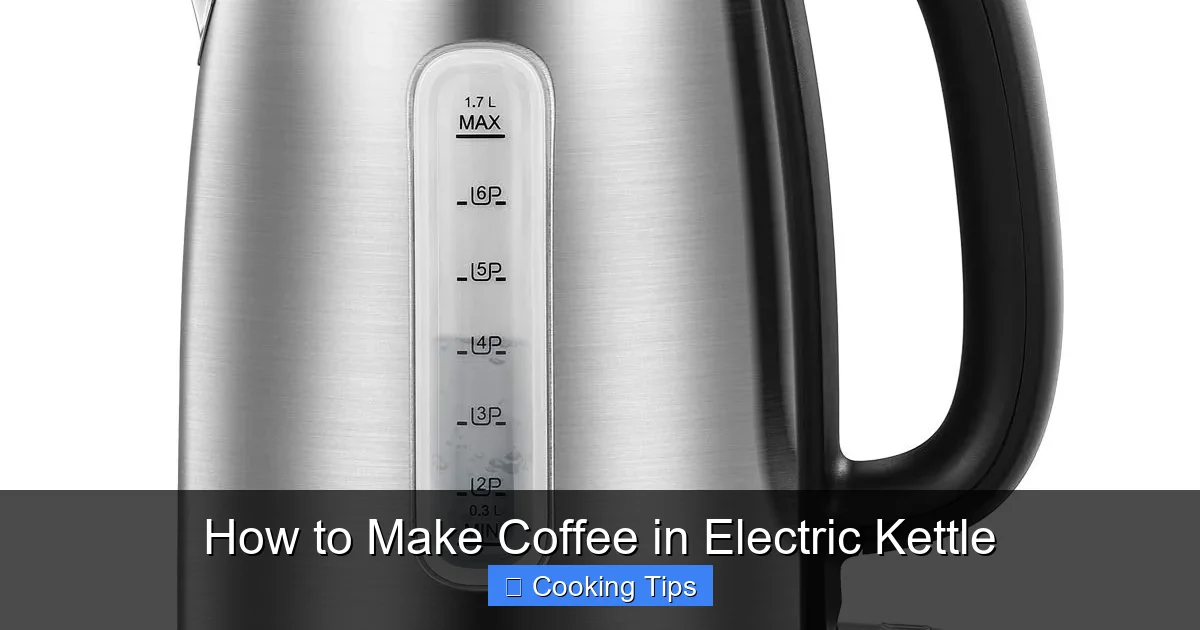
Discover how to brew exceptional coffee using only your electric kettle. This comprehensive guide, updated for 2026, will walk you through the simple steps, from selecting the right ingredients to achieving a perfect brew. Master this efficient method and enjoy a satisfying coffee experience with minimal fuss.
Key Takeaways
- Understand the Basics: Electric kettles are surprisingly versatile for coffee brewing, offering speed and simplicity.
- Choose the Right Grind: The grind size is crucial for optimal extraction in methods using an electric kettle.
- Master Water Temperature: Heating water to the correct temperature is vital for unlocking coffee’s best flavors.
- Explore Brewing Methods: Several simple coffee brewing techniques can be successfully employed with an electric kettle.
- Freshness is Key: Using freshly ground beans and filtered water significantly enhances coffee quality.
- Experiment and Personalize: Don’t be afraid to tweak ratios and methods to find your ideal coffee taste.
How to Make Coffee in Electric Kettle
In the fast-paced world of 2026, convenience often dictates our morning routines. For many, that means a quick, satisfying cup of coffee. But what if your kitchen is minimalist, or you’re traveling, and all you have is an electric kettle? Good news! You can absolutely make delicious coffee using just this common appliance. Forget the fancy espresso machines or complex pour-over setups for a moment. This guide will show you how to harness the power of your electric kettle to brew a fantastic cup of coffee, proving that great coffee doesn’t always require elaborate equipment. We’ll cover everything from selecting your beans to the simple, step-by-step process of brewing. Get ready to enjoy a delightful coffee experience, made easy.
Making coffee in an electric kettle might sound unconventional, but it’s a practical and effective method for coffee lovers who value simplicity and speed. Electric kettles are designed to heat water quickly and efficiently, which are two essential components of good coffee brewing. By understanding a few key principles and employing a straightforward brewing technique, you can consistently produce a rich, flavorful cup. This method is perfect for those who are new to coffee brewing, have limited kitchen space, or are looking for a portable coffee solution.
Understanding the Core Principles
Before we dive into the brewing process, let’s touch on the fundamental elements that make coffee taste great. These principles apply regardless of your brewing method, including when you’re using an electric kettle.
1. Water Quality
The water you use constitutes over 98% of your coffee. Using tap water that has a strong taste or contains impurities will negatively impact your coffee’s flavor. For the best results, opt for filtered water or good-quality bottled water. This simple step makes a surprising difference.
2. Coffee Bean Freshness and Grind
Freshness is paramount. Coffee beans begin to lose their flavor soon after they are roasted, and even faster once they are ground. If possible, buy whole beans and grind them just before brewing. The grind size is also critical. For most electric kettle brewing methods, a medium grind is ideal. It’s not too fine that it will clog your filter or make the coffee bitter, and not too coarse that the water won’t extract enough flavor.
3. Water Temperature
The ideal brewing temperature for coffee is between 195°F and 205°F (90°C to 96°C). This range allows for optimal extraction of the coffee’s flavorful compounds without burning the grounds. Most electric kettles have automatic shut-off features that prevent boiling. If yours doesn’t, or if it boils water, you’ll need to let it cool slightly before pouring.
Choosing Your Brewing Method
While you can’t technically “brew” coffee directly inside an electric kettle (as it’s meant for heating water only), you can use the hot water it provides for various simple brewing techniques. Here are a few popular and effective methods that work wonderfully with an electric kettle.
Method 1: The Simple Immersion (Cowboy Coffee Style)**
This is the most basic method, requiring minimal equipment. It’s perfect for camping or when you have absolutely nothing else.
What you’ll need:
* Electric kettle
* Coffee grounds (medium to coarse grind recommended)
* A mug
* A spoon
Step-by-step instructions:
- Heat the Water: Fill your electric kettle with fresh, filtered water. Heat it to just off the boil (around 200°F or 93°C). If your kettle boils, let it sit for about 30 seconds to a minute before pouring.
- Add Coffee to Mug: Place your desired amount of coffee grounds into your mug. A good starting point is 2 tablespoons of coffee for every 6 ounces (about 180ml) of water, but you can adjust this to your preference.
- Pour Hot Water: Slowly pour the hot water from the electric kettle over the coffee grounds in your mug. Stir gently with your spoon to ensure all the grounds are saturated.
- Steep: Let the coffee steep for about 4 minutes. This allows the water to extract the flavors from the coffee grounds.
- Settle the Grounds: After steeping, the coffee grounds will be at the bottom of your mug. You can sprinkle a little cold water on top (about a teaspoon) to help the grounds settle faster and prevent them from floating up into your drink.
- Enjoy: Sip carefully to avoid disturbing the grounds at the bottom.
**Practical Tip:** Using a coarser grind will help the grounds settle more easily. If you find too many grounds in your cup, you can try letting it sit for another minute or carefully pouring it into another mug, leaving the sludge behind.
Method 2: The French Press Method
If you have a French press, your electric kettle becomes the perfect companion for this popular brewing method, known for producing a rich and full-bodied coffee.
What you’ll need:
* Electric kettle
* French press
* Coffee grounds (medium-coarse grind recommended)
* Timer
Step-by-step instructions:
- Heat Water: Fill your electric kettle with fresh, filtered water and heat it to approximately 200°F (93°C).
- Preheat French Press: Pour a little hot water into your French press to warm it up. Swirl it around and then discard the water. This helps maintain the brewing temperature.
- Add Coffee: Add your coffee grounds to the bottom of the French press. A common ratio is 1:15 (1 gram of coffee to 15 grams of water), or roughly 2 tablespoons of coffee per 6 ounces of water.
- Bloom the Coffee: Pour just enough hot water from your electric kettle to saturate the grounds. Let it sit for about 30 seconds. This is called the “bloom” and allows carbon dioxide to escape, leading to better flavor extraction.
- Add Remaining Water: Slowly pour the rest of the hot water into the French press. Stir gently once or twice.
- Steep: Place the lid on the French press, but do not press the plunger down yet. Let it steep for 4 minutes.
- Press and Serve: After 4 minutes, slowly and steadily press the plunger all the way down. Pour the coffee immediately into your mug to prevent over-extraction.
**Practical Tip:** If you don’t have a timer, you can estimate the 4 minutes by humming a song or mentally counting. Be careful not to press the plunger too quickly, as this can force fines through the filter and make your coffee cloudy.
Method 3: Using a Pour-Over Cone (like V60, Kalita, Chemex)**
Pour-over brewers offer a lot of control over the brewing process, and an electric kettle with a gooseneck spout is ideal for this. If you don’t have a gooseneck kettle, a standard electric kettle will still work, though it might require a little more care.
What you’ll need:
* Electric kettle (ideally with a gooseneck spout for better control)
* Pour-over brewer (e.g., V60, Kalita Wave, Chemex)
* Paper filter specific to your brewer
* Coffee grounds (medium-fine grind recommended)
* Mug or carafe
* Timer
Step-by-step instructions:
- Heat Water: Fill your electric kettle with fresh, filtered water and heat it to around 200°F (93°C).
- Prepare the Brewer: Place the paper filter in your pour-over brewer. Rinse the filter with hot water from the kettle. This removes any paper taste and preheats the brewer. Discard the rinse water.
- Add Coffee: Add your ground coffee to the filter. Give the brewer a gentle shake to level the coffee bed.
- Bloom: Start your timer. Pour just enough hot water from the kettle over the grounds to saturate them evenly, ensuring no dry spots. Wait for about 30-45 seconds. You’ll see the coffee grounds puff up as they release CO2.
- Pour in Stages: Continue pouring the hot water slowly and steadily in a circular motion, starting from the center and moving outwards, avoiding pouring directly onto the filter paper. Pour in stages, allowing the water level to rise and then recede slightly before adding more. Aim to complete your pour within 2 to 3 minutes.
- Finish Dripping: Allow all the water to drip through the coffee grounds. The total brew time should ideally be between 2.5 to 4 minutes, depending on the brewer and the amount of coffee.
- Serve: Remove the pour-over brewer and enjoy your coffee.
**Practical Tip:** If you have a standard electric kettle without a gooseneck spout, pour the water into a smaller pitcher or even a sturdy measuring cup first. This will give you more control over the pour rate and stream. Aim for a slow, consistent trickle.
Troubleshooting Common Issues
Even with the simplest methods, you might encounter a few hiccups. Here’s how to address them:
Issue: Coffee is too weak or watery.
Cause: This usually means the coffee grounds were not exposed to the hot water long enough (under-extraction) or the grind was too coarse.
Solution: Try using slightly more coffee grounds, or let the coffee steep for an extra minute. If using a pour-over or French press, ensure your grind is a bit finer. For immersion methods, stir the grounds a bit more vigorously.
Issue: Coffee is too bitter or harsh.
Cause: This is often due to over-extraction, meaning the water was in contact with the coffee grounds for too long, or the water was too hot.
Solution: Reduce the steeping time. If using an electric kettle that boils, let the water cool for a full minute before pouring. For pour-over, try a slightly coarser grind. Ensure you’re not pressing the French press plunger too forcefully or too quickly.
Issue: Too many grounds in my coffee.
Cause: The grind is too fine, or the grounds haven’t settled properly.
Solution: For immersion methods, let the coffee sit for an extra minute or two. A splash of cold water can help grounds settle. If this persists, use a coarser grind. For pour-over, ensure you’re using the correct filter and that it’s seated properly.
Tips for Elevating Your Electric Kettle Coffee
To get the most out of your electric kettle coffee brewing, keep these extra tips in mind:
* Clean Your Kettle: Regularly descale your electric kettle to ensure optimal performance and prevent mineral buildup from affecting your water’s taste.
* Measure Consistently: Use a kitchen scale for both coffee beans and water. This accuracy leads to repeatable results and helps you dial in your perfect brew.
* Experiment with Ratios: The coffee-to-water ratio is a personal preference. Don’t be afraid to adjust it. Start with the recommended ratios and then tweak them until you find what you love.
* Consider the Coffee Origin: Different coffee beans from different regions have unique flavor profiles. Exploring single-origin coffees can add another layer of enjoyment to your brewing.
* Grind Size is King: As mentioned, it’s the most critical variable after water temperature. Experimenting with grind size is your best bet for fine-tuning your extraction.
Conclusion
Making coffee with an electric kettle is an accessible and enjoyable way to achieve a satisfying cup, no matter your circumstances. Whether you opt for the super-simple immersion method, the beloved French press, or a controlled pour-over, the key is using good ingredients and paying attention to water temperature and grind size. The convenience of an electric kettle, combined with these straightforward brewing techniques, means you can enjoy delicious, home-brewed coffee with minimal fuss and equipment. So, next time you crave a great cup, don’t underestimate the power of your electric kettle. Happy brewing in 2026 and beyond!
