

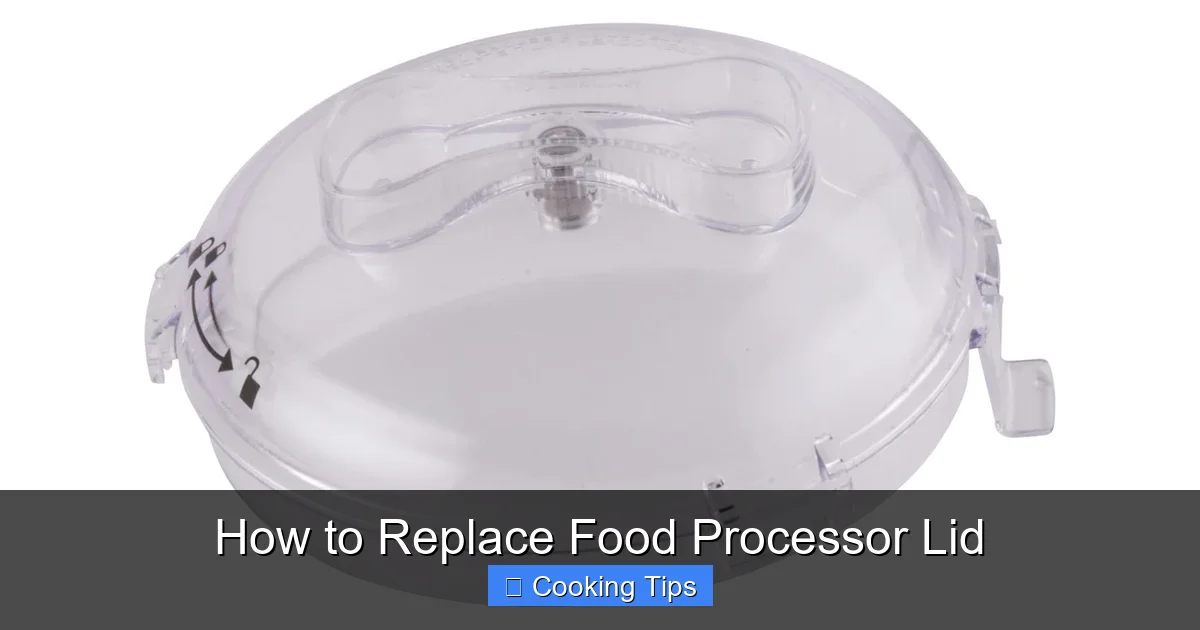
Is your food processor lid broken or lost? Don’t let a damaged lid stop you from enjoying your kitchen appliance! This comprehensive guide will walk you through every step of replacing your food processor lid, from identifying the right replacement part to securely attaching it. With our expert advice and practical tips, you’ll have your food processor back in action in no time, ready for all your culinary creations.
## How to Replace Food Processor Lid
Your food processor is a kitchen workhorse. It chops, purees, slices, and shreds with ease, making meal preparation so much faster. But what happens when the lid gets damaged, cracked, or even goes missing? Don’t despair! Replacing a food processor lid is a straightforward process that can bring your appliance back to full functionality. This guide will equip you with all the knowledge you need to successfully replace your food processor lid, from identifying the right part to ensuring a secure fit.
### Why Replace Your Food Processor Lid?
There are several reasons why you might need to replace your food processor lid. The most common include:
* Accidental Damage: Dropping the lid can lead to cracks or breaks, rendering it unsafe or ineffective.
* Wear and Tear: Over time, plastic components can become brittle and may crack or break with regular use.
* Lost Parts: Sometimes, in the hustle of cleaning or storage, parts can go missing. A lost lid means your food processor is unusable.
* Malfunctioning Locking Mechanism: The lid often contains safety interlocks that prevent the processor from running if it’s not properly secured. If these parts of the lid are damaged, the processor won’t turn on.
Regardless of the reason, a damaged or missing lid poses a safety risk and prevents your food processor from working. Thankfully, replacing it is usually an achievable DIY task.
## Step 1: Identify Your Food Processor Model
This is the most critical first step. You cannot buy a new lid without knowing exactly what kind of food processor you have. Different brands and even different models within the same brand use unique lid designs.
### Locate the Model Number
* Check the Appliance Itself: Look for a sticker or plate on the base of your food processor. This usually contains the brand name, model number, and serial number. It might be on the bottom, the back, or even under the motor housing.
* Consult the Original Manual: If you still have your food processor’s instruction manual, the model number will be clearly listed on the cover or inside the first few pages.
* Review Original Packaging: The box your food processor came in will definitely have the model number printed on it.
* Online Purchase History: If you bought your food processor online, check your order history with the retailer. The product description should include the model number.
Once you have the model number, write it down. You’ll need it for the next step.
## Step 2: Source a Replacement Lid
With your model number in hand, you can now begin searching for a replacement lid. There are several avenues to explore:
### Manufacturer’s Website
* Pros: This is the most reliable way to get a genuine part designed specifically for your model. It ensures compatibility and quality.
* Cons: Manufacturer parts can sometimes be more expensive.
* How to: Go to the official website of your food processor brand (e.g., Cuisinart, KitchenAid, Breville). Look for a “Parts,” “Support,” or “Accessories” section. You can usually search for replacement parts by your model number.
### Authorized Parts Retailers
* Pros: These retailers often carry a wide range of genuine replacement parts for various appliance brands. They can be a good alternative if the manufacturer’s site is unhelpful or if you’re looking for a slightly better price.
* Cons: You still need to be sure they are authorized and reputable to get a genuine part.
* How to: Search online for “appliance parts” or “food processor parts” and look for retailers that explicitly state they sell genuine manufacturer parts. Many also have a search function where you can enter your model number.
### Reputable Online Marketplaces
* Pros: Websites like Amazon, eBay, or specialized appliance parts sites can offer a wider selection, including third-party compatible parts. Prices might be more competitive.
* Cons: Be very cautious here. Ensure the seller has good reviews and clearly states the part is compatible with your specific model. Third-party parts might not be as durable or fit perfectly.
* How to: Search using your food processor’s brand and model number, followed by “replacement lid.” Read product descriptions carefully and check seller feedback.
### What to Look for in a Replacement Lid:
* Compatibility: Double-check, triple-check that the lid is specifically listed as compatible with your food processor model number.
* Material: Most food processor lids are made of BPA-free plastic. Ensure the replacement is of similar quality.
* Attachments: Does your original lid have a feed tube? Does it include a pusher? Make sure the replacement includes these if they are part of the lid assembly you need. Some lids are sold as just the plastic cover, while others come with integrated parts.
* Condition: If buying used, ensure there are no cracks or missing pieces. For new lids, check for any manufacturing defects upon arrival.
## Step 3: Prepare for Replacement
Before you even touch the new lid, it’s crucial to prepare safely.
### Safety First: Unplug the Appliance
* Importance: This cannot be stressed enough. Always unplug your food processor from the power outlet. Food processors have powerful motors, and accidental activation while you’re working on it can cause serious injury.
* How to: Simply disconnect the power cord from the wall socket.
### Clean the Food Processor Bowl
* Why: You don’t want to introduce new contaminants into your clean appliance. Plus, a clean rim on the bowl will help the new lid seat properly.
* How to: Wash the food processor bowl thoroughly with soap and warm water. Ensure it’s completely dry before proceeding.
### Inspect the Bowl and Locking Mechanism
* Check the Bowl Rim: Carefully examine the rim of the food processor bowl where the lid attaches. Look for any nicks, cracks, or damage that might prevent the new lid from sealing correctly. If the bowl itself is damaged, you might need to replace that as well, or consider if the food processor is worth repairing further.
* Examine Interlock Tabs: Most food processor lids have small tabs or prongs that engage with safety interlock mechanisms on the motor base. Check if the corresponding slots or mechanisms on the base are clean and free of debris.
## Step 4: Attach the New Food Processor Lid
This is where you put the new lid to work! The process is usually quite intuitive, but following these steps will ensure a secure and safe fit.
### Align the Lid Correctly
* Feed Tube Orientation: Most lids have a specific orientation. The feed tube usually needs to be positioned in a particular direction, often towards the front or side of the appliance. Look for alignment markers, arrows, or notches on the lid and the bowl.
* Match Grooves and Tabs: Carefully place the lid onto the bowl. You should feel it starting to settle into place. Gently rotate it until you feel it align with the bowl’s rim and any grooves or locking tabs.
### Secure the Lid
* Locking Mechanism: Depending on your food processor model, the lid might secure in different ways.
* Twist to Lock: Many lids require a slight twist, usually clockwise, to lock into place. You might hear or feel a click when it’s properly secured.
* Downward Pressure: Some lids simply press down and lock with internal clips.
* Handle Engagement: Certain models have a handle on the lid that needs to be moved into a locked position, which often engages the safety interlocks.
* Visual and Auditory Cues: Pay attention to any clicks, snaps, or visual indicators (like a green light or a change in an indicator mark) that signal the lid is locked.
### Ensure a Secure Fit
* Gentle Tug: Once you believe the lid is locked, give it a gentle tug upwards. It should feel firmly attached and not come loose.
* Check for Gaps: Look around the rim of the bowl where the lid meets. There should be no significant gaps. A small amount of snugness is expected.
## Step 5: Test the Food Processor
Before you start chopping onions, it’s essential to test your newly attached lid.
### Perform an Empty Test Run
* Plug In: Reconnect the food processor to the power outlet.
* Turn On (Briefly): Turn the food processor on for just a few seconds. Listen for any unusual noises.
* Check Functionality: Ensure the motor runs smoothly. The processor should not start if the lid is not correctly locked, so this test confirms the safety interlocks are working with the new lid.
* Troubleshooting: If the processor does not turn on, the lid is likely not locked correctly, or there might be an issue with the interlock mechanism on the base. Turn off and unplug the appliance, then re-seat the lid, ensuring it’s fully locked.
### Test with Water (Optional but Recommended)
* Add Water: Pour a small amount of water (about half a cup) into the clean bowl.
* Run Processor: Lock the lid securely and run the processor for about 30 seconds.
* Check for Leaks: After running, unplug the appliance, remove the lid, and check for any leaks around the rim. A slight drip might occur if the seal isn’t perfect, but significant leakage indicates a problem with the lid or bowl.
## Practical Tips for Success
* Keep Old Parts: If your old lid broke, but you still have it, examine how it attached and locked. This can provide clues for installing the new one.
* Take Photos: Before you remove the old lid (if it’s still partially intact), take a few photos from different angles. This can serve as a visual guide when you’re installing the new one.
* Read Instructions: Some replacement lids might come with specific installation instructions. Always read these carefully.
* Be Patient: Don’t force the lid. If it’s not aligning or locking easily, there’s probably a reason. Re-examine the alignment and try again gently.
* Consider a Lid Repair Kit: For minor cracks or issues with the locking tab, sometimes a strong adhesive specifically designed for plastics can be a temporary fix, though a full replacement is usually more reliable.
## Troubleshooting Common Issues
* Lid Won’t Lock:
* Cause: Misalignment, debris in the locking mechanism, damaged interlock tabs on the lid or base.
* Solution: Unplug the appliance. Clean both the lid and bowl rim, and the corresponding parts on the base. Realign the lid carefully and apply even pressure. Try a gentle twist if that’s how it locks. If it still won’t lock, inspect the interlock tabs for damage.
* Lid is Loose:
* Cause: Incorrect alignment, not fully locked, wrong replacement lid.
* Solution: Ensure the lid is twisted or pushed down completely until it clicks or is fully seated. If it’s the wrong lid, you’ll need to find the correct one.
* Processor Won’t Turn On After Lid Replacement:
* Cause: Lid is not properly locked, safety interlocks are not engaged.
* Solution: This is the most common reason. Unplug and re-attach the lid, ensuring it’s firmly and correctly locked according to your model’s mechanism.
* Leaks During Operation:
* Cause: Lid not sealed properly, cracked bowl, damaged seal on the lid.
* Solution: Ensure the lid is fully locked and seated. If the bowl has a crack or the new lid is damaged, you might need to replace those parts as well.
## Conclusion
Replacing a food processor lid might seem like a daunting task, but by following these steps, you can successfully restore your appliance to its former glory. The key is to be methodical, prioritize safety, and ensure you have the correct replacement part for your specific food processor model. With a little care and attention, you’ll be back to enjoying the convenience and efficiency of your food processor in no time, ready to tackle all your favorite recipes. Happy processing!
Key Takeaways
- Identify Your Food Processor Model: Knowing the exact make and model number of your food processor is crucial for finding a compatible replacement lid.
- Source a Reliable Replacement Lid: Explore options like the manufacturer’s website, authorized parts retailers, or reputable online marketplaces for a genuine or compatible lid.
- Safety First: Unplug the Appliance: Always ensure your food processor is completely unplugged from the power outlet before attempting any lid replacement to prevent electrical hazards.
- Inspect the Bowl and Sealing Mechanism: Before installing the new lid, check the food processor bowl for any damage to the rim or the locking mechanism.
- Proper Lid Alignment and Locking: Carefully align the new lid with the bowl and ensure it locks securely into place to activate the safety interlocks.
- Test for Functionality: Once the lid is replaced, run a quick, empty test cycle to confirm that the food processor operates correctly and safely.
- Maintain Your New Lid: Proper cleaning and storage of your replacement lid will help ensure its longevity and continued functionality.
