

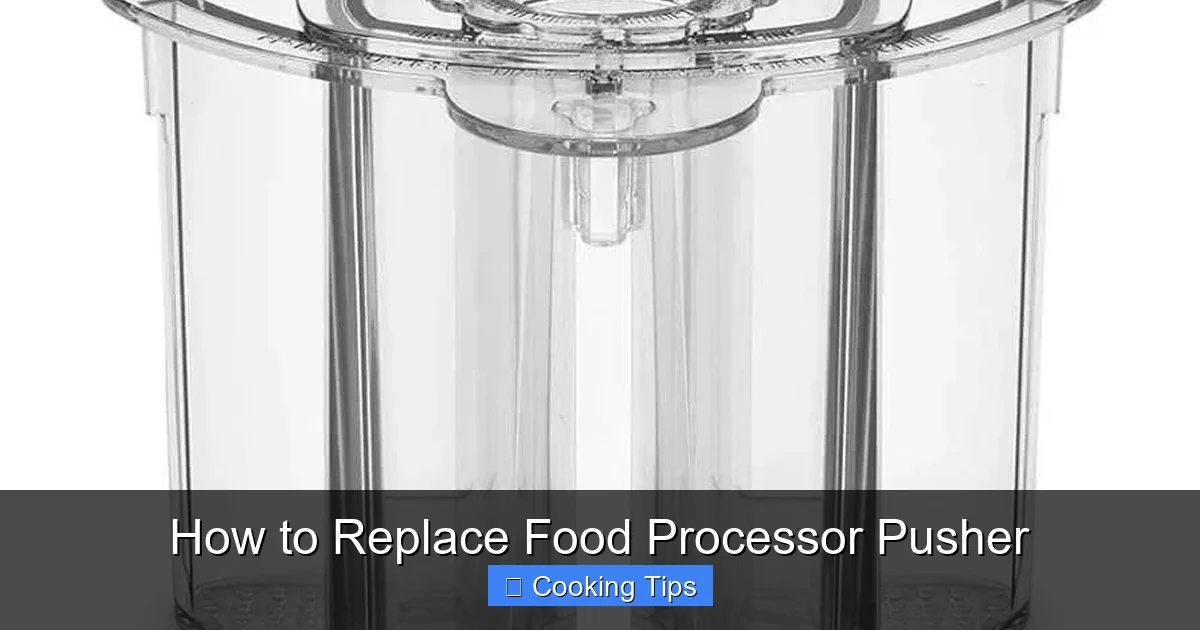
If your food processor pusher is lost, broken, or missing, it’s time for a replacement. This comprehensive guide will walk you through the simple steps to find and install a new pusher, ensuring your appliance is ready for action again. Don’t let a missing part stop your culinary creations; learn how to get your food processor back to its full potential with minimal fuss.
How to Replace Food Processor Pusher
Your food processor is a powerhouse in the kitchen, capable of chopping, slicing, pureeing, and so much more. But what happens when a vital component goes missing or gets damaged? The food processor pusher, that essential piece that guides food down the feed tube, is often overlooked until it’s gone. A lost or broken pusher can render your appliance frustratingly unusable. But don’t despair! Replacing a food processor pusher is a surprisingly straightforward process. This guide will equip you with everything you need to know, from identifying your model to fitting your brand-new pusher. Let’s get your food processor back to its full working order!
- Identify Your Food Processor Model: The most crucial first step is to know the exact make and model of your food processor to ensure you order a compatible replacement pusher.
- Locate Replacement Parts: You can find replacement pushers through the manufacturer’s website, authorized parts dealers, or sometimes even on general online marketplaces.
- Understand Pusher Types: Not all pushers are the same; some are single pieces, while others have multiple parts or even integrated measuring cups.
- Installation is Usually Simple: In most cases, replacing a food processor pusher requires no tools and involves simply inserting the new pusher into the feed tube.
- Test the Fit: After installation, always test the new pusher to ensure it fits snugly and moves smoothly within the feed tube.
- Consider Alternatives if Needed: If an official replacement isn’t available, explore universal pushers or contact the manufacturer for guidance.
Why You Might Need to Replace Your Food Processor Pusher
Several common scenarios can lead to the need for a replacement food processor pusher. Understanding these reasons can help you prevent future issues and appreciate the importance of this seemingly small part.
Accidental Loss
This is perhaps the most frequent culprit. Pushers can easily get misplaced during cleaning or when storing your food processor. They might fall behind cabinets, get mixed in with other kitchen gadgets, or simply vanish into the abyss of a busy kitchen drawer.
Damage or Breakage
While designed to be sturdy, food processor pushers can sometimes break. This might happen if they are dropped, if excessive force is applied, or if they come into contact with very hard ingredients that aren’t properly prepped. Cracks or chips can also occur over time.
Wear and Tear
Like any kitchen tool, components can degrade with prolonged use. The plastic of a pusher might become brittle or the fit might loosen over time, making it less effective or prone to falling apart.
Acquiring a Used Food Processor
If you’ve purchased a pre-owned food processor, it’s not uncommon for some accessories, like the pusher, to be missing.
Step 1: Identify Your Food Processor Model
Before you can order a replacement, you need to know exactly what you’re looking for. This is the most critical step for ensuring compatibility.
Visual guide about How to Replace Food Processor Pusher
Image source: cdn-content-oz2.storbie.com
Locate the Manufacturer and Model Number
Your food processor will have a label, usually on the base of the unit, that lists the manufacturer’s name (e.g., Cuisinart, KitchenAid, Braun, Breville) and a model number. This number is often a combination of letters and numbers. It’s essential to get this information precisely right. Sometimes, there might be a series name as well.
Tip: Take a clear photo of the label with your phone. This makes it easier to reference when you’re searching for parts online or discussing it with a customer service representative.
Consult Your Owner’s Manual
If you still have your food processor’s owner’s manual, it will undoubtedly list the full model name and number. It might also provide details about replacement parts.
Check the Original Packaging
If by some miracle you still have the original box your food processor came in, the model information will be printed on it.
Step 2: Find a Replacement Pusher
Once you have your model information, it’s time to track down a compatible replacement pusher. There are several avenues to explore.
Visual guide about How to Replace Food Processor Pusher
Image source: cdn-content-oz2.storbie.com
The Manufacturer’s Website
This is usually the most reliable source. Most appliance manufacturers have a “Parts” or “Accessories” section on their website. You can often search by your model number to find specific replacement parts for your appliance. Buying directly from the manufacturer ensures you’re getting a genuine, perfectly fitting part.
Authorized Parts Dealers
Many independent appliance repair shops are authorized dealers for specific brands. They often carry or can order genuine replacement parts. A quick online search for “appliance parts [your city]” might yield local options.
Online Retailers and Marketplaces
General online retailers like Amazon, eBay, or specialized appliance parts websites often carry a wide range of replacement parts. When purchasing from these platforms, pay close attention to the seller’s reputation and product descriptions to ensure you’re getting the correct part for your specific model.
Caution: Be wary of generic “universal” pushers unless explicitly stated they are compatible with a wide range of models and your specific brand. A poorly fitting pusher can be ineffective or even damage your feed tube.
Contacting Customer Service
If you’re having trouble finding the part online, don’t hesitate to contact the manufacturer’s customer service department. They can often guide you to the correct part number and tell you where to purchase it.
Step 3: Understand Different Pusher Types (If Applicable)
While most food processor pushers are single, solid pieces, some models have more complex designs. Be aware of these possibilities when ordering.
Visual guide about How to Replace Food Processor Pusher
Image source: cdn-content-oz2.storbie.com
Single Piece Pushers
This is the most common type. It’s a single molded piece of plastic designed to fit snugly into the feed tube and push food towards the blades.
Multi-Piece Pushers
Some older or more specialized models might have pushers that consist of two or more parts that connect. This is less common but worth noting if your original pusher was like this.
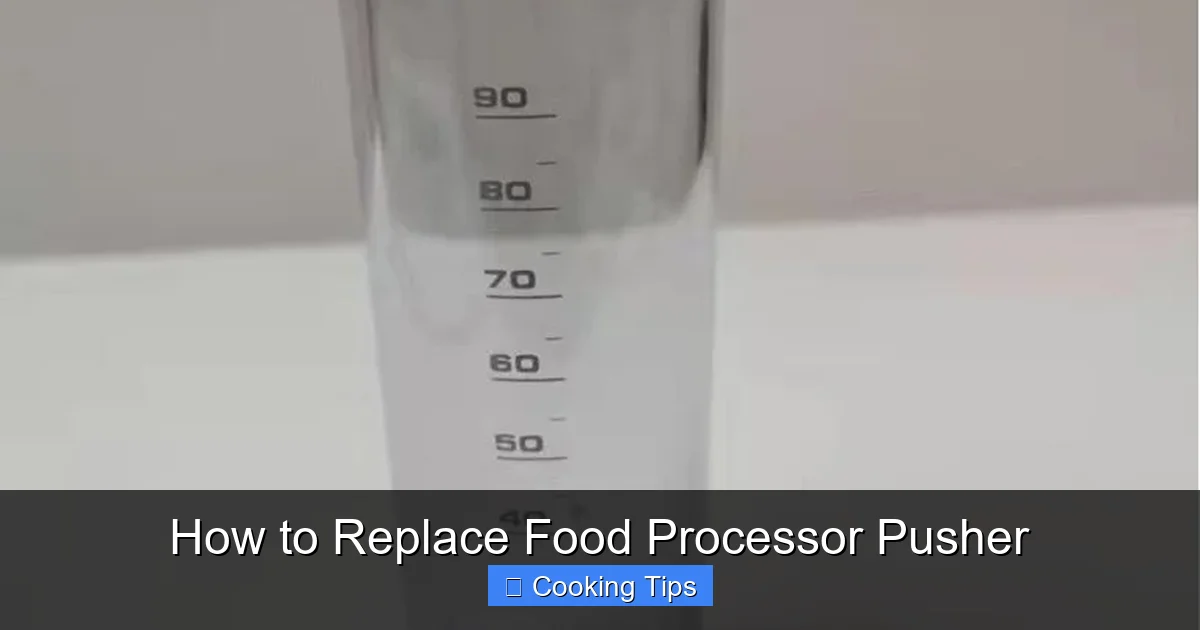
Pushers with Integrated Measuring Features
Certain high-end models might feature pushers with built-in measurement markings or even small measuring cups that fit inside. If your original pusher had these features, ensure your replacement does too if you want to retain that functionality.
Step 4: Installation of Your New Food Processor Pusher
The great news is that installing a new food processor pusher is typically incredibly simple and requires no tools.
Prepare Your Food Processor
First, ensure your food processor is unplugged for safety. Then, remove the work bowl and blade assembly. You need clear access to the feed tube.
Inspect the Feed Tube
Before inserting the new pusher, take a moment to inspect the feed tube. Ensure there are no obstructions, food debris, or cracks that could prevent the pusher from seating correctly or moving smoothly.
Insert the New Pusher
Gently take your new food processor pusher and align it with the opening of the feed tube. Slide it in. It should fit snugly but also be able to move up and down freely within the tube. It should not be too loose, nor should it require excessive force to insert or move.
Example: Imagine sliding a key into a lock. It needs to fit well to work, but it shouldn’t be jammed in there.
Check for Proper Fit and Movement
Once inserted, gently push the pusher down as far as it will go. Then, pull it back up. It should move smoothly without catching or feeling wobbly. If it feels too tight, too loose, or gets stuck, there might be an issue with the part or how it’s seated.
Step 5: Test Your Food Processor
With the new pusher in place, it’s time to give your food processor a quick test run.
Assemble and Operate (Safely)
Reassemble your food processor by placing the work bowl back onto the base, then carefully fitting the blade assembly. Lock the lid securely. Plug in the appliance. You can test the pusher by using it to guide a piece of soft food (like a carrot slice or a piece of onion) down the feed tube while the machine is running on a low setting. Observe how the pusher interacts with the food and the feed tube.
Important Safety Note: Never put your fingers or any utensils into the feed tube while the food processor is running. Only use the pusher to guide ingredients.
Observe Pusher Performance
Does the pusher guide the food effectively towards the blades? Does it stay in place during operation? Does it feel secure? These are all good indicators that the replacement has been successful.
Troubleshooting Common Issues
Even with the best intentions, sometimes a new pusher might not work perfectly right away. Here are a few common issues and how to resolve them.
The Pusher is Too Loose
Cause: You may have received a part that is not precisely for your model, or perhaps your feed tube has a slight wear issue.
Solution: Double-check that you ordered the correct part for your exact model. If the part is confirmed to be correct, contact the seller or manufacturer. Unfortunately, a significantly loose pusher is often difficult to remedy without a replacement. Avoid using it, as it could lead to uneven processing or food escaping the bowl.
The Pusher is Too Tight or Won’t Fit
Cause: The part may be for a different model, or there might be a manufacturing defect.
Solution: Confirm the model number again. If it’s correct, try gently wiggling the pusher as you try to insert it, but do not force it. If it still won’t fit, contact the seller or manufacturer for an exchange or return. Forcing it could break the new pusher or damage the feed tube.
The Pusher Falls Out During Operation
Cause: This usually indicates the pusher is too loose or not correctly designed for your feed tube.
Solution: As mentioned above, ensure you have the correct part. If it’s the correct part, this is a significant issue. Immediately stop using the food processor and contact the manufacturer. This could be a safety concern.
My Model is Old and I Can’t Find a Pusher
Cause: Manufacturers often discontinue parts for older models.
Solution:
- Check Second-Hand Marketplaces: Look on eBay or other vintage appliance parts sites.
- Contact Specialized Parts Stores: Some businesses specialize in obsolete appliance parts.
- Consider a Universal Pusher (with caution): Some companies offer “universal” pushers, but their effectiveness and fit can vary wildly. Research these thoroughly and read reviews before purchasing.
- Contact Manufacturer as a Last Resort: While they may not have the part, they might offer advice or suggest compatible newer models.
Conclusion
Replacing a lost or broken food processor pusher is a simple yet essential task that can bring your beloved kitchen appliance back to life. By carefully identifying your model, diligently searching for the correct replacement part, and following the straightforward installation steps, you can quickly be back to enjoying the full functionality of your food processor. Don’t let a missing pusher put a damper on your culinary adventures. With a little patience and this guide, you’ll have your food processor ready for action in no time!
