

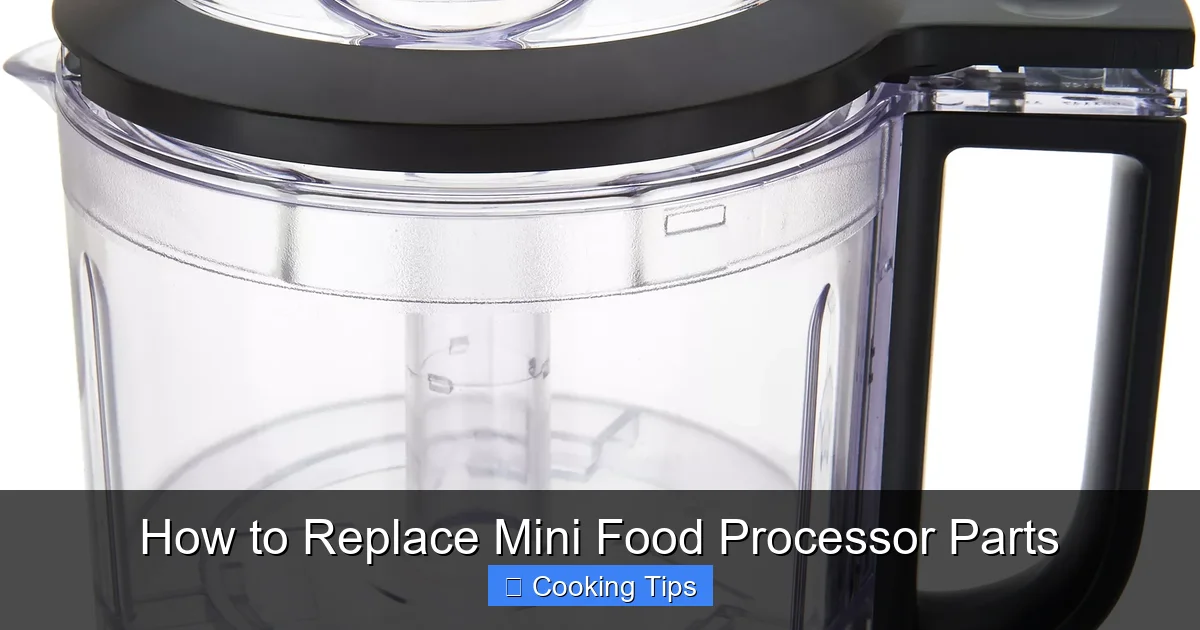
Don’t let a broken mini food processor part stop your culinary creativity! This comprehensive guide empowers you to easily replace common mini food processor parts, saving you money and reducing waste. We’ll walk you through identifying the issue, sourcing replacements, and performing the swap with simple, step-by-step instructions suitable for home cooks of all levels. Get your trusty mini food processor back in action quickly and efficiently.
Welcome, home chefs and kitchen enthusiasts of 2026! In today’s fast-paced culinary world, a reliable mini food processor is an indispensable tool for whipping up everything from salsas and pesto to finely chopped veggies for stir-fries. But what happens when a crucial part breaks or wears out? Don’t despair! Replacing mini food processor parts is often simpler than you think, and this comprehensive guide will equip you with the knowledge to do just that. We’ll cover everything from identifying common issues to sourcing replacements and performing the swap yourself, saving you money and keeping your beloved kitchen gadget in tip-top shape.
## Understanding Common Mini Food Processor Problems
Before diving into replacements, it’s essential to understand what might be going wrong with your mini food processor. Most issues stem from wear and tear, accidental damage, or improper use.
### Blade Assembly Woes
The blade assembly is the heart of your mini food processor. Common problems include:
* Dull or Chipped Blades: Over time, the blades can lose their sharpness, leading to inefficient chopping and uneven results. Minor chips can also occur from hitting hard ingredients or dropping the assembly.
* Worn or Damaged Blade Hub: The plastic or metal part that connects the blades to the motor shaft can become worn, cracked, or loose, causing the blades to spin erratically or not at all.
* Leaking Seals: The seals around the blade assembly can degrade, leading to liquid leaking into the motor base, which is a serious safety hazard.
### Bowl and Lid Issues
The bowl and lid are equally important for safe and effective operation. Look out for:
* Cracked or Chipped Bowl: Dropping the bowl or exposure to extreme temperatures can cause it to crack or chip. This can lead to leaks and make the appliance unsafe to use.
* Damaged Lid or Locking Mechanism: The lid often contains safety interlocks that prevent the processor from operating unless it’s securely in place. A broken lid or a malfunctioning lock can render the entire unit useless.
* Worn Gaskets or Seals on Lid: Similar to the blade assembly, seals on the lid can wear out, leading to spills during operation.
### Motor Base and Control Panel Problems
While less common for simple part replacement, issues with the motor base or control panel can arise:
* Faulty Motor: This is usually a more complex repair and might require professional servicing or a full replacement of the unit. However, sometimes a loose connection or a minor electrical issue might be present.
* Broken Buttons or Switches: Wear and tear can lead to unresponsive buttons or switches on the control panel.
* Damaged Power Cord: A frayed or damaged power cord is a safety concern and needs immediate attention.
## Step-by-Step Guide to Replacing Mini Food Processor Parts
Now that you have a better understanding of potential problems, let’s get to the core of this guide: how to actually replace those parts.
## Step 1: Safety First! Unplug and Disassemble Carefully
Before you even think about touching a screwdriver, the most critical step is ensuring your safety.
### Ensure the Appliance is Unplugged
* Always disconnect the mini food processor from the power outlet. This is non-negotiable. Even if you think you’re just replacing a blade, a live electrical current is dangerous.
### Clean the Appliance
* It’s much easier and safer to work with a clean appliance. Wash all removable parts (bowl, lid, blade assembly) thoroughly. If you’re disassembling the motor base, wipe it down to remove any food residue.
### Document the Process (Optional but Recommended)
* If your mini food processor has several small parts or a complex assembly, consider taking pictures with your smartphone as you disassemble. This will be incredibly helpful when it’s time to reassemble.
## Step 2: Identify the Exact Part Needed
This is where your detective skills come into play.
### Consult Your User Manual
* This is your best friend. Most user manuals contain a diagram of the mini food processor, often with a list of all included parts. Look for part numbers here – this will be invaluable when ordering replacements. If you’ve lost your manual, search online for “[Your Mini Food Processor Brand and Model Number] user manual PDF.”
### Visual Inspection
* Examine the damaged part closely. Note its shape, size, and any specific markings or part numbers printed on it. Compare it to the diagrams in your manual or online schematics.
## Step 3: Sourcing Replacement Parts
Finding the right part is crucial for a successful repair.
### Option A: Original Manufacturer Parts
* Pros: Guaranteed compatibility, often the highest quality, ensures the appliance functions as intended.
* Cons: Can be more expensive, might be harder to find for older models.
* Where to Look: Check the manufacturer’s official website. Many have dedicated “parts” or “accessories” sections. You can often search by your appliance’s model number.
### Option B: Compatible Aftermarket Parts
* Pros: Often more affordable, wider availability, especially for popular models.
* Cons: Quality can vary significantly, compatibility isn’t always 100% guaranteed (though reputable sellers will specify compatibility), might void warranty (though for older appliances, this is less of a concern).
* Where to Look: Online marketplaces like Amazon, eBay, or specialized appliance parts retailers. Always read reviews and check the seller’s return policy. Ensure the description explicitly states it’s compatible with your specific model number.
### What to Order:
* Blade Assembly: This usually comes as a single unit with blades and the central hub.
* Bowl: If your bowl is cracked, order the entire bowl.
* Lid: Order the complete lid assembly, including any interlocks or seals.
* Gaskets/Seals: These are often sold separately and are good to have on hand as spares.
## Step 4: Replacing the Damaged Part
This is where you’ll get your hands dirty. The process will vary slightly depending on the part, but the general principles remain.
### Replacing the Blade Assembly
This is one of the most common replacements.
#### Step 4.1.1: Detaching the Old Blade Assembly
* Turn the mini food processor bowl upside down.
* Grip the bottom of the blade assembly’s hub. Some have a central screw, while others simply twist off.
* If it’s a screw-on type, you might need a small wrench or pliers to loosen it. Be firm but gentle to avoid damaging the bowl.
* If it’s a twist-off, often you can grip the blades themselves or the hub and twist counter-clockwise.
#### Step 4.1.2: Installing the New Blade Assembly
* Ensure the new blade assembly is clean.
* Align the new assembly with the opening at the bottom of the bowl.
* If it’s a screw-on type, screw it in firmly, but don’t overtighten.
* If it’s a twist-on, align the notches and twist clockwise until it clicks or feels secure.
### Replacing the Bowl
This is usually straightforward if the bowl is the only damaged part.
#### Step 4.2.1: Remove the Old Bowl
* Simply lift the old bowl off the motor base.
#### Step 4.2.2: Install the New Bowl
* Align the new bowl with the motor base, ensuring it sits correctly and locks into place if there’s a locking mechanism.
### Replacing the Lid
This can be slightly trickier if the lid has integrated safety features.
#### Step 4.3.1: Remove the Old Lid
* Lift the old lid off the bowl.
* If your lid has a separate locking tab or a removable pusher, these might need to be detached first. Refer to your manual if unsure.
#### Step 4.3.2: Install the New Lid
* Place the new lid onto the bowl.
* If there are separate components like a pusher or locking tab, reattach them according to your manual.
* Ensure the lid sits snugly and engages any safety interlocks correctly.
### Replacing Gaskets and Seals
These are small but vital.
#### Step 4.4.1: Locate and Remove the Old Seal
* Seals are often found around the blade assembly base or inside the lid.
* They are usually a rubber or silicone ring. You can often gently pry them out with a small, flathead screwdriver or a plastic spudger. Be careful not to scratch the surrounding material.
#### Step 4.4.2: Install the New Seal
* Stretch the new seal slightly and carefully press it into the groove or channel where the old one was removed.
* Ensure it’s seated evenly and completely.
## Step 5: Reassembly and Testing
This is the moment of truth!
### Reassemble the Mini Food Processor
* If you disassembled further than just swapping a part, carefully put everything back together, referring to your photos or manual.
### Perform a Test Run
* Place the bowl and lid securely on the motor base.
* Plug the mini food processor back into the outlet.
* Add a small amount of liquid (like water) and a few ice cubes or a small piece of soft food.
* Turn the processor on for a few short bursts.
* Check for:
* Proper blade spinning.
* No unusual noises or vibrations.
* No leaks from the bowl or lid.
* The processor stopping when you release the button (if it’s a momentary switch).
## Practical Tips for Success
* Keep it Clean: A clean workspace and clean parts make the process smoother and more hygienic.
* Be Patient: Don’t rush the process. Take your time, and if something feels stuck, re-examine how it’s connected.
* Invest in a Good Set of Tools: You might only need a few basic tools like screwdrivers and pliers, but having a good set makes any DIY task easier.
* When in Doubt, Watch a Video: Search YouTube for “[Your Mini Food Processor Brand and Model Number] part replacement” – you might find visual guides that are incredibly helpful.
## Troubleshooting Common Issues After Replacement
Even after careful replacement, you might encounter a hiccup.
### The Processor Won’t Turn On
* Check Power: Is it plugged in? Is the outlet working?
* Lid and Bowl Interlocks: Most mini food processors have safety features. Ensure the lid is properly secured and the bowl is correctly seated. The safety interlock mechanisms might be sensitive.
* Loose Connections: If you disassembled the motor base, a wire might have come loose. This is more advanced and might require professional help.
### Leaking Continues
* Seal Placement: Double-check that the new gasket or seal is seated correctly and evenly in its groove.
* Cracked Bowl or Lid: If the leak persists, the issue might not be the seal but a crack in the bowl or lid that you missed or that developed.
* Blade Assembly Hub: Sometimes, the seal can leak if the blade assembly hub itself is damaged.
### Unusual Noises or Vibrations
* Blade Assembly Not Secure: Ensure the blade assembly is tightly screwed or twisted into place.
* Damaged Motor Bearings: This is a more serious issue and often indicates the motor itself is failing or has internal damage.
## Conclusion: Empower Your Kitchen
Replacing mini food processor parts in 2026 is a practical skill that can save you significant money and reduce electronic waste. By following these step-by-step instructions, prioritizing safety, and carefully sourcing your replacement components, you can easily revive your trusty kitchen companion. Remember, a little patience and attention to detail go a long way. So, don’t let a minor breakage sideline your culinary adventures. Empower yourself with the knowledge to fix it and get back to creating delicious meals with ease!
Key Takeaways
- Identify the Specific Damaged Part: Accurately pinpointing which component needs replacing is the crucial first step to ensuring you order the correct part.
- Consult Your User Manual: Your appliance’s manual is the best resource for model-specific information, part numbers, and disassembly instructions.
- Source Genuine or Compatible Replacements: Always try to obtain original manufacturer parts or high-quality compatible alternatives for optimal performance and safety.
- Prioritize Safety: Ensure the food processor is unplugged and all components are clean before attempting any disassembly or replacement.
- Follow Step-by-Step Instructions: Carefully follow the provided instructions for your specific model to avoid damaging other parts or causing injury.
- Test Thoroughly After Replacement: After installing a new part, run a small test to confirm the mini food processor is functioning correctly and safely.
- Consider Professional Repair for Complex Issues: If you encounter significant damage or are uncomfortable with the replacement process, seeking professional help is a wise option.
