

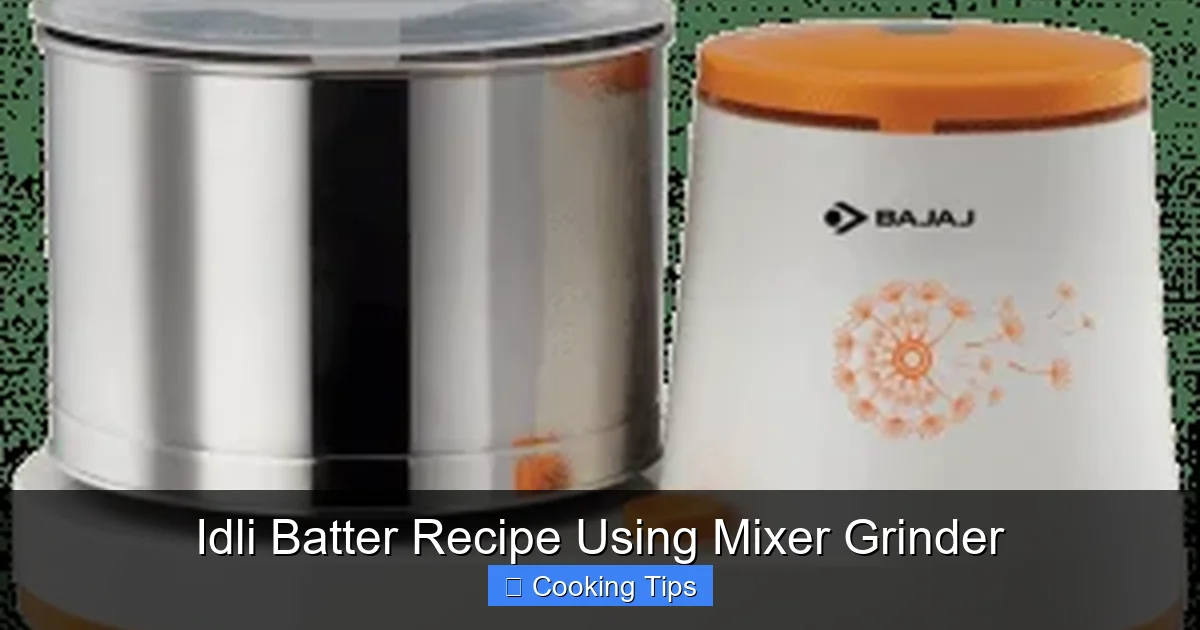
Master the art of making soft, fluffy idli batter with your trusty mixer grinder! This comprehensive guide walks you through each step, from selecting the right ingredients to achieving the perfect fermentation. With our detailed instructions and helpful tips, you’ll be enjoying delicious homemade idlis in no time. Say goodbye to store-bought batters and hello to authentic, delightful idlis made with ease.
# Idli Batter Recipe Using Mixer Grinder
Making idlis at home can feel like a culinary challenge, especially when it comes to achieving that perfect, soft, and fluffy texture. The secret to delicious idlis often lies in the batter. While many opt for store-bought options, nothing beats the taste and satisfaction of homemade idli batter. And guess what? Your trusty mixer grinder is more than capable of helping you achieve this!
This comprehensive guide will walk you through the entire process of creating perfect idli batter using your mixer grinder. We’ll cover everything from selecting the right ingredients to the final fermentation, ensuring you get consistently delicious results every time. Get ready to impress yourself and your family with authentic, restaurant-quality idlis made right in your own kitchen.
## Understanding the Ingredients
Before we dive into the grinding process, let’s talk about the stars of our idli batter show: rice and lentils. The quality and type of these ingredients significantly impact the final outcome.
### Rice Selection
* **Idli Rice:** This is a parboiled or partially polished rice variety that’s ideal for idlis. It absorbs water well and gives the batter the right texture. If you can’t find specific idli rice, a short-grain, starchy rice like Sona Masoori can be a good substitute.
* **Ratio:** The most common and effective ratio of rice to urad dal is 3:1 or 4:1. A 3:1 ratio yields slightly softer idlis, while a 4:1 ratio results in lighter, airier idlis. Experiment to find your preference!
### Lentil Selection
* **Urad Dal (Black Gram Lentils):** Whole urad dal is preferred for idlis. It has a high starch content, which contributes to the batter’s fluffiness and binding properties.
* **Fenugreek Seeds (Methi Dana):** A small amount of fenugreek seeds (about 1 teaspoon per cup of urad dal) is a secret ingredient for many. It aids in fermentation, adds a subtle flavor, and contributes to a golden hue.
## Step-by-Step Guide to Making Idli Batter
Now, let’s get our hands dirty (or rather, our mixer grinder blades!).
### Step 1: Washing and Soaking
This is a critical first step that sets the stage for successful grinding and fermentation.
#### Washing the Grains
* **Rice:** Rinse the idli rice thoroughly under running water until the water runs clear. This removes any impurities or starch.
* **Urad Dal and Fenugreek Seeds:** Rinse the urad dal and fenugreek seeds together until the water is clear.
#### Soaking Time
* **Rice:** Soak the washed idli rice in plenty of water for at least 4-6 hours, or preferably overnight. Ensure there’s enough water to cover the rice by at least an inch, as it will absorb a lot.
* **Urad Dal and Fenugreek Seeds:** Soak the urad dal and fenugreek seeds in separate water for the same duration, 4-6 hours or overnight. Urad dal needs ample water for soaking.
**Pro Tip:** Soaking softens the grains and lentils, making them easier to grind into a smooth paste and promoting better fermentation.
### Step 2: Grinding the Ingredients
This is where your mixer grinder shines. Using the right jar and technique is paramount.
#### Grinding the Urad Dal and Fenugreek Seeds
* **Drain and Grind:** Drain the soaked urad dal and fenugreek seeds completely.
* **Add Water Gradually:** Transfer the urad dal and fenugreek mixture to the wet grinding jar of your mixer grinder. Add just enough cold water, a tablespoon at a time, to help the blades catch and grind.
* **Achieve a Creamy Paste:** Grind the urad dal until it becomes incredibly smooth, light, and fluffy. This might take 10-15 minutes, depending on your grinder’s power. The batter should be airy and have a fluffy texture, similar to whipped cream. You should be able to see tiny air bubbles.
* **Check Consistency:** The batter should be soft and smooth, not coarse or watery. If it’s too thick, add a splash more water. If it’s too thin, you might need to grind a little longer or add a tablespoon of soaked rice (though this is not ideal).
**Important Note:** Avoid overfilling the grinder jar. Grind in batches if necessary. Overheating the grinder can affect the batter quality.
#### Grinding the Rice
* **Drain the Rice:** Drain the soaked idli rice, reserving the soaking water.
* **Grind to a Coarse Paste:** Transfer the drained rice to the grinder jar. Add minimal water, just enough to get it moving. Grind the rice until it’s a coarse, rava-like consistency. It shouldn’t be a completely smooth paste like the urad dal. Some tiny grains should be visible.
* **Batch Grinding:** If you have a lot of rice, grind it in batches to prevent the mixer from overheating.
### Step 3: Mixing the Batter
Once both components are ground, it’s time to bring them together.
* **Combine:** In a large, clean bowl (preferably non-metallic, like glass or stainless steel), combine the ground urad dal paste and the ground rice.
* **Mix Well:** Using a clean spatula or your hands (this is traditional and believed to help fermentation!), mix the two batters thoroughly. The goal is to incorporate air and ensure everything is evenly combined. Mix in a circular motion for several minutes.
* **Adjust Consistency:** The final batter consistency should be like thick pancake batter – pourable but not runny. If it feels too thick, add a tablespoon or two of the reserved soaking water or fresh water. If it’s too thin, you can try mixing in a tablespoon of semolina (rava) and letting it sit for 30 minutes, but this is a last resort.
### Step 4: Fermentation
This is perhaps the most crucial step for achieving flavorful and fluffy idlis.
* **Cover and Rest:** Cover the bowl with a lid or a clean kitchen towel. Ensure it’s not airtight, as the batter needs to breathe.
* **Warm Place:** Place the bowl in a warm, dark place to ferment. Ideal fermentation temperatures are between 80-90°F (27-32°C). This could be inside a slightly warm oven (turned off!), on top of your refrigerator, or near a sunny window.
* **Fermentation Time:** Fermentation typically takes 8-12 hours, depending on the ambient temperature. In colder climates, it might take longer (up to 18 hours). In very hot climates, it might be faster.
* **What to Look For:** The batter will rise and double in volume. It will also develop a slightly sour aroma and a bubbly texture. You’ll see tiny air pockets on the surface.
**Troubleshooting Fermentation:**
* **Not fermenting:** If your batter isn’t fermenting, check the temperature. If it’s too cold, find a warmer spot. You can also add a teaspoon of active yeast or a small piece of starter from a previous successful batch to help kickstart fermentation.
* **Over-fermented:** If the batter smells too sour or has a very alcoholic aroma, it’s over-fermented. You can still use it, but the idlis might be too tangy. Mix in a tablespoon of fresh rice flour or semolina to mellow it down.
### Step 5: Preparing for Steaming
Once fermented, the batter is ready to be transformed into idlis.
* **Gentle Stir:** After fermentation, the batter will have risen considerably. Gently stir the batter to deflate it slightly and ensure an even consistency. Don’t overmix, as you want to retain some of the air.
* **Add Salt:** Add salt to taste. Mix it gently.
* **Check Consistency (Again):** The batter should still be pourable but not watery. If it has become too thick after fermentation, add a tablespoon of water.
## Tips for Perfect Idli Batter
Here are some extra tips to elevate your idli batter game:
* **Use Cold Water:** For grinding, always use cold water. This helps prevent the mixer blades and the batter from overheating, which can affect fermentation and texture.
* **Don’t Overload the Grinder:** Grinding in smaller batches is better for your mixer and for achieving a smooth batter. Overloading can lead to uneven grinding and motor strain.
* **Cleanliness is Key:** Ensure all your utensils, especially the grinding jar and the mixing bowl, are clean and dry. Any oil or residue can hinder fermentation.
* **Non-Metallic Bowl for Fermentation:** While not strictly necessary, fermenting in a glass or stainless steel bowl is often recommended as metal bowls can sometimes react with the fermented batter.
* **Consistency is King:** Aim for the right batter consistency – thick enough to hold its shape but pourable. This is crucial for fluffy idlis.
* **The Power of Your Grinder:** Mixer grinders vary in power. You might need to adjust grinding times based on your appliance.
* **Experiment with Ratios:** Once you’ve mastered the basics, play around with the rice-to-dal ratio to find your perfect idli texture.
## Troubleshooting Common Idli Batter Problems
Even with the best intentions, you might encounter a few hitches. Here’s how to fix them:
* **Batter is too thick:** Add a tablespoon of water at a time and mix gently until you reach the desired pouring consistency.
* **Batter is too thin/runny:**
* If you just ground it, try adding a tablespoon of soaked rice and grinding again (this is tricky).
* If fermented, stir in 1-2 tablespoons of fine semolina (rava) or rice flour and let it rest for 30 minutes. This will absorb excess moisture.
* Alternatively, you can proceed with steaming, but the idlis might be flatter.
* **Idlis are dense and hard:** This usually indicates issues with fermentation, grinding, or proportions.
* **Grinding:** Was the urad dal ground to a fluffy, airy consistency? If not, it won’t leaven properly.
* **Fermentation:** Did the batter ferment sufficiently? If not, try a warmer spot or longer fermentation time.
* **Ratio:** Ensure your rice-to-dal ratio is correct.
* **Mixing:** Was the batter mixed well after grinding?
* **Idlis are sticky:** This can sometimes happen if the batter is too thin or under-fermented. Ensure the correct consistency and proper fermentation.
* **Batter smells too sour/alcoholic:** This means the batter has over-fermented. Stir in a tablespoon of rice flour or semolina. The idlis will be tangier but still edible.
## Storing Idli Batter
If you have leftover batter, you can store it in the refrigerator.
* **Refrigerate:** Transfer the fermented batter to an airtight container and store it in the refrigerator.
* **Shelf Life:** Idli batter stays good in the refrigerator for 2-3 days.
* **Reviving:** When you take it out for use, the batter might have lost some of its fluffiness. Give it a gentle stir. If it seems too thick, add a tablespoon of water. The fermentation will continue slowly in the fridge, so the taste might become tangier over time.
## Conclusion
Making idli batter using a mixer grinder is a rewarding process that yields delicious, authentic results. By following these steps carefully, paying attention to ingredient quality, grinding techniques, and fermentation, you can consistently create the perfect batter for soft, fluffy idlis. Don’t be discouraged if your first attempt isn’t perfect; like any culinary art, it takes a little practice. Soon, you’ll be a pro at whipping up idli batter, and your homemade idlis will become a staple in your kitchen. Enjoy the delightful journey of creating this South Indian breakfast classic!
- The perfect rice-to-lentil ratio is crucial for light and fluffy idlis. Aim for a 3:1 or 4:1 ratio of idli rice to urad dal.
- Soaking is essential to soften the grains and lentils, aiding in smooth grinding and better fermentation.
- Grinding in stages ensures the batter reaches the ideal fluffy and airy consistency, avoiding a dense texture.
- Proper fermentation is key to developing the characteristic sourness and lightness of idli batter.
- Using the right grinder jar (wet grinding jar) and technique prevents overheating and ensures a smooth batter.
- Troubleshooting common issues like a runny or dense batter can be addressed with simple adjustments and techniques.
