


The definitive answer to whether a coffee scoop equals one tablespoon is often no. While many assume this, the reality is that coffee scoop sizes vary significantly, and they are designed for volume of coffee grounds, not precise tablespoon measurements. This guide will demystify coffee scoop sizes, explain why they differ from standard measuring spoons, and provide essential tips for achieving the perfect coffee-to-water ratio every time.
Ah, coffee. That glorious morning elixir, the afternoon pick-me-up, the ritual that starts our day. For many of us, the process of making that perfect cup is as important as the drinking itself. And a crucial part of that process is measuring our coffee beans or grounds. Often, the tool we reach for is the trusty coffee scoop that came with our beans or a generic one we picked up somewhere. But a burning question lingers in many coffee lovers’ minds: is a coffee scoop 1 tablespoon?
It’s a simple question, but the answer is, unfortunately, not so straightforward. In this guide, we’re going to dive deep into the world of coffee scoops and measuring spoons. We’ll break down why this question is so common, explore the realities of coffee scoop sizes, and equip you with the knowledge to ensure you’re measuring your coffee grounds accurately for the best possible brew, every single time. Get ready to become a coffee measurement master!
Key Takeaways
- Coffee scoops are not standardized and can vary greatly in size. Unlike measuring spoons, there’s no universal “one size fits all” for coffee scoops.
- A standard U.S. tablespoon measures approximately 15 milliliters or 3 teaspoons. This is a consistent measurement across kitchen tools.
- The intended purpose dictates the measurement: coffee scoops are for volume of grounds, while tablespoons are for precise ingredient measurements.
- Using a kitchen scale is the most accurate way to measure coffee. This removes guesswork and ensures consistency in your brew.
- If you must use a scoop, identify its volume. Look for markings on the scoop or measure its capacity with water or flour.
- Experimentation is key to finding your ideal coffee strength. Once you understand scoop sizes, adjust to your personal taste.
Understanding the Standard: What is a Tablespoon?
Before we can determine if a coffee scoop is a tablespoon, we first need to understand what a tablespoon *is*. In the world of cooking and baking, precision is key, and standardized measurements are our best friends. A standard U.S. tablespoon is a well-defined unit of volume.
The Official Measurement
A U.S. tablespoon is officially defined as:
- 15 milliliters (ml)
- 3 teaspoons (tsp)
- Approximately 0.5 fluid ounces (fl oz)
You’ll find these measurements consistently on any set of reliable measuring spoons. They are designed to be precise, ensuring that when a recipe calls for “1 tablespoon of sugar,” you’re adding the exact amount needed. This consistency is vital for successful baking and cooking.
Why This Matters for Coffee
When you’re making coffee, the ratio of coffee grounds to water is paramount. This ratio directly impacts the strength, flavor, and overall quality of your brew. If your measurement tool isn’t consistent, your coffee won’t be consistent either. Imagine trying to follow a recipe that said “add a scoop of flour” – the results would be wildly different depending on the scoop’s size!
The Murky World of Coffee Scoops
Now, let’s turn our attention to the coffee scoop. This is where things get a little less defined. Unlike the standardized measuring spoons in your kitchen drawer, coffee scoops are often not held to the same strict measurement standards. They are more like “scoops” in their most literal sense – tools designed to scoop coffee, with less emphasis on exact volumetric measurement.

Visual guide about Is a Coffee Scoop 1 Tablespoon
Image source: cdn11.bigcommerce.com
Variability is the Norm
The primary reason why a coffee scoop is often *not* 1 tablespoon is the sheer variability in their design and intended use. Here’s why:
- Promotional Items: Many coffee scoops are given away as promotional items by coffee brands. These are often designed to be a convenient size for a standard serving of coffee as envisioned by the brand, rather than a precise measurement.
- Bag-Specific Scoops: Some coffee bags come with their own scoop. The size of this scoop is usually tailored to the brand’s recommended brewing ratio for that specific coffee. What one brand considers a “scoop” for their medium roast might be different for another brand’s dark roast.
- General-Purpose Scoops: You can buy general-purpose coffee scoops in various sizes. These might be labeled by their capacity (e.g., “2-cup scoop,” “tablespoon scoop”), but even these can have slight variations.
- “Standard” Coffee Scoop Size: If there’s any semblance of a “standard” coffee scoop, it often hovers around 2 tablespoons in volume. This is because many people aim for a 1:17 or 1:18 coffee-to-water ratio, and a scoop that approximates 2 tablespoons of grounds allows for easier calculation with typical mug sizes.
The Danger of Assumption
The danger lies in assuming that because it’s a “coffee scoop,” it must be the correct size for your brewing needs, or that it equates to a standard measurement like a tablespoon. This assumption can lead to:
- Inconsistent Brews: One day your coffee might be too strong, the next too weak, all because the amount of coffee grounds you’re using varies.
- Wasted Coffee: Over-extracting due to too many grounds can result in bitter, unpleasant coffee.
- Underwhelming Flavor: Using too few grounds leads to weak, watery coffee that doesn’t deliver the full flavor potential of the beans.
How to Tell if Your Coffee Scoop is a Tablespoon (or Close!)
So, how do you get to the bottom of this coffee measurement mystery? You need to do a little detective work. Luckily, it’s not overly complicated.
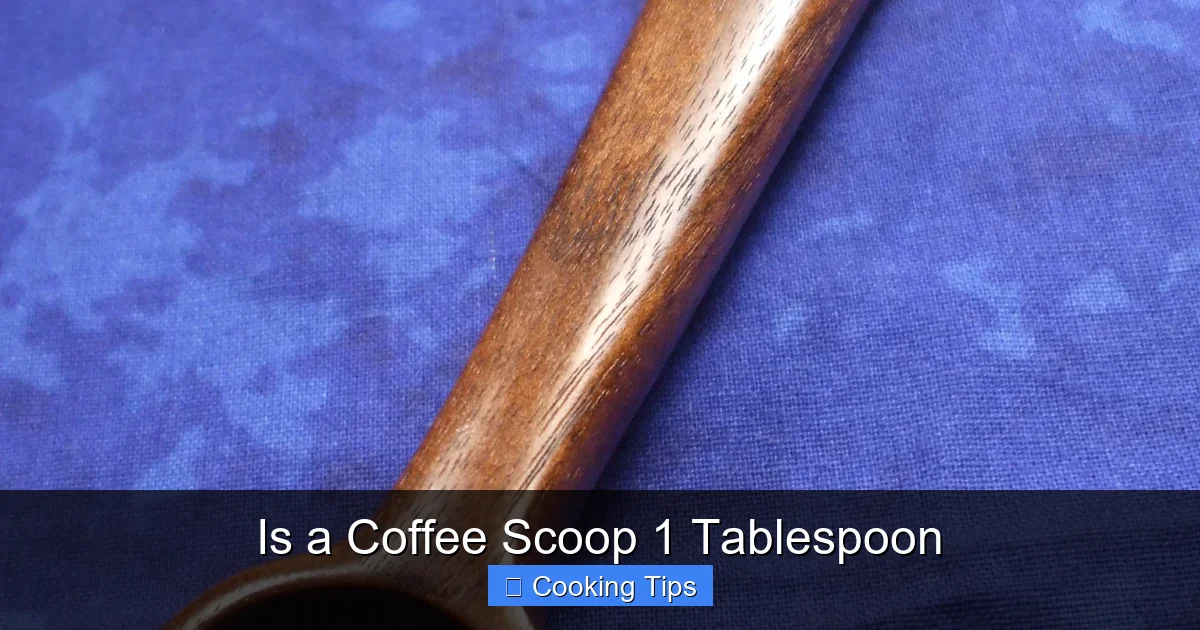
Visual guide about Is a Coffee Scoop 1 Tablespoon
Image source: i.etsystatic.com
Method 1: Check for Markings
This is the easiest and quickest method, though not always available.
Step 1: Inspect the Scoop
Carefully examine your coffee scoop. Look for any etched or printed markings on the scoop itself or its handle. You might find numbers, abbreviations (like “tbsp” or “tsp”), or even ml measurements.
Step 2: Interpret the Markings
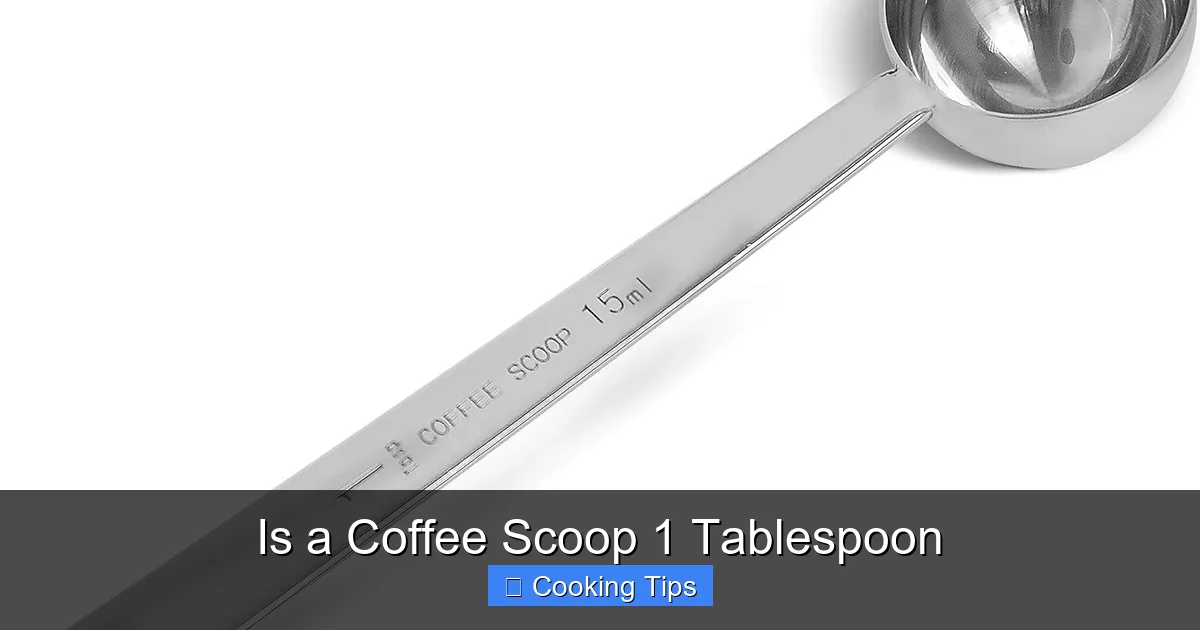
If you see “1 tbsp” or “15 ml,” congratulations! Your scoop is likely a U.S. tablespoon. If you see “2 tbsp” or “30 ml,” it’s twice the size of a tablespoon. If there are no markings, proceed to the next method.
Method 2: The Water Test (or Flour Test)
This method involves actually measuring the volume of your coffee scoop. It’s reliable and works even if there are no markings.
Step 1: Gather Your Tools
You will need:
- Your coffee scoop
- A standard U.S. measuring spoon set (specifically a 1-tablespoon measure)
- A liquid measuring cup (with ml markings is ideal) OR a small bowl and water. If using dry ingredients, you can use flour or sugar and a flat edge for leveling.
Step 2: Measure Water/Flour
If using water: Fill a liquid measuring cup to the 15 ml line. If you don’t have ml markings, carefully fill a small bowl with water. Then, using your standard 1-tablespoon measuring spoon, carefully transfer water from the bowl into the tablespoon until it is completely full. This is your reference for 1 tablespoon of volume. Then, carefully pour this water into your coffee scoop.
If using flour/sugar: Use your standard 1-tablespoon measure to scoop flour. Level it off with a straight edge (like a knife). Then, empty this into your coffee scoop. Repeat this process, counting how many level tablespoons of flour fit into your coffee scoop.
Step 3: Compare and Calculate
Observe how much water or flour fills your coffee scoop.
- If the water or flour perfectly fills your coffee scoop to the brim and matches the volume of your 1-tablespoon measure, then your coffee scoop is indeed 1 tablespoon.
- If it takes roughly two scoops of your tablespoon measure to fill the coffee scoop, then your coffee scoop is approximately 2 tablespoons.
- If it takes approximately three scoops of your tablespoon measure, then your coffee scoop is approximately 3 tablespoons (or 1 fluid ounce).
This test will give you a very good idea of your coffee scoop’s true volume.
The Gold Standard: Measuring Coffee by Weight
While the water or flour test can help you understand your coffee scoop’s volume, the most accurate and consistent way to measure coffee is by weight. Coffee grounds, especially, can be affected by density, roast level, and grind size, which can impact their volume. A kitchen scale eliminates all these variables.
Visual guide about Is a Coffee Scoop 1 Tablespoon
Image source: images-na.ssl-images-amazon.com
Why Weight is Superior
- Consistency: A gram is a gram, regardless of the coffee’s roast or grind.
- Accuracy: It removes the guesswork associated with volume measurements.
- Reproducibility: You can reliably recreate your perfect cup every single time.
How to Measure Coffee by Weight
Step 1: Get a Digital Kitchen Scale
Purchase a simple digital kitchen scale. Many are affordable and have a “tare” function, which is essential for accurate weighing.
Step 2: Place Your Brewing Vessel on the Scale
Put your coffee filter, French press, or mug directly onto the scale. Press the “tare” button to zero out the weight of the vessel. This ensures you’re only weighing the coffee grounds.
Step 3: Add Coffee Grounds
Add your desired amount of coffee grounds directly into the vessel on the scale. Aim for a common starting ratio, such as 1:17 (1 gram of coffee for every 17 grams of water) or 1:18. For example, if you want to make a 340-gram cup of coffee (about 12 ounces), you would use 20 grams of coffee (340 / 17 = 20).
Step 4: Adjust to Your Taste
This ratio is a starting point. If your coffee is too strong, use slightly less coffee or more water. If it’s too weak, use slightly more coffee or less water. Keep a small notebook to record your preferred ratios.
Tips for Perfect Coffee Measurement (Scoop or Scale!)
Whether you’re sticking with a scoop or embracing a scale, here are some tips to elevate your coffee game:
Level Your Scoop
When using a scoop, always level it off. Don’t pack the coffee grounds in, and don’t leave a mound. A gentle sweep with a straight edge (like the back of a knife) will ensure a more consistent volume.
Grind Consistency Matters
The grind size of your coffee beans can affect how much volume they take up. A coarser grind will be fluffier and take up more space than a fine grind. If you change your grind size, your scoop measurement might need adjustment (though weight measurements avoid this problem).
Know Your Bean
Different coffee beans have different densities, especially between light and dark roasts. Darker roasts are often more porous and less dense than lighter roasts. This means a scoop of dark roast might weigh less than a scoop of light roast, even if the volume appears similar. This is another reason why weighing is superior.
Start with Recommendations
If your coffee bag has brewing instructions or recommended ratios, start there! They are usually a good guide from the roaster themselves. Then, adjust to your personal preference.
Consistency is Key
Whatever method you choose, the most important thing is to be consistent. Once you find a method and a ratio that produces coffee you love, stick with it.
Troubleshooting Common Coffee Measurement Issues
Even with the best intentions, you might run into some snags. Here’s how to fix them:
Issue: My coffee is consistently too weak.
Possible Cause: You’re using too few coffee grounds. If using a scoop, it might be smaller than you think, or you’re not filling it properly. If using weight, your coffee-to-water ratio is too high (e.g., 1:20 instead of 1:17).
Solution: Increase the amount of coffee grounds. If using a scoop, try to determine its actual volume and adjust accordingly. If using weight, reduce the water amount or increase the coffee amount slightly.
Issue: My coffee is consistently too bitter or strong.
Possible Cause: You’re using too many coffee grounds. If using a scoop, it might be larger than you think, or you’re overfilling it. If using weight, your coffee-to-water ratio is too low (e.g., 1:15 instead of 1:17).
Solution: Decrease the amount of coffee grounds. If using a scoop, check its volume and adjust. If using weight, increase the water amount or decrease the coffee amount slightly.
Issue: My coffee tastes different each day, even when using the same scoop.
Possible Cause: Scoops are not precise. Differences in how you fill the scoop, the density of the coffee beans (especially between roasts), or slight variations in your grind size can all contribute to inconsistent results.
Solution: Switch to measuring by weight. This is the most effective way to ensure consistency.
Conclusion: The Truth About the Coffee Scoop
So, to finally answer the burning question: is a coffee scoop 1 tablespoon? The answer, in most cases, is no. While some scoops might coincidentally be close to 1 tablespoon, their sizes are not standardized. Relying on an unmarked coffee scoop as a definitive tablespoon measure is a recipe for inconsistent coffee.
The journey to a perfect cup of coffee is a delightful one, filled with aroma, flavor, and personal preference. Understanding your tools is a crucial step in that journey. By knowing the standard of a tablespoon, by investigating the true volume of your coffee scoop (or better yet, by embracing the unparalleled accuracy of a kitchen scale), you empower yourself to brew coffee that consistently delights your palate.
Don’t let the mystery of the coffee scoop dictate your morning ritual. Take a few moments to test your scoop, or invest in a small digital scale. Your taste buds will thank you for it, and you’ll unlock the full potential of your favorite coffee beans. Happy brewing!
