
The Nutribullet is a powerful blender, excelling at breaking down ingredients for smoothies and nutrient extraction. While it can perform *some* food processing tasks like chopping and pureeing, it’s not a direct replacement for a dedicated food processor. Understand the key differences and when to use each appliance to maximize your kitchen efficiency.
Is the Nutribullet a Food Processor?
Welcome to our comprehensive guide! You’re probably holding a Nutribullet, or perhaps you’re considering buying one. You might be wondering, “Is this amazing little appliance actually a food processor?” It’s a common question, and the answer isn’t a simple yes or no. While your Nutribullet can do some impressive things in the kitchen, it has a specific purpose that sets it apart from a traditional food processor.
In this guide, we’ll break down exactly what a Nutribullet is, what it excels at, and where its limitations lie. We’ll compare its capabilities directly to those of a food processor. By the end, you’ll have a clear understanding of how to best utilize your Nutribullet and when you might still need that trusty food processor for other culinary tasks.
Key Takeaways
- Nutribullets are primarily high-powered blenders designed for liquefying and extracting nutrients, not for versatile food processing.
- Key difference lies in blade design and motor function: Nutribullet blades spin at high speeds for pulverizing, while food processor blades are designed for chopping, slicing, and shredding with more control.
- Nutribullets are excellent for: smoothies, shakes, pureeing soups, making dips and sauces, and breaking down soft ingredients.
- Nutribullets are *not* ideal for: finely chopping vegetables, slicing, shredding cheese, kneading dough, or processing dry ingredients like nuts in large quantities.
- When a food processor is better: recipes requiring precise cuts, large batch processing of solid ingredients, or tasks involving dough.
- When a Nutribullet is sufficient: quick blending of liquid-heavy recipes, single-serving purees, and nutrient extraction.
Understanding the Nutribullet’s Core Function
At its heart, the Nutribullet is a powerful, compact blender. Its name itself, “NutriBullet,” hints at its primary mission: extracting nutrients. These devices are engineered to break down whole foods—fruits, vegetables, nuts, and seeds—into a smooth, digestible form. This is perfect for creating nutrient-dense smoothies and shakes where you want every last bit of goodness from your ingredients.
The magic happens with its cyclonic action and specially designed blades. The motor is incredibly strong for its size, generating high-speed rotations. This action creates a vortex, pulling ingredients down into the blades repeatedly, ensuring everything is thoroughly blended and pulverized. This is key for achieving that ultra-smooth texture that makes smoothies so appealing.
What Can a Nutribullet *Actually* Do?
Let’s look at the tasks your Nutribullet can handle with aplomb:
Visual guide about Is the Nutribullet a Food Processor
Image source: storables.com
Making Smoothies and Shakes
This is the Nutribullet’s bread and butter. It handles frozen fruits, leafy greens, ice, and liquids effortlessly, turning them into silky-smooth beverages in seconds. The powerful motor ensures no chunky bits of kale or unblended berries are left behind.
Pureeing Soups and Sauces
If you’re making a creamy tomato soup or a silky hollandaise sauce, the Nutribullet is a fantastic tool. It can take cooked vegetables and create a wonderfully smooth puree. For hot liquids, remember to follow the manufacturer’s safety guidelines, typically involving venting the lid slightly.
Creating Dips and Spreads
Hummus, pesto, bean dips, or even simple fruit dips can be made easily. The Nutribullet can blend ingredients like chickpeas, herbs, garlic, and tahini into a smooth, dippable consistency. It’s much quicker than a traditional blender for small batches.
Breaking Down Ingredients for Other Recipes
Need to finely chop garlic for a marinade or quickly puree some cooked sweet potatoes for baby food? The Nutribullet can do that. It’s great for pre-processing ingredients that need to be very finely broken down before being added to a larger dish.
Making Nut Butters (with caveats)
While you *can* make nut butter in a Nutribullet, it requires patience and often works best with smaller batches of pre-roasted nuts. You’ll need to stop and scrape down the sides multiple times to achieve a smooth consistency. It’s a good option if you don’t have a dedicated food processor or high-powered blender.
Understanding the Food Processor’s Core Function
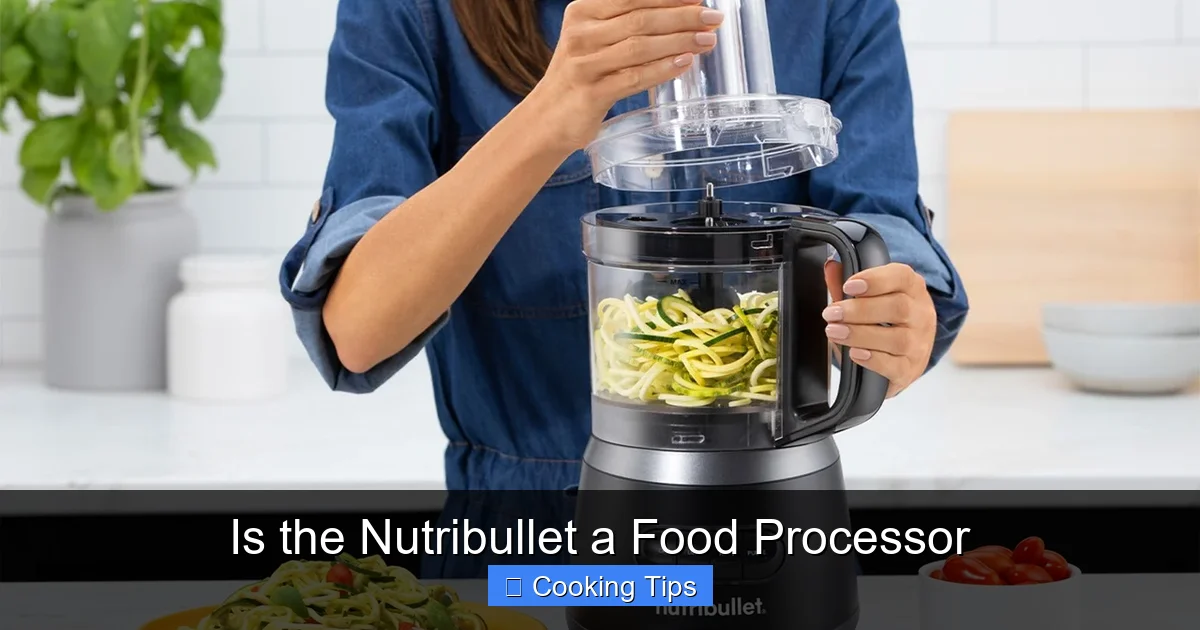
Now, let’s shift our focus to the food processor. A food processor is a kitchen workhorse designed for a wide range of food preparation tasks. Unlike a blender, which primarily liquefies, a food processor excels at chopping, slicing, shredding, grating, mixing, and even kneading dough.
Visual guide about Is the Nutribullet a Food Processor
Image source: i.ytimg.com
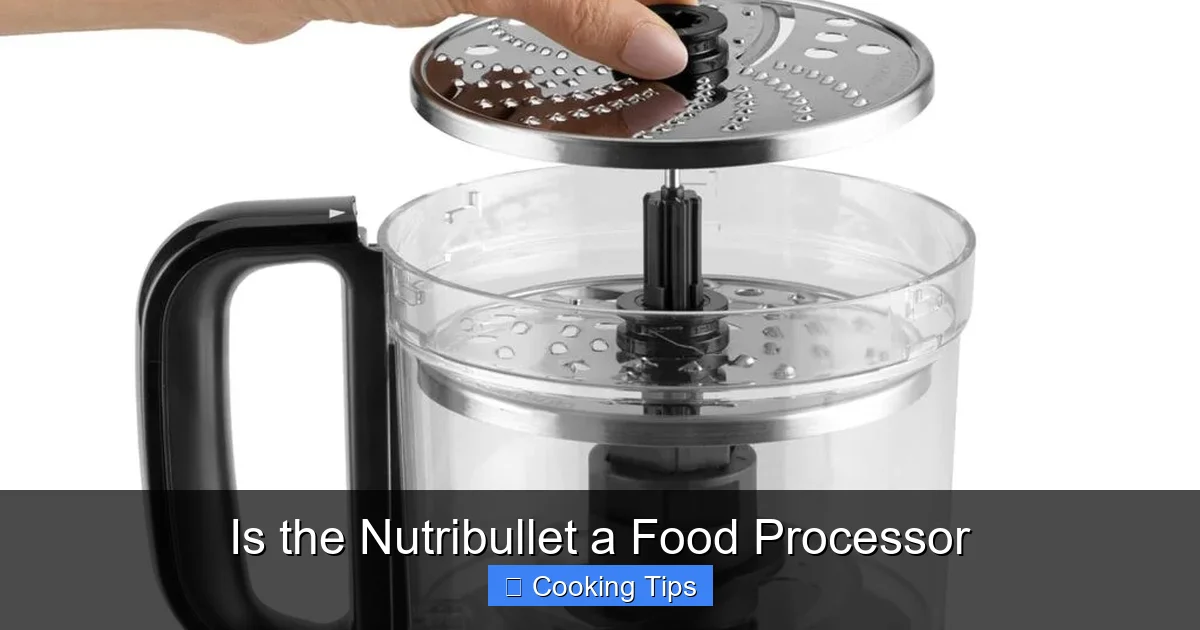
The key differentiating factor is the design of the blades and the bowl. Food processors come with various interchangeable blades and discs. These are engineered for specific actions. The standard S-blade is excellent for chopping and pureeing, but other attachments allow for precise slicing of cucumbers, shredding of cheese, or grating of carrots. The bowl is typically wider and shallower than a blender jar, allowing for more even processing of solid ingredients.
What Can a Food Processor *Actually* Do?
Here’s where the lines between the two appliances become clearer:
Visual guide about Is the Nutribullet a Food Processor
Image source: manua.ls
Chopping and Mincing
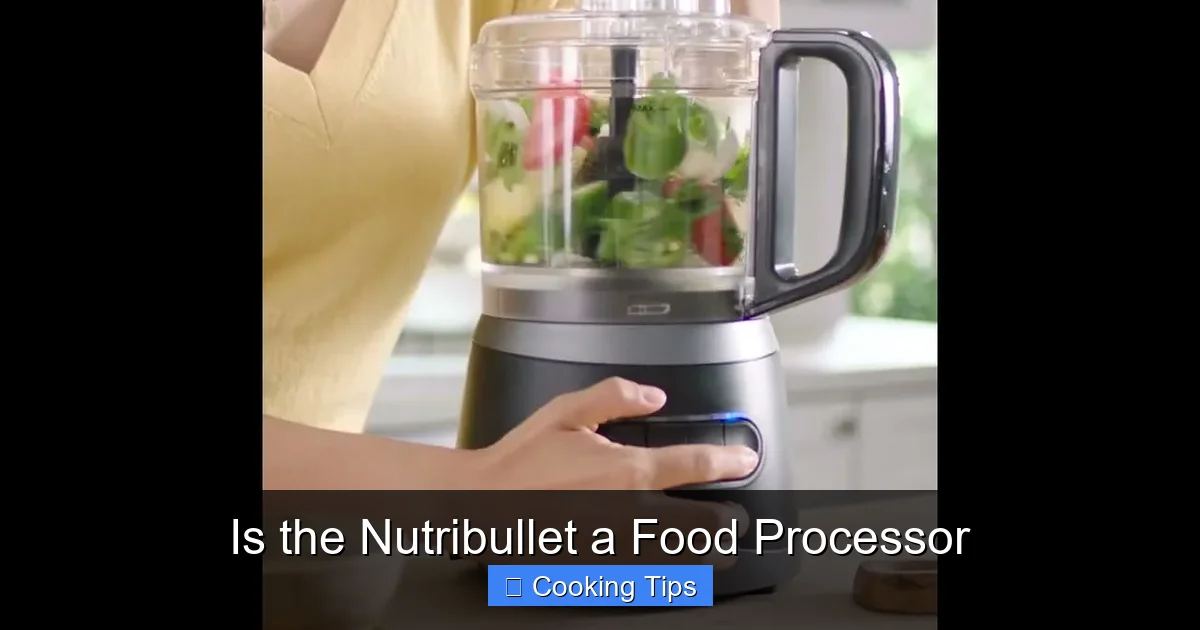
This is a food processor’s specialty. Whether you need finely minced onions for mirepoix, chopped nuts for a recipe, or coarsely chopped vegetables for a salsa, a food processor can do it precisely. You can control the texture by pulsing the machine, achieving consistent results that a Nutribullet would struggle with.
Slicing and Shredding
Most food processors come with slicing discs and shredding attachments. This allows you to quickly and uniformly slice potatoes for gratins, shred carrots for coleslaw, or slice vegetables for stir-fries. This level of precision and uniformity is impossible with a Nutribullet.
Kneading Dough
Larger, more powerful food processors are capable of kneading dough for bread or pizza. The wide bowl and robust motor can handle the development of gluten in flour, a task that would overwhelm and likely damage a Nutribullet.
Grating Cheese
Tired of pre-shredded cheese that’s coated in anti-caking agents? A food processor with a grating disc can shred a block of cheese in seconds, providing you with fresh, perfectly grated cheese for all your culinary needs.
Making Batters and Pastry Dough
From pie crusts to cookie dough, a food processor can quickly cut butter into flour, creating the perfect flaky texture. It also speeds up the process of combining wet and dry ingredients for cake batters or muffin mixes.
Pureeing Larger Batches
While a Nutribullet is great for small batches of puree, a food processor can handle larger quantities of cooked vegetables for soups or pureed fruits for jams and preserves.
Direct Comparison: Nutribullet vs. Food Processor
Let’s put them head-to-head on specific tasks:
Texture Control
Nutribullet: Primarily achieves a smooth, liquefied, or pureed texture. It’s difficult to achieve coarse chops or uniform slices.
Food Processor: Offers excellent texture control, from fine mince to coarse chop to uniform slices and shreds. Pulsing allows for precise results.
Ingredient Size
Nutribullet: Best for ingredients that can be easily liquefied. Large, hard chunks may not break down as effectively or evenly.
Food Processor: Handles larger solid ingredients well, cutting them down to your desired size.
Versatility
Nutribullet: Highly versatile for blending and nutrient extraction, excelling in liquid-based recipes.
Food Processor: Extremely versatile for a broad range of dry and solid food preparation tasks.
Capacity
Nutribullet: Typically designed for single servings or small batches due to its compact jar size.
Food Processor: Available in various sizes, from compact models for small tasks to large ones capable of handling family-sized meals.
Speed
Nutribullet: Very fast for liquefying and making smoothies.
Food Processor: Fast for chopping, slicing, and shredding, especially for larger quantities.
When to Use Your Nutribullet
You should reach for your Nutribullet when:
- You want to make a single-serving smoothie packed with fruits, vegetables, and protein powder.
- You’re making a quick, creamy soup or sauce from cooked ingredients.
- You need to quickly blend a small batch of dip or spread.
- You want to extract the maximum nutrients from whole foods.
- You’re looking for an easy-to-clean appliance for daily health drinks.
When to Use Your Food Processor
Your food processor is the tool of choice when:
- You need to finely chop onions, garlic, or herbs without a watery mess.
- You want to slice vegetables uniformly for salads or cooking.
- You need to shred cheese or carrots quickly.
- You’re making pastry dough, bread dough, or cookie dough.
- You’re preparing a large batch of salsa, pesto, or hummus.
- You need to grind nuts or seeds into a coarse meal or fine flour.
- You’re preparing ingredients for a meal that requires consistent cuts.
Can the Nutribullet *Replace* a Food Processor?
In short, generally, **no**. While your Nutribullet can perform some tasks that a food processor does, like basic chopping and pureeing, it cannot replicate the precision, versatility, or raw power for solid ingredient manipulation that a food processor offers.
If your culinary ambitions are limited to smoothies and occasional purees, a Nutribullet might suffice. However, if you enjoy cooking from scratch, baking, or preparing meals that involve a lot of chopping, slicing, or shredding, a dedicated food processor is an indispensable tool. Trying to force a Nutribullet to perform tasks it wasn’t designed for can lead to inconsistent results, strain on the motor, and potential damage to the appliance.
Troubleshooting Common Nutribullet “Food Processing” Issues
If you’re trying to use your Nutribullet for something it’s not quite cut out for, you might encounter these problems:
Problem: Uneven Chopping
Why it happens: The Nutribullet’s high-speed blades are designed to pulverize, not cut cleanly. Ingredients tend to get tossed around, leading to some pieces being finely minced while others remain chunky.
Solution: For tasks requiring even chopping, use a food processor. If you must use the Nutribullet, add a small amount of liquid to help the ingredients circulate more evenly, but this will result in a more pureed texture.
Problem: Over-Processing or Turning Ingredients to Mush
Why it happens: Because the blades spin so fast and there’s no direct control over cutting depth, it’s easy to go from chopped to pureed very quickly.
Solution: Use the pulse function sparingly on your Nutribullet (if available) and stop frequently to check the consistency. Again, a food processor with its controlled blade speeds and attachments is better for this.
Problem: Dry Ingredients Not Blending Well
Why it happens: The Nutribullet relies on a vortex created by liquids to draw ingredients into the blades. Dry ingredients, like flour or a large amount of nuts for butter, might just spin around without being effectively processed.
Solution: For nut butters, add a small amount of oil, and be prepared for long processing times with frequent scraping. For general dry ingredient processing like flour, a food processor or grain mill is necessary.
Conclusion: Know Your Appliances, Maximize Your Kitchen Power
So, to definitively answer the question: Is the Nutribullet a food processor? No, it is not. It’s a high-powered blender designed for nutrient extraction and creating smooth concoctions. It can perform some basic food prep functions that overlap with a food processor, such as pureeing and some degree of chopping.
However, for tasks requiring precise cutting, slicing, shredding, or dough manipulation, a dedicated food processor is the superior tool. Understanding the strengths and weaknesses of each appliance allows you to use them effectively, saving you time, effort, and ensuring delicious results in your kitchen.
Think of it this way: your Nutribullet is your go-to for health drinks and smooth purees. Your food processor is your sous chef for preparing ingredients for meals, baking, and a multitude of other culinary adventures. By appreciating their distinct roles, you can build a more efficient and capable kitchen.
