


Choosing between a Keurig and a regular coffee maker depends on your lifestyle and coffee preferences. Keurigs offer speed and single-serve convenience, ideal for busy mornings or varied tastes. Regular coffee makers are generally more economical and produce larger batches, suited for households and those who enjoy a traditional brewing experience. This guide will help you decide which is best for your needs.
Welcome to the ultimate showdown in your kitchen: Keurig coffee maker versus a regular coffee maker! Are you staring at two very different machines and wondering which one will brew your perfect cup of morning joy? You’re not alone. This guide is designed to demystify the differences, weigh the pros and cons, and help you make an informed decision that suits your caffeine cravings and lifestyle.
We’ll dive deep into what makes each type of coffee maker tick. We’ll cover everything from the brewing process and taste profiles to cost, convenience, and environmental impact. By the end of this guide, you’ll have a clear understanding of whether a Keurig’s instant gratification or a regular coffee maker’s robust batch brewing is the right fit for your home. Let’s get brewing!
Key Takeaways
- Convenience and Speed: Keurig brewers are significantly faster for making a single cup of coffee, perfect for busy mornings.
- Variety of Options: Keurig machines offer a vast selection of K-Cup pods, allowing for diverse flavors and brands with minimal effort.
- Cost Per Cup: While the initial Keurig machine cost might be higher, the ongoing cost of K-Cups is typically more expensive per serving than ground coffee.
- Batch Brewing: Regular coffee makers excel at brewing larger quantities of coffee at once, making them ideal for families or gatherings.
- Environmental Impact: K-Cup pods generate more waste than traditional coffee filters, although reusable K-Cup options exist.
- Flavor Control: Regular coffee makers often allow for more control over the brewing process, such as coffee-to-water ratio and grind size, potentially leading to a more customizable flavor.
- Maintenance: Both types require regular cleaning, but Keurigs may have specific descaling needs, while regular makers might involve cleaning the carafe and brew basket.
Understanding the Basics: What’s the Difference?
At their core, both Keurig and regular coffee makers aim to achieve the same goal: transforming coffee grounds and water into delicious coffee. However, their methods and the results they deliver are quite distinct.
Keurig Coffee Makers: The Single-Serve Specialist
Keurig machines are famous for their single-serve brewing system. They use pre-packaged, sealed pods called K-Cups.
- How it works: You insert a K-Cup into the machine, add water to the reservoir, and press a button. The machine punctures the K-Cup, forces hot water through the coffee grounds inside, and dispenses a single cup of coffee directly into your mug.
- Key features: Speed, simplicity, and variety. They are designed for individuals or households where people prefer different types of coffee.
Regular Coffee Makers: The Traditional Brewer
This category encompasses a wide range of machines, from basic drip coffee makers to more advanced pour-over systems. For this comparison, we’ll focus on the most common type: the automatic drip coffee maker.
- How it works: You place a coffee filter (paper or reusable) into the brew basket, add your desired amount of ground coffee, fill the water reservoir, and turn the machine on. The machine heats the water and drips it over the grounds, collecting the brewed coffee in a carafe below.
- Key features: Batch brewing, more control over ingredients, and generally lower cost per cup.
The Brewing Process: Speed and Simplicity
When it comes to getting your coffee, speed and ease of use are major factors for many people.
Keurig: Instant Gratification
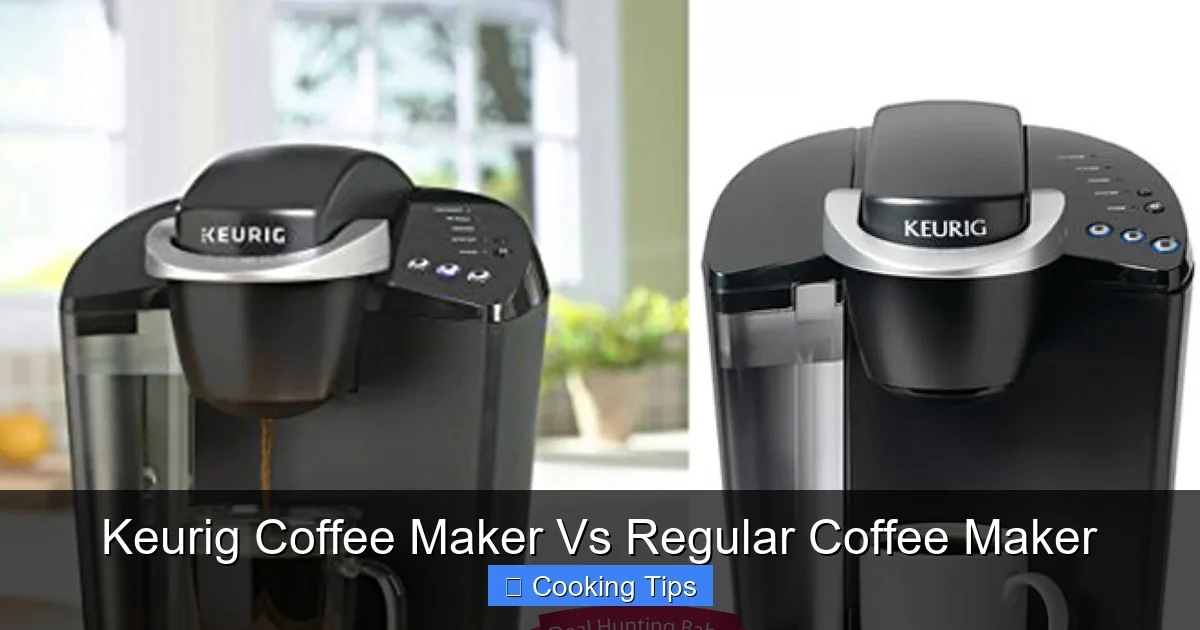
The biggest draw of a Keurig is its incredible speed. If you’re often rushing out the door or just need a quick caffeine fix, a Keurig is hard to beat.
Visual guide about Keurig Coffee Maker Vs Regular Coffee Maker
Image source: dealhuntingbabe.com
- Speed: Most Keurig machines can brew a single cup of coffee in under a minute.
- Simplicity: There’s virtually no learning curve. Insert a pod, press a button, and your coffee is ready. No measuring grounds, no fussing with filters.
This makes it a fantastic option for busy households with different coffee preferences. For example, one person might want a dark roast, while another prefers a decaf. With a Keurig, everyone can have their specific choice quickly. If you’re interested in specific models, checking out reviews like the Keurig K Mini vs Keurig K Express Essentials can highlight these differences in speed and features.
Regular Coffee Maker: A More Deliberate Brew
Regular drip coffee makers are not as fast for a single cup, but they offer a different kind of brewing experience.
- Brew Time: Brewing a full pot (e.g., 10-12 cups) typically takes between 5 to 10 minutes, depending on the machine.
- Effort: While it requires a few more steps – measuring grounds, adding a filter – it’s still a relatively simple process. Some prefer the ritual of grinding beans and preparing the coffee.
If you’re brewing for yourself, making a full pot can seem like overkill. However, for families or those who enjoy multiple cups throughout the morning, the efficiency of brewing a larger batch at once is a significant advantage. For those looking for large-batch options, the best 12-cup coffee maker with a thermal carafe can keep your coffee hot for hours.
Coffee Variety and Customization
Your coffee preferences are unique, and so should be your brewing method’s ability to cater to them.
Keurig: A World of K-Cups
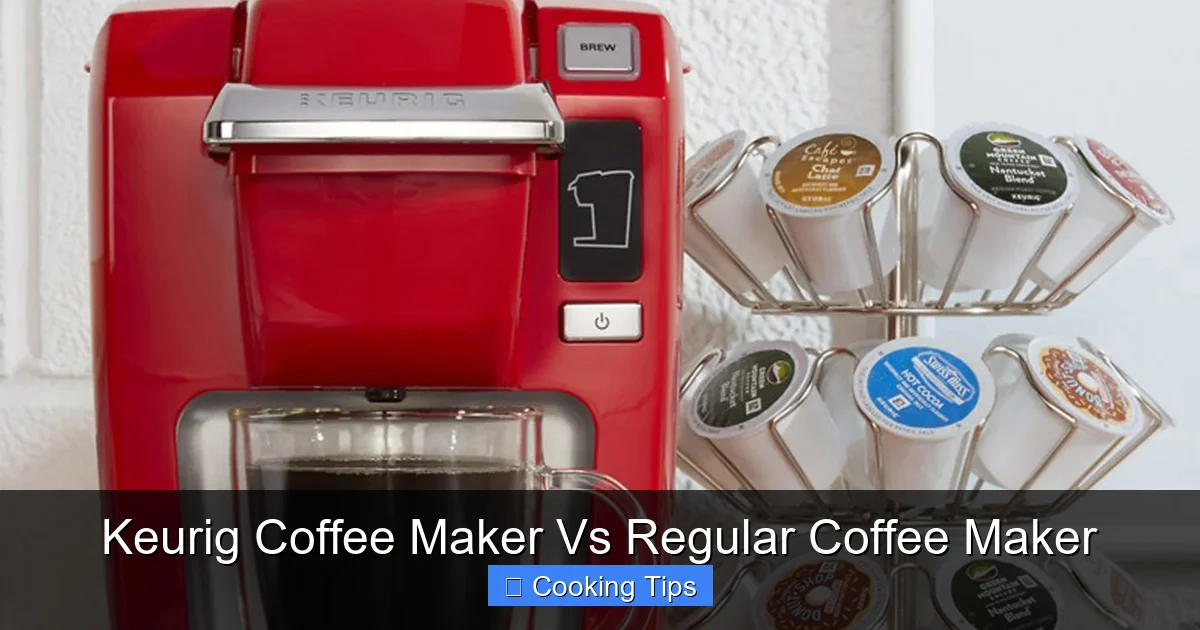
Keurig’s primary appeal lies in its vast selection of K-Cup pods. You can find almost any brand, flavor, and roast imaginable.
Visual guide about Keurig Coffee Maker Vs Regular Coffee Maker
Image source: dealhuntingbabe.com
- Flavor Options: From light roasts and dark roasts to flavored coffees, teas, hot chocolate, and even specialty beverages.
- Brand Loyalty: You can easily switch between Starbucks, Dunkin’, Green Mountain, and countless other brands without changing your machine.
- Customization: Some Keurig models offer brew-size options (e.g., 6oz, 8oz, 10oz) and strength control, allowing for some degree of personalization. Models like the Keurig K Supreme vs K Supreme Plus offer advanced customization features.
However, the flavor profile from a K-Cup is generally consistent and designed for a quick brew, which might not satisfy the connoisseur seeking nuanced notes. Some users find that K-Cups can sometimes produce a less rich or slightly more watery taste compared to freshly ground beans.
Regular Coffee Maker: Craft Your Perfect Cup
With a regular coffee maker, you have a lot more control over the final taste.
- Bean Selection: You can choose any whole bean or pre-ground coffee you like. This allows for exploration of single-origin beans, different roast profiles, and unique blends.
- Grind Size: The grind size significantly impacts flavor extraction. With a regular coffee maker, you can experiment with different grind sizes (fine, medium, coarse) to find what works best for your coffee and machine. If you’re wondering about grinding your own beans, you might ask yourself, Can You Use A Food Processor To Grind Coffee Beans? (The answer is generally no for optimal results, a dedicated grinder is best!).
- Coffee-to-Water Ratio: You can precisely control how much coffee grounds you use relative to the water, affecting the strength and body of the brew.
- Freshness: Grinding beans just before brewing is widely considered the best way to maximize freshness and flavor.
This level of control makes regular coffee makers appealing to coffee enthusiasts who enjoy the process of brewing and dialing in their perfect cup. For those who appreciate the finer details of coffee, exploring different brewing techniques and bean origins becomes part of the enjoyment. Some advanced models, like those found in comparisons of the Keurig K Cafe vs K Cafe Special Edition, offer features that aim to improve flavor, but they still operate within the K-Cup system.
Cost Analysis: Initial Investment vs. Ongoing Expenses
The financial aspect of owning a coffee maker is a crucial consideration for most budgets.
Keurig: Higher Upfront, Higher Per-Cup
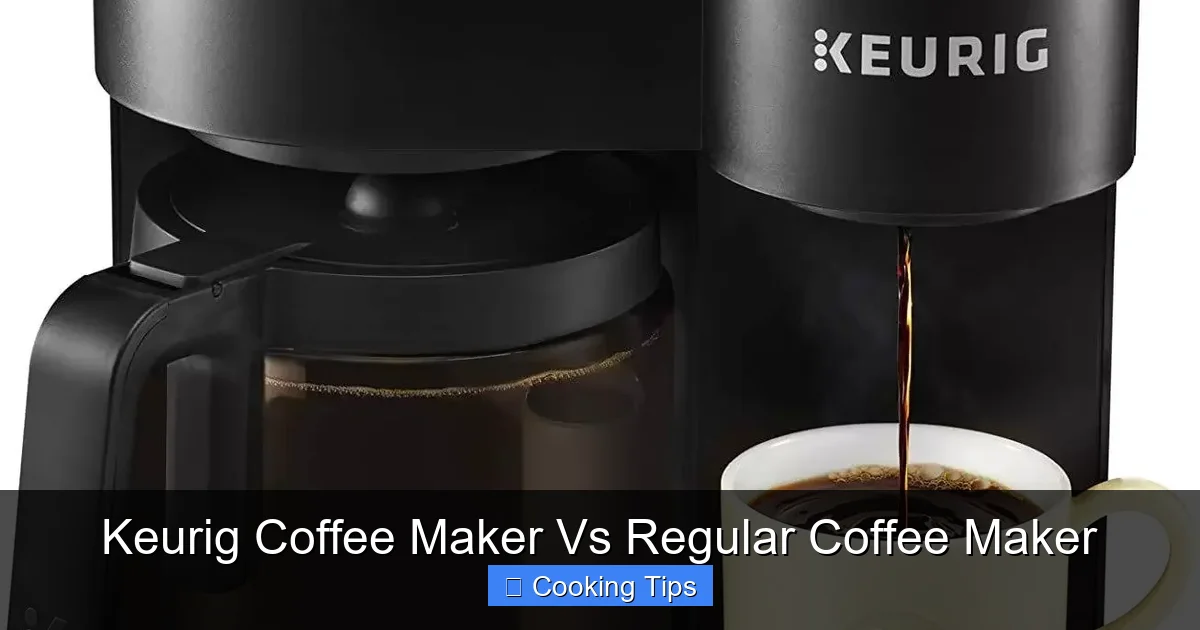
Keurig machines themselves can range in price from budget-friendly basic models to more expensive, feature-rich ones. However, the real ongoing cost comes with the K-Cups.
Visual guide about Keurig Coffee Maker Vs Regular Coffee Maker
Image source: espressocoffeebrewers.com
- Machine Cost: Entry-level Keurigs can be found for under $100, while higher-end models can cost $200 or more.
- K-Cup Cost: K-Cups are convenient, but they are significantly more expensive per serving than buying ground coffee. A box of 12 K-Cups might cost $8-$12, which breaks down to roughly $0.67 to $1.00 per cup.
- Reusable Pods: Keurig does offer reusable K-Cup filters that allow you to use your own ground coffee. This can significantly reduce the per-cup cost, making it more comparable to a regular coffee maker.
If you’re looking at specific Keurig models, comparing them can help you understand the price points and features, such as looking at Keurig K Slim vs Keurig K Express Essentials.
Regular Coffee Maker: Lower Upfront, Lower Per-Cup
The initial cost of a standard drip coffee maker is often lower, and the ongoing cost of coffee is much more economical.
- Machine Cost: A reliable drip coffee maker can be purchased for as little as $30-$50, with higher-end models reaching $100-$150.
- Ground Coffee Cost: Buying a pound of coffee grounds (which yields about 30-40 cups) typically costs between $7-$15, depending on the brand and quality. This breaks down to approximately $0.18 to $0.50 per cup.
- Filter Cost: Paper filters are inexpensive, and reusable filters eliminate this cost entirely.
When considering the long-term financial implications, the savings of using a regular coffee maker with ground coffee can be substantial, especially for households that drink multiple cups a day.
Environmental Impact: Waste and Sustainability
In today’s world, thinking about the environmental footprint of our appliances is becoming increasingly important.
Keurig: The K-Cup Conundrum
The most significant environmental concern with Keurig machines is the waste generated by K-Cup pods.
- Plastic Waste: Each K-Cup is a single-use plastic container, and while some are now recyclable, many still end up in landfills. The sheer volume of K-Cups produced globally is staggering.
- Packaging: The individual packaging for each pod also contributes to waste.
- Solutions: As mentioned, reusable K-Cup filters are a great way to mitigate this. You can use your own coffee grounds in them, reducing plastic waste and often saving money. Some manufacturers are also developing more compostable or fully recyclable K-Cup options.
Regular Coffee Maker: A Greener Footprint (Generally)
Regular coffee makers tend to have a smaller environmental impact, especially when used mindfully.
- Filters: If using paper filters, they are compostable. Reusable mesh filters or cloth filters eliminate this waste altogether.
- Bulk Purchasing: Buying coffee in bulk or in larger bags reduces individual packaging.
- Less Plastic: The primary plastic components are the machine itself and potentially a reusable filter, which have a much longer lifespan than single-use pods.
If you’re concerned about waste, a regular coffee maker with a reusable filter and bulk-purchased coffee is generally the more eco-friendly choice.
Maintenance and Cleaning
Keeping your coffee maker clean is essential for optimal performance and taste. Both Keurig and regular coffee makers have their own maintenance routines.
Keurig: Descaling and Pod Chamber Cleaning
Keurig machines require regular cleaning to prevent mineral buildup and ensure proper function.
- Descaling: Mineral deposits from water can build up over time, affecting brew temperature and speed. Keurig recommends descaling every 3-6 months, depending on water hardness. This involves running a descaling solution through the machine.
- Pod Chamber: The area where the K-Cup is inserted needs periodic cleaning to remove coffee grounds and residue.
- Water Reservoir: The water reservoir should be emptied and wiped down regularly to prevent mold or slime buildup.
If your Keurig stops working, knowing how to fix a coffee maker that will not turn on might be helpful, but regular maintenance is key to avoiding such issues.
Regular Coffee Maker: Carafe, Brew Basket, and Showerhead
The cleaning process for a regular drip coffee maker is fairly straightforward.
- Carafe and Brew Basket: These parts should ideally be washed after each use with soap and water to prevent coffee oils from becoming rancid and affecting the taste. Many are dishwasher-safe.
- Descaling: Similar to Keurigs, drip coffee makers can also accumulate mineral deposits. Descaling is recommended every 1-3 months, often by running a vinegar and water solution through the machine.
- Showerhead: The part of the machine that dispenses water over the coffee grounds (the showerhead) can sometimes get clogged with mineral deposits or coffee grounds. This may require occasional cleaning with a small brush.
Proper cleaning ensures that your coffee always tastes fresh and that your machine operates efficiently.
Troubleshooting Common Issues
Even the best coffee makers can sometimes have hiccups.
Keurig Troubleshooting
- Weak Coffee: Ensure you are using the correct brew size for your pod, and check that the water reservoir is full. The K-Cup might be old or damaged.
- Machine Not Brewing: Check if the power cord is plugged in and the machine is turned on. Make sure the water reservoir is properly seated. For more in-depth troubleshooting, consult the machine’s manual. If the machine won’t turn on at all, you might need to look into how to fix a coffee maker that will not turn on.
- Leaking: Ensure the water reservoir is not overfilled and that the drip tray is correctly positioned.
Regular Coffee Maker Troubleshooting
- Coffee Not Hot Enough: Check that the warming plate is functioning and has power. Ensure the carafe is fully seated on the plate.
- Slow Brewing: This can be a sign of mineral buildup. Descaling the machine usually resolves this issue.
- Overflowing Brew Basket: You may be using too finely ground coffee, or too much coffee grounds for the amount of water. Ensure the filter is properly seated and not folded.
Conclusion: Which Coffee Maker is Right for You?
The “better” coffee maker is entirely subjective and depends on your personal priorities.
Choose a Keurig If:
- You value speed and convenience above all else.
- You live in a household where people drink different types of coffee or have varied preferences.
- You enjoy trying a wide range of flavors and brands easily.
- You are okay with the higher per-cup cost of K-Cups or plan to use a reusable filter.
- You have limited counter space and appreciate a compact design for single servings.
If you’re considering a Keurig, exploring comparisons like the Keurig K Duo Essentials vs Single Serve Carafe can help you understand the different functionalities available.
Choose a Regular Coffee Maker If:
- You primarily brew coffee for multiple people or enjoy several cups yourself throughout the day.
- You prefer to have more control over your coffee’s flavor and brewing process.
- You are looking for a more economical option in the long run.
- You are mindful of environmental waste and want to minimize single-use plastics.
- You enjoy the ritual of preparing coffee with freshly ground beans.
Ultimately, both machines can deliver a satisfying cup of coffee. Consider your daily routine, your budget, your taste preferences, and your environmental concerns to make the choice that will best enhance your coffee experience.
