

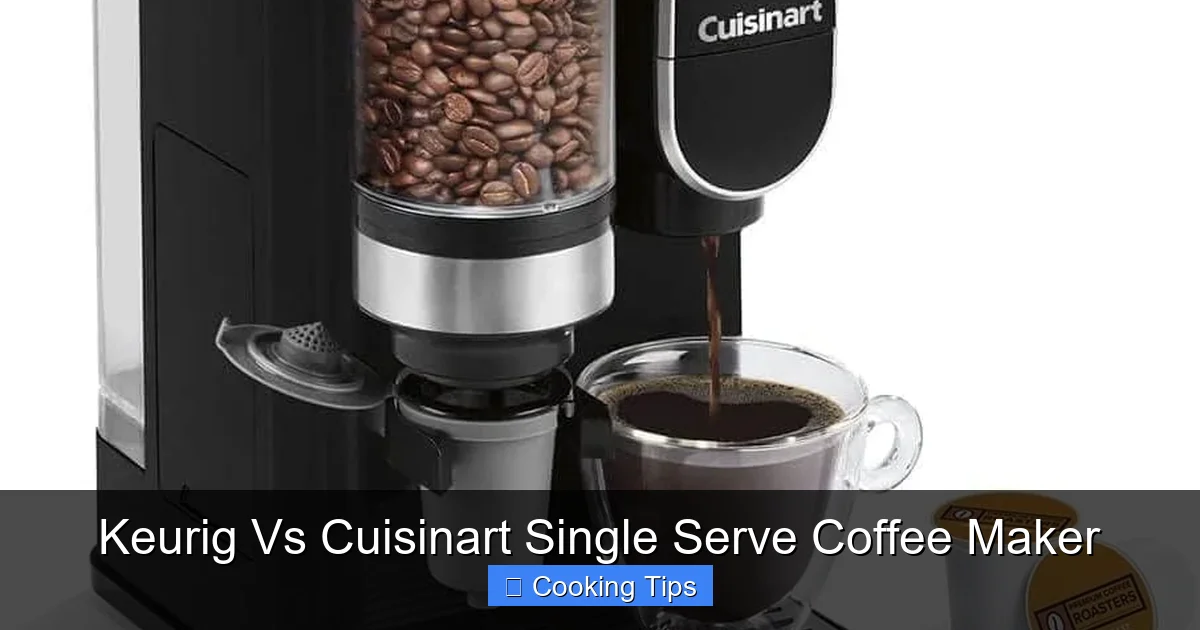
Choosing between a Keurig and a Cuisinart single-serve coffee maker can be tough. This guide breaks down the key differences in features, brewing styles, and convenience to help you make an informed decision. We’ll cover everything from ease of use and maintenance to coffee quality and cost, ensuring you find the perfect brewer for your daily caffeine fix.
Welcome to your ultimate guide to navigating the world of single-serve coffee makers! Today, we’re pitting two giants against each other: Keurig and Cuisinart. If you’re craving a quick, perfectly brewed cup of coffee without the fuss of a traditional drip machine, a single-serve brewer is likely on your radar. But with so many options, how do you choose? That’s where we come in. We’ll break down everything you need to know to decide whether a Keurig or a Cuisinart is the right fit for your kitchen and your coffee habits.
Whether you’re a busy professional needing a fast morning jolt or a coffee enthusiast looking for customization, understanding the nuances between these popular brands is key. We’ll explore their core technologies, the variety of coffee they offer, their ease of use, and even their impact on your wallet. Get ready to discover which single-serve coffee maker will become your new best friend.
Key Takeaways
- Brand Reputation and Variety: Keurig is the established leader with a vast array of models, while Cuisinart offers a more curated selection, often focusing on premium features.
- Brewing Technology and Customization: Keurig excels in simplicity and speed with its K-Cup system. Cuisinart often provides more control over brew strength and temperature, catering to a more discerning palate.
- Coffee Variety and Pod Ecosystem: Keurig boasts an enormous selection of K-Cup pods. Cuisinart supports K-Cups but also frequently offers reusable filter options for grounds, providing greater flexibility.
- Ease of Use and Cleaning: Both brands are generally user-friendly. Keurig is known for its straightforward operation. Cuisinart models can sometimes have more parts for cleaning but often offer advanced self-cleaning cycles.
- Design and Footprint: Keurig machines come in various sizes, from compact to larger, more feature-rich units. Cuisinart machines often have a more modern, stainless-steel aesthetic and can be slightly bulkier.
- Price Point: Entry-level Keurig models are typically more budget-friendly. Cuisinart single-serve brewers often sit in the mid-to-high price range, reflecting their premium features.
Understanding Single-Serve Coffee Makers
Before we dive into the Keurig vs. Cuisinart showdown, let’s quickly define what a single-serve coffee maker is. These machines brew one cup of coffee at a time, typically using pre-packaged pods or capsules, or a reusable filter for your own coffee grounds. The appeal is undeniable: speed, convenience, and minimal mess. No more brewing a whole pot when you only want one cup! This makes them perfect for households with diverse coffee preferences or for individuals who just want a single serving.
Keurig: The Pioneer of Pods
Keurig is a name synonymous with single-serve coffee. They’ve been in the game for a long time, refining their technology and building a massive ecosystem around their K-Cup pods.
The Keurig Brewing Experience
Using a Keurig is designed to be incredibly simple.
- Insert Pod: You pop in a K-Cup pod. These pods contain pre-measured coffee grounds, tea, or other beverages.
- Select Size: Choose your desired brew size (e.g., 6 oz, 8 oz, 10 oz).
- Brew: Press the brew button. The machine punctures the pod and forces hot water through the grounds.
The entire process usually takes less than a minute.
Keurig Pods: Variety is the Spice of Life
One of Keurig’s biggest strengths is the sheer volume of K-Cup options available. You can find coffee from virtually every major brand, in countless roasts and flavors, as well as tea, hot chocolate, and even cider. This vast selection ensures there’s something for everyone. If you’re looking for comparisons within the Keurig line, checking out guides like the comparison between Keurig K Mini vs Keurig K Express Essentials or Keurig K Slim vs Keurig K Express Essentials can be helpful.
Keurig Models: Something for Everyone
Keurig offers a wide range of machines, from the super-compact K-Mini to more advanced models like the K-Supreme.
- Compact Models: Perfect for small spaces like dorm rooms or office desks. They prioritize portability and simplicity.
- Mid-Range Models: Offer larger water reservoirs, multiple brew sizes, and sometimes a strength control.
- Premium Models: May include features like iced coffee settings, temperature control, and even smart connectivity. The Keurig K-Duo series, for example, offers versatility by brewing single cups or a carafe, as seen in comparisons like Keurig K Duo Essentials vs Single Serve Carafe.
Pros of Keurig:
- Unmatched Variety: Thousands of K-Cup options.
- Speed and Convenience: Brews a cup in under a minute.
- Simplicity: Very easy to operate, minimal learning curve.
- Wide Price Range: Affordable entry-level options available.
- Compact Designs: Many models are space-saving.
Cons of Keurig:
- Environmental Impact: K-Cup pods can generate significant plastic waste (though reusable pods are available).
- Coffee Quality: Some users find the coffee quality to be less nuanced than with other brewing methods.
- Limited Customization: Basic models offer little control over brew strength or temperature.
Cuisinart: Elevating the Single-Serve Experience
Cuisinart, a brand known for its quality kitchen appliances, brings a more refined approach to single-serve coffee. They often focus on enhanced features and a premium brewing experience.
The Cuisinart Brewing Experience
Cuisinart machines often offer a bit more control and sophistication.
- Choose Your Method: Many Cuisinart single-serve brewers allow you to use either K-Cups or your own coffee grounds with a reusable filter.
- Select Size and Strength: You typically have more options for brew size and often a strength selector (e.g., regular, bold).
- Brew: The machine heats the water and brews your coffee, often with a focus on optimal brewing temperature.
While still convenient, Cuisinart can offer a slightly more involved, but rewarding, brewing process.
Cuisinart Options: Flexibility and Flavor
Cuisinart often provides a great balance between convenience and the ability to customize your brew.
- K-Cup Compatibility: Like Keurig, Cuisinart machines can brew standard K-Cups, giving you access to a vast array of brands and flavors.
- Reusable Filter: A significant advantage is the inclusion of a reusable filter. This allows you to use your favorite ground coffee, which can be more economical and environmentally friendly. It also opens up a world of freshly ground beans if you’re interested in grinding your own coffee. We’ve explored how to grind coffee beans in our guide on Can You Use A Food Processor To Grind Coffee Beans, though a dedicated grinder is recommended for the best results.
- Customization Features: Cuisinart models often include brew strength controls and sometimes temperature adjustments, allowing you to fine-tune your cup.
Cuisinart Models: Design and Durability
Cuisinart single-serve brewers often feature a sleek, modern design, frequently incorporating stainless steel accents.
- Build Quality: Known for their sturdy construction and durable components.
- Feature-Rich: Many models include advanced features like hot water dispensers, self-cleaning cycles, and programmable brew times.
- Aesthetic Appeal: They tend to look more sophisticated on a countertop compared to some of the more basic Keurig models.
Pros of Cuisinart:
- Flexibility: Can use both K-Cups and ground coffee.
- Better Control: Options for brew strength and sometimes temperature.
- Premium Build: Often constructed with higher-quality materials.
- Stylish Design: Aesthetically pleasing on the countertop.
- Environmentally Friendly Option: Reusable filter reduces waste.
Cons of Cuisinart:
- Higher Price Point: Generally more expensive than entry-level Keurigs.
- Fewer Models: Less variety in the range of machines compared to Keurig.
- Potentially More Complex Cleaning: More parts to clean if using the reusable filter regularly.
Keurig vs. Cuisinart: Head-to-Head Comparison
Let’s break down the key differences in a direct comparison.
Ease of Use
Keurig: Wins for absolute simplicity. Pop in a pod, press a button, get coffee. It’s the epitome of grab-and-go convenience.
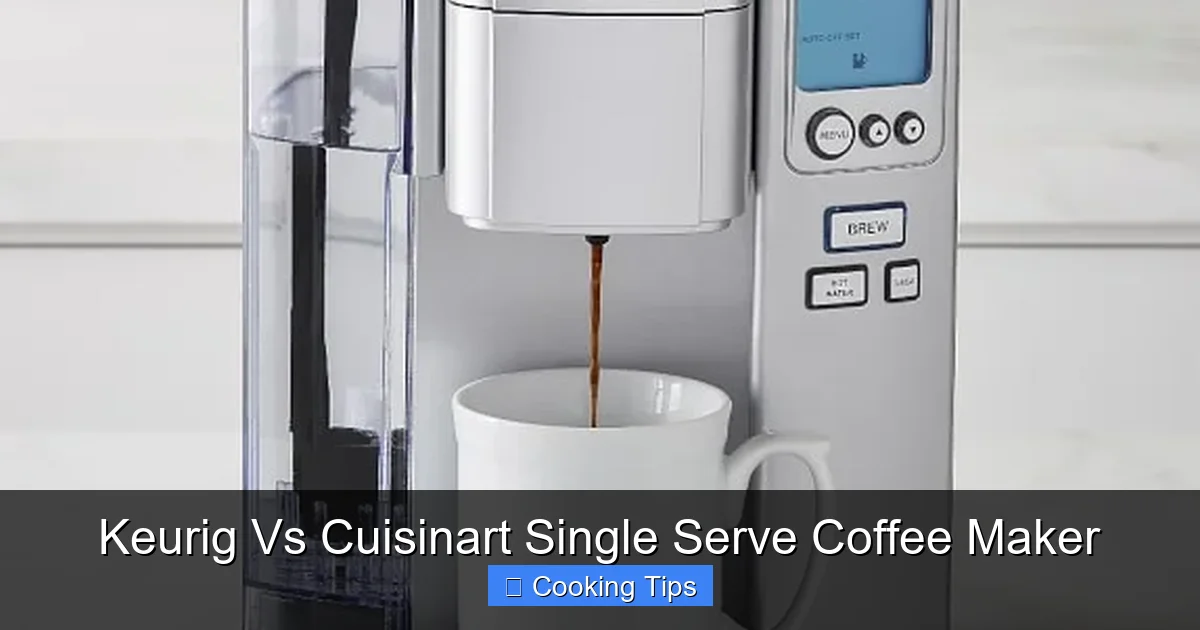
Visual guide about Keurig Vs Cuisinart Single Serve Coffee Maker
Image source: williams-sonoma.com
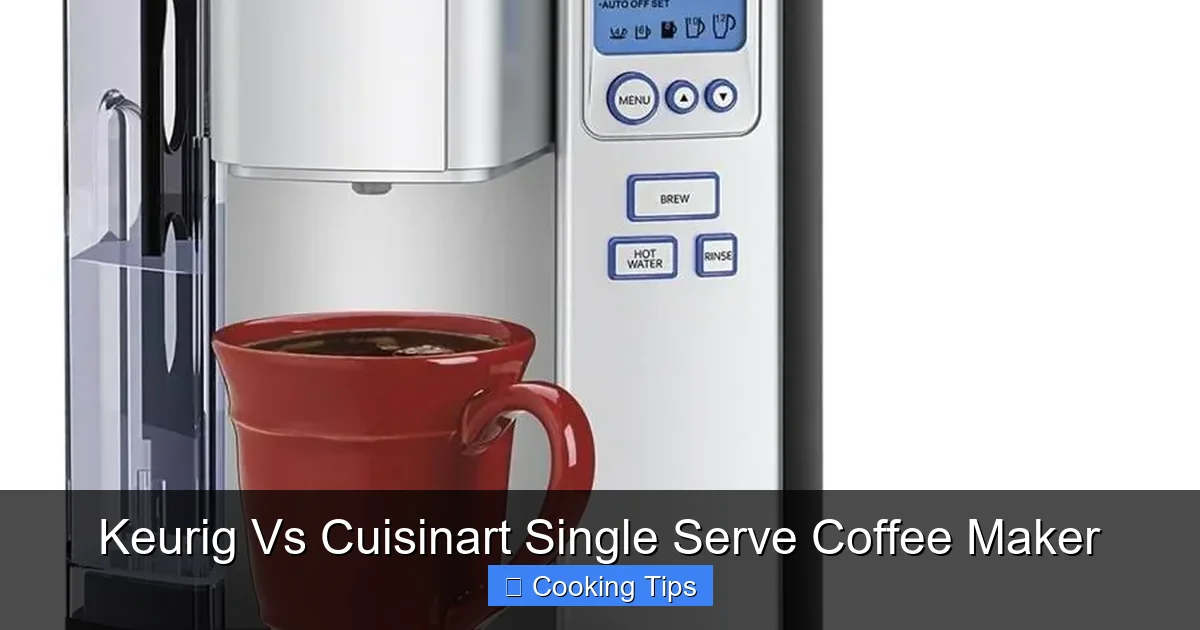
Visual guide about Keurig Vs Cuisinart Single Serve Coffee Maker
Image source: mobileimages.lowes.com
Visual guide about Keurig Vs Cuisinart Single Serve Coffee Maker
Image source: mobileimages.lowes.com
Cuisinart: Very easy to use, but the option to use ground coffee or adjust strength adds a slight layer of complexity, which many users welcome for better control.
Coffee Variety and Flexibility
Keurig: Unbeatable in the sheer number of K-Cup options. If variety within the pod system is your main goal, Keurig is king.
Cuisinart: Offers flexibility by supporting both K-Cups and ground coffee. This is a huge advantage for those who like to experiment with different beans or want a more eco-friendly option.
Brew Quality and Customization
Keurig: Generally good, consistent coffee. Basic models offer minimal customization. Premium models add some features, but are still less customizable than many Cuisinarts. If you’re comparing models, guides on Keurig K Supreme Vs Keurig K Supreme Plus can show feature differences.
Cuisinart: Often produces a more nuanced cup due to better temperature control and strength options. The ability to use fresh grounds further enhances potential quality.
Design and Build Quality
Keurig: Ranges from very basic plastic designs to more premium finishes. Build quality varies by model.
Cuisinart: Typically features a more robust, premium build with a sleeker, more modern aesthetic. Stainless steel is common.
Cost
Keurig: More affordable entry points. The cost of K-Cups can add up over time, however.
Cuisinart: Higher initial investment for the machine. Using ground coffee with a reusable filter can be more cost-effective long-term than K-Cups.
Environmental Considerations
Keurig: K-Cups are a significant source of plastic waste, though reusable filters are available for most models.
Cuisinart: The inclusion of a reusable filter makes it inherently more environmentally friendly if you opt for ground coffee.
Tips for Getting the Best Brew from Your Single-Serve Brewer
No matter which brand you choose, a few tips can elevate your coffee experience.
For Keurig Users:
- Use Filtered Water: This makes a noticeable difference in taste and also helps prevent scale buildup in your machine.
- Clean Regularly: Descale your machine every 3-6 months, and wipe down the exterior and drip tray frequently.
- Experiment with Pods: Don’t be afraid to try different brands and flavors.
- Consider Reusable Pods: If environmental concerns are high on your list, invest in a reusable K-Cup filter and use your own favorite coffee grounds.
For Cuisinart Users:
- Grind Fresh: If using the reusable filter, grind your coffee beans just before brewing for the freshest flavor. Explore options like Keurig K Cafe Vs K Cafe Special Edition or other models to see how they handle different brewing styles.
- Clean the Reusable Filter: Rinse it immediately after each use to prevent coffee oils from building up and affecting the taste of future brews.
- Dial in Your Strength: Experiment with the strength settings to find your perfect cup.
- Don’t Forget Regular Maintenance: Just like any coffee maker, Cuisinart brewers need descaling to perform optimally.
Troubleshooting Common Issues
Even the best coffee makers can have hiccups. Here are a few common problems and solutions:
Coffee is weak or watery:
- Keurig: Ensure you’re using the correct brew size for the amount of coffee in the pod. Try a stronger K-Cup option.
- Cuisinart: If using ground coffee, you might need a coarser grind or less coffee. If using K-Cups, try the ‘bold’ setting if available.
- Both: Ensure the water reservoir is adequately filled. Check that the machine is clean; buildup can affect water flow. If your coffee maker simply won’t turn on, our guide on How To Fix A Coffee Maker That Will Not Turn On might offer some solutions.
Machine is not brewing or is making strange noises:
- Both: Check that the water reservoir is properly seated and filled. Ensure the pod or reusable filter is correctly inserted. For Cuisinart, make sure the ground coffee isn’t packed too tightly in the reusable filter. Sometimes, simply unplugging the machine for a minute and plugging it back in can reset it.
Coffee tastes stale or bitter:
- Both: This is often a sign that the machine needs cleaning. Descale your brewer to remove mineral buildup. Also, ensure you are using fresh coffee beans or pods.
Conclusion: Which Single-Serve Brewer Is Right for You?
The choice between a Keurig and a Cuisinart single-serve coffee maker ultimately comes down to your priorities.
If your main focus is on ultimate simplicity, speed, and an unparalleled variety of beverage options, a Keurig is likely your best bet. It’s the perfect choice for those who want a quick, no-fuss cup and enjoy exploring a vast landscape of K-Cup flavors.
If you value more control over your brew, appreciate better build quality and design, and want the flexibility to use your own coffee grounds, a Cuisinart is an excellent option. It’s ideal for the coffee drinker who wants a slightly more refined experience and enjoys the ability to customize their caffeine fix.
Both brands offer convenience that can transform your morning routine. By understanding their strengths and weaknesses, you can confidently choose the single-serve coffee maker that will bring you joy, one delicious cup at a time. Happy brewing!
