
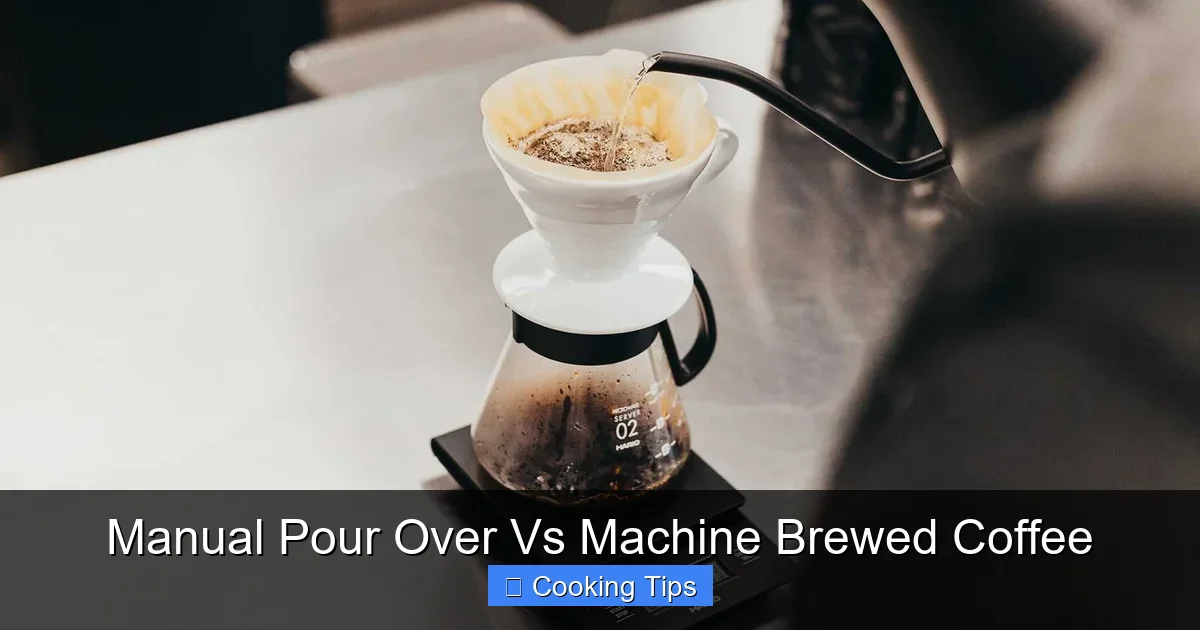
This guide delves into the nuanced world of manual pour over vs machine brewed coffee, helping you understand the unique advantages and disadvantages of each. Whether you’re a seasoned coffee enthusiast or just starting your caffeine journey, you’ll learn to appreciate the control and flavor potential of manual brewing versus the convenience and consistency of automated machines. Make an informed decision about your daily brew by understanding the process, taste profiles, and equipment involved.
Key Takeaways
- Control Over Variables: Manual pour over coffee offers complete control over water temperature, bloom time, pour rate, and grind size, allowing for fine-tuning of flavor.
- Flavor Complexity: Many enthusiasts believe manual pour over methods can extract more nuanced and complex flavors from coffee beans due to precise technique.
- Convenience and Speed: Machine-brewed coffee excels in speed and ease of use, making it ideal for busy mornings or when brewing for multiple people.
- Consistency: Automatic coffee makers are designed for repeatable results, ensuring a familiar taste profile with minimal effort.
- Learning Curve: Manual pour over requires practice and patience to master, while machine brewing is generally straightforward and accessible to beginners.
- Equipment Investment: While manual pour over can be relatively inexpensive to start, high-end machines can represent a significant financial investment.
- Taste Preference is Subjective: The “better” method ultimately depends on individual priorities, such as taste preference, time availability, and desired level of involvement.
Manual Pour Over vs Machine Brewed Coffee: Your Ultimate Guide to the Perfect Cup
The quest for the perfect cup of coffee is a journey many of us embark on daily. In today’s coffee landscape, two prominent paths lead to that desirable brew: the mindful ritual of manual pour over and the effortless convenience of a machine. But which one reigns supreme? The answer, as with many things in life and coffee, is often subjective and depends on your priorities. This guide will walk you through the fascinating world of manual pour over vs machine brewed coffee, helping you understand the nuances, master the techniques, and ultimately, choose the method that best suits your lifestyle and taste buds.
We’ll explore the distinct characteristics of each brewing style. You’ll discover the intricate control manual pour over offers, allowing you to become a coffee alchemist. We’ll also highlight the sheer efficiency and consistent results of machine brewing, perfect for those who need their caffeine fix with minimal fuss. By the end of this guide, you’ll have a clear understanding of the benefits, drawbacks, and processes involved in both manual pour over and machine brewing, empowering you to make an informed decision for your daily coffee ritual in 2026.
Understanding the Core Differences
At their heart, manual pour over and machine brewing differ in one fundamental aspect: human intervention. Manual pour over places you firmly in the barista’s seat, demanding your active participation at every stage. Machine brewing, on the other hand, automates the process, relying on pre-set parameters to deliver a cup.
Visual guide about Manual Pour Over Vs Machine Brewed Coffee
Image source: roastycoffee.com
Think of it this way: manual pour over is like playing a finely tuned instrument, where your skill and technique directly influence the music. Machine brewing is more like listening to a beautifully recorded symphony; the performance is already curated for you.
Manual Pour Over: The Art of Precision
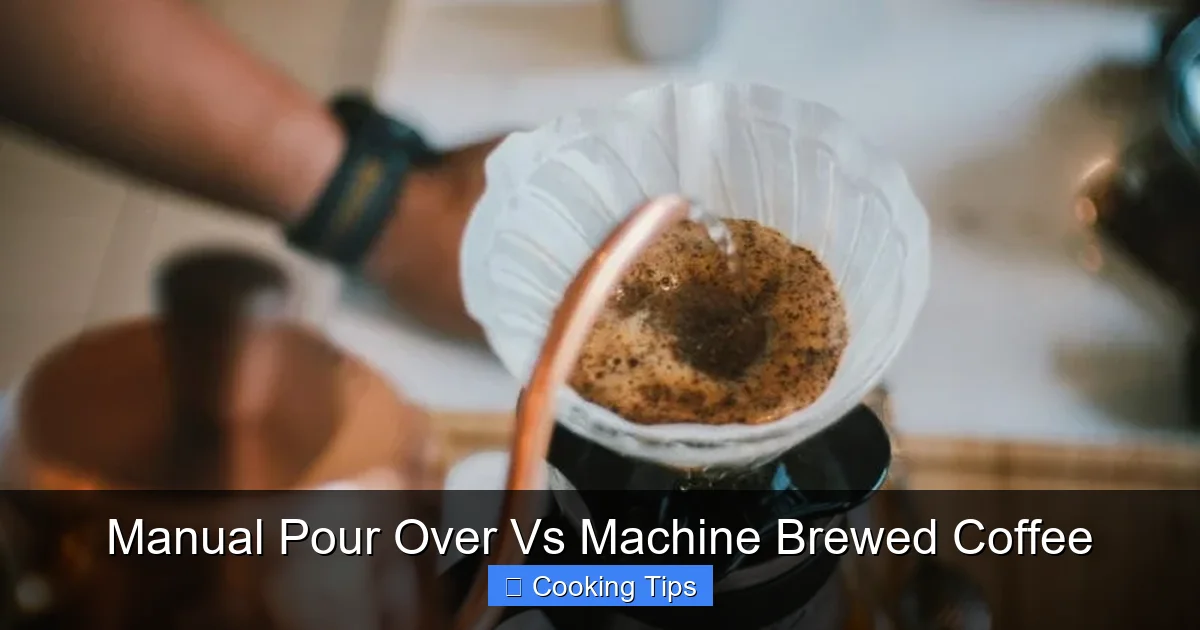
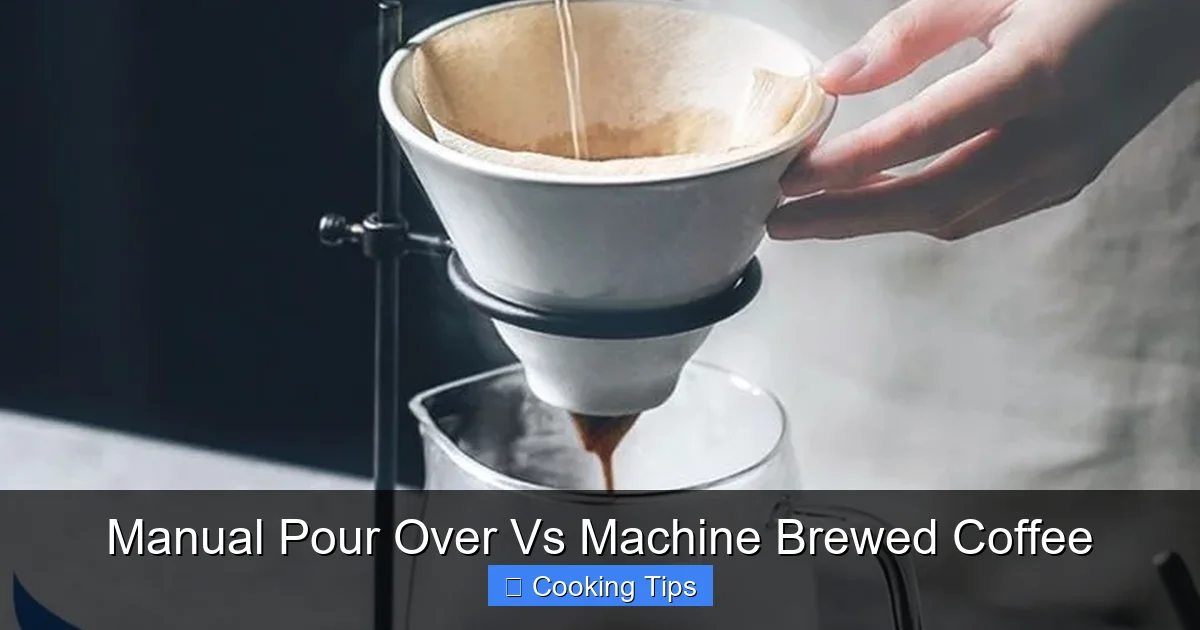
Manual pour over coffee is a method where hot water is poured slowly and deliberately over coffee grounds in a filter, allowing the brewed coffee to drip into a vessel below. This method is cherished by coffee enthusiasts for the unparalleled control it offers over the brewing process, leading to a highly customizable and often exceptionally flavorful cup.
Visual guide about Manual Pour Over Vs Machine Brewed Coffee
Image source: sprignaturemoves.com
The Allure of Control
The magic of manual pour over lies in its ability to fine-tune every variable. You are the conductor of your coffee symphony. This level of control allows you to:
- Grind Size: You can precisely control the coarseness or fineness of your coffee grounds, a critical factor influencing extraction.
- Water Temperature: You can ensure your water is at the optimal temperature (typically between 195-205°F or 90-96°C) for ideal extraction, avoiding under-extraction (sourness) or over-extraction (bitterness).
- Bloom Time: You can carefully manage the initial “bloom” phase, where CO2 gas escapes from fresh coffee grounds when first met with hot water. This phase is crucial for even extraction.
- Pouring Technique and Speed: The way you pour – whether in slow, concentric circles or a faster, more aggressive pour – significantly impacts how the water interacts with the grounds, influencing the final taste.
- Brew Time: You can monitor and adjust the total brew time to achieve your desired extraction.
Essential Equipment for Pour Over
To embark on your pour over journey, you’ll need a few key pieces of equipment:
- Pour Over Dripper: Popular options include the Hario V60, Kalita Wave, Chemex, and Bee House. Each has a unique design that can slightly influence the brew.
- Paper Filters: These are specific to your dripper type and play a role in the final taste by filtering out oils and sediment.
- Gooseneck Kettle: This kettle provides precise control over water flow, allowing for a steady and controlled pour.
- Burr Grinder: A good burr grinder is essential for achieving a consistent grind size, which is crucial for even extraction. Blade grinders can create uneven particles, leading to inconsistent brewing.
- Scale: A digital scale is vital for accurately measuring your coffee grounds and water, ensuring a consistent coffee-to-water ratio (typically 1:15 to 1:17).
- Timer: To track your bloom time and total brew time.
- Mug or Server: To catch your delicious brewed coffee.
The Pour Over Brewing Process: A Step-by-Step Guide
Let’s brew!
Step 1: Heat Your Water
Heat your water to the optimal temperature, usually between 195-205°F (90-96°C). If you don’t have a temperature-controlled kettle, bring water to a boil and let it sit for about 30-60 seconds.
Step 2: Prepare Your Filter and Dripper
Place a paper filter into your pour over dripper. Rinse the filter thoroughly with hot water. This removes any papery taste and preheats your dripper and vessel, ensuring a more stable brewing temperature.
Step 3: Grind Your Coffee
Grind your coffee beans to a medium-fine consistency, similar to table salt. The exact grind size will depend on your dripper and personal preference, but this is a good starting point. Weigh your coffee grounds using your scale.
Step 4: Add Coffee Grounds and Tare Your Scale
Place the dripper with the rinsed filter (and discard the rinse water) onto your mug or server. Add your weighed coffee grounds into the filter. Gently shake the dripper to level the grounds. Place the entire setup on your scale and tare it to zero.
Step 5: The Bloom
Start your timer. Gently pour just enough hot water over the coffee grounds to saturate them evenly, ensuring no dry spots. This is the “bloom” phase. Let it sit for 30-45 seconds. You’ll see the coffee grounds expand and bubble as CO2 gas is released.
Step 6: The Pour
After the bloom, begin to slowly and steadily pour the remaining hot water over the coffee grounds. Use a circular motion, starting from the center and moving outwards, then back to the center. Avoid pouring directly onto the filter paper. Aim to maintain a consistent water level without overflowing the dripper.
Step 7: Brew Time and Completion
Continue pouring until you reach your desired coffee-to-water ratio. The total brew time for pour over typically ranges from 2 to 4 minutes, depending on the amount of coffee and your pouring technique. Once all the water has dripped through, remove the dripper.
Step 8: Enjoy Your Coffee
Give your freshly brewed coffee a gentle swirl and enjoy the nuanced flavors you’ve carefully extracted!
Troubleshooting Pour Over
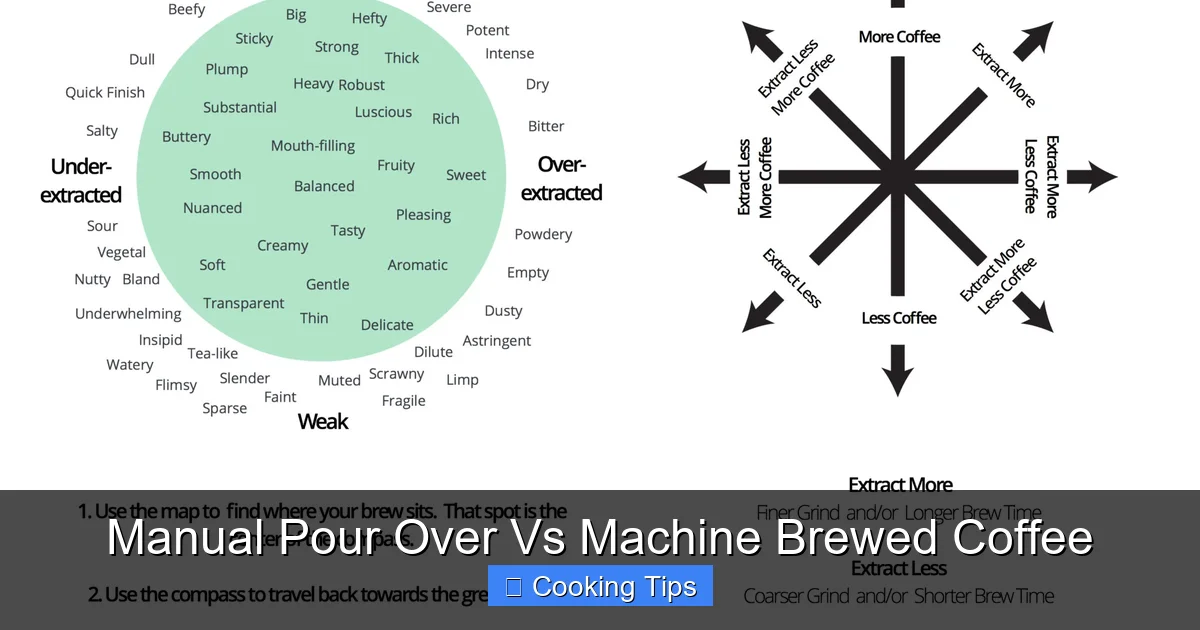
- Too Sour: Likely under-extracted. Try a finer grind, hotter water, or a longer brew time.
- Too Bitter: Likely over-extracted. Try a coarser grind, slightly cooler water, or a shorter brew time.
- Water Draining Too Fast: Grind might be too coarse.
- Water Draining Too Slow: Grind might be too fine, or you’re pouring too aggressively.
Machine Brewed Coffee: Convenience and Consistency
Machine brewed coffee, encompassing everything from automatic drip coffee makers to espresso machines, prioritizes speed, ease of use, and consistency. For many, this is the cornerstone of their morning routine, providing a reliable cup with minimal effort.
Visual guide about Manual Pour Over Vs Machine Brewed Coffee
Image source: img.lazcdn.com
The Benefits of Automation
The primary advantage of machine brewing is its inherent convenience. You can:
- Save Time: Simply add coffee and water, press a button, and walk away. This is invaluable for busy mornings or when brewing for a crowd.
- Achieve Consistency: Most machines are designed to maintain specific parameters like water temperature and brew time, leading to a predictable and consistent cup every time.
- Ease of Use: There’s a minimal learning curve. Most machines are intuitive and user-friendly.
- Brew Larger Batches: Many drip coffee makers are designed to brew multiple cups at once, perfect for households or offices.
Types of Coffee Machines
The world of coffee machines is vast, but here are some common types:
- Automatic Drip Coffee Makers: The most common type, these machines heat water and drip it over coffee grounds in a filter basket.
- Single-Serve Pod Machines (e.g., Keurig, Nespresso): These use pre-portioned pods for ultimate convenience and speed, though they can be less environmentally friendly and offer less flavor customization.
- Espresso Machines: These force hot water under high pressure through finely ground coffee to produce concentrated espresso shots, the base for lattes, cappuccinos, and more.
- French Press (Manual, but often considered a ‘machine’ alternative for its immersion style): While manual, it’s an immersion method where coffee grounds steep in hot water before being pressed down. It offers a full-bodied cup.
- Moka Pot: A stovetop brewer that uses steam pressure to force water through coffee grounds, producing a strong, espresso-like coffee.
The Machine Brewing Process (General Drip Coffee Maker)
While specific machines vary, the general process for an automatic drip coffee maker is as follows:
Step 1: Add Water
Fill the water reservoir with fresh, cold water to the desired level. Use filtered water for the best taste.
Step 2: Prepare the Filter and Coffee Grounds
Place a paper filter into the filter basket. Add your ground coffee. The amount of coffee will depend on the machine’s recommendations and your preferred strength. For most machines, a medium grind is suitable.
Step 3: Start the Brew Cycle
Close the lid, ensure the carafe is in place, and press the start button. The machine will heat the water and dispense it over the coffee grounds.
Step 4: Wait and Serve
The machine will automatically brew your coffee. Once it’s finished, your coffee is ready to serve.
Troubleshooting Machine Brewing
- Weak Coffee: Ensure you’re using enough coffee grounds for the amount of water. Check if the grind size is appropriate for your machine.
- Bitter Coffee: The machine might be brewing at too high a temperature, or the coffee might be over-extracted. Some machines have temperature settings. Ensure you’re cleaning your machine regularly, as old coffee oils can contribute to bitterness.
- Machine Not Brewing: Check that it’s plugged in, the water reservoir is full, and the carafe is properly seated.
- Clogged Machine: Most machines require regular descaling to remove mineral buildup. Follow your manufacturer’s instructions for descaling.
Manual Pour Over vs Machine Brewed Coffee: Which is Right for You?
The choice between manual pour over and machine brewed coffee boils down to your personal preferences and lifestyle. Ask yourself these questions:
- How much time do you have in the morning? If time is of the essence, a machine is likely your best bet. If you enjoy a morning ritual and have a few extra minutes, pour over offers a rewarding experience.
- What level of involvement do you want? Do you want to be hands-on and experiment with different variables, or do you prefer a set-it-and-forget-it approach?
- What is your priority: flavor nuance or consistency? While machines offer consistency, pour over allows for a deeper exploration of a coffee’s inherent flavors.
- What’s your budget? While you can start pour over with minimal investment, high-end espresso machines can be very expensive. Quality automatic drip machines can also range widely in price.
- Who are you brewing for? If you’re often brewing for yourself, pour over can be a delightful solo activity. If you’re brewing for a family or office, a larger-capacity machine is more practical.
The Future of Coffee Brewing in 2026
As we look towards 2026, both manual pour over and machine brewing continue to evolve. Smart coffee makers are becoming more sophisticated, offering app control and personalized brewing profiles. On the manual side, innovative dripper designs and a deeper understanding of extraction science continue to push the boundaries of flavor. The beauty of coffee is that it caters to everyone, from the casual drinker to the dedicated aficionado. Whether you choose the contemplative art of pour over or the efficient promise of a machine, the goal remains the same: a delicious and satisfying cup of coffee.
Conclusion
The debate of manual pour over vs machine brewed coffee isn’t about declaring a definitive winner. It’s about understanding the unique strengths and characteristics of each. Manual pour over offers a deeply personal and rewarding experience, allowing for unparalleled control and the potential to unlock the most exquisite flavors within your beans. Machine brewing provides unmatched convenience and consistency, ensuring a good cup of coffee is always within reach. By understanding the processes, the equipment, and your own preferences, you can confidently choose the brewing method that best aligns with your daily life and your pursuit of that perfect cup. So, embrace the journey, experiment, and enjoy the wonderful world of coffee!
