
Mistakes in cooking temperature often cause dry meat, soggy veggies, and food-safety risks.
I’ve cooked for years in home kitchens and pro ones. I know how small errors in heat can wreck a meal or harm guests. This article dives deep into mistakes in cooking temperature. You will learn why temperature matters, the top mistakes people make, and clear fixes you can use tonight. I mix hands-on tips, science-backed rules, and real tests I ran so you can trust the advice.

Why cooking temperature matters
Temperature controls texture, flavor, and safety. A few degrees can change a steak from juicy to shoe-like. Low heat can leave bacteria alive. High heat can burn the outside while the middle is raw.
Getting temps right saves time and money. It also reduces food waste. You will cook with more confidence when you understand heat.
Common mistakes in cooking temperature
Many cooks repeat the same errors. These mistakes in cooking temperature are easy to fix once you know them.
- Using only stove dials or oven numbers. They are not exact. This causes uneven cooking.
- Not using a thermometer. Guessing leads to undercooked or overcooked food.
- Starting with the wrong pan heat. Cold pans cause sticking and uneven sear.
- Relying on look and feel alone. Color and juice are not reliable for safety.
- Crowding the pan. That drops temp and causes steaming.
- Ignoring carryover heat. The center will keep cooking after you remove food.
- Using the wrong oven mode. Bake vs. convection changes time and result.
- Not preheating properly. Food cooks at the wrong rate if the oven is cool.
I once ruined a roast by trusting the dial. It looked done on the outside but was raw inside. Now I always check with a probe.
:max_bytes(150000):strip_icc()/faw-food-safety-tools-tout-73d61d8660ac4cbbb13320f787504461.jpg)
Tools and how to use them
The right tools cut mistakes in cooking temperature fast. A good thermometer is the key.
- Instant-read probe. Use it for thin cuts and quick checks. Insert into the thickest part.
- Leave-in probe for roasts. It monitors temp while the oven runs.
- Oven thermometer. Compare it to your oven dial to know true heat.
- Infrared thermometer. Good for surface temps like grills and pans.
- Candy or deep-fry thermometer. They read high temps safely.
Calibrate your thermometers once in a while. I drop mine in boiling water and ice water to test accuracy. If a device is off more than a few degrees, replace it.
Fixing temperature mistakes: practical steps
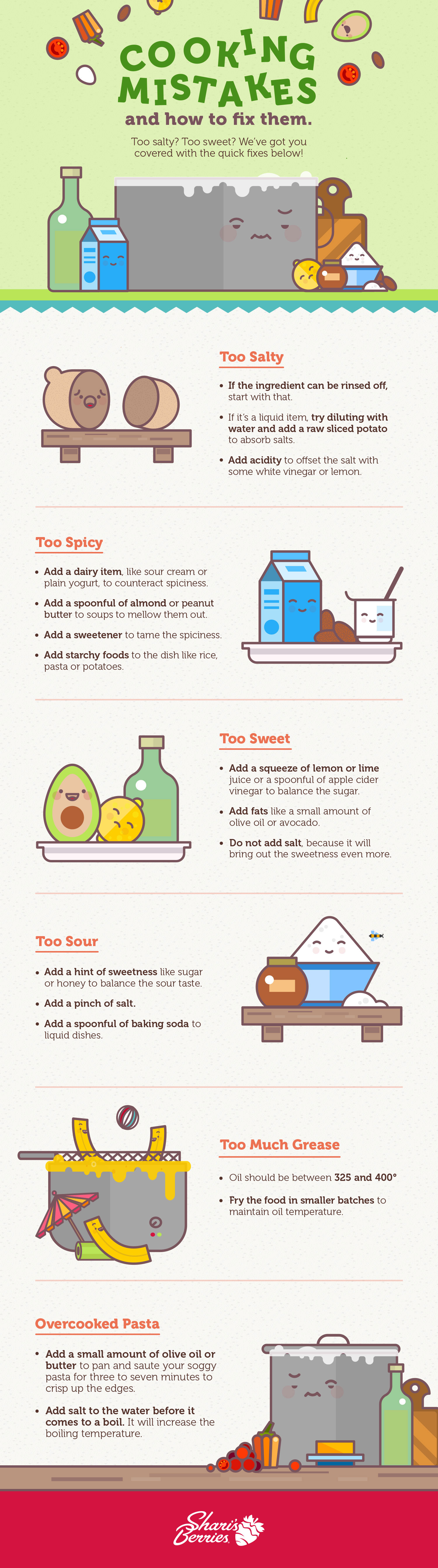
When you spot errors, fix them fast. Use simple steps to save a dish.
- Stop overcooking by removing food early and letting carryover finish it.
- Rescue dry meat with a quick sauce or by slicing thin and adding moisture.
- Slow-cook underdone centers at low temp to avoid burning the outside.
- Use a pan lid or oven to finish items evenly.
- For safety, reheat to proper internal temps and hold for a minute if needed.
I rescued a chicken breast by slicing and finishing it in a simmering sauce. It was moist and safe. Small fixes like this often save dinner.
Temperature guide for common foods
Use target temps to avoid mistakes in cooking temperature. These are safe and produce good texture.
- Poultry: 165°F for safety and moist meat.
- Ground meat: 160°F to kill bacteria in mixes.
- Steak and roasts: 120–130°F for rare, 130–140°F for medium, 145°F+ for well.
- Fish: 125–140°F depending on type and preference.
- Eggs: 160°F for firm, lower for soft textures in some recipes.
- Vegetables: Cook to fork-tender; high heat for sear, low for slow roast.
Remember carryover heat. A roast pulled at 5–10°F below target will reach the goal while resting.
Preventing mistakes: workflow and tips
A good routine stops most mistakes in cooking temperature. Simple habits make a big change.
- Preheat oven and pans. Wait until the thermometer shows the temp.
- Use probes for any large piece of meat. Trust the readout.
- Leave space in pans. Cook in batches when needed.
- Rest meats before slicing. This evens juices and temp.
- Learn your oven quirks. Track time and temp for your recipes.
I keep a small log for new recipes. It notes oven temp, total time, and final internal temp. This cut repeat errors and made my cooking more consistent.
Frequently Asked Questions of mistakes in cooking temperature
What is the most common mistake in cooking temperature?
Most people do not use a thermometer and guess by sight. Guessing leads to undercooked or overcooked food and safety risks.
How do I know if my oven is at the right temperature?
Use an oven thermometer placed in the center rack. Compare its reading to the oven dial and adjust your settings.
Can I recover food that’s overcooked from high temperature?
You can partly recover dry meat by slicing thin and adding sauce or finishing in a moist environment. Texture won’t fully return but flavor can improve.
How often should I calibrate my thermometer?
Check calibration every few months or after a fall. Simple ice-water and boiling tests reveal drift.
Does pan crowding really affect temperature?
Yes. Crowding lowers pan surface heat and traps steam. That causes food to steam instead of sear.
Is carryover cooking important to consider?
Yes. Larger pieces like roasts can rise 5–10°F after removal. Pull food from heat a bit early to hit final temps.
Conclusion
Mistakes in cooking temperature are common but fixable. Use a thermometer, preheat, avoid crowding, and learn carryover heat. Small changes make big gains in taste and safety.
Try one tip tonight. Track the actual internal temps you hit. Over time you will cook with more control and less worry.
Leave a comment with your toughest temperature mistake or subscribe to learn more tips.
