


Over-marinating, wrong acid balance, and poor hygiene are the top mistakes while marinating food.
I’ve spent years testing marinades in home kitchens and restaurants, so I know what works and what fails. This guide breaks down the most common mistakes while marinating food, explains the why behind each problem, and gives clear, practical fixes you can use right away. Read on for proven tips, safety rules, recipes, and simple checks to help every marinade succeed.

Common mistakes while marinating food
Marinades can lift a dish or ruin it. Here are the common missteps I see most often.
-
Over-marinating and mushy texture
- High-acid or enzyme-rich marinades left too long will break down proteins and make meat soft and mealy. Fish and seafood are most at risk.
-
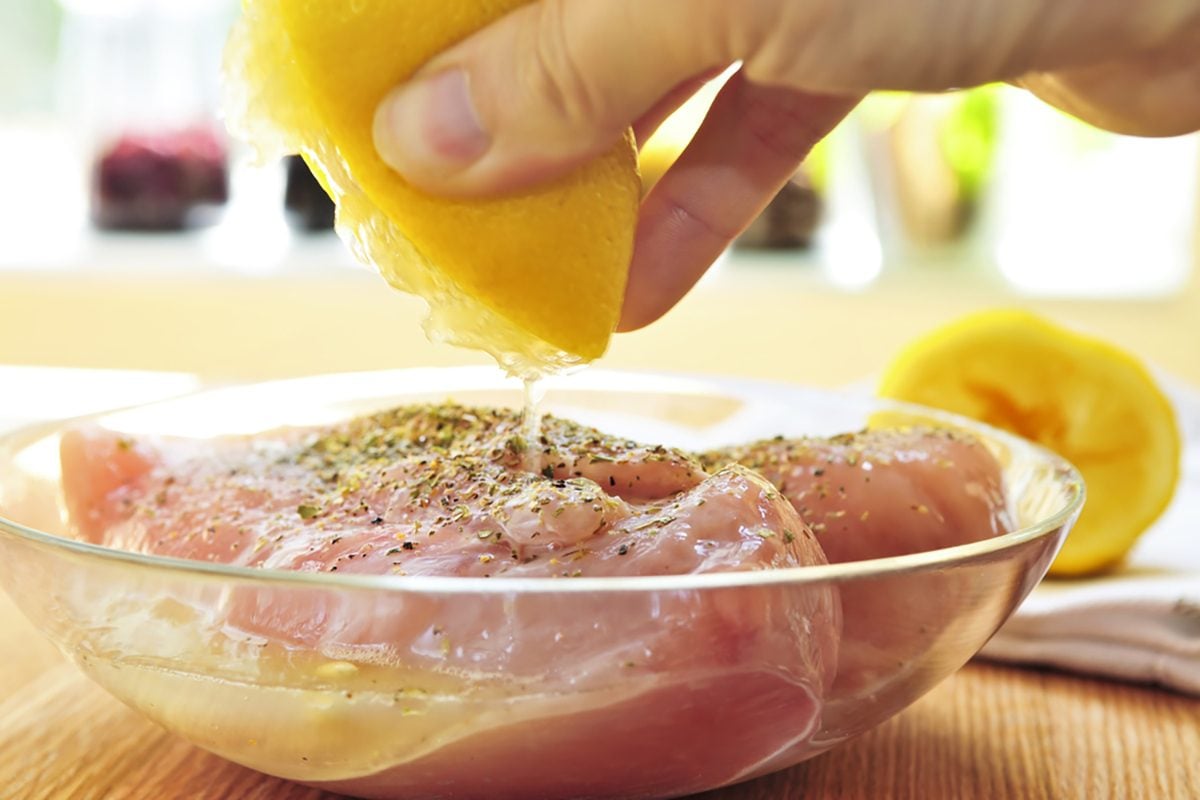
Using too much acid
- Too much lemon, vinegar, or wine will overpower flavor and denature proteins unevenly.
-
Not enough flavor time
- Thin marinades or short marinating times can mean bland results, especially for thick cuts.
-
Too much salt or sugar
- Excess salt draws out moisture and can make meat dry. Excess sugar burns on high heat.
-
Marinating at room temperature
- Leaving food out invites bacterial growth and food safety risks.
-
Reusing raw marinade as sauce
- Untreated marinade carries raw juices and can spread pathogens if not boiled.
-
Wrong container choice
- Reactive metals and thin plastic can affect taste or leach chemicals when used with acid.
-
Not patting dry before cooking
- Wet surface prevents proper sear and causes steaming rather than browning.
-
Poor ingredient balance and proportions
- No clear ratio of acid, oil, and aromatics leads to inconsistent results.
-
Over-relying on enzymes
- Fresh pineapple, papaya, or kiwi will over-tender quickly and leave a paste-like texture.
Why these mistakes while marinating food happen (the science)
Understanding why marinades work helps you avoid the common mistakes while marinating food.
-
Acid breaks down proteins
- Acid causes proteins to unwind. Short exposure adds flavor and tenderizes. Too long makes meat mushy.
-
Enzymes are potent
- Bromelain (pineapple) and papain (papaya) chew proteins fast. Small amounts or short times are best.
-
Salt draws and holds moisture
- Salt can brine meat, improving juiciness if used right. Too much pulls moisture out.
-
Oil carries flavor
- Oil coats and helps distribute fat-soluble aromatics. It does not tenderize.
-
Heat and surface moisture control browning
- Wet protein steams, dry protein sears. Patting dry helps caramelize flavors.
Knowing these basics reduces the mistakes while marinating food. Aim for balance and use time as a tool, not a crutch.

How to marinate correctly: times, ratios, and methods
Simple rules and clear times make marinating easy and reliable.
-
Basic ratio
- 1 part acid : 3 parts oil : seasonings to taste. Adjust to preference.
-
General marinating times
- Fish and shellfish: 15 to 30 minutes.
- Shells like scallops: 10 to 20 minutes.
- Chicken: 30 minutes to 8 hours depending on cut and acid level.
- Pork: 1 to 12 hours.
- Beef (steaks): 30 minutes to 6 hours; tougher cuts 6 to 24 hours.
- Vegetables: 15 minutes to 2 hours.
-
Enzyme-based marinades
- Use fresh pineapple, kiwi, or papaya for very short times (5–20 minutes). Test first.
-
Salt-first vs salt-later
- For brining, use salt-heavy solutions before cooking. For quick flavor, add modest salt in the marinade.
-
Container and method
- Use glass, ceramic, or BPA-free plastic bags. Avoid reactive metals with acid.
- Seal and turn frequently for even coverage.
- Refrigerate while marinating.
-
Marinating for flavor vs tenderizing
- Short marinate = surface flavor. Long marinate = deeper tenderizing for some cuts. Choose technique for your goal.
Follow these steps to avoid the classic mistakes while marinating food and get consistent results.
Food safety and hygiene when marinating
Food safety must come first when marinating. Simple precautions prevent illness.
-
Always marinate in the refrigerator
- Cold slows bacterial growth. Never marinate at room temperature for extended periods.
-
Do not reuse raw marinade as-is
- Boil used marinade for at least 3–5 minutes before using as a sauce.
-
Avoid cross-contamination
- Use separate tools and plates for raw and cooked foods. Wash hands and surfaces well.
-
Use safe containers
- Glass, ceramic, or stainless steel are ideal. Avoid aluminum with citrus or vinegar.
-
Proper storage time
- Most marinated raw meat should be used within 24 hours for best safety and texture, unless you’re using a controlled brine or vacuum-sealed method.
By following these rules you reduce the mistakes while marinating food and keep your meals safe.
Fixing mistakes and rescuing bad marinades
Not all mistakes are final. Here’s how to rescue common problems.
-
Meat is too mushy
- Rinse lightly, pat dry, and grill or sear quickly. Strong texture damage may be irreversible.
-
Marinade tastes too acidic
- Rinse and pat dry. Add a glaze or sweeter finishing sauce to balance acidity.
-
Too salty
- Rinse under cold water, pat dry, and cook with a low-salt side or dilute with unsalted stock.
-
Bland flavor
- Finish with a quick sauce, fresh herbs, or a finishing oil infused with garlic or chili.
-
Burn-prone marinade
- Reduce sugar near cook time, or cook over lower heat and baste near the end.
These fixes help recover from mistakes while marinating food and salvage a meal.

Personal experiences and lessons learned
I still recall an early mistake that taught me more than any recipe. I marinated a flank steak overnight in a very acidic mix. The next day the steak turned soft and almost pulpy. I learned to trust timing and to cut down acid. I also started using a simple test: marinate a small corner piece first. If it feels right after the recommended time, proceed with the rest.
Other lessons I share with friends and cooks:
- Label and time your marination in the fridge.
- Test a small piece before committing.
- Keep a small bottle of marinade base to tweak quickly.
These small habits fixed many mistakes while marinating food in my kitchen.
Quick checklist and final tips
Use this checklist to avoid common mistakes while marinating food.
- Follow the 1:3 acid-to-oil ratio as a starting point.
- Use short times for seafood and enzyme marinades.
- Refrigerate while marinating; never leave raw meat out.
- Use glass, ceramic, or zip-top bags for even coverage.
- Pat dry before cooking to get a good sear.
- Boil used marinade before serving as a sauce.
- Taste and adjust seasoning after cooking, not before.
- Label and time your marinating work to prevent over-marinating.
Adopt this checklist to make marinating fast, safe, and delicious.
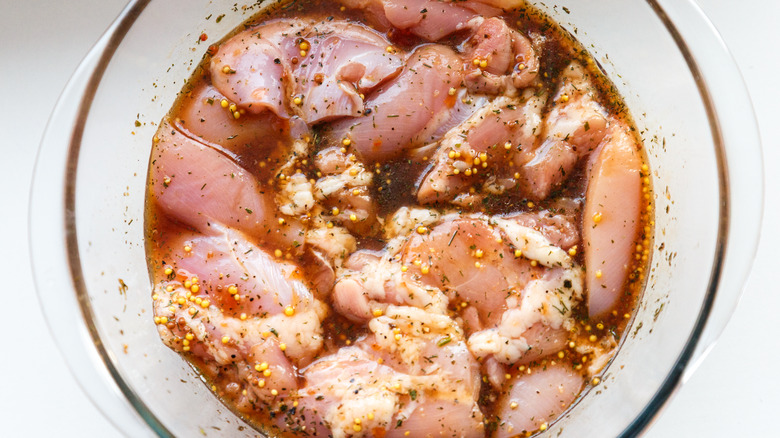
Frequently Asked Questions of mistakes while marinating food
How long can I safely marinate meat in the fridge?
Most meats can marinate safely in the fridge for 24 hours. Tough cuts can handle longer, up to 48 hours, but acid levels should be mild to avoid texture damage.
Can I marinate at room temperature for faster flavor?
No. Marinating at room temperature increases bacterial risk. Always marinate in the refrigerator for safety, even for quick jobs.
Is it safe to reuse marinade as a sauce?
Only if you bring it to a full boil for several minutes first. Boiling kills bacteria from raw juices and makes the liquid safe as a sauce.
Do acidic marinades tenderize every protein?
Acidic marinades tenderize by denaturing proteins, but over time they can make meat mushy. Use short times for delicate proteins and moderate acid for tougher cuts.
What container is best for marinating?
Use glass, ceramic, or heavy-duty plastic bags. Avoid reactive metals like aluminum for acidic marinades to prevent off flavors and discoloration.
Conclusion
Marinades are simple tools that can fail from common oversights. Avoiding the top mistakes while marinating food comes down to timing, balance, and safe habits. Use the ratios, times, and safety checks in this guide to make every marinade count. Try one new tip tonight—label your marinade and test a small piece first—and share your results. If you found these tips helpful, subscribe or leave a comment with your best or worst marinating story.
