

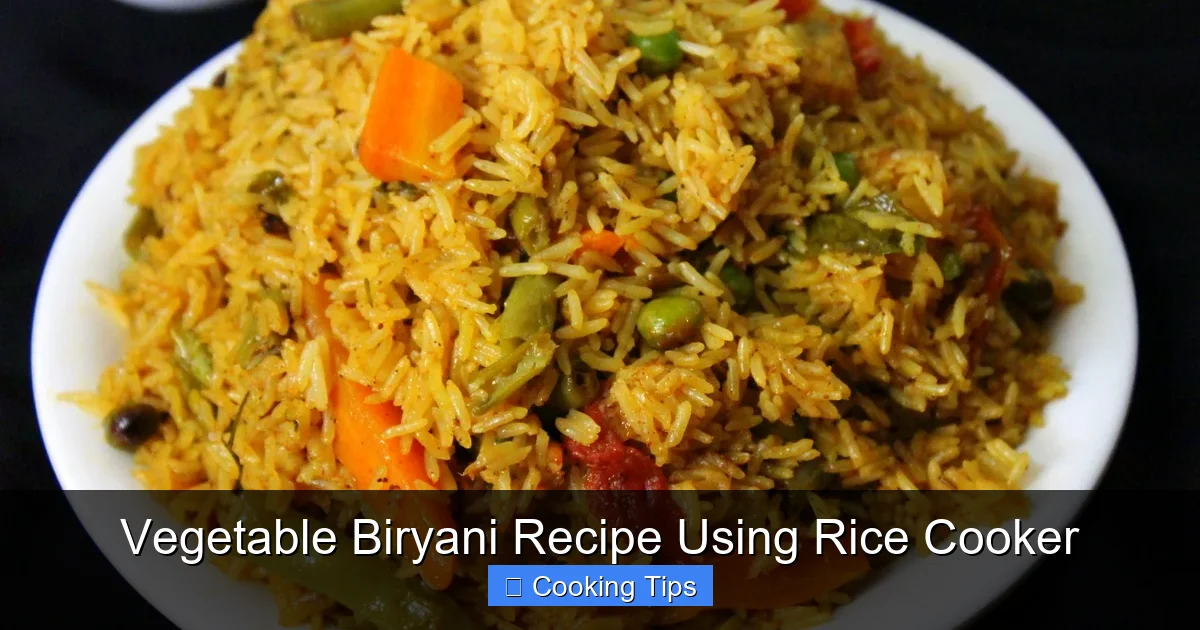
Unlock the secret to a flavorful Vegetable Biryani without the stovetop hassle! This comprehensive guide will walk you through creating a delicious and aromatic biryani using only your rice cooker. Enjoy perfectly cooked rice and tender vegetables with minimal effort, making it an ideal dish for busy weeknights or casual gatherings.
## Vegetable Biryani Recipe Using Rice Cooker
Craving a fragrant, flavorful biryani but dreading the multi-pot stovetop method? What if we told you that you could achieve a delicious, restaurant-quality Vegetable Biryani using just your trusty rice cooker? Yes, it’s absolutely possible, and this guide is here to show you exactly how!
Making biryani traditionally can involve several steps: par-cooking the rice, sautéing vegetables and aromatics, layering, and then steaming. While the results are often spectacular, it can be time-consuming and require careful attention. But with a rice cooker, we can simplify the process significantly. We’ll use its consistent heating and “cook” function to bring all those wonderful biryani flavors together.
In this guide, you’ll learn how to:
- Prepare your rice for optimal texture in a rice cooker.
- Choose and prepare the best vegetables for biryani.
- Layer ingredients effectively within the rice cooker for maximum flavor infusion.
- Achieve perfectly cooked, fluffy rice and tender vegetables.
- Add finishing touches for that authentic biryani aroma and taste.
Get ready to impress yourself and your loved ones with this incredibly simple yet satisfying Vegetable Biryani made effortlessly in your rice cooker. Let’s get cooking!
## Preparing Your Rice Cooker for Biryani Bliss
The foundation of any great biryani is the rice. For this recipe, we’ll be using Basmati rice, known for its long grains and fragrant aroma, which is perfect for biryani. Using the right rice-to-water ratio is crucial to avoid mushy rice or undercooked grains. You can find a detailed explanation of [what is the ratio of water to rice in a rice cooker](https://cookrm.com/what-is-the-ratio-of-water-to-rice-in-a-rice-cooker/) on our blog. Generally, for Basmati rice, a 1:1.5 or 1:1.75 ratio of rice to water is a good starting point for most rice cookers, but always check your rice cooker’s manual.
### Step 1: Washing and Soaking the Rice
Properly washing and soaking your Basmati rice is key to achieving those distinct, separate grains that are characteristic of a good biryani. This step removes excess starch, which can lead to sticky or mushy rice.
- Measure Your Rice: Start by measuring out your desired amount of Basmati rice. For a standard rice cooker (around 3-cup capacity), 1.5 cups of dry rice is a good amount for 3-4 servings.
- Rinse Thoroughly: Place the rice in a fine-mesh sieve. Rinse it under cold running water, agitating the grains gently with your fingers. Continue rinsing until the water runs clear. This might take 4-5 rinses.
- Soak the Rice: Once rinsed, place the rice in a bowl and cover it with ample fresh water. Let it soak for at least 20-30 minutes. Soaking helps the rice absorb moisture evenly, leading to a more tender and evenly cooked grain.
- Drain Well: After soaking, drain the rice thoroughly using the sieve. Ensure as much water as possible is removed, as this will affect the final water ratio for cooking.
### Step 2: Preparing the Rice Cooker Inner Pot
While some rice cookers can handle ingredients directly, it’s often a good idea to lightly grease the inner pot to prevent sticking, especially for dishes like biryani where flavors can concentrate at the bottom.
- Lightly Grease: Use a teaspoon of oil or ghee and spread it evenly across the bottom and up the sides of the rice cooker’s inner pot. This is a simple step that can prevent a lot of frustration later.
## Assembling Your Vegetable Biryani
This is where the magic happens! We’ll layer our ingredients in the rice cooker to allow the flavors to meld beautifully as the rice cooks.
### Step 3: Layering the Aromatics and Spices
This layer forms the flavor base of your biryani.
- Ginger-Garlic Paste: About 1 tablespoon of fresh ginger-garlic paste is essential for that characteristic biryani aroma.
- Chopped Onions: Finely chopped onions will caramelize slightly and add sweetness. About half a medium onion is usually sufficient.
- Green Chilies: Finely chopped green chilies for heat. Adjust to your spice preference.
- Whole Spices: A small number of whole spices like a bay leaf, 2-3 green cardamom pods, 2-3 cloves, and a small piece of cinnamon stick will release their fragrance during cooking.
- Ground Spices: A teaspoon of turmeric powder, 1 teaspoon of red chili powder (adjust to taste), and 1 teaspoon of garam masala.
### Step 4: Adding the Vegetables
Choose a mix of vegetables that cook well and complement the biryani flavors.
- Recommended Vegetables: Carrots, peas, beans, potatoes, cauliflower florets, and bell peppers are excellent choices. Cut them into bite-sized pieces.
- Quantity: Aim for about 1.5 to 2 cups of mixed, chopped vegetables.
- Pre-Sautéing (Optional but Recommended): For deeper flavor and better texture, you can quickly sauté your onions and vegetables in a separate pan with a little oil or ghee until they are slightly softened. This is a good idea if you’re using harder vegetables like potatoes or carrots. If you skip this, ensure your vegetables are cut small enough to cook through. If you’re looking for [vegetable saute tips](https://cookrm.com/tag/vegetable-saute-tips/), check out our other guide.
### Step 5: Adding the Rice and Liquid
Now it’s time to add the prepared rice and the cooking liquid.
- Add Drained Rice: Gently spread the drained Basmati rice over the layer of vegetables and spices in the rice cooker pot.
- Add Cooking Liquid: Pour in your measured water or vegetable broth. Using vegetable broth instead of water will add an extra layer of savory flavor. Remember the [rice to water ratio](https://cookrm.com/tag/rice-to-water-ratio/) is critical here. For 1.5 cups of rice, start with approximately 2.25 to 2.5 cups of liquid, adjusting based on your rice cooker and how well you drained the rice.
- Add Salt: Season generously with salt. About 1 to 1.5 teaspoons, but taste your liquid before adding the rice to ensure it’s seasoned correctly.
- Add Ghee or Oil: Drizzle 1-2 tablespoons of ghee or oil over the top. This helps the rice grains stay separate and adds richness.
## Cooking Your Rice Cooker Vegetable Biryani
This is the simplest part! Let your rice cooker do all the heavy lifting.
### Step 6: Cooking Cycle
Most standard rice cookers have a “Cook” or “White Rice” setting.
- Start the Cooker: Close the lid securely and set your rice cooker to the “Cook” or “White Rice” setting.
- Let it Cook: The rice cooker will automatically switch to “Warm” once the cooking cycle is complete. Resist the urge to open the lid during the cooking process! This is one of the common [rice cooker mistakes](https://cookrm.com/tag/rice-cooker-mistakes/) to avoid. Opening the lid too early can release steam and prevent the rice from cooking properly, or even lead to mushy rice.
### Step 7: Resting and Fluffing
This resting period is crucial for allowing the steam to finish cooking the rice and vegetables, ensuring everything is perfectly tender and flavorful.
- Resting Time: Once the rice cooker switches to “Warm,” let the biryani rest undisturbed for at least 10-15 minutes. This allows the steam to redistribute and cook the rice evenly.
- Fluffing the Biryani: After resting, open the lid carefully. Use a fork or a spatula to gently fluff the biryani, mixing the rice and vegetables together. Be gentle to avoid breaking the rice grains.
## Finishing Touches for an Authentic Biryani
Elevate your rice cooker biryani with these simple additions.
### Step 8: Garnishing
These final touches add aroma, texture, and visual appeal.
- Fresh Herbs: Sprinkle generously with fresh chopped cilantro and mint leaves.
- Fried Onions (Birista): A generous topping of store-bought or homemade fried onions adds a delightful crunch and sweetness.
- Nuts: A handful of toasted cashews or almonds can add a lovely crunch.
- Lemon/Lime: A squeeze of fresh lemon or lime juice just before serving adds a bright, zesty finish.
## Troubleshooting Your Rice Cooker Biryani
Even with the simplicity of a rice cooker, sometimes things don’t go exactly as planned. Here are a few common issues and how to fix them:
Problem: Rice is Undercooked
Solution: If the rice is still hard after the initial cooking cycle and resting period, add a couple of tablespoons of hot water, close the lid, and run the “Cook” cycle again. You might have had too little water or not soaked the rice enough. Ensure you are using the correct [rice to water ratio](https://cookrm.com/tag/rice-water-ratio/).
Problem: Rice is Mushy or Sticky
Solution: This usually happens due to too much water or not rinsing/soaking the rice properly. If it’s slightly mushy, you can try gently spreading it on a plate or tray to let some excess moisture evaporate while it’s still warm. For future attempts, double-check your water ratio and rinsing technique. Understanding [why rice becomes mushy](https://cookrm.com/why-rice-becomes-mushy/) can help prevent this.
Problem: Vegetables are Undercooked
Solution: If you didn’t pre-sauté your vegetables, they might be a bit firm. If this happens, you can try to gently stir them into the cooked rice and run the “Cook” cycle for another 5-10 minutes, or let it sit on “Warm” for a longer period. Cutting vegetables into smaller, uniform pieces will help them cook through.
Problem: Biryani is Bland
Solution: This can happen if the salt or spices weren’t distributed evenly or if you were hesitant with the seasonings. Always taste your cooking liquid for salt before you start cooking. For future recipes, you can add a bit more garam masala or a pinch of saffron strands soaked in warm milk during the last 10 minutes of cooking for an enhanced aroma and flavor.
## Enjoy Your Delicious Rice Cooker Vegetable Biryani!
Congratulations! You’ve successfully created a vibrant and flavorful Vegetable Biryani using the convenience of your rice cooker. This method proves that you don’t need complex techniques or multiple pots to enjoy a classic dish. It’s a fantastic way to achieve perfectly cooked rice and tender vegetables infused with aromatic spices, making it a go-to recipe for any occasion.
This dish pairs wonderfully with a side of raita (yogurt dip) or a simple salad. Experiment with different vegetable combinations and spice levels to find your perfect biryani. Happy cooking!
- Effortless Cooking: This recipe leverages the simplicity of a rice cooker to create a complex dish like biryani with minimal supervision.
- Customizable Ingredients: Easily adapt the vegetable mix and spice levels to suit your personal preferences and what’s available in your pantry.
- Perfect Rice Texture: Learn the crucial rice-to-water ratio and preparation steps to ensure your basmati rice is fluffy and not mushy.
- Flavor Infusion: Understand how to layer aromatics and spices to build deep flavor directly within the rice cooker.
- Time-Saving Method: Save time by sautéing some ingredients beforehand or letting the rice cooker do most of the work.
- Troubleshooting Tips: Address common issues like undercooked vegetables or sticky rice to ensure a successful biryani every time.
