

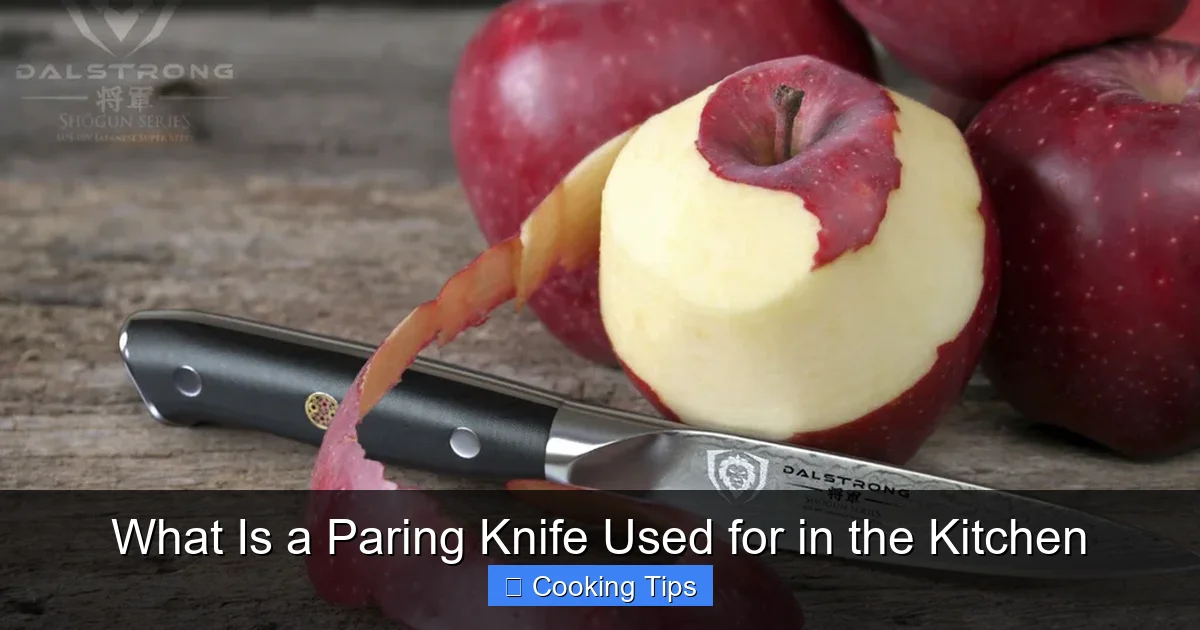
The paring knife is a culinary chameleon, indispensable for delicate tasks requiring precision. This guide explores its core functions, from peeling and coring to intricate garnishes and detailed trimming. Learn how to choose, hold, and effectively use this small but mighty kitchen tool to enhance your cooking and presentation.
Key Takeaways
- Precision and Control: The small blade and handle of a paring knife offer unparalleled control for detailed work that larger knives can’t handle.
- Peeling and Coring: It’s the go-to tool for efficiently removing the skin from fruits and vegetables and for coring apples, pears, and tomatoes.
- Trimming and Detail Work: Ideal for deveining shrimp, removing blemishes, trimming fat from meat, and hulling strawberries.
- Garnishes and Intricate Cuts: Essential for creating decorative garnishes, such as citrus twists or intricate vegetable carvings.
- Safety First: Proper grip and a sharp blade are crucial for safe and effective paring knife usage, preventing slips and injuries.
- Versatile Small Tasks: Beyond the obvious, it’s useful for opening packages, slicing small items, and performing minor repairs on produce.
What is a Paring Knife Used For in the Kitchen? Your Ultimate Guide
Welcome to the wonderful world of paring knives! If you’ve ever wondered about that small, sharp blade that seems to be a staple in every chef’s knife roll, you’re in the right place. The paring knife might be the smallest knife in your collection, but it’s by no means the least important. In fact, it’s one of the most versatile and frequently used tools for a multitude of kitchen tasks.
This comprehensive guide will dive deep into the essential uses of a paring knife. We’ll explore why it’s so effective, how to choose the right one for your needs, and, most importantly, how to use it safely and efficiently. Get ready to elevate your culinary skills and make your kitchen prep a breeze!
Understanding the Paring Knife: Anatomy and Purpose
Before we get into its uses, let’s understand what makes a paring knife so special. A paring knife is characterized by its short blade, typically ranging from 2 to 4 inches (5 to 10 cm) in length. This small size is its greatest asset, allowing for exceptional maneuverability and precision. The handle is also proportionally sized to the blade, providing a comfortable and secure grip for detailed work.
Unlike its larger counterparts, like the chef’s knife or utility knife, the paring knife isn’t designed for chopping or slicing through large ingredients. Instead, its purpose is to tackle the finer, more intricate jobs where control is paramount. Think of it as the scalpel of the kitchen – precise, agile, and incredibly effective for detailed tasks.
The Core Functions: What Can a Paring Knife Do?
The versatility of a paring knife means it can handle a surprising range of culinary activities. Let’s break down its primary uses:
1. Peeling Fruits and Vegetables with Ease
This is perhaps the most common and widely recognized use of a paring knife. The short, sharp blade allows you to glide smoothly around the contours of fruits and vegetables, removing their skins with minimal waste.
* How to Peel:
* Hold the Ingredient: For most fruits and vegetables, hold the item firmly in your non-dominant hand.
* Grip the Knife: Hold the paring knife comfortably in your dominant hand, with your index finger extended along the spine of the blade for added control.
* Peel Away: Start at the top or bottom of the ingredient and make gentle, consistent strokes away from your body, rotating the ingredient as you go. The goal is to remove only the thin outer layer, preserving as much of the edible flesh as possible.
* For Round Items (like potatoes or apples): You can also use a circular peeling motion.
* For Curved Items (like carrots or cucumbers): Work in long, sweeping strokes.
* Practical Tips:
* Always peel away from yourself to avoid accidental cuts.
* A sharp paring knife makes peeling much easier and safer. A dull knife requires more force, increasing the risk of slipping.
* Don’t forget to wash your produce before peeling!
2. Coring and Seeding for Perfect Prep
Many fruits and vegetables have cores or seeds that need to be removed before cooking or eating. The paring knife excels at this delicate operation.
* Coring Apples and Pears:
* **Method 1 (Cut in Half):** Cut the apple or pear in half. Then, use the tip of your paring knife to carve out the core and seeds in a V-shape.
* **Method 2 (Core Removal):** Insert the tip of the paring knife into the top of the fruit, just below the stem. Angle the blade to cut around the core in a circular motion. Once loosened, you can usually pull the core out with the knife or your fingers.
* Seeding Tomatoes:
* Cut the tomato in half horizontally.
* Use the tip of the paring knife to carefully scoop out the seeds and the watery pulp from each half.
* Seeding Bell Peppers:
* Cut off the top of the bell pepper.
* Reach inside with your paring knife and carefully slice around the inner membrane to loosen the seeds and core, then pull them out.
3. Trimming and Detailed Preparation of Meats and Produce
The paring knife is your best friend for those fiddly trimming tasks that larger knives can’t manage efficiently.
* Deveining Shrimp:
* Carefully insert the tip of the paring knife under the dark vein on the shrimp’s back.
* Gently lift and remove the vein.
* Removing Blemishes and Eyes:
* Use the tip of the paring knife to meticulously cut away any bruised spots, soft areas, or “eyes” from potatoes and other produce.
* Trimming Fat from Meat:
* For smaller cuts of meat or poultry, the paring knife is perfect for trimming away excess fat or sinew with precision.
* Hull-ing Strawberries:
* Gently insert the tip of the knife into the base of the strawberry, just where the green leaves meet the red fruit.
* Twist the knife slightly to cut around and remove the green hull.
4. Creating Garnishes and Decorative Cuts
If you enjoy presenting your food beautifully, a paring knife is essential for making attractive garnishes.
* Citrus Twists and Zests:
* Use the paring knife to carefully peel strips of citrus zest (avoiding the bitter white pith). You can then twist these into elegant garnishes.
* Fluting Mushrooms:
* This involves making small, decorative cuts around the edge of a mushroom cap. The paring knife allows for the precision needed to create these patterns.
* Carving Small Designs:
* For more advanced culinary artists, a paring knife can be used to carve small, intricate designs into fruits and vegetables.
5. Handling Small Items and Minor Tasks
Beyond the more defined tasks, the paring knife is incredibly useful for a variety of smaller, everyday kitchen jobs.
* Slicing Small Ingredients:
* Need to thinly slice a clove of garlic, a shallot, or a small mushroom? The paring knife is perfect for these delicate slicing jobs.
* **Opening Packaging:**
* Sometimes, a paring knife is just the right tool for safely opening stubborn plastic packaging or mail. Be careful not to use your best knives for this!
* **Minor Repairs on Produce:**
* Did you accidentally cut a piece of fruit too deep? A paring knife can help you neaten up the edges.
Choosing the Right Paring Knife
With so many options available, how do you pick the best paring knife for your needs? Here are a few things to consider:
* Blade Length: For most general-purpose tasks, a 3-inch blade is ideal. Longer blades (4 inches) can offer a bit more reach for slightly larger items, while shorter blades (2 inches) are excellent for extremely intricate work.
* **Blade Type:
* Straight Edge: The most common and versatile type. Great for peeling, slicing, and trimming.
* Serrated Edge (often called a Tomato Knife): While not strictly a paring knife, serrated paring knives are excellent for soft-skinned fruits and vegetables like tomatoes, peaches, and kiwis, where a straight edge might crush the skin.
* Material: High-carbon stainless steel is a popular choice as it holds an edge well and resists rust. Ceramic blades are very sharp and lightweight but can be brittle.
* Handle: Look for a handle that feels comfortable and secure in your hand. Materials like wood, plastic, or composite are common. A good grip is essential for safety and control.
How to Hold and Use a Paring Knife Safely
Safety is paramount when working with any knife, especially a sharp one like a paring knife. Proper technique ensures both efficiency and accident prevention.
The Pinch Grip (Recommended for Control)
This is the most common and recommended grip for a paring knife when precision is needed.
* **How to Grip:**
* Wrap your fingers around the handle of the knife.
* Place your thumb and index finger on either side of the blade, near the bolster (where the blade meets the handle). This “pinches” the blade, giving you maximum control over its movement.
* **Why it’s Effective:** The pinch grip allows you to steer the blade with subtle movements of your fingers and wrist, making it ideal for detailed tasks like peeling or coring.
The Handle Grip
This grip is more like how you’d hold a larger knife and can be useful for some tasks where less extreme precision is required, or when you need a bit more leverage.
* **How to Grip:**
* Grip the handle firmly with your palm and fingers, similar to holding a pen.
* Your thumb can rest on the side of the handle or the spine of the blade.
* **When to Use:** This grip might be used for slightly more vigorous tasks, like cutting through the skin of a very firm fruit, but always prioritize control.
Key Safety Tips for Paring Knife Usage
* **Always Use a Sharp Knife:** A dull knife requires more force, increasing the chance of slipping and cutting yourself.
* **Cut Away from Your Body:** This is a fundamental knife safety rule that applies to all cutting tasks, especially peeling.
* **Use a Stable Cutting Surface:** Ensure your cutting board is not slipping. You can place a damp paper towel underneath it for extra stability.
* **Keep Your Knives Clean and Dry:** Store them properly and dry them thoroughly after washing.
* **Never Try to Catch a Falling Knife:** Let it fall. Your safety is more important than the knife.
* **Focus on the Task:** Avoid distractions when using sharp knives.
Troubleshooting Common Paring Knife Issues
* **Problem: My paring knife isn’t cutting well.**
* Solution: It’s likely dull. Sharpen your knife or get it professionally sharpened.
* **Problem: I’m cutting too much flesh away when peeling.**
* Solution: You might be pressing too hard, or your grip isn’t allowing for fluid movement. Try the pinch grip and focus on making gentle, consistent strokes.
* **Problem: I feel like I don’t have enough control.**
* Solution: Re-evaluate your grip. Ensure you’re using the pinch grip correctly for tasks requiring high precision. Make sure the ingredient you’re working with is stable.
* **Problem: My paring knife feels uncomfortable in my hand.**
* Solution: Consider if this is the right paring knife for you. Different handle shapes and sizes suit different hands. Try holding various knives in a store before purchasing.
Beyond the Basics: Advanced Paring Knife Techniques
Once you’ve mastered the fundamental uses, you might be interested in exploring more advanced techniques:
* **Zesting a Whole Lemon:** Use your paring knife to carefully remove thin strips of zest from the entire lemon, then finely mince the zest for recipes.
* **Creating Julienne Strips:** While a mandoline is often used, a skilled hand with a paring knife can create very fine julienne strips from vegetables like carrots or zucchini for salads or garnishes.
* **Trimming and Frenching Rack of Lamb:** For a professional touch, a paring knife is used to scrape the meat away from the bone ends of a rack of lamb, creating the “French” look.
Conclusion: The Indispensable Paring Knife
The paring knife is more than just a small knife; it’s a testament to the fact that good things come in small packages. Its precision, agility, and control make it an indispensable tool for a vast array of kitchen tasks, from the mundane to the magnificent. Whether you’re a beginner cook or a seasoned culinary professional, understanding and mastering the uses of your paring knife will undoubtedly enhance your cooking experience and the quality of your dishes.
So, next time you’re in the kitchen, don’t underestimate the power of this small but mighty blade. Embrace its versatility, practice safe handling, and watch as your prep work transforms from tedious to effortless. Happy paring!
