
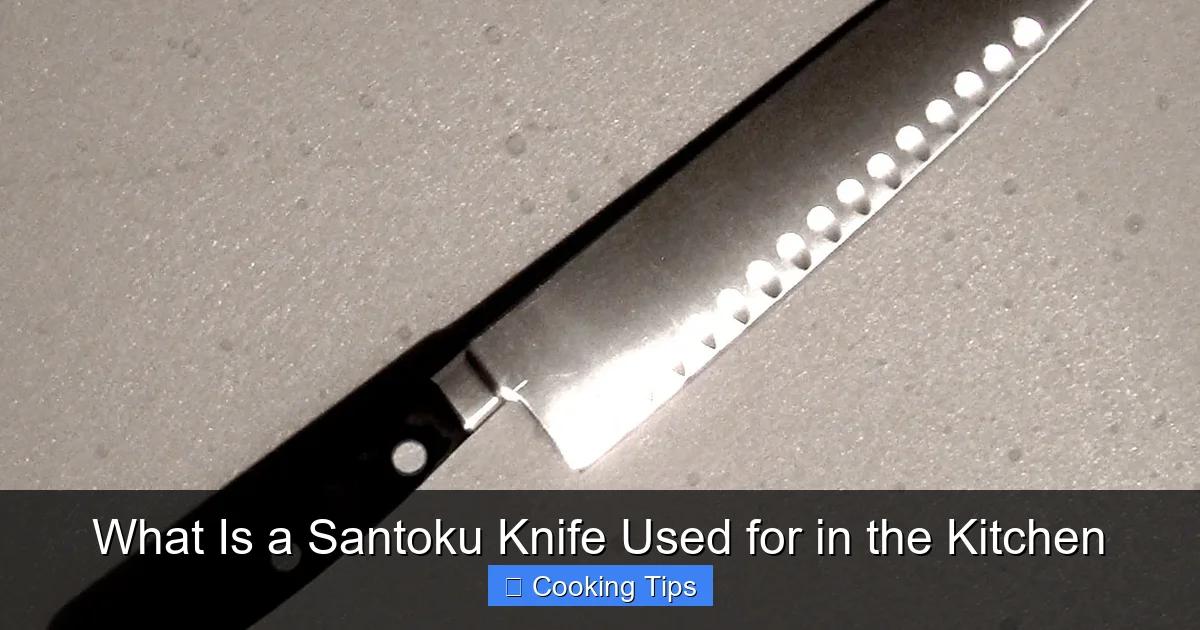
The Santoku knife is a Japanese chef’s knife, perfect for precision tasks in the kitchen. Its unique design makes it ideal for chopping, slicing, and dicing a wide range of ingredients, from vegetables to fish and meat. This guide will equip you with the knowledge to understand and effectively utilize this versatile tool.
Key Takeaways
- A Versatile All-Rounder: The Santoku knife excels at chopping, slicing, and dicing a broad spectrum of ingredients, making it a go-to for many kitchen tasks.
- Unique Blade Design: Its wider blade, straighter edge, and sheepsfoot tip differentiate it from Western chef’s knives, offering enhanced control and stability.
- Effortless Chopping: The straighter edge allows for a rocking motion or a straight down chop, ideal for quickly processing vegetables and herbs.
- Precise Slicing: The Santoku’s sharp edge and balanced weight enable clean, precise slices, particularly useful for fish and boneless meats.
- The Granton Edge Advantage: Many Santoku knives feature a Granton edge (dimples or hollows) which reduces friction and prevents food from sticking to the blade.
- Mastering the Technique: Understanding the proper grip and cutting techniques will unlock the full potential of your Santoku knife.
- Maintenance is Key: Proper cleaning and sharpening will ensure your Santoku knife remains a reliable and efficient kitchen companion for years to come.
What Is a Santoku Knife Used For in the Kitchen?
Welcome to the ultimate guide to the Santoku knife! If you’ve ever wondered about that distinctive-looking Japanese knife gracing your kitchen or a friend’s, you’re in the right place. The Santoku knife, a true workhorse of the modern kitchen, offers a unique blend of functionality and elegance. Its name, “Santoku,” translates to “three virtues” or “three uses” in Japanese, referring to its proficiency in chopping, slicing, and dicing. This guide will dive deep into what makes a Santoku knife so special and how you can leverage its capabilities to elevate your cooking. Whether you’re a seasoned home cook or just starting your culinary journey, understanding the Santoku will undoubtedly enhance your efficiency and enjoyment in the kitchen.
We’ll explore the Santoku’s distinctive features, compare it to other common kitchen knives, and provide practical advice on how to use it for various ingredients and tasks. Get ready to unlock the full potential of this fantastic Japanese blade!
Understanding the Santoku Knife: Design and Features
Before we delve into its uses, let’s first understand what sets the Santoku knife apart. Its design is rooted in centuries of Japanese cutlery tradition, optimized for precision and efficiency.
The Blade: Wider and Straighter
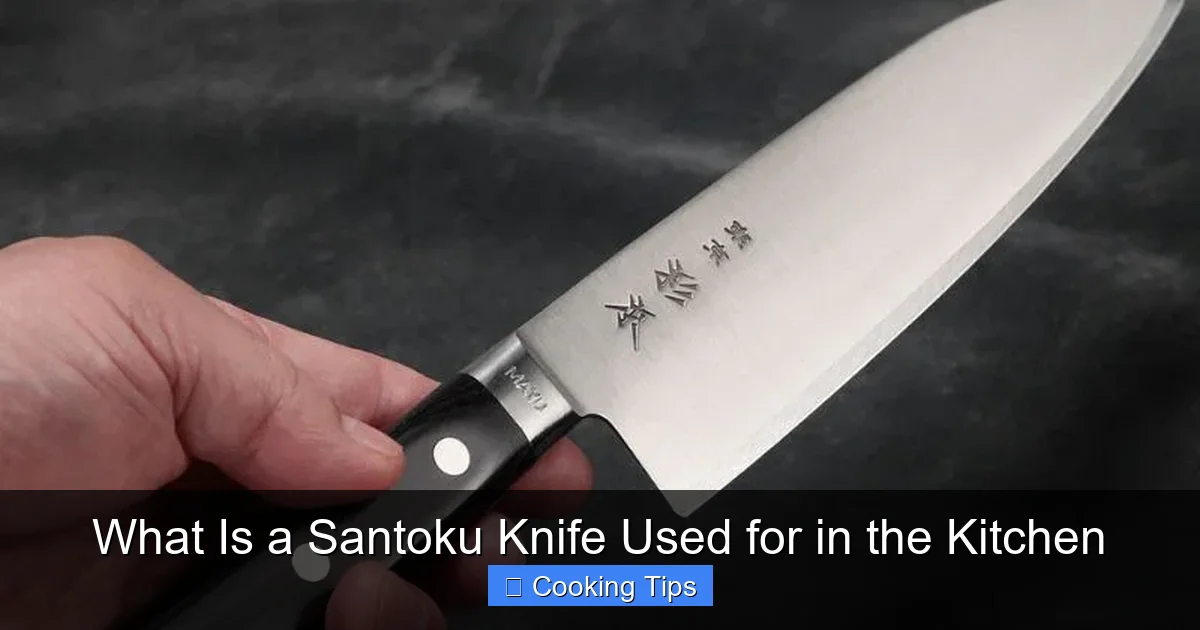
One of the most immediate differences you’ll notice is the Santoku’s blade. Compared to a Western-style chef’s knife, the Santoku’s blade is typically wider and has a less pronounced curve along its edge. The edge is much straighter, extending almost to the tip. This straighter edge is a key feature that dictates many of its uses. It allows for a more direct downward chopping motion, rather than the rocking motion often used with a Western chef’s knife. The wider blade also provides excellent leverage and makes it easier to scoop up ingredients after cutting.
Visual guide about What Is a Santoku Knife Used for in the Kitchen
Image source: cdn.shopify.com
The Tip: The Sheepsfoot Design
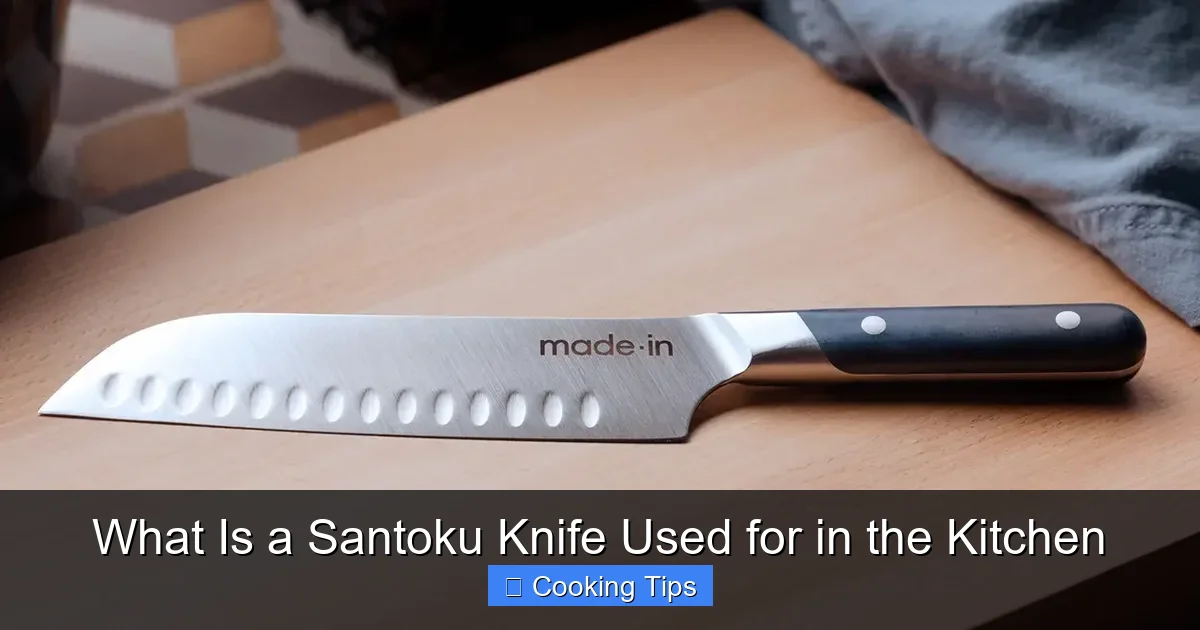
The tip of a Santoku knife is often described as a “sheepsfoot” or “westerly” shape. This means the spine of the knife curves down to meet the edge at a blunt point, or very close to it. This design is intentional. It provides a safer tip for general chopping and dicing, reducing the risk of accidental punctures. It also contributes to the knife’s overall stability and control when performing precise cuts.
The Granton Edge (Optional but Common)
Many Santoku knives are equipped with a “Granton edge,” also known as a kullensliff. These are the characteristic dimples or hollows that run along the sides of the blade. Their primary function is to create air pockets between the blade and the food being cut. This reduces friction, preventing food from sticking to the blade. This is especially beneficial when slicing moist or sticky ingredients like fish, vegetables, and cooked meats. If your Santoku has this feature, you’ll notice a significant improvement in how smoothly food releases from the blade.
Santoku vs. Chef’s Knife: What’s the Difference?
It’s natural to compare the Santoku to the ubiquitous Western chef’s knife. While both are versatile, their design leads to subtle but important differences in their ideal applications.
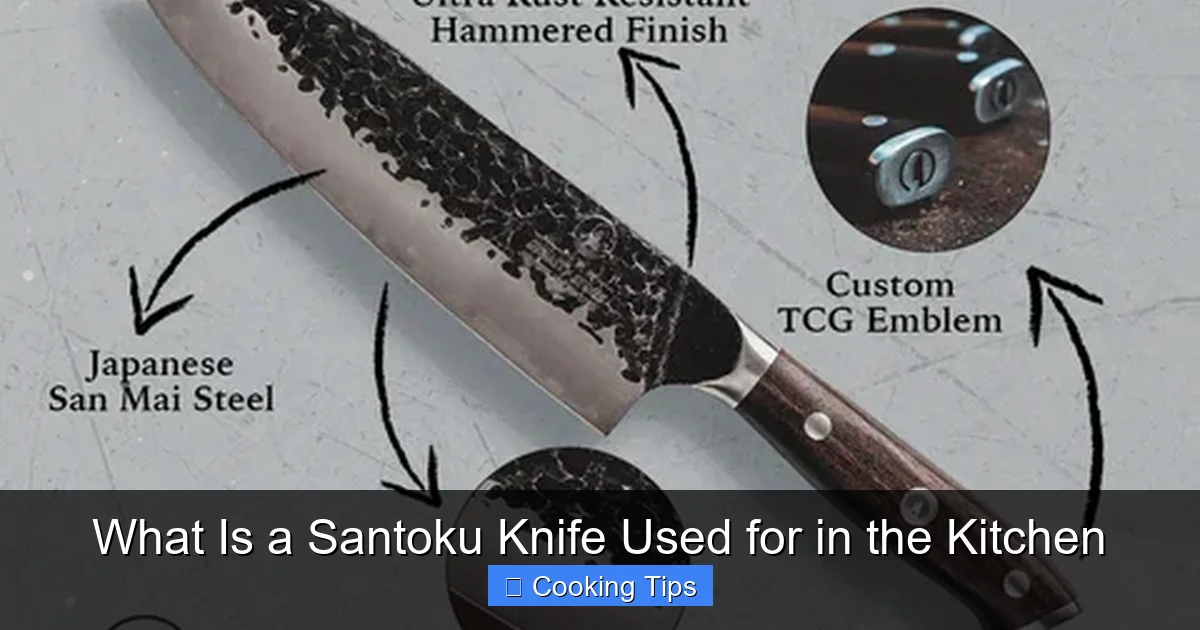
The Western chef’s knife generally has a longer, narrower blade with a more pronounced curve. This curve is perfect for a rocking motion, which is very efficient for mincing herbs and vegetables. The Santoku, with its straighter edge and wider blade, favors a more direct downward chop. While a chef’s knife can do most of what a Santoku can, and vice-versa, understanding their strengths allows you to choose the right tool for the job. The Santoku often feels more balanced and controlled for detailed tasks and is a fantastic alternative for those who prefer a more direct cutting style.
Visual guide about What Is a Santoku Knife Used for in the Kitchen
Image source: cdn.shopify.com
What Is a Santoku Knife Used For? The Three Virtues in Action
As its name suggests, the Santoku knife truly shines in three core areas: chopping, slicing, and dicing. Let’s explore each of these in detail.
1. Chopping: Effortless Efficiency
The Santoku excels at chopping due to its straighter edge. This design allows you to use a simple, direct downward motion. You don’t need to rock the knife extensively. This makes it incredibly efficient for processing large volumes of ingredients quickly.
Visual guide about What Is a Santoku Knife Used for in the Kitchen
Image source: preppykitchentips.com
Vegetable Preparation
For vegetables like onions, carrots, bell peppers, and potatoes, the Santoku is a dream. You can simply line them up and chop them down with ease. The wider blade helps to gather the chopped ingredients, making your prep work faster.
Herb Mincing
While a chef’s knife is often preferred for extensive herb mincing due to its rocking motion, the Santoku can still do a capable job. For finer mincing, you can still employ a slight rocking motion, but the straighter edge means you might need to make slightly more distinct passes. For larger cuts of herbs for garnishes or more rustic dishes, the Santoku is perfect.
Boning and Cutting Larger Vegetables
The wider blade can also be useful for tackling larger, tougher vegetables. While it’s not a cleaver, its sturdiness and sharp edge can help you cut through things like butternut squash or large heads of cabbage with more confidence.
2. Slicing: Precision and Control
The sharp, straight edge of the Santoku knife, combined with its balanced weight, makes it ideal for producing clean, precise slices.
Fish Filleting and Slicing
This is where the Santoku truly shines. Its ability to make clean, thin slices is perfect for preparing sushi, sashimi, or simply for delicate fish fillets. The Granton edge, if present, is particularly beneficial here, preventing the delicate flesh from sticking to the blade. You can achieve beautiful, uniform slices of fish with minimal effort.
Meat Slicing
For boneless meats, the Santoku performs admirably. Whether you’re slicing chicken breasts, beef steaks, or pork tenderloin, you can achieve thin, even slices. This is great for stir-fries, fajitas, or preparing meats for other dishes. It’s important to note that the Santoku is generally not designed for cutting through bone, so use it for boneless cuts.
Fruit and Vegetable Slicing
From slicing tomatoes thinly for salads to creating uniform rounds of cucumbers or apples, the Santoku offers excellent control. Its precision allows you to get paper-thin slices when needed, which can elevate the presentation of your dishes.
3. Dicing: Uniformity and Speed
Dicing involves cutting food into small, uniform cubes. The Santoku’s design is well-suited for this task, allowing for consistent results.
Vegetable Dicing
Whether you’re dicing onions for a mirepoix, potatoes for a stew, or bell peppers for a salsa, the Santoku helps you achieve uniform cubes. The straight edge allows for clean cuts, and the wider blade makes it easy to manage the pieces as you work.
Mise en Place
The term “mise en place” refers to having all your ingredients prepped and ready before you start cooking. The Santoku knife is an invaluable tool for efficiently completing your mise en place. Its versatility means you can use it for almost every ingredient, saving you time and effort.
Practical Tips for Using Your Santoku Knife
To get the most out of your Santoku knife, consider these practical tips:
Proper Grip
Hold the knife with a pinch grip. This involves gripping the base of the blade between your thumb and index finger, with your other fingers wrapped around the handle. This grip offers the most control and precision, allowing you to guide the blade effectively.
Cutting Technique
For chopping, use a decisive downward motion. For slicing, a smooth, forward-and-back motion along the edge will produce the cleanest cuts. Don’t force the knife; let its sharpness do the work.
Using the Granton Edge
If your Santoku has a Granton edge, don’t be afraid to let it do its job. The dimples help to release food, so try to keep the blade moving smoothly. This feature is particularly useful for sticky ingredients.
Safety First
Always cut on a stable cutting board. Keep your fingers tucked under when chopping to protect them. Never try to catch a falling knife.
When to Reach for Your Santoku
Think of your Santoku when you are:
- Chopping a large quantity of vegetables.
- Slicing boneless meats or fish thinly and precisely.
- Dicing ingredients for stir-fries, salads, or side dishes.
- Preparing ingredients for sushi or sashimi.
- You want a versatile knife that can handle most everyday kitchen tasks.
- You prefer a more controlled, direct cutting motion.
When You Might Choose a Different Knife
While the Santoku is incredibly versatile, there are times when another knife might be more suitable:
- Bones and Hard Shells: For breaking down large cuts of meat or cutting through bones, a heavy-duty cleaver or a boning knife would be more appropriate.
- Extensive Rocking Minces: If you do a lot of fine mincing of herbs using a rocking motion, a well-curved chef’s knife might feel more natural.
- Paring Tasks: For small, intricate tasks like peeling or hulling small fruits and vegetables, a paring knife is the best choice.
Maintaining Your Santoku Knife
To ensure your Santoku knife remains a sharp and reliable tool, proper maintenance is crucial.
Cleaning
Always wash your Santoku knife by hand. Avoid using the dishwasher, as the harsh detergents and the high heat can dull the blade and damage the handle. Wash it immediately after use with warm, soapy water and dry it thoroughly with a soft cloth. This prevents rust and keeps the blade in pristine condition.
Sharpening
A dull knife is more dangerous than a sharp one, as it requires more force and can slip. Regularly sharpen your Santoku knife using a whetstone or a good-quality knife sharpener. Japanese knives often have a steeper, more acute angle, so if you’re using a whetstone, research the recommended angle for your specific knife (often around 15 degrees per side).
Storage
Store your Santoku knife properly to protect the blade. Use a knife block, a magnetic strip, or blade guards. This prevents the edge from getting damaged and also protects you from accidental cuts when reaching for a knife.
Conclusion: Embracing the Santoku
The Santoku knife is more than just a kitchen utensil; it’s a testament to thoughtful design and culinary efficiency. Its unique shape, with the wider blade, straighter edge, and sheepsfoot tip, makes it a master of chopping, slicing, and dicing. Whether you’re a professional chef or a home cook looking to improve your kitchen skills, embracing the Santoku can significantly streamline your preparation process and elevate the quality of your results. By understanding its strengths and using it with proper technique, you’ll find yourself reaching for your Santoku more and more. So, next time you’re faced with a mountain of vegetables or a delicate piece of fish, remember the “three virtues” of the Santoku and let it become your trusted companion in the kitchen.
