

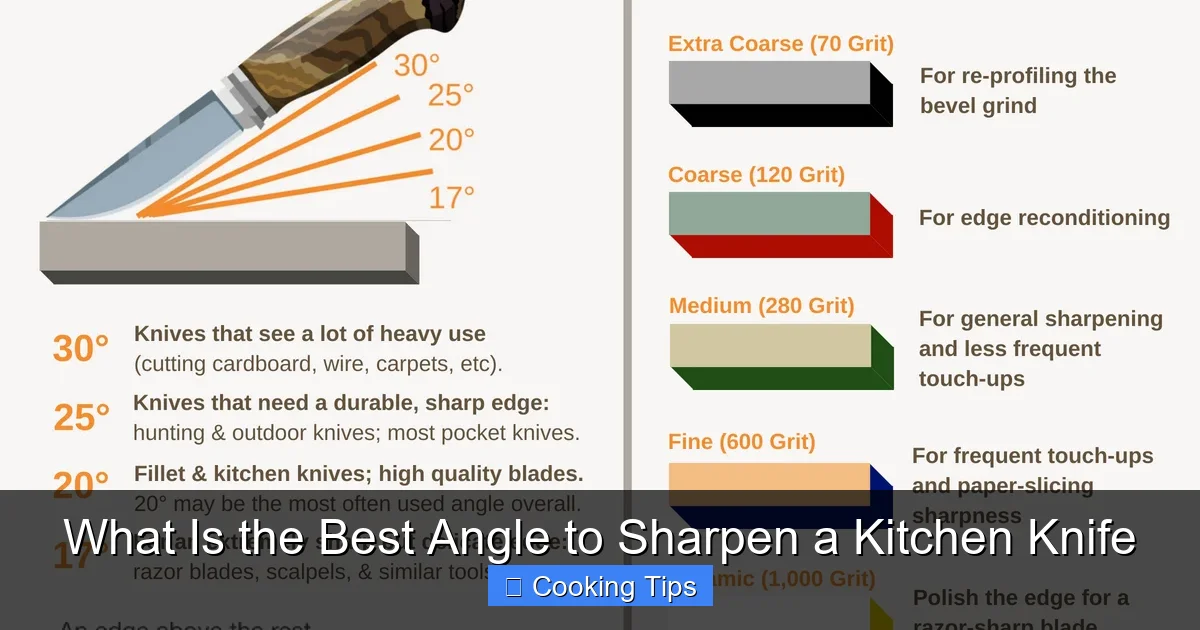
The best angle to sharpen a kitchen knife depends on the knife’s type and intended use. Generally, a lower angle creates a sharper, more delicate edge, while a higher angle yields a more durable edge. This guide will walk you through understanding these angles and how to achieve them for optimal cutting performance in your kitchen.
So, what is the best angle to sharpen a kitchen knife? It’s a question that sparks debate among home cooks and professional chefs alike. The truth is, there isn’t a single, universally “best” angle that applies to every single knife. Instead, the ideal sharpening angle is a nuanced decision influenced by the type of knife, the steel it’s made from, and how you primarily use it in your kitchen.
This guide will demystify the concept of sharpening angles. We’ll explore why angles matter, break down the common angles used, and help you determine the sweet spot for your own kitchen knives. By the end of this, you’ll be well-equipped to sharpen your knives to perfection, making your time in the kitchen more efficient and enjoyable.
Key Takeaways
- Understanding Knife Angles: The angle at which you sharpen your knife is crucial for its edge retention and cutting ability.
- The “Sweet Spot” for Most Knives: For general-purpose kitchen knives, an angle between 15 and 20 degrees per side is often considered the best.
- Lower Angles for Precision: Sharpening at a lower angle (10-15 degrees) creates a sharper, more acute edge, ideal for delicate tasks like filleting fish or slicing tomatoes.
- Higher Angles for Durability: A higher angle (20-25 degrees) results in a stronger, more robust edge that is less prone to chipping and is better suited for tougher tasks like chopping dense vegetables or butchering meat.
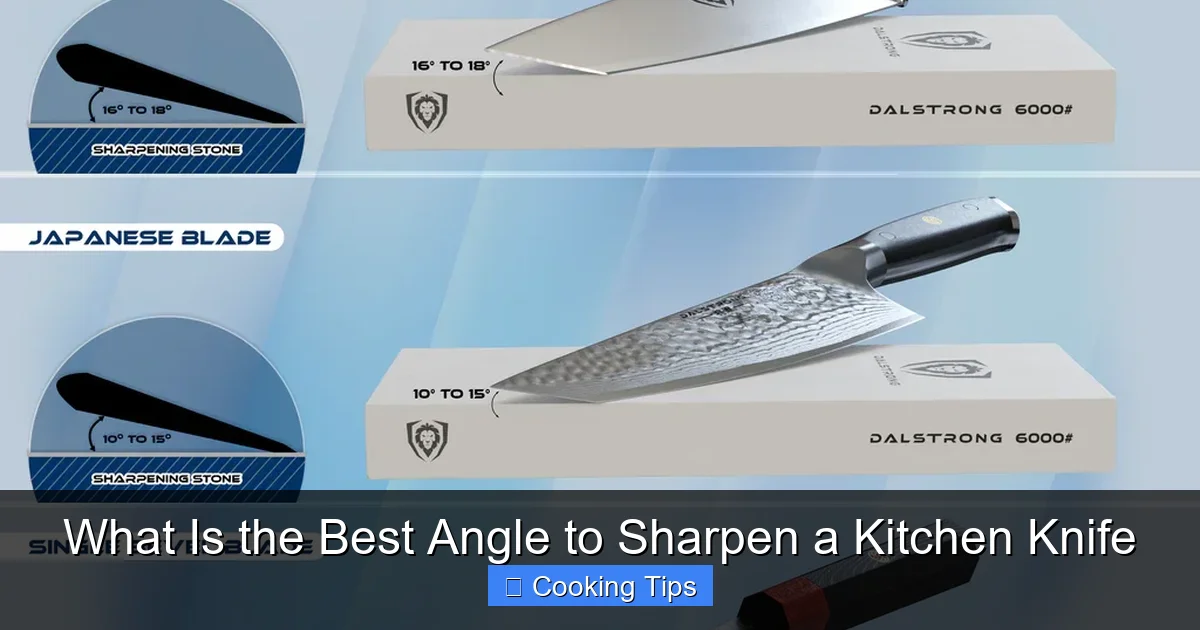
- Japanese vs. Western Knives: Japanese knives typically use lower angles (around 10-15 degrees), while Western knives often benefit from slightly higher angles (around 15-20 degrees).
- Finding Your Angle: Experimentation and understanding your specific knife and how you use it are key to finding your personal “best” sharpening angle.
- Consistency is Key: Regardless of the angle chosen, maintaining a consistent angle throughout the sharpening process is more important than the exact degree.
Why Sharpening Angles Matter
Think of your knife’s edge as a tiny V-shaped wedge. The angle of this wedge determines its performance. A narrower angle creates a finer, sharper point that can slice through food with ease. However, this delicate edge can also be more prone to damage, like chipping or rolling. A wider angle creates a more robust, durable edge that can withstand more abuse but might not be as exceptionally sharp.
The angle you choose impacts several key aspects of your knife’s performance:
- Sharpness: A lower angle leads to a sharper edge.
- Durability: A higher angle creates a stronger edge.
- Edge Retention: How long the edge stays sharp depends on both the angle and the steel.
- Cutting Feel: The way the knife glides through food.
Understanding these trade-offs is the first step to mastering your knife’s sharpening angle.
Common Sharpening Angles Explained
Visual guide about What Is the Best Angle to Sharpen a Kitchen Knife
Image source: i.ytimg.com
Most sharpening guides and systems will present you with a range of angles. Let’s break down what each commonly encountered angle typically offers:
The 10-15 Degree Angle (Low Angle)
This is the realm of the very sharp, very delicate edge.
- Characteristics: Extremely sharp, acute cutting angle.
- Best For:
- Japanese knives, which are often made from harder steels that can support a finer edge.
- Delicate tasks like filleting fish, skinning small game, or thinly slicing soft fruits and vegetables like tomatoes.
- Cooks who prioritize an incredibly keen edge for precise work.
- Considerations: This edge is less durable. It’s more susceptible to damage from twisting, prying, or cutting into hard surfaces like bones or frozen foods. You’ll likely need to touch up the edge more frequently.
When you see a knife with a very fine, almost scary-sharp edge, it’s likely been sharpened to a lower angle.
The 15-20 Degree Angle (Medium Angle)
This is often considered the “sweet spot” for many kitchen knives, offering a good balance between sharpness and durability.
- Characteristics: Very sharp, yet reasonably durable.
- Best For:
- Western-style chef’s knives and most general-purpose kitchen knives.
- A wide variety of tasks, from chopping vegetables and herbs to slicing meats.
- Home cooks who want a sharp, versatile knife that can handle everyday kitchen demands.
- Considerations: This angle provides a good compromise. It’s sharp enough for most tasks but strong enough to resist chipping and rolling with typical kitchen use.
Many knife manufacturers recommend this range for their knives. It’s a safe and effective bet for most situations.
The 20-25 Degree Angle (High Angle)
This angle prioritizes durability and robustness.
- Characteristics: A thicker, stronger edge that is very resistant to damage.
- Best For:
- Heavy-duty tasks like butchering, chopping through dense root vegetables, or breaking down poultry.
- Knives made from softer steels that might otherwise chip at lower angles.
- Cooks who are rougher on their knives or frequently deal with demanding cutting jobs.
- Considerations: While durable, the edge won’t be as razor-sharp as those sharpened at lower angles. It might require more effort to slice through very soft or delicate items.
This angle is less common for typical culinary knives but can be useful for specialized tools or particularly demanding environments.
Identifying Your Knife’s Steel and Origin
Visual guide about What Is the Best Angle to Sharpen a Kitchen Knife
Image source: edgeproinc.com
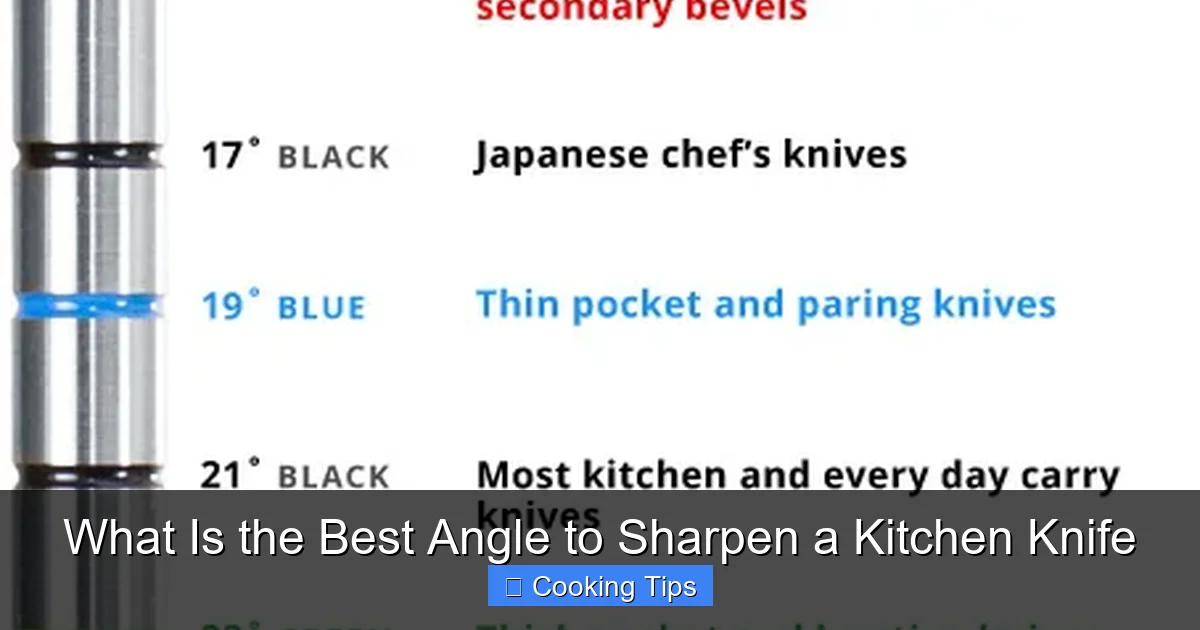
The type of steel your knife is made from and its origin (e.g., Japanese or Western) are huge clues to the best sharpening angle.
Japanese Knives
Japanese knives are renowned for their incredible sharpness and often feature very hard steels. These steels, while allowing for exceptional sharpness, can be more brittle.
- Typical Steel Hardness: High (often 58-62 HRC on the Rockwell scale).
- Recommended Angle: Generally 10-15 degrees per side.
- Why: The harder steel can hold a very fine edge at a low angle. The fine edge allows the knife to glide through food with minimal resistance, which is a hallmark of Japanese cutlery.
If you have a high-end Japanese chef’s knife, a Santoku, or a Nakiri, you’ll likely want to aim for a lower sharpening angle.
Western Knives
Western-style knives, often referred to as German-style knives, are typically made from slightly softer, more flexible steels. This makes them more durable and less prone to chipping.
- Typical Steel Hardness: Medium to High (often 54-58 HRC).
- Recommended Angle: Generally 15-20 degrees per side.
- Why: The slightly softer steel benefits from a slightly wider angle to ensure the edge doesn’t chip or roll easily. This angle provides a great balance of sharpness and resilience for everyday kitchen use.
Your everyday chef’s knife, utility knife, or paring knife from a well-known Western brand will likely fall into this category.
How to Achieve the Correct Sharpening Angle
Visual guide about What Is the Best Angle to Sharpen a Kitchen Knife
Image source: cdn.shopify.com
Knowing the ideal angle is one thing; achieving it consistently is another. Here’s how to do it with different sharpening tools.
Using a Sharpening Stone (Whetstone)
Sharpening stones are the traditional and most effective way to sharpen knives, offering the most control over the angle.
Step-by-Step Sharpening with Stones:
- Prepare Your Stone: If using a water stone, soak it in water until bubbles stop appearing. For oil stones, apply a thin layer of honing oil.
- Find Your Angle: This is the crucial part.
- The Marker Trick: Use a permanent marker to color the bevel of your knife (the angled part of the edge). As you sharpen, you’ll see where the marker is being removed. If you’re hitting the very edge of the bevel, you’re at the correct angle.
- Angle Guides: Many sharpening systems and even some stones come with angle guides that clip onto the knife. These are excellent for beginners.
- Freehand Practice: With practice, you’ll develop a feel for the angle. A common analogy is that 15-20 degrees per side looks like the angle of a matchstick head or the width of your thumb.
- Sharpen One Side: Place the knife on the stone at your chosen angle. Apply gentle, even pressure.
- Stroke Direction: Typically, you’ll use a pushing or sweeping motion away from the edge, moving the knife from heel to tip across the stone.
- Consistency: Try to maintain the same angle throughout the stroke.
- Create a “Burr”: After several strokes on one side, you’ll feel a slight “burr” or wire edge forming on the opposite side of the edge. You can feel this by gently running your fingertip across the edge, away from the blade. This burr indicates you’ve sharpened all the way to the apex.
- Switch Sides: Flip the knife over and repeat the process on the other side until you raise a burr on the first side.
- Refine the Edge: Once you’ve raised a burr on both sides, you’ll typically want to do a few alternating strokes with lighter pressure to remove the burr and refine the apex.
- Strop (Optional but Recommended): For the sharpest edge, finish by stropping the knife on leather or a fine-grit stone. This polishes the edge and further removes any remaining burr.
Using a Pull-Through Sharpener
Pull-through sharpeners are convenient but offer less control over the angle and can sometimes be too aggressive.
How to Use a Pull-Through Sharpener:
- Identify the Slots: Most pull-through sharpeners have multiple slots, often labeled “coarse” or “fine,” and sometimes indicating angles.
- Start with Coarse (if needed): If your knife is very dull or has nicks, use the coarse slot first.
- Pull Gently: Place the heel of the knife into the designated slot and pull it towards you with moderate, consistent pressure. Do not saw back and forth.
- Repeat: Pull the knife through the slot several times (e.g., 5-10 times).
- Move to Fine: If a fine slot is available, repeat the process to refine the edge.
Important Note: Be aware that pull-through sharpeners often have fixed angles that might not be ideal for all your knives. They are best for quick touch-ups on more durable knives.
Using an Electric Sharpener
Electric sharpeners are fast and easy but also have fixed angles.
How to Use an Electric Sharpener:
- Read the Instructions: Each electric sharpener is different. Always read the manufacturer’s instructions first.
- Select the Correct Slot: Many have slots for sharpening, honing, and polishing.
- Guide the Knife: Place the heel of the knife into the sharpening slot and gently pull it through. The machine does the grinding.
- Follow the Angle: The design of the machine dictates the angle, which is usually in the 15-20 degree range for most general-purpose sharpeners.
- Use Honing Slots: Follow up with the honing or polishing slots to refine the edge.
Caution: Electric sharpeners can remove a lot of metal quickly. Be careful not to over-sharpen, as this can shorten the life of your knife.
Tips for Finding and Maintaining Your Ideal Angle
* Start with Recommendations: If your knife came with instructions, check them for recommended sharpening angles.
* Observe Your Knife’s Bevel: Look at the existing bevel on your knife. The angle it’s currently sharpened at can be a good indicator.
* Consider Your Cutting Style: Do you chop vigorously or slice delicately? This can guide your choice.
* Practice Makes Perfect: Don’t be discouraged if your first few attempts aren’t perfect. Sharpening is a skill that improves with practice.
* Consistency Over Perfection: It’s more important to maintain a consistent angle throughout each stroke than to hit an exact degree with every single stroke.
* Regular Honing is Key: A honing steel (also called a sharpening steel) doesn’t sharpen the knife; it realigns a slightly bent edge. Regular honing between sharpening sessions will help maintain sharpness and make your knives perform better for longer. Use a honing steel at roughly the same angle you sharpen your knife.
Troubleshooting Common Sharpening Issues
* “My knife still feels dull”:
* You might not be reaching the very apex of the edge. Ensure you’re creating a burr.
* You might be using too coarse a grit stone, which creates a jagged edge. Finish with finer grits.
* You might not be holding the angle consistently.
* “My knife chips easily”:
* You might be using too low an angle for the steel or the type of cutting you do. Try increasing the angle slightly.
* The steel might be too hard to support such a fine edge.
* “I can’t feel a burr”:
* You might not be sharpening enough passes.
* You might be using a very fine grit stone from the start, making the burr harder to detect. Try a coarser stone first.
Conclusion
The “best” angle to sharpen a kitchen knife isn’t a one-size-fits-all answer. It’s a thoughtful consideration of your knife’s design, its steel, and your personal cutting habits. For most Western-style kitchen knives, an angle of 15-20 degrees per side offers an excellent balance of sharpness and durability. For lighter, more delicate work or with Japanese knives, a lower angle of 10-15 degrees can unlock incredible cutting performance.
Ultimately, the most important aspects of sharpening are consistency and understanding what works best for you and your tools. Don’t be afraid to experiment a little with your less expensive knives. With practice and attention to detail, you’ll soon be sharpening your kitchen knives with confidence, ensuring every slice and chop is a pleasure.
