

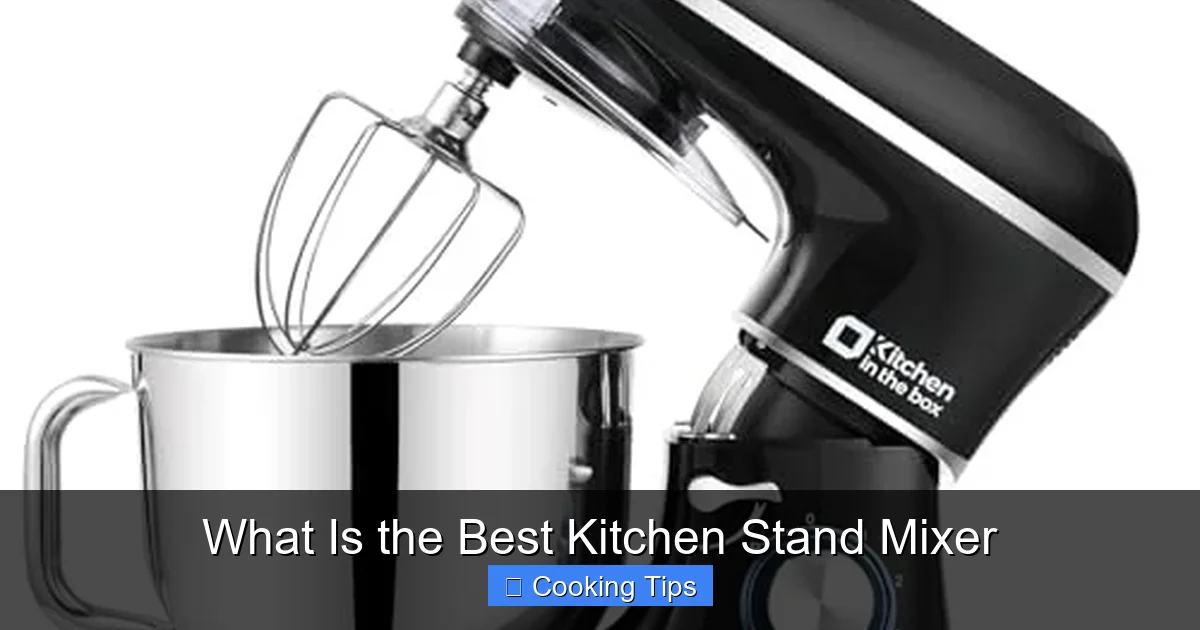
Looking for the best kitchen stand mixer? This comprehensive guide will help you navigate the options. We’ll explore different types of mixers, essential features to consider, popular brands, and how to match a mixer’s capabilities to your specific cooking and baking needs. Get ready to elevate your kitchen game with the perfect stand mixer for you!
What Is the Best Kitchen Stand Mixer
Are you tired of wrestling with a hand mixer that strains your arm and delivers inconsistent results? Do you dream of effortlessly whipping cream, kneading dough, and creating show-stopping cakes? If so, it’s time to welcome a kitchen stand mixer into your culinary arsenal. But with so many options on the market, how do you choose the best kitchen stand mixer for your needs? This guide is here to demystify the world of stand mixers, from understanding their different types to identifying the features that truly matter. By the end, you’ll have the knowledge to confidently select a stand mixer that will become your trusty kitchen companion for years to come.
Let’s dive in and discover what makes a stand mixer “the best” for *you*.
Key Takeaways
- Understand Mixer Types: Planetary mixers are ideal for most home bakers, while spiral mixers are better suited for high-volume bread making.
- Essential Features Matter: Look for variable speed control, a powerful motor, durable construction, and a good range of attachments for versatility.
- Capacity is Crucial: Consider the size of your typical recipes. Bowl capacity ranges from compact 3-quart models to large 7-quart or even commercial-sized units.
- Budget Wisely: Stand mixers vary significantly in price. Determine your budget and prioritize features that align with your cooking habits.
- Consider Brand Reputation: Established brands like KitchenAid, Cuisinart, and Bosch often offer reliable performance and excellent customer support.
- Think About Attachments: Extra attachments like pasta makers, meat grinders, and ice cream bowls can significantly expand your mixer’s functionality.
- Read Reviews: User reviews provide valuable insights into real-world performance, durability, and any potential drawbacks.
Understanding the Different Types of Stand Mixers
Before you can choose the best kitchen stand mixer, it’s important to understand the fundamental types available. While most home cooks will gravitate towards one primary style, knowing the differences can prevent costly mistakes and ensure you get the right tool for your culinary tasks.
Planetary Mixers
This is the most common type of stand mixer found in home kitchens. The name “planetary” comes from the way the beater moves. It rotates on its own axis while also revolving around the inside of the bowl, much like planets orbit the sun. This unique motion ensures that all ingredients are thoroughly mixed and scraped from the sides of the bowl.
* Best for: Cake batters, cookie dough, meringues, whipping cream, and general mixing tasks.
* Pros: Versatile, efficient for most baking and cooking, relatively easy to use and clean, wide variety of attachments available.
* Cons: Can sometimes struggle with very stiff bread doughs compared to spiral mixers.
Spiral Mixers
Spiral mixers are less common in typical home kitchens but are a staple in bakeries, especially for bread making. They feature a spiral-shaped dough hook that rotates, while the bowl also rotates in the opposite direction. This design is specifically engineered to efficiently knead large batches of bread dough.
* Best for: Kneading large quantities of bread dough.
* Pros: Excellent at developing gluten in bread dough, efficient for high-volume baking.
* Cons: Limited versatility for other baking tasks like beating egg whites or mixing light batters, generally more expensive and bulkier.
For the purpose of this guide, we will focus primarily on planetary stand mixers, as they are the most relevant for the majority of home cooks seeking the best kitchen stand mixer.
Key Features to Consider When Buying a Stand Mixer
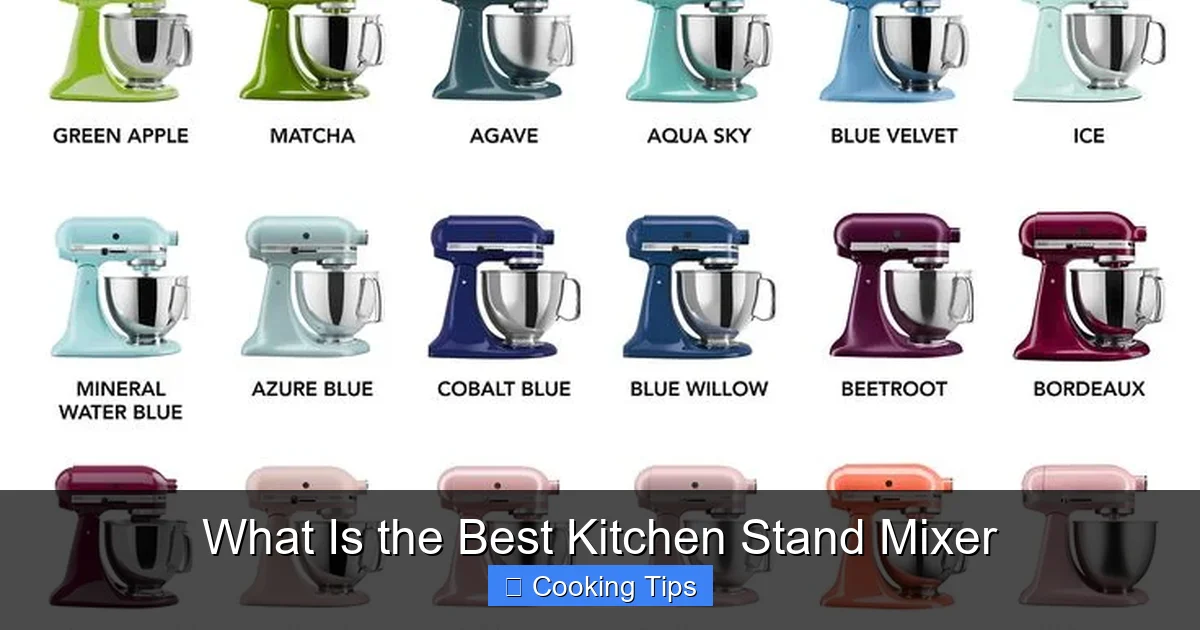
Visual guide about What Is the Best Kitchen Stand Mixer
Image source: i.pinimg.com
Now that you know the types, let’s break down the essential features that differentiate one stand mixer from another. These are the aspects you’ll want to evaluate carefully to ensure you’re investing in a quality appliance.
Motor Power and Performance
The wattage of a stand mixer’s motor is often advertised, but it’s not the only indicator of power. While a higher wattage generally suggests more power, the gear system and overall build quality play a significant role in how effectively the mixer can handle heavy loads.
* What to look for: For general baking and mixing, 300-500 watts is usually sufficient. If you plan on making a lot of bread dough or heavy cookie doughs, look for models with 600 watts or more. Some high-end mixers have incredibly powerful, direct-drive motors that can handle tough jobs with ease.
* Tip: Don’t just rely on wattage. Look for reviews that specifically mention how well the mixer handles dense doughs.
Bowl Capacity
The size of the mixing bowl is a critical factor, especially if you often bake in large batches or for a crowd. Bowls are typically measured in quarts.
* Small batches or individuals: A 3-quart to 4.5-quart bowl might be sufficient.
* Average family or moderate baking: A 5-quart bowl is a very popular and versatile size.
* Large families or frequent, large-batch baking: Consider 6-quart or 7-quart models.
* Tip: It’s often better to have a slightly larger bowl than you think you need, as it prevents overfilling and makes cleanup easier.
Speed Settings
Variable speed control is a must-have feature for any good stand mixer. It allows you to start ingredients slowly to prevent splattering, gradually increase speed for mixing, and then reach high speeds for whipping.
* What to look for: At least 4-6 speed settings are standard. Some mixers offer even more precise control.
* Tip: A “slow start” or “soft start” feature is incredibly useful for preventing flour explosions when you first turn the mixer on.
Construction and Durability
A stand mixer is an investment, and you want it to last. The build quality will tell you a lot about its longevity.
* What to look for: Full metal construction, especially for the base and gears, is a good sign of durability. Plastic components can be prone to breaking over time, especially under heavy use. Check for a sturdy base that won’t wobble during operation.
* Tip: Tilt-head mixers are generally easier to access for adding ingredients and removing the bowl, while bowl-lift mixers are more robust and better suited for heavy-duty tasks.
Attachments and Versatility
One of the biggest advantages of a stand mixer is its ability to perform tasks beyond simple mixing and kneading with the help of various attachments.
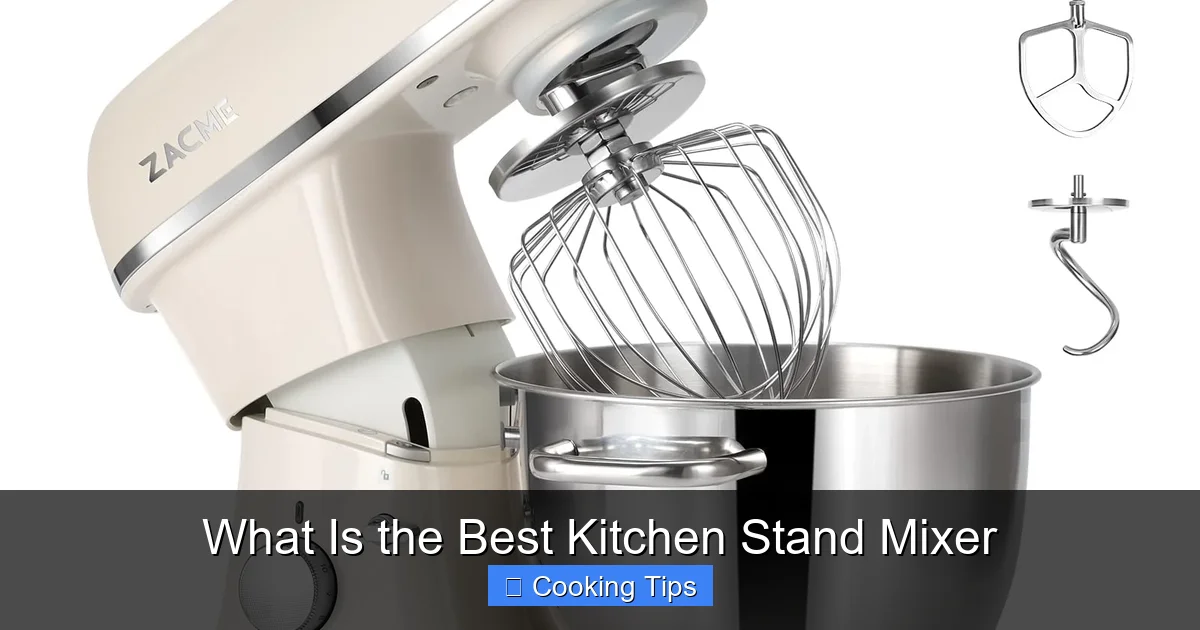
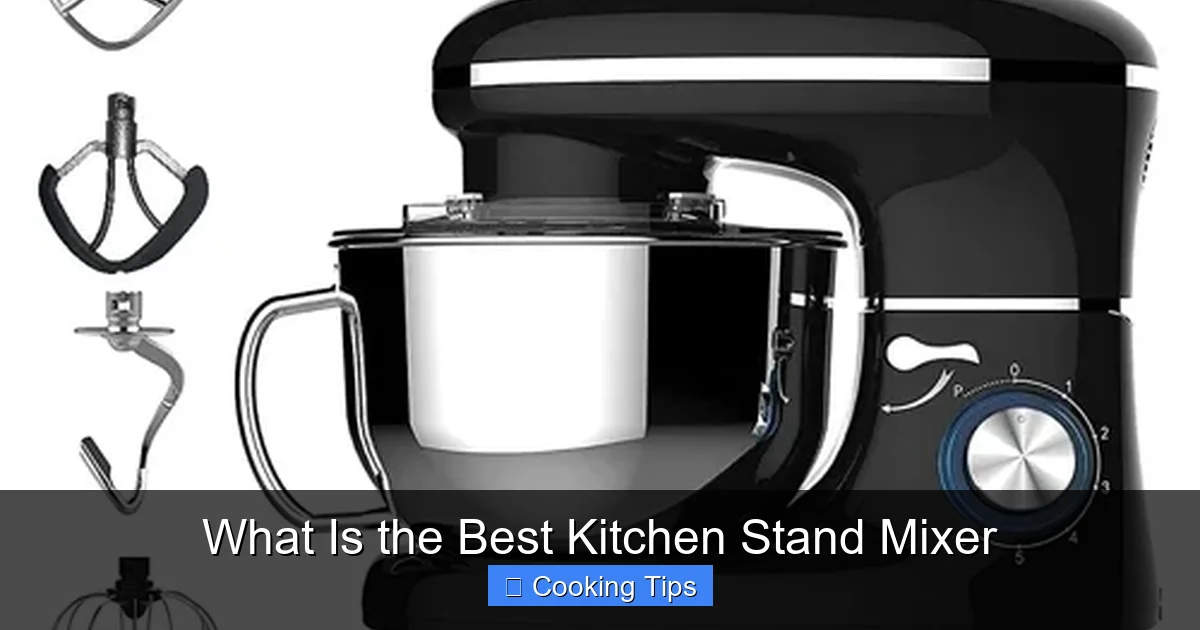
* Included attachments: Most stand mixers come with a flat beater (for general mixing), a dough hook (for kneading), and a wire whisk (for whipping cream and egg whites).
* Optional attachments: The “power hub” or attachment port on many mixers allows you to connect a wide range of accessories, such as:
* Pasta maker attachments
* Meat grinder attachments
* Ice cream maker bowls
* Vegetable spiralizers
* Grain mill attachments
* Tip: If you envision using your stand mixer for more than just basic baking, research the availability and cost of the attachments you might want.
Ease of Use and Cleaning
Even the most powerful stand mixer is useless if it’s a chore to operate or clean.
* What to look for: A bowl that locks securely into place, an easy-to-operate tilt-head or bowl-lift mechanism, and dishwasher-safe bowls and beaters are major pluses.
* Tip: Consider the weight of the mixer. If you plan to store it in a cabinet, you’ll want to be able to move it easily.
Top Stand Mixer Brands to Consider
Visual guide about What Is the Best Kitchen Stand Mixer
Image source: m.media-amazon.com
When it comes to stand mixers, a few brands have consistently earned reputations for quality, durability, and performance.
KitchenAid
KitchenAid is arguably the most iconic stand mixer brand. They offer a vast range of models, from the classic Artisan series to the powerful Pro Line.
* Pros: Wide selection of colors and finishes, extensive attachment ecosystem, durable construction, excellent performance for most tasks.
* Cons: Can be pricier, some models might be heavier than comparable brands.
* Best for: Home bakers of all levels, those who value aesthetics and a wide range of customization.
Cuisinart
Cuisinart offers a strong contender in the stand mixer market, often providing excellent value for money. Their mixers are known for their robust build and powerful motors.
* Pros: Powerful motors, good build quality, often more affordable than KitchenAid, good range of included accessories.
* Cons: Attachment selection might be slightly less extensive than KitchenAid.
* Best for: Home cooks looking for a powerful and reliable mixer without the premium price tag.
Bosch
Bosch stand mixers, particularly their Universal Plus model, are highly regarded for their quiet operation, efficient mixing, and ability to handle large batches.
* Pros: Powerful, efficient, handles large batches well, often very quiet, bowl-lift design for stability.
* Cons: Distinctive design might not appeal to everyone, attachment system is different from KitchenAid.
* Best for: Serious bakers who frequently make large batches, especially bread.
Smeg
Smeg mixers are known for their retro aesthetic and vibrant color options, bringing a touch of vintage charm to the kitchen. They offer solid performance with a stylish flair.
* Pros: Beautiful design, good performance, range of attractive colors.
* Cons: Can be more expensive than other brands, performance may not always match the price point compared to some competitors.
* Best for: Those who prioritize design and aesthetics alongside functional cooking.
How to Choose the Best Kitchen Stand Mixer for You
Visual guide about What Is the Best Kitchen Stand Mixer
Image source: housetastic.co.uk
Now that you understand the features and brands, let’s put it all together to make your decision. The “best” stand mixer is highly personal and depends on your individual needs and preferences.
Step 1: Assess Your Baking and Cooking Habits
This is the most crucial step. Be honest with yourself about how you’ll primarily use the mixer.
* **Occasional baker of simple recipes (cookies, cakes):** A 5-quart mixer with a 300-400 watt motor and standard attachments will likely suffice.
* **Frequent baker, making larger batches or richer doughs:** Aim for a 5-quart or 6-quart bowl with a more powerful motor (400-600 watts) and sturdy construction.
* **Serious bread baker:** Consider a larger bowl (6-7 quarts) and a mixer known for its dough-kneading capabilities, like a Bosch or a powerful KitchenAid Pro line model.
* **Someone who wants to make pasta, ice cream, or grind meat:** Prioritize a model with a robust power hub and a wide selection of available attachments.
Step 2: Determine Your Budget
Stand mixers can range from under $200 to over $600. Set a realistic budget before you start shopping.
* **Entry-level:** You can find decent 4.5-5 quart mixers for $200-$300.
* **Mid-range:** Most popular models with good features fall into the $300-$500 range.
* **High-end/Professional:** Expect to pay $500+ for top-tier models with the most power and capacity.
* **Tip:** Consider waiting for sales events or looking for refurbished models from reputable retailers to save money.
Step 3: Read Reviews and Compare Models
Once you have a few models in mind, dive deep into reviews. Look for recurring comments about performance, durability, ease of cleaning, and customer service.
* **Where to look:** Consumer review websites, cooking blogs, online retailer reviews (Amazon, Best Buy, etc.).
* **What to look for in reviews:**
* Does the mixer struggle with stiff doughs?
* Is it noisy?
* Are the attachments easy to use and clean?
* How is the customer support if there’s a problem?
Step 4: Consider Physical Space and Aesthetics
Stand mixers can be quite bulky. Think about where you’ll store it when not in use and if it will live on your countertop.
* **Countertop display:** If it’s going to be a permanent fixture, consider the design and color to match your kitchen decor.
* **Storage:** Measure your cabinets or pantry space to ensure it will fit.
* **Weight:** If you’ll be moving it frequently, lighter models might be preferable, but don’t sacrifice power for weight.
Troubleshooting Common Stand Mixer Issues
Even the best kitchen stand mixer can encounter minor hiccups. Here are a few common issues and how to address them.
My mixer is making a strange noise.
* **Possible cause:** The motor might be straining, or the gears might need lubrication.
* **Solution:** For lighter tasks, ensure you’re not overfilling the bowl. For persistent noise, consult your owner’s manual or contact the manufacturer’s customer support. Some manufacturers offer maintenance services.
The beater isn’t reaching the bottom of the bowl.
* **Possible cause:** The beater height might need adjustment.
* **Solution:** Most stand mixers allow you to adjust the height of the beater. Consult your manual for instructions. This is usually done with a small screw on the mixer head.
My mixer feels wobbly during operation.
* **Possible cause:** The mixer might not be on a stable surface, or the bowl or beater might not be properly secured.
* **Solution:** Ensure the mixer is on a flat, stable countertop. Double-check that the bowl is locked into place and the attachment is securely fastened. If the wobble persists, it could indicate a more significant mechanical issue.
Ingredients are splattering everywhere.
* **Possible cause:** You’re starting the mixer on too high a speed, or the bowl guard (if you have one) isn’t in place.
* **Solution:** Always start your mixer on the lowest speed setting, especially when adding dry ingredients like flour. Use the bowl guard to minimize splatter.
Conclusion
Choosing the best kitchen stand mixer is an exciting journey that promises to transform your cooking and baking experiences. By understanding the different types of mixers, carefully evaluating key features like motor power, bowl capacity, and versatility, and considering reputable brands, you can find an appliance that perfectly suits your needs and budget. Remember to think about your specific culinary habits and prioritize the features that will make your time in the kitchen more enjoyable and efficient. With the right stand mixer by your side, you’ll be whipping up delicious creations with confidence and ease. Happy baking!
