

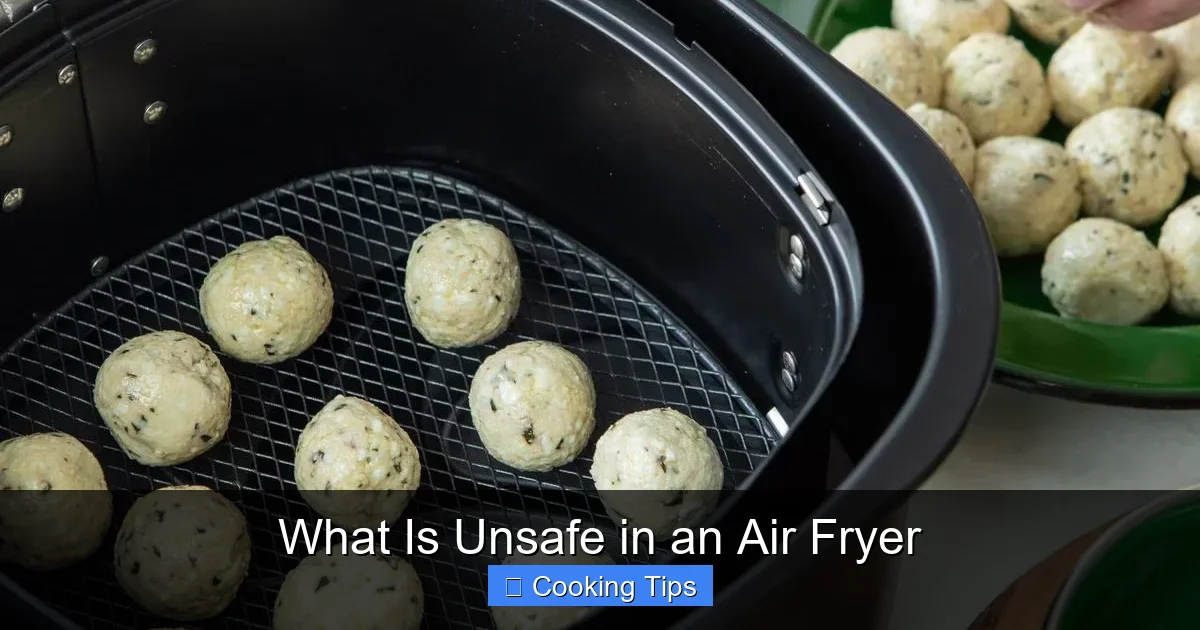
Ensure safe and delicious cooking with your air fryer by understanding what *not* to put inside. This guide highlights unsafe materials, certain food types, and improper usage that can lead to damage, fire hazards, or unhealthy outcomes. Learn to air fry safely and avoid common pitfalls for optimal results and longevity of your appliance.
What Is Unsafe in an Air Fryer
Air fryers have revolutionized home cooking, offering a healthier and often faster way to achieve crispy, delicious results. But like any kitchen appliance, it’s crucial to know what’s safe and what’s not to ensure optimal performance, longevity, and, most importantly, your safety. Using your air fryer incorrectly can lead to damage, fire hazards, and even unhealthy food. This guide will walk you through everything you should steer clear of when using your air fryer.
Key Takeaways
- Incorrect Materials: Never use plastic, parchment paper not rated for high heat, or foil improperly in your air fryer, as these can melt, ignite, or obstruct airflow.
- Overcrowding: Don’t overcrowd the air fryer basket, as this prevents proper air circulation, leading to unevenly cooked food and potentially overworking the appliance.
- Wet or Saucy Foods: Very wet or saucy batters can drip, causing flare-ups and making cleanup difficult. Pre-cook or drain these items before air frying.
- Certain Vegetables: Leafy greens that aren’t secured or tossed with oil can blow around and scorch, while watery vegetables might steam rather than crisp.
- Reheating Specific Foods: Not all leftovers are ideal for air frying. Delicate items or those with high moisture content might not reheat well and can become dry or soggy.
- Improper Cleaning: Neglecting to clean your air fryer regularly, especially the heating element and basket, can lead to grease buildup and fire hazards.
- Blocking Airflow: Placing the air fryer too close to walls or other appliances can impede ventilation, causing it to overheat.
Understanding Your Air Fryer’s Mechanism
Before diving into what’s unsafe, let’s briefly touch upon how an air fryer works. It’s essentially a high-powered convection oven. It circulates hot air at high speed around your food, creating a crispy exterior. This rapid circulation is key to its effectiveness but also highlights why certain things are unsafe. Anything that interferes with this airflow or is susceptible to high heat can cause problems.
Materials to Avoid in Your Air Fryer
The material of any item you place inside your air fryer basket is paramount. Using the wrong materials can lead to melting, fire, or toxic fumes. Your air fryer basket is typically made of metal and coated with a non-stick surface. Accessories should be designed specifically for air fryer use or be heat-safe alternatives.
Visual guide about What Is Unsafe in an Air Fryer
Image source: supergoldenbakes.com
1. Plastics Not Rated for High Heat
This is perhaps the most critical rule. Standard plastic containers, wraps, or utensils are *never* safe for your air fryer. The temperatures inside an air fryer can easily exceed the melting point of most plastics. When plastic melts, it can:
- Contaminate your food with harmful chemicals.
- Damage the non-stick coating of your air fryer basket.
- Cause a fire hazard as melted plastic ignites.
Tip: Always look for products explicitly labeled as “air fryer safe” or “heat resistant to X degrees Fahrenheit/Celsius” if you’re considering using any non-standard accessories.
2. Regular Parchment Paper (Used Improperly)
Parchment paper can be a useful tool for easier cleanup, but it needs to be used correctly. Standard parchment paper is generally safe, *provided* it’s rated for the temperatures you’re using and secured properly. The danger arises when:
- It’s too large: Excess parchment paper can get caught in the fan or heating element, leading to scorching or a fire.
- It’s not weighted down: The strong fan can lift loose parchment paper, causing it to blow around and potentially catch fire.
Tip: Use perforated parchment paper designed for air fryers, or cut your parchment paper to fit snugly within the basket, ensuring no part hangs over the edges. Tuck it under the food if possible to weigh it down.
3. Aluminum Foil (Used Improperly)
Similar to parchment paper, aluminum foil can be a useful liner for certain foods. However, improper use can be problematic. The main concerns are:
- Blocking airflow: Completely covering the bottom of the basket with foil will prevent hot air from circulating, leading to uneven cooking and a less crispy result. It can also cause the appliance to overheat.
- Reacting with acidic foods: Aluminum can react with acidic foods (like tomatoes or citrus), leaching into the food and imparting a metallic taste.
Tip: If using foil, use it sparingly. Line the bottom of the basket with a small piece, ensuring it doesn’t block air vents. For cooking, wrap food loosely, allowing air to circulate around it.
4. Metal Utensils (Inside the Basket)
While your air fryer basket is made of metal, avoid using sharp metal utensils like knives or forks to stir or move food inside the basket if it has a non-stick coating. Repeatedly scraping the basket with metal can scratch and damage the non-stick surface, making it less durable and potentially releasing small particles into your food over time.
Tip: Use silicone-tipped tongs or spatulas for turning and removing food from your air fryer.
Food Types to Use with Caution or Avoid
While air fryers are versatile, not every food item is ideal for this cooking method. Some foods can create messes, fire hazards, or simply don’t cook well.
Visual guide about What Is Unsafe in an Air Fryer
Image source: recipethis.com
1. Very Wet or Saucy Batters
Foods coated in thin, watery batters (like tempura or very wet pancake batter) can be problematic. The batter can:
- Drip through the basket holes, onto the heating element below, causing smoke and flare-ups.
- Prevent the food from crisping properly, as the moisture will steam the item instead of allowing hot air to crisp it.
Tip: For foods that require a batter, opt for thicker, drier coatings. If you must use a wetter batter, consider pre-frying it briefly or ensure it adheres well to the food. You might also want to line your basket with parchment paper designed for air fryers to catch drips.
2. Leafy Greens Not Secured
Light, leafy greens like spinach or kale can easily get blown around by the powerful fan in an air fryer. If they aren’t tossed with enough oil to weigh them down, or if they’re placed loosely in the basket, they can fly up and get scorched by the heating element.
Tip: To air fry leafy greens, toss them thoroughly with a bit of oil and seasonings to help them stick together and stay in the basket. Cook them in small batches for a short time.
3. Very Watery Vegetables
Vegetables with very high water content, like cucumbers or some types of mushrooms, might not crisp up well. Instead, they can steam, resulting in a soggy texture. The water released can also make the air fryer less effective or even a bit messy.
Tip: For these vegetables, consider other cooking methods or pat them thoroughly dry before air frying. You can also cut them into smaller pieces to encourage drying.
4. Cheese That Melts Excessively
While cheese can be delicious, large amounts of melting cheese can cause issues. It can drip through the basket and onto the heating element, creating a sticky mess that’s hard to clean and can produce smoke. Very soft cheeses can simply melt into a puddle.
Tip: Use cheese judiciously. Grate it or use cheese that holds its shape better. You can also place cheese-covered items on parchment paper to catch drips.
5. Foods That Require Steaming or Boiling
Air fryers are designed to circulate hot air for crisping and cooking, not for steaming or boiling. Attempting to steam vegetables directly in the air fryer without any liquid will just lead to them drying out. Boiling is impossible.
Tip: If a recipe calls for steaming or boiling, use your stovetop or a dedicated steamer. If you want to steam something *inside* an air fryer, you might need a specific accessory designed for it, and even then, results vary.
6. Overcrowding the Basket
This isn’t a food type, but an extremely common unsafe practice. Packing the air fryer basket too full is a recipe for disaster. When overcrowded, the hot air cannot circulate properly around the food. This results in:
- Uneven cooking (some parts burnt, others raw).
- Food that isn’t crispy, but rather steamed or soggy.
- The appliance working harder, potentially leading to premature wear and tear or overheating.
Tip: Cook in batches! It’s better to cook smaller portions more effectively than to try and cram everything in at once. Your food and your air fryer will thank you.
Improper Usage and Maintenance
Beyond materials and food types, how you operate and maintain your air fryer is crucial for safety.
Visual guide about What Is Unsafe in an Air Fryer
Image source: airfryerfanatics.com
1. Blocking Ventilation
Air fryers need space to breathe. Placing your air fryer too close to walls, cabinets, or other appliances can obstruct the vents, preventing proper heat dissipation. This can cause the appliance to overheat, shorten its lifespan, and even pose a fire risk.
Tip: Always ensure there’s at least 4-6 inches of clearance around your air fryer on all sides, including the top and back.
2. Running the Air Fryer Empty for Extended Periods
While briefly preheating is standard practice, running your air fryer empty for prolonged periods is not recommended. The heating element is designed to heat food, not just empty air. This can cause unnecessary wear on the element and potentially lead to overheating.
Tip: Follow the preheating instructions in your air fryer’s manual. Most recommend preheating for only a few minutes.
3. Not Cleaning Your Air Fryer Regularly
Grease and food debris can build up in your air fryer over time. If not cleaned, this buildup can:
- Cause smoke and unpleasant odors.
- Become a fire hazard as grease can ignite.
- Affect the performance of your air fryer.
Tip: Clean your air fryer basket and tray after every use. Periodically, clean the interior and exterior according to the manufacturer’s instructions. Pay special attention to the heating element area, being careful to unplug the unit first and allow it to cool completely.
4. Using Damaged Accessories or Units
If your air fryer basket, tray, or any accessories are damaged (e.g., scratched non-stick coating, bent parts, frayed cord), do not use them. Damaged components can be unsafe and may lead to malfunction or hazards.
Tip: Inspect your air fryer and its accessories regularly. If you notice any damage, contact the manufacturer for replacement parts or consider replacing the appliance.
Troubleshooting Common Air Fryer Issues Related to Unsafe Practices
Issue: My air fryer is smoking.
Possible Cause: You likely have food debris or grease buildup from previous cooking, or you’ve used a food item that is too fatty and is dripping grease onto the heating element (e.g., bacon without proper prep). You might also have used an unsafe material like plastic that’s melting.
Solution: Unplug the air fryer and let it cool completely. Clean the basket, tray, and interior thoroughly. For fatty foods, you may need to place a piece of foil or parchment paper underneath the basket to catch drips, or cook in smaller batches.
Issue: My food is cooking unevenly.
Possible Cause: The air fryer basket is likely overcrowded, preventing air circulation. Alternatively, you might not be shaking or flipping your food halfway through cooking.
Solution: Remove some food from the basket to allow for proper airflow. Ensure you shake or flip your food at the halfway point of cooking.
Issue: There’s a strange smell when I use my air fryer.
Possible Cause: This could be due to food residue not being cleaned properly, the initial “new appliance” smell (which usually dissipates), or the use of unsafe materials like plastic.
Solution: Ensure thorough cleaning. If the smell persists and you’ve ruled out food residue, it might be time to check the condition of the heating element or consult the manual.
Conclusion
Your air fryer is a fantastic tool for creating healthy and delicious meals. By understanding what is unsafe to put in it – from specific materials and food types to improper usage and maintenance – you can ensure you’re using your appliance safely and effectively. Always prioritize heat-safe, air fryer-approved items, avoid overcrowding, keep your appliance clean, and give it plenty of ventilation. Following these guidelines will help you achieve perfect results every time, while keeping your kitchen safe and your air fryer in excellent condition for years to come. Happy air frying!
