

When battling a cold and cough, your diet plays a crucial role in recovery. This guide explores the best foods to eat for relief, focusing on hydration, nutrients, and soothing properties. Learn how simple dietary adjustments can significantly ease your symptoms and support your body’s healing process.
What To Eat For Cold Cough Relief
When you’re feeling under the weather with a cold and cough, the last thing you might want to do is cook. However, what you eat can make a significant difference in how quickly you recover and how severe your symptoms feel. This guide is here to help you navigate the best food choices for cold and cough relief. We’ll explore simple, comforting, and effective dietary strategies to help you feel better faster. You’ll learn about the importance of hydration, specific foods that can soothe your throat and ease congestion, and nutrient-rich options to support your immune system.
Key Takeaways
- Focus on Hydration: Staying well-hydrated is paramount for thinning mucus and preventing dehydration, which can worsen cold and cough symptoms. Water, herbal teas, and clear broths are your best allies.
- Embrace Warm Liquids: Warm beverages like herbal teas and broths can soothe a sore throat, ease congestion, and provide comfort. Honey is a natural cough suppressant.
- Prioritize Nutrient-Dense Foods: Incorporate foods rich in vitamins and minerals, especially Vitamin C and Zinc, to support your immune system and aid recovery.
- Choose Easily Digestible Foods: Opt for bland, easy-to-digest foods when your appetite is low or your stomach feels sensitive. This prevents your body from expending too much energy on digestion.
- Incorporate Soothing Ingredients: Foods and spices like ginger, garlic, turmeric, and honey have natural anti-inflammatory and antimicrobial properties that can help combat cold and cough symptoms.
- Listen to Your Body: Pay attention to what your body craves and tolerates. Sometimes simple, familiar foods are the most comforting and beneficial.
The Foundation of Recovery: Hydration is Key
When you have a cold or cough, your body loses fluids faster due to fever, increased mucus production, and general exertion. Staying hydrated is not just about quenching thirst; it’s essential for helping your body function optimally during illness. Proper hydration thins mucus, making it easier to cough up and clear from your airways. It also helps prevent dehydration, which can make you feel more fatigued and can exacerbate other symptoms.
Why Water is Your Best Friend
Plain water is the ultimate hydrator. It’s calorie-free, readily available, and essential for all bodily functions. Aim to sip water consistently throughout the day, even if you don’t feel thirsty.
The Power of Herbal Teas
Herbal teas offer more than just hydration; they can provide soothing benefits. Warm teas can calm a sore throat and ease congestion.
- Chamomile Tea: Known for its calming properties, chamomile can help you relax and sleep better, which is crucial for recovery.
- Peppermint Tea: The menthol in peppermint can help to open up nasal passages, easing congestion and providing a cooling sensation.
- Ginger Tea: Ginger is a powerful anti-inflammatory and can help to soothe nausea, a common symptom for some when they are sick. It also has warming properties that can feel comforting.
- Licorice Root Tea: This tea can help to soothe a sore throat and has expectorant qualities, meaning it can help to loosen mucus.
Tip: Add a spoonful of honey to your herbal tea for an extra soothing effect and to help suppress your cough. (See more on honey below!)
Clear Broths: A Savory Sip
Chicken soup is famously good for colds, but any clear broth can be beneficial. These warm liquids are easy to digest and provide essential electrolytes lost through illness.
- Chicken Broth: Contains electrolytes and is comforting.
- Vegetable Broth: A lighter, plant-based option packed with nutrients.
- Bone Broth: Rich in minerals and amino acids, it can provide extra nourishment.
How to make it simple: You can use store-bought low-sodium broths or make your own by simmering chicken bones or vegetables for several hours. Add a pinch of salt for electrolytes.
Soothing Your Sore Throat and Easing Congestion
A sore throat and congested nose can make breathing and swallowing uncomfortable. Certain foods and drinks can provide much-needed relief.
Honey: Nature’s Cough Suppressant
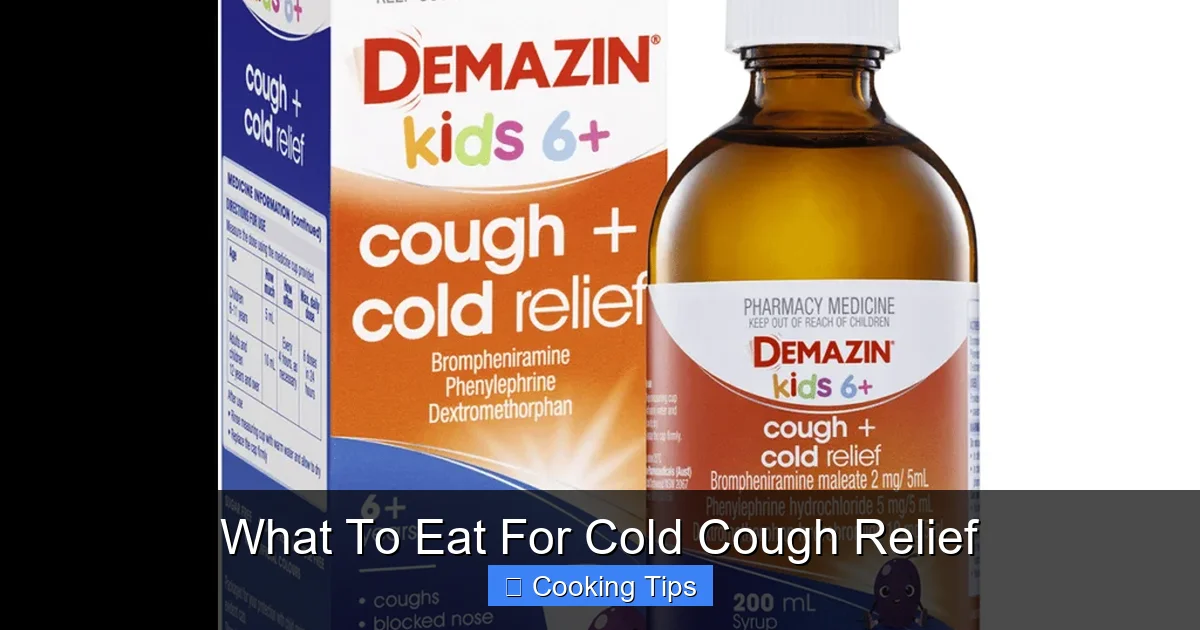
Honey has been used for centuries to treat coughs and sore throats. Its thick consistency coats the throat, providing a soothing effect. Research suggests it can be as effective as some over-the-counter cough medicines, especially for children over one year old.
Visual guide about What To Eat For Cold Cough Relief
Image source: demazin.com.au
- How to use it: Take a tablespoon of raw honey straight, or mix it into warm water or herbal tea.
- Important Note: Never give honey to infants under one year old due to the risk of botulism.
Warm Liquids with Lemon
Adding lemon to warm water or tea provides Vitamin C, which is an antioxidant that can support your immune system. The acidity of lemon can also help to break up mucus.
- Simple preparation: Squeeze half a lemon into a mug of warm water or your favorite herbal tea.
Ginger: The Spicy Soother
Ginger has potent anti-inflammatory and antioxidant properties. It can help to reduce inflammation in the throat and can also ease nausea.
- How to enjoy it: Fresh ginger can be grated and steeped in hot water to make ginger tea. You can also add it to broths or smoothies. Candied ginger can also be a good option for a soothing throat treat.
Garlic: A Powerful Ally
Garlic contains allicin, a compound with immune-boosting and antimicrobial properties. While the smell might be strong, its benefits are worth it.
- Best consumed raw: For maximum benefits, consume garlic raw. You can finely mince it and add it to a spoonful of honey or mix it into a salad dressing.
- Cooked options: If raw garlic is too strong, add it generously to your broths, soups, and other cooked dishes.
Nutrient-Dense Foods for Immune Support
While resting is paramount, fueling your body with the right nutrients can significantly speed up your recovery. Focus on foods rich in vitamins and minerals that bolster your immune system.
Vitamin C-Rich Foods
Vitamin C is an antioxidant that helps protect cells from damage and supports immune function. While it won’t cure a cold, it can help your body fight it off.
Visual guide about What To Eat For Cold Cough Relief
Image source: cdn.shopify.com
- Citrus Fruits: Oranges, grapefruits, lemons, and limes are excellent sources.
- Berries: Strawberries, blueberries, raspberries, and cranberries are packed with Vitamin C and antioxidants.
- Kiwi: A small fruit with a big punch of Vitamin C.
- Bell Peppers: Especially red bell peppers, which have more Vitamin C than oranges.
- Leafy Greens: Spinach and kale are good sources.
How to incorporate: Eat these fruits whole, add them to smoothies, or squeeze their juice into water.
Zinc-Rich Foods
Zinc is crucial for immune cell function. Studies suggest that taking zinc early in a cold can shorten its duration.
- Lean Meats: Turkey, chicken, and lean beef.
- Seafood: Oysters, crab, and lobster are particularly high in zinc.
- Legumes: Lentils, chickpeas, and beans.
- Nuts and Seeds: Pumpkin seeds, cashews, and almonds.
- Dairy Products: Yogurt and cheese.
Tip: If you struggle to get enough zinc from your diet, consider a zinc supplement, but always consult with a healthcare professional first.
Foods with Anti-inflammatory Properties
Inflammation can contribute to cold and cough symptoms. Foods with anti-inflammatory properties can help calm your body.
- Turmeric: This vibrant spice contains curcumin, a powerful anti-inflammatory compound. Add it to broths, soups, or make golden milk (turmeric latte).
- Omega-3 Fatty Acids: Found in fatty fish like salmon and mackerel, as well as flaxseeds and walnuts, these can help reduce inflammation.
- Fruits and Vegetables: A wide variety of colorful fruits and vegetables provide antioxidants that fight inflammation.
Easily Digestible Foods for Low Appetite
When you’re sick, your appetite might dwindle, and rich or heavy foods can feel unappealing or hard to digest. Focus on bland, easily digestible options.
Oatmeal
Oatmeal is a comforting, whole-grain food that’s easy on the stomach. It provides fiber and can be customized with fruits or a touch of honey.

Visual guide about What To Eat For Cold Cough Relief
Image source: tearaja.in
- Preparation: Cook with water or milk until soft. Avoid adding too much sugar.
Rice
Plain white rice is a simple carbohydrate that is easy to digest. Brown rice is also good if your stomach can handle it, offering more fiber.
- Serving suggestions: Serve plain, or as a side to broth or cooked chicken.
Toast
Plain toast, preferably whole wheat, is another simple carbohydrate that can settle an upset stomach. Avoid butter or heavy toppings.
- Additions: A thin layer of honey or a smear of natural peanut butter (if tolerated) can add flavor and some protein.
Bananas
Bananas are soft, easily digestible, and provide potassium, an important electrolyte. They can also help to bind stool if you’re experiencing loose stools.
- Enjoy them: Eat a whole banana, or mash it up if needed.
Applesauce
Unsweetened applesauce is gentle on the stomach and provides some fiber and vitamins. It’s also easy to eat when you have a sore throat.
Foods to Avoid or Limit
While focusing on what to eat, it’s also helpful to know what to limit or avoid when you have a cold or cough.
- Sugary Foods and Drinks: Excessive sugar can suppress the immune system and potentially increase inflammation. This includes candy, sugary sodas, and processed snacks.
- Dairy Products: For some people, dairy can thicken mucus. While this is debated and varies from person to person, it might be worth limiting if you notice it worsens your congestion.
- Fried and Greasy Foods: These are harder to digest and can make you feel more sluggish.
- Alcohol and Caffeine: Both can be dehydrating, which is the opposite of what you need when you’re sick.
- Spicy Foods (sometimes): While some spices like ginger can be beneficial, extremely spicy foods might irritate a sore throat or stomach for some.
Practical Tips for Eating When You’re Sick
Here are some easy ways to implement these dietary recommendations:
- Make Ahead: Prepare a batch of broth or make some simple chicken and rice when you’re feeling a bit better to have on hand for when you don’t have much energy.
- Keep it Simple: Don’t aim for gourmet meals. Simple, well-prepared dishes are best.
- Listen to Your Cravings: If you’re craving something specific, and it’s relatively healthy, go for it! Your body might be telling you what it needs.
- Small, Frequent Meals: If your appetite is very low, try eating smaller portions more often rather than three large meals.
- Focus on Comfort: Warm, nourishing foods can provide significant comfort, both physically and mentally.
When to Seek Medical Advice
While diet can greatly aid recovery, it’s important to know when to consult a healthcare professional.
- If your symptoms are severe or persist for more than a week or two.
- If you experience high fever, difficulty breathing, or chest pain.
- If you have underlying health conditions that could be exacerbated by illness.
Conclusion
Dealing with a cold and cough can be miserable, but your diet can be a powerful tool in your recovery arsenal. By focusing on hydration, embracing warm, soothing liquids, and fueling your body with nutrient-dense foods, you can significantly ease your symptoms and support your immune system. Remember to listen to your body, opt for simple and easily digestible foods when your appetite is low, and don’t forget the comforting power of a warm bowl of soup or a cup of herbal tea. Prioritizing these dietary strategies can help you bounce back to your healthy self more quickly. Get well soon!
