

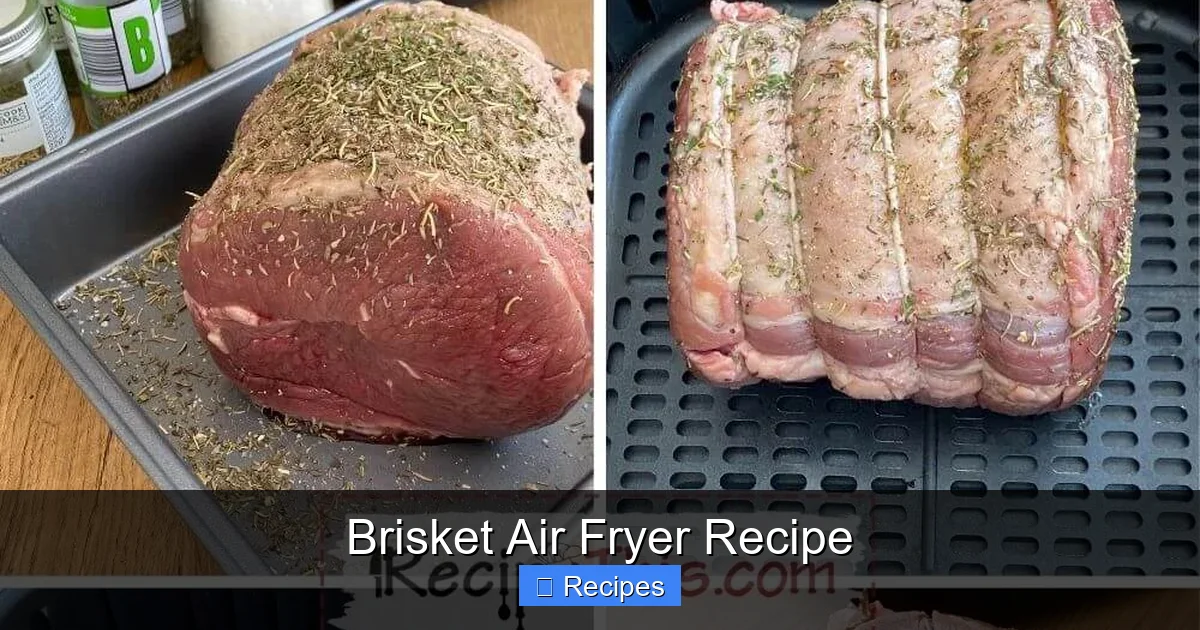
Want juicy, fall-off-the-bone brisket in your air fryer? This game-changing brisket air fryer recipe uses low-and-slow cooking to transform tough cuts into melt-in-your-mouth masterpieces—no smoker required. With just 15 minutes of prep and hands-off time, you’ll enjoy rich, flavorful results every single time.
Key Takeaways
- Low-and-slow method: Cooking brisket in an air fryer at 275°F (135°C) for 2–3 hours ensures tender meat without drying out.
- Prep is key: Trim fat evenly and sear brisket before air frying locks in juices and enhances browning.
- Moisture matters: Use a drip pan or foil tray underneath to catch drippings and prevent flare-ups.
- Resting is essential: Let brisket rest 10–15 minutes after cooking to redistribute juices.
- Slice against the grain: For maximum tenderness, cut diagonally across muscle fibers.
- Customize flavors: Experiment with rubs, marinades, or glazes like honey-soy or bourbon-maple.
- Serves 6–8: Ideal for family dinners, meal prep, or feeding a crowd without a backyard grill.
📑 Table of Contents
Why Your Brisket Needs an Air Fryer
There’s nothing quite like a perfectly cooked brisket—tender, smoky, and packed with deep flavor. Traditionally, this cut requires hours in a smoker or oven, but what if you could enjoy that same rich taste using just your trusty air fryer? That’s where our brisket air fryer recipe comes in.
Air fryers aren’t just for crispy fries or reheating leftovers. When used correctly, they can handle large cuts like brisket by circulating hot air evenly around the meat. The result? A beautifully browned exterior and succulent interior—without the guesswork or long wait times. Whether you’re short on time or simply want a fuss-free way to serve up barbecue classics, this method delivers consistent, restaurant-worthy results every time.
Plus, since there’s no open flame or heavy oil involved, it’s safer and more energy-efficient than traditional grilling methods. And don’t worry—you won’t miss out on flavor. In fact, many home cooks find the air fryer version even more convenient because it reduces cleanup and keeps your kitchen cooler during summer cookouts.
Gathering Your Ingredients & Tools
Before you start, make sure you have everything ready. You don’t need fancy equipment—just your standard countertop air fryer and basic pantry items.
Essential Ingredients
- 1 whole beef brisket (about 4–5 pounds)
- 2 tablespoons olive oil or avocado oil
- 2 tablespoons brown sugar
- 1 tablespoon smoked paprika
- 1 teaspoon garlic powder
- 1 teaspoon onion powder
- 1 teaspoon black pepper
- 1½ teaspoons kosher salt
- ½ teaspoon cayenne pepper (optional, for heat)
- 1 cup beef broth or water (for moisture)
For extra flavor, try adding liquid smoke, mustard, or Worcestershire sauce to your dry rub mix.
Required Equipment
- Airtight container or resealable bag (for marinating)
- Large skillet (for searing)
- Drip pan or aluminum foil tray
- Meat thermometer (digital preferred)
- Sharp carving knife
- Cutting board
Note: Not all air fryers come with a drip pan, so check your model. If yours doesn’t, line the basket with parchment paper sheets—these help reduce sticking and make cleanup easier (learn more here).
Step-by-Step Brisket Prep
The secret to great brisket starts long before it hits the air fryer. Proper preparation ensures even cooking and maximizes tenderness.
Trimming & Sizing
Begin by placing the brisket on a clean surface and removing any excess hard fat—but leave a thin layer (about ¼ inch) intact. Too much fat burns during cooking; too little dries out the meat. Aim for balanced coverage.
Next, trim uneven edges so the brisket sits flat in your air fryer basket. Most models fit up to 5 pounds comfortably, but if your brisket is larger, consider cutting it into two smaller pieces or using a dual-drawer air fryer model (compare models here).
Seasoning Like a Pro
In a small bowl, combine all dry spices except salt. Rub the mixture evenly over both sides of the brisket, then sprinkle generously with salt. For added depth, massage in a bit of mustard as a binder—it helps seasonings stick and creates a nice crust.
Let the seasoned brisket sit at room temperature for 20–30 minutes. This helps the rub penetrate and speeds up cooking time slightly.
Searing for Flavor
Heat a skillet over medium-high heat and add a thin layer of oil. Once hot, place the brisket fat-side down and sear for 3–4 minutes until golden brown. Flip and sear the other side for another 2–3 minutes. This step isn’t just about looks—it develops fond (that delicious caramelized stuff), which adds incredible flavor when drizzled over the finished dish.
After searing, let the brisket cool slightly before placing it in the air fryer.
Cooking the Brisket in Your Air Fryer
Now comes the easy part—setting your air fryer and letting science do the work!
Preheating & Setup
Preheat your air fryer to 275°F (135°C). While it heats, line the bottom of the basket with aluminum foil or place a drip pan underneath to catch juices. Pour ½ cup of beef broth or water into the drip pan—this creates steam and keeps the brisket moist.
Place the seared brisket fat-side up in the basket. Avoid overcrowding; if needed, rotate the meat halfway through cooking to ensure even airflow (tips on airflow here).
Timing & Monitoring
Set the timer for 2 hours. After 1 hour, check the internal temperature using a digital thermometer inserted into the thickest part of the meat. For medium-rare, aim for 195°F (90°C); for well-done, go up to 205°F (96°C). Remember: brisket continues cooking while resting, so don’t overdo it!
If the brisket looks dry, spray it lightly with water or add more broth to the drip pan. Total cooking time typically ranges from 2 to 3 hours depending on size and desired tenderness.
Checking Doneness the Smart Way
Instead of relying on guesswork, use a thermometer. At 190°F (88°C), the collagen begins to break down into gelatin, making the meat fork-tender. At 200°F+ , it becomes pull-apart soft. Both are excellent—just choose based on your preference.
Avoid piercing the meat frequently, as this releases precious juices.
Resting, Slicing, and Serving
This final step makes or breaks your brisket’s texture.
The Importance of Resting
Once done, transfer the brisket to a cutting board and loosely cover it with foil. Let it rest for 10–15 minutes. During this time, residual heat finishes cooking, and juices redistribute throughout the meat. Skipping this step leads to dry, sad slices every time.
Slicing Against the Grain
Using a sharp knife, slice the brisket **against the grain**—meaning perpendicular to the muscle fibers. Look for visible lines running along the meat and cut diagonally across them. This shortens the fibers, making each bite tender and easy to chew.
For presentation, arrange slices on a platter and drizzle with pan drippings from the drip pan for extra richness.
Best Side Dishes & Sauces
Pair your brisket with classic Southern sides like coleslaw, baked beans, cornbread (try air fryer cornbread!), or creamy mashed potatoes. Serve with pickles, onions, and your favorite BBQ sauce on the side.
For a modern twist, top slices with horseradish cream or chimichurri for brightness.
Troubleshooting Common Issues
Even with perfect prep, sometimes things go sideways. Here’s how to fix common problems:
Dry Meat?
Dry brisket usually means it cooked too fast or wasn’t rested properly. Always use a drip pan with liquid, avoid high heat, and never skip the resting phase.
Not Browning Enough?
If the outside lacks color, increase the last 15 minutes of cook time to 375°F (190°C) in 25°F increments. Keep an eye on it to prevent burning.
Uneven Cooking?
Rotate the brisket halfway through and ensure the air fryer vents aren’t blocked. Also, double-check that the meat isn’t touching the sides of the basket.
Too Much Smoke Smell?
Some air fryers produce odors during long cooks. To keep things fresh, place a slice of onion or lemon in the drip pan—it absorbs smells naturally (more odor tips here).
Tips for Success Every Time
Want consistent, mouthwatering brisket? Follow these pro tricks:
– **Marinate overnight:** Let the brisket sit in your spice rub for 4–12 hours for deeper flavor.
– **Use a meat thermometer:** It’s the only reliable way to know when it’s ready.
– **Keep a log:** Track cook times and temps for future reference.
– **Clean as you go:** Wipe down the basket after each use to prevent buildup that affects performance (why cleaning matters).
– **Double the batch:** Leftovers freeze beautifully and reheat well in the air fryer.
And remember—every air fryer is different. Adjust settings based on your model’s wattage and airflow capabilities (check yours here).
Conclusion: Brisket Made Simple
Cooking brisket doesn’t have to be intimidating or time-consuming. With this brisket air fryer recipe, you get all the flavor and texture of slow-smoked beef—minus the hassle. From trimming to slicing, every step is designed for home cooks who want big results without big commitments.
Whether you’re hosting a casual dinner or prepping meals for the week ahead, this method fits seamlessly into busy lifestyles. Plus, it opens up new possibilities: imagine reheating leftover brisket for sandwiches or turning it into tacos the next day!
So fire up your air fryer, grab that brisket, and get ready to impress everyone with tender, juicy perfection. Your taste buds will thank you—and your schedule will too.
Frequently Asked Questions
Can I use frozen brisket in my air fryer?
No—never cook frozen brisket directly. Always thaw it completely in the fridge first to ensure safe, even cooking. Frozen meat can create hot spots and lead to undercooked sections.
How do I know if my brisket is done?
Use a digital meat thermometer. For tender brisket, target 190–205°F (88–96°C). At 190°F, it should feel soft when pierced; higher temps yield pull-apart texture. Always rest the meat before checking.
Do I need special oil for air frying brisket?
Any neutral oil works—olive, avocado, or grapeseed oil are ideal. Just use enough to coat the brisket lightly during searing. Too much oil can cause smoking or uneven browning.
Can I cook brisket in a multi-cooker air fryer?
Yes! Multi-cooker models often include a “slow cook” function that mimics the low-and-slow method perfectly. Just adjust timing and liquid amounts accordingly.
What if my air fryer is too small?
If your brisket doesn’t fit, trim it slightly or split it into two smaller pieces. Alternatively, consider upgrading to a larger model like those designed for whole chickens (see recommendations).
How long does leftover brisket last?
Store in an airtight container in the fridge for up to 4 days or freeze for up to 3 months. Reheat gently in the air fryer at 300°F (150°C) until warmed through—no microwave sogginess!
