

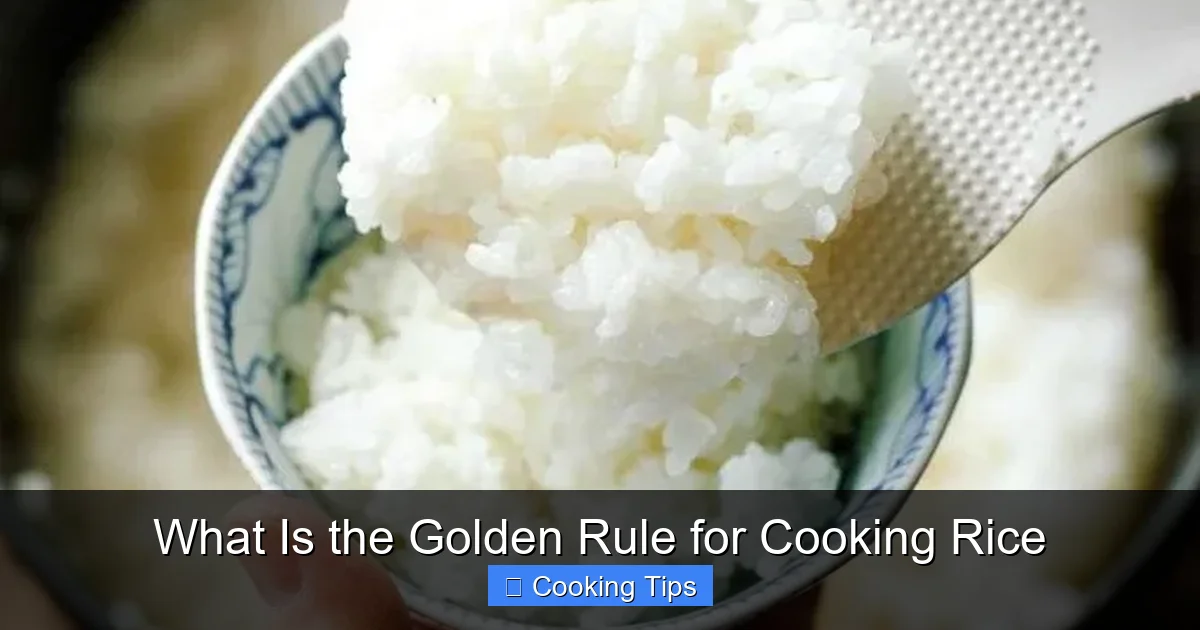
Cooking perfect rice might seem tricky, but there’s a surprisingly simple “Golden Rule” to follow. This guide will unlock the secret to fluffy, delicious grains, every single time. Say goodbye to mushy or dry rice and hello to a staple that elevates any meal. We’ll cover the essential ratio, proper rinsing, cooking techniques, and troubleshooting tips for rice success in 2026.
Are you tired of rice that’s either a gummy mess or dry and sad? In 2026, the quest for perfectly cooked rice is more accessible than ever. Whether you’re a seasoned home cook or just starting your culinary journey, understanding a few fundamental principles can transform your rice game. Today, we’re diving deep into the “Golden Rule for Cooking Rice” – a simple, yet incredibly effective, method that guarantees fluffy, delicious grains every single time. You’ll learn why this rule works, how to apply it with precision, and how to troubleshoot common issues. Let’s get cooking!
## Understanding the Golden Rule: The 1:2 Ratio
The heart of perfect rice lies in a straightforward measurement: the ratio of rice to liquid. For most common types of white rice, the Golden Rule is a **1:2 ratio of rice to water**. This means for every one cup of uncooked rice, you will use two cups of water. This ratio ensures that the rice has enough liquid to absorb as it cooks, becoming tender and fully cooked without becoming waterlogged.
It sounds almost too simple, right? But this ratio is the foundation upon which successful rice cooking is built. It’s a universal starting point that works for a vast majority of white rice varieties, from long-grain to medium-grain. Of course, as we’ll discuss, there are nuances for different rice types, but if you remember nothing else, remember 1:2.
## The Essential Steps to Perfect Rice
Following the Golden Rule is just the first step. The technique you use to cook the rice is equally important. Here’s a step-by-step breakdown to achieve rice perfection:
### Step 1: Measure Your Rice
Accuracy is key. Use a standard measuring cup to measure your dry rice. It’s best to measure rice before rinsing it.
### Step 2: Rinse Your Rice
This is a step many people skip, but it’s **absolutely crucial** for fluffy rice. Rinsing removes excess surface starch, which is what makes rice sticky and clumpy.
How to Rinse Rice Properly:
- Place the measured rice in a fine-mesh sieve or a bowl.
- Run cold water over the rice, stirring it gently with your hand.
- You will see the water turn cloudy as the starch is released.
- Continue rinsing until the water runs mostly clear. This might take several rinses.
- Drain the rice thoroughly in the sieve.
This simple act makes a world of difference in the final texture of your rice, preventing it from sticking together in an unappealing mass.
### Step 3: Combine Rice and Liquid in a Pot
Now, it’s time to bring the rice and its cooking liquid together.
Choosing the Right Pot:
- Use a heavy-bottomed saucepan with a tight-fitting lid. A heavy bottom helps distribute heat evenly, preventing scorching. A snug lid traps steam, which is essential for cooking the rice evenly.
Adding the Liquid and Rice:
- Add the rinsed and drained rice to the pot.
- Pour in your measured water according to the 1:2 ratio (or adjusted ratio for specific rice types).
- Optional: Add a pinch of salt for flavor. Some people also like to add a pat of butter or a tablespoon of olive oil at this stage for added richness and to further help prevent sticking.
### Step 4: Bring to a Boil
Place the pot over medium-high heat and bring the water to a rolling boil. This initial boil helps to start the cooking process quickly.
Step 5: Reduce Heat and Simmer
As soon as the water reaches a boil, immediately reduce the heat to the lowest possible setting. The goal is a very gentle simmer.
Cover Tightly:
- Cover the pot with its tight-fitting lid. Do not lift the lid!
This is where the magic happens. The steam trapped inside the pot will cook the rice gently and evenly.
Step 6: Cook for the Recommended Time
The cooking time will vary slightly depending on the type of rice, but for most white rice varieties, aim for **15-20 minutes**.
Resist the Urge to Peek:
- Opening the lid releases precious steam, which is necessary for cooking the rice perfectly. Trust the process!
### Step 7: Rest the Rice
This is another **critical step** that is often overlooked. Once the cooking time is up, remove the pot from the heat.
Let it Steam:
- Leave the lid on the pot and let the rice rest for at least 10 minutes.
During this resting period, the rice will absorb any remaining steam, and the grains will finish cooking and firm up. This prevents a mushy bottom and ensures every grain is perfectly cooked.
### Step 8: Fluff and Serve
After resting, remove the lid and gently fluff the rice with a fork. This separates the grains and gives it that beautiful, fluffy appearance. Serve immediately and enjoy your perfectly cooked rice!
## Nuances and Adjustments for Different Rice Types
While the 1:2 ratio is your go-to for white rice, here are some common variations:
- Brown Rice: Brown rice requires more liquid and a longer cooking time due to its bran layer. A common ratio is 1:2.5 or even 1:3 (rice to water), and it typically needs 40-50 minutes of simmering, followed by a 10-15 minute rest.
- Basmati and Jasmine Rice: These aromatic long-grain rices often cook perfectly with the 1:2 ratio. Some chefs prefer a slightly less liquid ratio (e.g., 1:1.5) to preserve their delicate texture and fragrance. Experiment to find your preference.
- Arborio Rice (for Risotto): Risotto rice is cooked very differently, gradually absorbing liquid while being stirred, so the standard boiling method doesn’t apply.
- Sushi Rice: Short-grain sushi rice also typically uses the 1:2 ratio but benefits greatly from very thorough rinsing and a slightly shorter resting time (around 5-10 minutes) before being seasoned with vinegar.
**Pro Tip:** Always check the package instructions for your specific rice variety, as manufacturers often provide the most accurate cooking guidelines.
## Troubleshooting Common Rice Problems
Even with the best intentions, sometimes rice doesn’t turn out perfectly. Here are solutions for common issues:
Problem: Rice is mushy or gummy.
Cause: Too much water, not enough rinsing, or opening the lid too often during cooking.
Solution: In the future, ensure you use the correct ratio, rinse thoroughly, and avoid peeking. If it’s already mushy, you can sometimes salvage it by spreading it on a baking sheet and gently baking it at a low temperature (around 200°F or 95°C) for a few minutes to dry it out. This isn’t ideal, but it can help.
Problem: Rice is dry or undercooked.
Cause: Not enough water, lid not fitting tightly, or not cooking long enough.
Solution: If the rice is still firm but the liquid is absorbed, add a few tablespoons of hot water, cover tightly, and cook for a few more minutes. For future cooking, double-check your measurements and ensure your lid is sealing well.
Problem: Rice is burnt on the bottom.
Cause: Heat is too high, pot doesn’t have a heavy bottom, or not enough liquid.
Solution: Lower the heat to the absolute minimum simmer. Use a heavy-bottomed pot. If it’s burnt, try to scrape away the burnt bits and serve the fluffy rice from the top. For future attempts, use a diffuser if your stovetop runs hot, or ensure your pot is robust enough.
## Conclusion: Embrace the Golden Rule
Mastering the art of cooking rice is a fundamental skill that can elevate your home cooking in 2026. By understanding and consistently applying the **Golden Rule of the 1:2 rice-to-water ratio**, combined with proper rinsing, careful cooking, and essential resting, you’re well on your way to consistently perfect rice. Remember to adapt slightly for different rice varieties, but always start with this reliable foundation. So, ditch the worry and embrace the simplicity. Your delicious, fluffy rice awaits!
Key Takeaways
- The Golden Rule: The fundamental principle for cooking most types of rice is the 1:2 rice-to-water ratio.
- Rinsing is Crucial: Always rinse your rice thoroughly to remove excess starch, preventing clumping and ensuring fluffiness.
- Proper Pot Choice: Use a heavy-bottomed saucepan with a tight-fitting lid to ensure even heat distribution and prevent burning.
- Resting is Key: Allowing the rice to steam and rest off the heat after cooking is vital for absorbing residual moisture and achieving perfect texture.
- Don’t Peek: Resist the urge to lift the lid during the cooking process, as this releases steam and can disrupt the cooking.
- Know Your Rice Type: While the 1:2 ratio is a great starting point, different rice varieties might require slight adjustments.
- Flavor Boosters: Simple additions like salt, butter, or aromatics can significantly enhance the taste of your cooked rice.
