

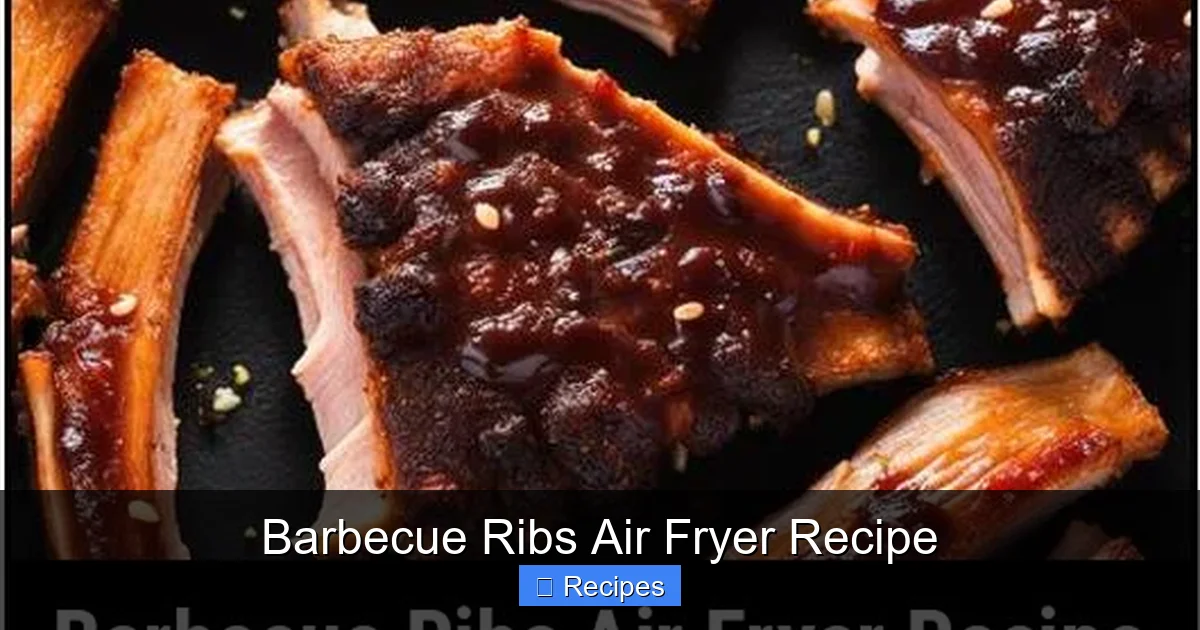
Want tender, smoky barbecue ribs without hours of oven time? This barbecue ribs air fryer recipe delivers restaurant-quality results fast using hot air circulation. Perfect for busy weeknights or weekend cookouts.
Who doesn’t love a plate of fall-off-the-bone, smoky barbecue ribs? Traditionally, these crowd-pleasers require hours in the oven or smoker, turning your kitchen into an oven with extra steps. But what if you could enjoy restaurant-style barbecue ribs air fryer recipe results in under an hour—without sacrificing flavor or texture?
That’s exactly where modern air fryers shine. These countertop wonders use superheated air circulation to mimic deep-frying, giving you that crispy exterior and tender interior—all with way less oil. And when it comes to ribs? Your air fryer can deliver fall-apart tenderness with bold smoky flavor in just 35–45 minutes.
Whether you’re feeding a family, hosting friends, or craving comfort food after a long day, this barbecue ribs air fryer recipe is a game-changer. No smoker required.
Key Takeaways
- Speed & Convenience: Cook full racks of ribs in under 45 minutes—much faster than traditional methods.
- Healthier Choice: Uses 70% less oil while achieving crispy bark and juicy interior.
- Customizable Flavor: Apply dry rubs and sauces before or after cooking based on preference.
- Even Cooking: Air fryer’s circulating heat ensures consistent doneness across the entire rack.
- Easy Cleanup: Non-stick basket makes post-meal cleaning simple and quick.
- Great for Meal Prep: Cook multiple batches ahead—perfect for parties or busy schedules.
📑 Table of Contents
Gathering Your Ingredients and Tools
Before you fire up your air fryer, let’s make sure you have everything you need for perfect ribs every time.
What You’ll Need
- 1 full rack of baby back ribs (or country-style spare ribs)
- ¼ cup brown sugar
- 2 tablespoons paprika
- 1 tablespoon garlic powder
- 1 tablespoon onion powder
- 1 teaspoon cayenne pepper (optional for heat)
- 1½ teaspoons salt
- 1 teaspoon black pepper
- ½ teaspoon dried thyme
- ½ cup barbecue sauce (store-bought or homemade)
- Baking sheet or tray (for catching drips)
- Aluminum foil
- Paper towels
- Spray bottle with water (optional, for steam step)
For best results, choose fresh, chilled ribs from your local butcher. Look for meaty sides with good marbling. Avoid pre-rubbed or pre-seasoned ribs—they often contain preservatives and too much salt.
You’ll also want a good instant-read thermometer. While not mandatory, it helps confirm internal temperature reaches 190°F for that melt-in-your-mouth texture.
Prep Work: The Secret to Tender Ribs
Start by removing the thin membrane from the back of the ribs—the silvery layer that prevents moisture from penetrating. Use a butter knife to lift it at one corner, then grab it with a paper towel and peel it off. This step is crucial; otherwise, your ribs may stay tough no matter how long you cook them.
Next, pat the ribs dry with paper towels. Moisture on the surface stops seasonings from sticking properly. Then place them on a baking sheet and cover with plastic wrap. Chill in the fridge for at least 30 minutes—this firms up the meat and helps the rub adhere better.
While the ribs chill, mix your dry rub in a small bowl. Combine all spices until well blended. Set aside until ready to use.
Seasoning and Preparing the Ribs
Now comes the fun part: turning plain pork into something magical.
Applying the Dry Rub
Remove the ribs from the fridge and discard any excess moisture. Generously coat both sides with your spice blend—don’t be shy! Rub it into the meat with your fingers. Let the seasoned ribs sit at room temperature for 20–30 minutes. This allows the flavors to start working their magic.
If you’re short on time, you can skip chilling and go straight to seasoning—but the longer they rest, the deeper the flavor.
The Optional Steam Step
Here’s a pro tip: lightly spray the top of each rib with water using a spray bottle. Then loosely tent the rack with aluminum foil and return it to the fridge for another 30 minutes. This creates steam that softens connective tissue, making the final result extra tender. It’s especially helpful for thicker cuts like country ribs.
Once done, unwrap and pat dry again before moving to the next step.
Cooking Ribs in the Air Fryer
This is where technology meets tradition. Your air fryer will transform simple ingredients into something extraordinary.
Setting Up Your Air Fryer
Preheat your air fryer to 325°F (165°C). If your model has preset options, select “Ribs” or “Pork” if available—otherwise, manual setting works fine.
Line the basket with parchment paper for easier cleanup. Place the rib rack upright in the center, standing on its bone side. This position maximizes airflow and ensures even cooking. Do not overcrowd—one full rack fits most standard models.
First Stage: Braising with Heat & Steam
Cover the air fryer basket loosely with a piece of foil (leaving a few gaps for ventilation). Add 2–3 tablespoons of water or apple cider vinegar to the bottom of the basket. Close the lid and cook for 20 minutes. This low-and-slow step mimics traditional braising and begins breaking down collagen.
After 20 minutes, carefully open the basket. Remove the foil cover and flip the rack over so the meat side faces up. Discard any accumulated liquid.
Second Stage: Crisping and Glazing
Increase the temperature to 400°F (200°C). Brush both sides of the ribs generously with barbecue sauce. Return to the air fryer and cook for another 10–15 minutes, flipping once halfway through. You’ll know they’re done when the sauce caramelizes into a glossy, sticky glaze and the edges begin to crisp.
For added smoke flavor without a smoker, try adding a few drops of liquid smoke to the sauce during the last 5 minutes.
Serving and Storing Leftovers
Your barbecue ribs air fryer recipe masterpiece is almost ready!
Resting and Cutting
Let the ribs rest for 5–10 minutes before slicing. This allows juices to redistribute. Use a sharp knife or pair of scissors to cut between the bones. Serve immediately with extra BBQ sauce on the side.
Pairing Suggestions
These ribs shine alongside:
- Coleslaw with a tangy vinaigrette
- Baked beans simmered with maple syrup
- Cornbread muffins
- Grilled corn on the cob
- Fresh fruit salad for balance
Storing and Reheating
Wrap leftover ribs tightly in foil and store in the refrigerator for up to 4 days. To reheat, place a slice on a microwave-safe plate and cover with damp paper towel—microwave for 1–2 minutes. Or, use your air fryer at 350°F for 5 minutes for a crispier finish. For more details, check out our guide on How To Reheat Ribs In Air Fryer.
Troubleshooting Common Issues
Even with the best tools, things don’t always go as planned. Here’s how to fix common problems.
Ribs Are Too Chewy
This usually means insufficient collagen breakdown. Next time, add the optional steam step or extend the initial braising phase by 5–10 minutes. Also ensure your internal temperature hits at least 190°F.
Rub Doesn’t Stick Well
Always pat ribs completely dry before applying spices. Cold meat from the fridge holds seasoning better than warm, damp surfaces.
Sauce Burns or Runs Off
Apply sauce only during the final 10 minutes of cooking. Thick sauces work better than runny ones. Consider brushing on a second coat once cooled slightly after first application.
Air Fryer Smells Like Raw Meat
This happens when fat drips onto heating elements. Always use a drip tray underneath and clean your air fryer regularly. See our tips on Keeping Your Air Fryer Odor Free Between Uses.
Tips for Perfect Barbecue Ribs Every Time
Want consistent excellence? Follow these golden rules.
- Don’t Skip the Membrane: Removing it lets seasonings penetrate deeper and improves texture.
- Use Quality Sauce: Homemade or artisanal store brands beat generic supermarket varieties.
- Rotate Rack Position: If your air fryer has hot spots, rotate the rack halfway through cooking.
- Monitor Closely at High Heat: 400°F cooks quickly—stay nearby during the glazing stage.
- Experiment with Rubs: Try adding cinnamon, cocoa powder, or chili flakes for unique twists.
And remember: practice makes progress. Your first batch might not be perfect—but each attempt gets you closer to rib perfection.
Conclusion
There you have it—a foolproof barbecue ribs air fryer recipe that delivers big on flavor, speed, and ease. No smoker. No hours-long oven time. Just tender, saucy goodness that rivals any roadside diner.
Whether you’re new to air frying or a seasoned pro, this method proves that healthy eating and delicious meals can coexist. With minimal prep and maximum payoff, it’s no wonder more home cooks are turning to their air fryers for dinner.
So next time you’re craving ribs, ditch the complicated setups. Fire up your appliance, grab those spices, and get cooking. Your taste buds (and your guests) will thank you.
For more air fryer inspiration, explore our collection of Air Fryer Dinner Recipes or learn how long to cook different rib styles using our detailed guide on How Long To Cook Country Style Ribs In Air Fryer.
Frequently Asked Questions
Can I cook frozen ribs in my air fryer?
Yes, but it requires longer cooking time and careful monitoring. Thaw partially first for best results. Follow our guide on How To Cook Ribs In Air Fryer for adjusted timing.
Do I really need to remove the membrane from the ribs?
Absolutely. The membrane blocks moisture and seasonings from reaching the meat. Removing it ensures tender, flavorful ribs every time.
What type of barbecue sauce should I use?
Any thick, flavorful sauce works—Kentucky-style, Carolina vinegar-based, or Kansas City sweet. Avoid thin tomato sauces that burn easily.
Can I make these ribs ahead of time?
Yes! Seasoned, unseasoned, or fully cooked ribs store well. Wrap tightly and refrigerate for up to 3 days. Reheat in the air fryer at 350°F for 8–10 minutes.
Why did my ribs turn out dry?
Overcooking at high heat dries out meat. Use the two-stage method: lower temp for tenderness, higher for glaze. Also avoid skipping the steam step.
Are air fryer ribs healthier than oven-baked ribs?
Yes—air frying uses significantly less oil while maintaining crispiness. Combined with leaner cuts and smart seasoning, it’s a healthier protein option overall.
